Hire Verified & Experienced
Computer Hardware Tutors
4.8/5 40K+ session ratings collected on the MEB platform



Hire The Best Computer Hardware Tutor
Top Tutors, Top Grades. Without The Stress!




52,000+ Happy Students From Various Universities






How Much For Private 1:1 Tutoring & Hw Help?
Private 1:1 Tutoring and HW help Cost $20 – 35 per hour* on average.
Stuck on cache hierarchies, instruction pipelines, or memory addressing — and your exam is in six weeks?
Computer Hardware Tutor Online
Computer Hardware is the study of physical computing components — processors, memory systems, buses, storage, and I/O architecture — equipping students to design, analyze, and troubleshoot the building blocks of modern computing systems.
Finding a reliable Computer Hardware tutor near me is harder than it sounds — most generalist platforms don’t have tutors who can walk you through pipelining hazards, cache replacement policies, or RISC vs CISC tradeoffs at the level your course demands. MEB covers Electrical Engineering and its closely related disciplines, including Computer Hardware, with verified tutors who know the exact depth your syllabus requires. One session can turn a concept you’ve been avoiding into something you can actually explain.
- 1:1 online sessions tailored to your specific course or exam board
- Expert-verified tutors with degree-level knowledge of computer architecture
- Flexible time zones — US, UK, Canada, Australia, Gulf covered
- Structured learning plan built after a diagnostic session
- Ethical homework and assignment guidance — you understand the work, then submit it yourself
52,000+ students across the US, UK, Canada, Australia, and the Gulf have used MEB since 2008 — including students in Electrical Engineering subjects like Computer Hardware, Microprocessors, and Digital Electronics.
Source: My Engineering Buddy, 2008–2025.
How Much Does a Computer Hardware Tutor Cost?
Most Computer Hardware tutoring sessions at MEB run $20–$40/hr depending on level — undergraduate courses at the lower end, graduate or specialist hardware design topics at the higher. Not sure if it’s worth it? Start with the $1 trial: 30 minutes of live 1:1 tutoring or one homework question explained in full.
| Level / Need | Typical Rate | What’s Included |
|---|---|---|
| Standard (most undergrad levels) | $20–$35/hr | 1:1 sessions, homework guidance |
| Advanced / Graduate / Specialist | $35–$70/hr | Expert tutor, niche depth |
| $1 Trial | $1 flat | 30 min live session or 1 homework question |
Tutor availability gets tight during finals periods and semester-end project deadlines. Book early if you’re within six weeks of a submission or exam.
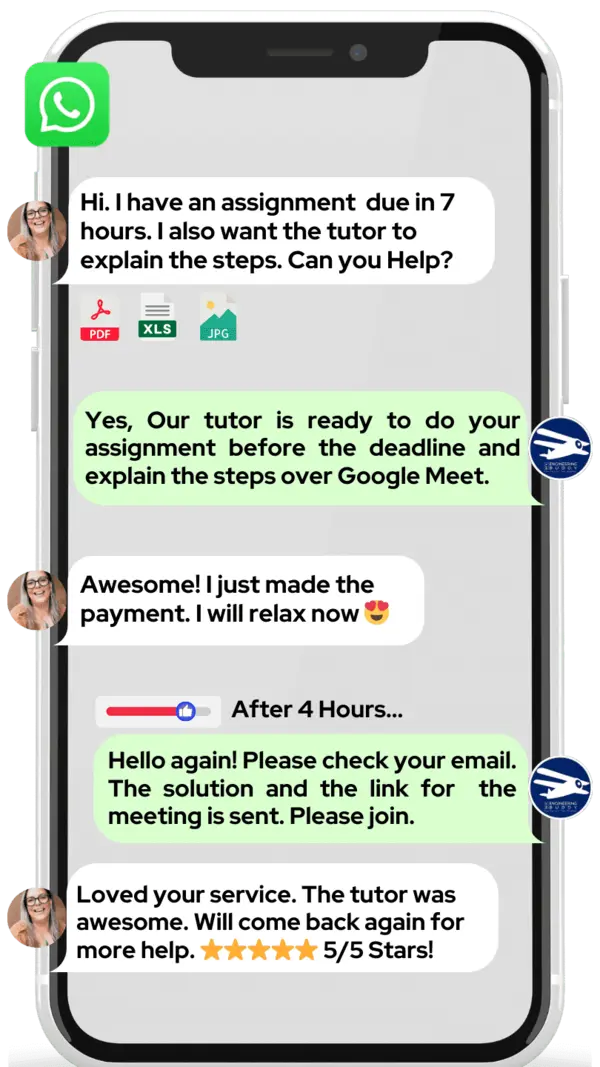
WhatsApp MEB for a quick quote — average response time under 1 minute.
Who This Computer Hardware Tutoring Is For
This isn’t a course for beginners who’ve never touched a circuit. MEB’s Computer Hardware tutoring is for students who are already in the subject — taking it at university, working through a computer engineering or ECE program, or preparing for an assessment — and need someone to work through the hard parts with them.
- Undergraduate students in computer engineering, ECE, or CS programs taking a Computer Organization or Architecture module
- Students who passed the software side of their degree but hit a wall with hardware abstraction, datapath design, or memory hierarchies
- Students retaking after a failed first attempt — especially common in courses covering pipelining and cache coherence
- Graduate students whose research touches hardware-software co-design or embedded architecture
- Students with a conditional university offer depending on this grade
- Parents supporting a student whose confidence has dropped alongside their lab scores
Students from MIT, Georgia Tech, Carnegie Mellon, Imperial College London, University of Toronto, UNSW, and TU Delft have all used MEB for Computer Hardware support. The subject content varies by institution, but the sticking points — pipeline hazards, addressing modes, cache performance — are remarkably consistent.
1:1 Tutoring vs Self-Study vs AI vs YouTube vs Online Courses
Self-study works if you’re disciplined, but Computer Hardware has no feedback loop when you misread a timing diagram or set up a datapath wrong. AI tools give fast answers — they can’t watch you work through a pipeline stage and catch the hazard you didn’t notice. YouTube is good for overviews of von Neumann architecture; it stops when you’re stuck on a specific cache miss calculation. Online courses move at a fixed pace regardless of where your gaps actually are. With 1:1 Computer Hardware tutoring at MEB, a tutor works through your exact course material — your textbook, your problem sets, your lab specs — and corrects errors the moment they happen.
Outcomes: What You’ll Be Able To Do in Computer Hardware
After working with an MEB Computer Hardware tutor, students can analyze multi-level cache hierarchies and calculate hit rates, miss penalties, and AMAT with confidence. You’ll be able to solve datapath and control unit design problems, explain instruction-level parallelism and identify pipeline hazards in real instruction sequences. Students learn to apply memory addressing modes correctly across different ISA formats, and present performance trade-offs between RISC and CISC architectures in written assignments and oral exams. The goal isn’t just passing — it’s being able to work through an unseen problem without freezing.
Based on feedback from 40,000+ sessions collected by MEB from 2022 to 2025, 58% of students improved by one full grade after approximately 20 hours of 1:1 tutoring in subjects like Computer Hardware. A further 23% achieved at least a half-grade improvement.
Source: MEB session feedback data, 2022–2025.
Supporting a student through Computer Hardware? MEB works directly with parents to set up sessions, track progress, and keep coursework on schedule. WhatsApp MEB — average response time is under a minute, 24/7.
Try your first session for $1 — 30 minutes of live 1:1 tutoring or one homework question explained in full. No registration. No commitment. WhatsApp MEB now and get matched within the hour.
What We Cover in Computer Hardware (Syllabus / Topics)

Track 1: Computer Organization and Architecture
- Von Neumann and Harvard architecture models
- Instruction set architectures — RISC vs CISC, MIPS, ARM, x86 basics
- Datapath design: ALU, registers, multiplexers, control units
- Instruction execution cycle and microprogramming
- Single-cycle vs multi-cycle processor implementation
- Interrupts, exceptions, and direct memory access (DMA)
- Bus architectures and I/O interfacing
Core texts: Computer Organization and Design (Patterson & Hennessy), Computer Architecture: A Quantitative Approach (Hennessy & Patterson).
Track 2: Memory Systems and Cache Design
- Memory hierarchy: registers, SRAM cache, DRAM, secondary storage
- Cache mapping techniques — direct, fully associative, set-associative
- Cache replacement policies: LRU, FIFO, random
- Write policies: write-through vs write-back, write-allocate
- Average Memory Access Time (AMAT) calculations
- Virtual memory, paging, TLBs, and page tables
- Memory interleaving and bandwidth optimization
Core texts: Computer Organization and Design (Patterson & Hennessy), Modern Operating Systems (Tanenbaum) for virtual memory depth.
Track 3: Pipelining, Parallelism, and Performance
- Five-stage pipeline: IF, ID, EX, MEM, WB
- Pipeline hazards — structural, data (RAW, WAW, WAR), control
- Hazard resolution: forwarding, stalling, branch prediction
- Instruction-level parallelism (ILP): superscalar and out-of-order execution
- Performance metrics: CPI, throughput, speedup, Amdahl’s Law
- Introduction to multicore architecture and cache coherence protocols (MESI)
- FPGA-based hardware implementation concepts
Core texts: Computer Architecture: A Quantitative Approach (Hennessy & Patterson), supplemented by Coursera computer science course materials for pipeline visualization.
What a Typical Computer Hardware Session Looks Like
The tutor opens by checking the previous topic — say, whether the student could correctly identify all three hazard types in a given MIPS instruction sequence. If that landed, the session moves forward. If not, five minutes of targeted review before progressing. The core of the session usually involves the student and tutor working through problems on a shared screen — cache performance calculations, datapath diagrams, or pipeline timing diagrams — with the tutor using a digital pen-pad to annotate directly. The student attempts each step first; the tutor watches, then steps in only when the reasoning goes off track. By the end, a concrete practice task is set — typically two or three unseen problems from a past paper or problem set — and the next topic is agreed. No vague “review the slides.” A specific target, ready for next time.
How MEB Tutors Help You with Computer Hardware (The Learning Loop)
Diagnose: In the first session, the tutor asks you to work through a short problem — often a cache AMAT calculation or a pipeline hazard identification question. This isn’t a test; it’s information. The tutor identifies exactly where your reasoning breaks down, not just what answer you got wrong.
Explain: The tutor works through the concept live using a digital pen-pad — drawing datapath diagrams, annotating timing diagrams, or stepping through instruction cycles one stage at a time. No pre-recorded slides. The explanation is built around your specific confusion.
Practice: You attempt the next problem with the tutor present. This is where most of the session time goes. Passive watching doesn’t fix misunderstandings in Computer Hardware — working through problems does.
At MEB, we’ve found that students who struggle with pipeline hazards almost always have the same root issue: they’re treating forwarding and stalling as arbitrary rules rather than consequences of datapath timing. One session spent on the why — not just the how — tends to unlock the rest.
Feedback: After each attempt, the tutor explains exactly where marks would have been lost and why — whether it’s a missed forwarding path, an incorrect LRU replacement calculation, or a sign-extension error in an addressing mode problem.
Plan: At the end of every session, the tutor notes where you are in the topic sequence, what gaps remain, and what to work on before next time. Progress is tracked — not assumed.
Sessions run over Google Meet with a digital pen-pad or iPad and Apple Pencil. Before your first session, share your course outline or syllabus, a recent assignment or past paper you struggled with, and your exam or deadline date. The tutor maps the first session around that. Start with the $1 trial — 30 minutes of live tutoring that also serves as your first diagnostic.
Tutor Match Criteria (How We Pick Your Tutor)
Not every electronics engineer knows Computer Hardware at the depth required for a senior-year architecture course. MEB matches on specifics.
Subject depth: The tutor must have worked at the level of your course — undergraduate architecture, graduate-level microarchitecture, or hardware-software co-design. Exam board and syllabus fit matter.
Tools: Every tutor uses Google Meet with a digital pen-pad or iPad and Apple Pencil. Annotated diagrams are non-negotiable for Computer Hardware — you can’t explain a pipeline timing chart in words alone.
Time zone: Matched to your region — US, UK, Gulf, Canada, Australia. No 2 a.m. sessions unless you want them.
Goals: Whether you need exam preparation, conceptual depth on a specific topic, or homework guidance on a problem set, the tutor is matched to that specific need — not just the subject name.
Unlike platforms where you fill out a form and wait, MEB responds in under a minute, 24/7. Tutor match takes under an hour. The $1 trial means you test before you commit. Everything runs over WhatsApp — no logins, no intake forms.
Study Plans (Pick One That Matches Your Goal)
Catch-up (1–3 weeks): for students behind on specific topics — cache design, pipelining, or memory systems — with an exam or submission approaching. Intensive focus on the highest-yield gaps. Exam prep (4–8 weeks): structured revision covering all major architecture topics in sequence, with past paper practice built in from week two. Weekly support: ongoing sessions aligned to your semester schedule, covering each topic as your course introduces it. After the diagnostic, the tutor builds the specific sequence — not a generic plan, but one mapped to your actual course.
Pricing Guide
Computer Hardware tutoring starts at $20/hr for standard undergraduate-level sessions. Graduate courses, VLSI-adjacent hardware topics, and hardware-software co-design work typically run $35–$70/hr. Niche graduate-level specialisms can reach $100/hr.
Rate factors include your level, the complexity of the specific topics, your timeline, and tutor availability. For students targeting positions at hardware-focused firms or admission to top graduate programs in computer architecture, tutors with professional chip design or research backgrounds are available at higher rates — share your specific goal and MEB will match the tier to your ambition.
Availability tightens during finals and semester-end project weeks. Early booking helps.
Start with the $1 trial — 30 minutes, no registration, no commitment. WhatsApp MEB for a quick quote.
MEB has served 52,000+ students since 2008 across 2,800+ subjects. Tutors go through live demo evaluation before joining. No tutors are added to the platform without subject-specific vetting.
Source: My Engineering Buddy, 2008–2025.
FAQ
Is Computer Hardware hard?
For most students, yes — particularly the transition from software thinking to hardware abstraction. Cache hierarchies, pipeline timing, and datapath design require a different mental model. The concepts aren’t impossibly complex, but the notation and the precision required trip most students up early.
How many sessions are needed?
Students with specific gaps — one or two topics — often close them in 3–5 sessions. Students needing full-semester support typically work with a tutor weekly. After the first diagnostic session, the tutor gives a realistic estimate based on your actual starting point.
Can you help with Computer Hardware homework and assignments?
Yes — MEB tutoring is guided learning. The tutor explains the concept, works through the method, and helps you understand the solution. You do the work and submit it yourself. See our Academic Integrity policy and Why MEB page for full details on what we help with and what we don’t.
Will the tutor match my exact syllabus or exam board?
Yes. When you contact MEB, share your course outline, university, and any specific topics or textbooks your course uses. Tutors are matched based on syllabus fit — not just the subject name. This matters in Computer Hardware, where course depth varies significantly between institutions.
What happens in the first session?
The tutor starts with a short diagnostic — usually a problem drawn from your actual course material. This identifies exactly where your understanding breaks down. The rest of the session addresses the most pressing gap directly. You leave with a clear plan for what comes next.
Is online Computer Hardware tutoring as effective as in-person?
For this subject, yes — often more so. Digital pen-pad annotation means the tutor can draw and label datapath diagrams, timing charts, and memory maps in real time on your screen. Most students find this clearer than a whiteboard they’re watching from a distance.
What’s the difference between Computer Organization and Computer Architecture — and does MEB cover both?
Computer Organization covers how hardware components are physically connected and operate — gates, datapaths, memory. Computer Architecture covers the design decisions behind instruction sets and performance trade-offs. Many courses blend both. MEB tutors cover the full spectrum, from gate-level logic through to microarchitecture design.
Can a tutor help me with VHDL or Verilog HDL used in my hardware course?
Yes. Many Computer Hardware courses include an HDL component for describing and simulating hardware. MEB has tutors experienced in both VHDL tutoring and Verilog tutoring. Mention this when you get in touch so the right tutor is matched.
Can you help if I’m studying Computer Hardware as part of an FPGA design or embedded systems course?
Yes. Hardware courses increasingly overlap with FPGA design and embedded systems. MEB tutors cover the hardware architecture fundamentals that underpin both. Share your course material and the tutor will work across the overlap naturally.
Do you offer group Computer Hardware sessions?
No. MEB sessions are exclusively 1:1. Group sessions reduce the diagnostic precision that makes individual tutoring effective — especially in Computer Hardware, where each student’s confusion point is different. One tutor, one student, one session plan.
How do I get started?
Three steps: WhatsApp MEB, get matched to a verified Computer Hardware tutor — usually within an hour — then start the $1 trial. Thirty minutes of live tutoring or one full homework question explained. No registration required before you begin.
Students consistently tell us that the first thing that shifts in Computer Hardware sessions is how they read a timing diagram — not because the diagram changed, but because a tutor pointed out the one thing they were ignoring every time. That moment usually takes about ten minutes. The rest of the topic follows faster than they expected.
Trust & Quality at My Engineering Buddy
Every MEB tutor goes through a structured vetting process: degree verification, a live demo session evaluated by the MEB team, and ongoing review based on student feedback. Tutors covering Computer Hardware are assessed specifically on their ability to explain pipeline hazards, cache design, and datapath problems — not just their general engineering background. Rated 4.8/5 across 40,000+ verified reviews on Google.
MEB tutoring is guided learning — you understand the work, then submit it yourself. For full details on what we help with and what we don’t, read our Academic Integrity policy and Why MEB.
MEB has been running since 2008, serving 52,000+ students across the US, UK, Canada, Australia, the Gulf, and Europe in 2,800+ subjects. Within Electrical Engineering, that includes Computer Hardware and closely related areas — students studying microelectronics, digital circuit design, and computer engineering regularly come to MEB when their course load gets heavy. The platform covers the full breadth of the discipline, not just the introductory topics.
A common pattern our tutors observe is this: a student thinks they understand cache mapping because they memorized the formulas. Then they hit a set-associative example with a non-power-of-two cache size and everything breaks. The formula was a crutch. The session fixes the concept underneath it.
Explore Related Subjects
Students studying Computer Hardware often also need support in:
- Microcontrollers
- Logic Gates
- Integrated Circuits (IC)
- Semiconductor Devices
- Signals and Systems
- Analog Circuits
- Circuit Analysis
Next Steps
Getting started takes less than two minutes. When you contact MEB, share your exam board or course outline, the topic you’re finding hardest right now, and your exam or submission date. Share your time zone and availability — MEB covers US, UK, Canada, Australia, and the Gulf. A verified Computer Hardware tutor is usually matched within 24 hours, often faster.
Before your first session, have ready:
- Your course outline or syllabus — or just the textbook and chapter you’re on
- A recent past paper attempt, homework problem, or lab report you struggled with
- Your exam or deadline date
The first session opens with a short diagnostic so no time is wasted on topics you already have covered. Visit www.myengineeringbuddy.com for more on how MEB works.
WhatsApp to get started or email meb@myengineeringbuddy.com.
Reviewed by Subject Expert
This page has been carefully reviewed and validated by our subject expert to ensure accuracy and relevance.