Hire Verified & Experienced
Microprocessors Tutors
4.8/5 40K+ session ratings collected on the MEB platform
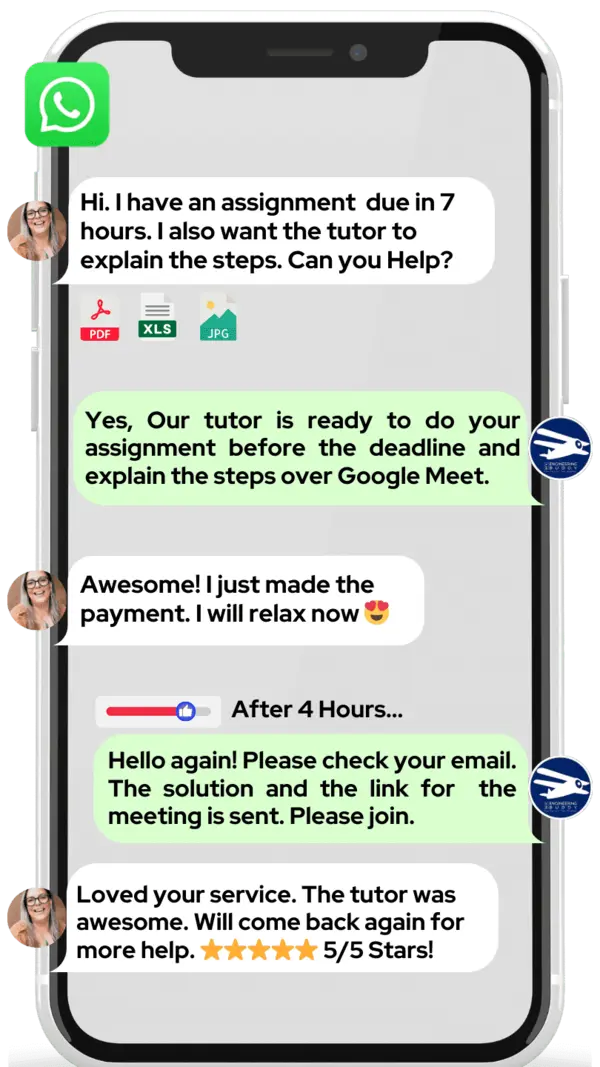



Hire The Best Microprocessors Tutor
Top Tutors, Top Grades. Without The Stress!




52,000+ Happy Students From Various Universities






How Much For Private 1:1 Tutoring & Hw Help?
Private 1:1 Tutoring and HW help Cost $20 – 35 per hour* on average.
Stuck on instruction cycles, interrupt handling, or memory-mapped I/O — and your exam is in four weeks?
Microprocessors Tutor Online
Microprocessors is the study of programmable processing units — covering architecture, instruction sets, memory organisation, and interfacing — equipping students to design, program, and troubleshoot processor-based digital systems.
MEB connects you with a 1:1 online Microprocessors tutor who knows your exact syllabus — whether you’re working through 8085/8086 architecture, ARM Cortex programming, or interrupt-driven I/O design. If you’ve searched for a Microprocessors tutor near me, online sessions on Google Meet with a digital pen-pad give you everything in-person tutoring offers, without the commute. Part of MEB’s broader Electrical Engineering tutoring platform, Microprocessors support is available 24/7 across the US, UK, Canada, Australia, and the Gulf.
- 1:1 online sessions tailored to your course and processor architecture
- Expert-verified tutors with hands-on embedded systems and hardware experience
- Flexible time zones — US, UK, Canada, Australia, Gulf covered
- Structured learning plan built after a diagnostic session
- Ethical homework and assignment guidance — you understand the work before you submit
52,000+ students across the US, UK, Canada, Australia, and the Gulf have used MEB since 2008 — including students in Electrical Engineering subjects like Microprocessors, Embedded Systems, and Digital Electronics.
Source: My Engineering Buddy, 2008–2025.
How Much Does a Microprocessors Tutor Cost?
Most Microprocessors tutoring sessions run $20–$40/hr. Graduate-level work — custom peripheral interfacing, real-time OS integration, RISC-V architecture — can reach up to $100/hr depending on tutor specialisation. Not sure if it’s worth it? The $1 trial lets you test a live session before committing to anything.
| Level / Need | Typical Rate | What’s Included |
|---|---|---|
| Standard (most undergrad levels) | $20–$35/hr | 1:1 sessions, homework guidance |
| Advanced / Specialist | $35–$100/hr | Expert tutor, niche depth (ARM, RISC-V, RTOS) |
| $1 Trial | $1 flat | 30 min live session or 1 homework question explained |
Tutor availability tightens significantly in the weeks before final exams and project submission deadlines. Book early if your timeline is fixed.
WhatsApp MEB for a quick quote — average response time under 1 minute.
Who This Microprocessors Tutoring Is For
Microprocessors trips up students at almost every level — not because the hardware is impossible to understand, but because the gap between lecture content and actual implementation is wide. If you can follow the theory but freeze when you see an assembly program or a timing diagram, that’s exactly the gap tutoring closes.
- Undergraduate EE, ECE, and Computer Engineering students covering 8085, 8086, or ARM architecture
- Students retaking after a failed first attempt in a core Microprocessors unit
- Students with a conditional university offer dependent on passing this module
- Graduate students working on embedded projects requiring processor-level understanding
- Students struggling with assembly language programming, interrupt service routines, or DMA controllers
- Parents supporting a student whose confidence has dropped alongside their lab grades
Students at universities including MIT, Georgia Tech, University of Michigan, Imperial College London, University of Toronto, UNSW Sydney, and TU Delft have used MEB for Microprocessors support at various stages of their programmes.
At MEB, we’ve found that students who struggle with Microprocessors almost always hit the same wall: they understand the block diagram but can’t trace what happens instruction by instruction. One session spent stepping through a fetch-decode-execute cycle in real time — with the tutor annotating on screen — typically breaks that block faster than three lectures.
1:1 Tutoring vs Self-Study vs AI vs YouTube vs Online Courses
Self-study works if your textbook is clear and you test yourself — but most students skip the self-testing. AI tools explain opcodes quickly but can’t watch you misread a timing diagram and correct you. YouTube is excellent for getting an overview of the 8086 pin diagram; it stops working when you’re stuck on why your interrupt routine isn’t firing. Online courses move at a fixed pace regardless of where your gaps actually are. With a 1:1 Microprocessors tutor from MEB, the session is live, the tutor sees your exact mistake in real time, and nothing moves on until you’ve got it right.
Outcomes: What You’ll Be Able To Do in Microprocessors
After targeted 1:1 Microprocessors tutoring, you’ll be able to analyse the fetch-decode-execute cycle for 8085 and 8086 processors without prompting. You’ll solve interrupt-priority problems, write and debug assembly language programs, and explain memory-mapped versus I/O-mapped interfacing to an examiner with confidence. Apply your understanding to DMA controller configuration and timing diagram interpretation — two areas that routinely cost marks. Present a working explanation of pipelining in ARM Cortex processors, and model how bus arbitration affects system throughput in multi-processor designs.
Based on feedback from 40,000+ sessions collected by MEB from 2022 to 2025, 58% of students improved by one full grade after approximately 20 hours of 1:1 tutoring in subjects like Microprocessors. A further 23% achieved at least a half-grade improvement.
Source: MEB session feedback data, 2022–2025.
Try your first session for $1 — 30 minutes of live 1:1 tutoring or one homework question explained in full. No registration. No commitment. WhatsApp MEB now and get matched within the hour.
What We Cover in Microprocessors (Syllabus / Topics)
Coverage spans three core tracks. Most university Microprocessors modules draw from all three — the tutor aligns to your specific course outline after the first session.
Track 1: Processor Architecture and Organisation
- 8085 and 8086 internal architecture — registers, ALU, BIU, EU
- Fetch-decode-execute cycle and instruction pipelining
- Addressing modes: immediate, register, direct, indirect, indexed
- Memory organisation — segmentation, banking, memory hierarchy
- Bus structure: data bus, address bus, control bus timing
- Comparison of CISC vs RISC architecture principles
- ARM Cortex-M architecture overview and register set
Key references: Microprocessor Architecture, Programming, and Applications by Ramesh Gaonkar; The Intel Microprocessors by Barry Brey.
Track 2: Assembly Language Programming and Interfacing
- Assembly language syntax — MOV, ADD, SUB, JMP, CALL, RET, and flag instructions
- Writing and debugging assembly programs for 8085/8086
- Stack operations, subroutine calls, and parameter passing
- Interrupt structure: maskable vs non-maskable, ISR design, priority schemes
- DMA controllers — 8257/8237, operation modes, handshaking
- Parallel and serial interfacing — 8255 PPI, 8251 USART
- Memory-mapped I/O vs I/O-mapped I/O — decoding and address selection
Key references: Assembly Language for x86 Processors by Kip Irvine; Microprocessors and Interfacing by Douglas Hall.
Track 3: Embedded and Modern Processor Applications
- Introduction to microcontroller vs microprocessor distinctions — application contexts
- ARM Cortex-M programming fundamentals and CMSIS
- Real-time considerations — latency, throughput, interrupt response time
- Introduction to RTOS concepts in processor-based systems
- Interfacing with ADCs, DACs, timers, and communication peripherals
- FPGA-based processor implementation overview
Key references: ARM Cortex-M3 Technical Reference Manual (ARM Ltd.); Embedded Systems: Introduction to ARM Cortex-M Microcontrollers by Jonathan Valvano.

What a Typical Microprocessors Session Looks Like
The tutor opens by checking where you got stuck since the last session — usually something like interrupt latency calculations or address decoding logic. From there, you work through a specific problem together on screen: the tutor annotates a timing diagram or traces through an assembly routine step by step using a digital pen-pad, and you explain each step back in your own words. When you get something wrong — misreading a flag state, for instance, or confusing the BIU and EU roles — the tutor catches it immediately and works back to the source of the misunderstanding rather than just giving you the right answer. The session closes with a concrete task: a past paper question on interrupt priority or a short assembly program to write before next time, with the next topic already noted.
How MEB Tutors Help You with Microprocessors (The Learning Loop)
Diagnose: In the first session, the tutor asks you to walk through a basic 8086 memory segmentation problem or explain the fetch-decode-execute cycle. The gaps show up fast — usually within ten minutes. That’s the map for everything that follows.
Explain: The tutor works through live examples on the digital pen-pad — tracing signal flows on a bus timing diagram, annotating an assembly program line by line, or drawing the 8085 internal architecture from scratch while you watch and question.
Practice: You attempt a problem while the tutor is there. Not after the session. Not as homework with no feedback. Right there, so errors get caught before they become habits.
Feedback: When you lose marks — misidentifying an addressing mode, writing a recursive subroutine that corrupts the stack — the tutor explains exactly where the reasoning broke down and what the examiner expects to see.
Plan: Every session ends with a clear next topic and a specific task. No vague “review chapters 4 and 5.” The plan is tied to your exam date or assignment deadline.
Sessions run on Google Meet with a digital pen-pad or iPad and Apple Pencil. Before your first session, have your course outline or lab manual, a recent assignment or past paper attempt you struggled with, and your exam or submission date. The first session is diagnostic — it tells both you and the tutor exactly where to start. Start with the $1 trial — 30 minutes of live tutoring that also serves as your first diagnostic.
Students consistently tell us that the moment Microprocessors clicks is when they stop memorising pin diagrams and start tracing what actually happens on the bus during a memory read cycle — live, with someone watching and correcting in real time.
Source: My Engineering Buddy tutor feedback summary, 2024.
Tutor Match Criteria (How We Pick Your Tutor)
Not every electronics tutor can handle a detailed 8086 interrupt architecture question. MEB matches on specifics.
Subject depth: Tutors hold engineering degrees with demonstrated coursework or professional experience in processor architecture, embedded systems, or digital design — not just general electronics. They’re matched to your level: second-year undergraduate, final year, or graduate.
Tools: Every Microprocessors tutor uses Google Meet with a digital pen-pad or iPad and Apple Pencil. Circuit diagrams, timing waveforms, and assembly code are annotated live — not described verbally.
Time zone: Matched to your region. US, UK, Gulf, Canada, and Australia students each get tutors whose working hours align with yours.
Goals: Whether you need to pass a resit, close gaps before finals, or build depth for a graduate project, the tutor is selected for that specific objective — not assigned at random from a roster.
Unlike platforms where you fill out a form and wait, MEB responds in under a minute, 24/7. Tutor match takes under an hour. The $1 trial means you test before you commit. Everything runs over WhatsApp — no logins, no intake forms.
Study Plans (Pick One That Matches Your Goal)
After the diagnostic session, your tutor builds a session sequence matched to your timeline. Catch-up (1–3 weeks): intensive focus on your weakest topics — typically interrupt handling, assembly programming, or bus timing — before an exam or lab deadline. Exam prep (4–8 weeks): structured revision moving through architecture, programming, and interfacing in exam-relevant order, with past paper practice built in. Weekly support: ongoing sessions aligned to your lecture schedule, so no topic falls behind. The tutor sets the specific sequence after your first diagnostic.
Pricing Guide
Standard Microprocessors tutoring runs $20–$40/hr for most undergraduate modules. Niche or graduate-level work — RISC-V processor design, real-time OS integration, custom bus interfacing — can reach up to $100/hr. Rate depends on topic complexity, your level, timeline pressure, and tutor availability.
For students targeting roles at semiconductor firms, embedded systems companies, or graduate research positions at institutions like ETH Zurich or Carnegie Mellon, tutors with industry backgrounds in processor design or embedded firmware are available at higher rates — share your goal and MEB matches the tier to your ambition.
Availability narrows sharply around semester finals and lab submission windows. Start with the $1 trial — 30 minutes, no registration, no commitment. WhatsApp MEB for a quick quote.
A common pattern our tutors observe is that students who book one session right before an exam rarely get full value. The students who improve most start 4–6 weeks out — enough time to close real gaps, not just skim past papers under pressure.
FAQ
Is Microprocessors hard?
It’s one of the more demanding core EE and ECE modules. The difficulty comes from bridging abstract architecture concepts — pipelining, bus cycles, interrupt priority — with actual assembly code and hardware timing. Students who struggle most are usually missing a clear mental model of the fetch-decode-execute cycle. One or two targeted sessions typically fix that.
How many sessions are needed?
Most students who need to close specific gaps before an exam see real progress in 4–6 sessions. Students using MEB for ongoing semester support typically book weekly. The diagnostic session tells the tutor exactly how many sessions make sense for your situation — there’s no standard prescription.
Can you help with homework and assignments?
Yes. MEB tutoring is guided learning — you understand the work, then submit it yourself. The tutor explains the underlying concepts, walks through similar problems, and helps you identify where your reasoning went wrong. See our Academic Integrity policy and Why MEB page for full details on what we help with and what we don’t.
Will the tutor match my exact syllabus or exam board?
Yes. When you message MEB, share your university, course code, and the specific processor your module covers — 8085, 8086, ARM Cortex, or another. The tutor is matched to that exact content, not assigned as a general electronics tutor.
What happens in the first session?
The tutor runs a short diagnostic — usually a few architecture or assembly questions — to locate exactly where your understanding breaks down. From there, the first session moves straight into the highest-priority gap. Nothing is wasted on topics you already know.
Is online tutoring as effective as in-person?
For Microprocessors specifically, online often works better. Timing diagrams, assembly code, and bus signal traces are clearer on screen with a digital pen-pad than on a physical whiteboard. Students across MEB’s 18-year history consistently rate online sessions as equal to or better than in-person for technical subjects.
What’s the difference between a microprocessor and a microcontroller — and does MEB cover both?
A microprocessor is a CPU that requires external memory, I/O, and peripherals. A microcontroller integrates all of these on a single chip. Most Microprocessors modules cover both concepts. MEB covers the full spectrum — get Embedded Systems tutoring for microcontroller-heavy projects alongside your Microprocessors coursework.
My module uses 8085 — is that still relevant, and can you find a tutor for it?
Yes to both. The 8085 remains a core teaching processor in many university programmes precisely because its architecture is clean and traceable. MEB has tutors who specialise in 8085 instruction sets, timing diagrams, and interfacing — including the 8155, 8255, and 8257 peripheral chips commonly paired with it in labs.
Can I get Microprocessors help at midnight?
Yes. MEB operates 24/7 across time zones. Message via WhatsApp at any hour — average response time is under a minute. Sessions can often be arranged the same day, including late evening slots for US, Gulf, and Australian students working across different time zones.
What if I don’t like my assigned tutor?
Tell MEB. Tutor reassignment is straightforward — message via WhatsApp, explain what wasn’t working, and a replacement is found, usually within a few hours. The $1 trial is specifically designed so you test the match before committing to paid sessions.
How do I find a Microprocessors tutor in my city?
You don’t need to. MEB’s online sessions on Google Meet cover every major city — London, Toronto, Dubai, Sydney, New York, Amsterdam. The tutor is matched to your time zone, not your postcode. No travel, no commute, no waiting for a local expert to have availability.
How do I get started?
Three steps: WhatsApp MEB, share your course and processor type, and start the $1 trial — 30 minutes of live tutoring or one full assignment question explained. Tutor match happens within the hour. No registration form, no intake interview.
Trust & Quality at My Engineering Buddy
Every MEB Microprocessors tutor is screened before their first session. That means a verified engineering degree relevant to digital systems, a live demo session assessed by MEB’s academic team, and subject-specific vetting for the processor families and programming environments they claim to teach. Ongoing feedback from students feeds directly back into tutor assignment decisions. Rated 4.8/5 across 40,000+ verified reviews on Google.
MEB tutoring is guided learning — you understand the work, then submit it yourself. For full details on what we help with and what we don’t, read our Academic Integrity policy and Why MEB.
MEB has served 52,000+ students across the US, UK, Canada, Australia, the Gulf, and Europe since 2008 — across 2,800+ subjects in Electrical Engineering, including Microprocessors, Digital Signal Processing tutoring, and VLSI Design help. The platform was built for technically demanding subjects where generic tutoring fails — and Microprocessors is exactly that kind of subject. Learn more about how sessions are structured at MEB’s tutoring methodology.
Explore Related Subjects
Students studying Microprocessors often also need support in:
- Analog Circuits
- Circuit Analysis
- Computer Hardware
- FPGA Design
- Integrated Circuits (IC)
- Logic Gates
- Signals and Systems
- VHDL
Next Steps
Ready to close the gap? Here’s what to do:
- Share your processor type (8085, 8086, ARM, or other), your course level, and your exam or submission date
- Share your time zone and available hours — MEB covers every major region 24/7
- MEB matches you with a verified Microprocessors tutor, usually within the hour
- Your first session opens with a diagnostic so every minute is spent on what actually matters
Before your first session, have ready:
- Your course outline, lab manual, or syllabus document
- A recent past paper attempt or assignment question you couldn’t solve
- Your exam date or submission deadline — the tutor builds the plan from there
Our experience across thousands of sessions shows that students who share a specific past paper question or lab report on the first WhatsApp message get matched faster and start their first session more productively. One sentence is enough: “I’m stuck on 8086 interrupt priority — exam in three weeks.”
Visit www.myengineeringbuddy.com for more on how MEB works.
WhatsApp to get started or email meb@myengineeringbuddy.com.
Reviewed by Subject Expert
This page has been carefully reviewed and validated by our subject expert to ensure accuracy and relevance.