

Hire Verified & Experienced
Radar systems Tutors
4.8/5 40K+ session ratings collected on the MEB platform



Hire The Best Radar systems Tutor
Top Tutors, Top Grades. Without The Stress!
52,000+ Happy Students From Various Universities



How Much For Private 1:1 Tutoring & Hw Help?
Private 1:1 Tutoring and HW help Cost $20 – 35 per hour* on average.
Most students hit a wall at the radar range equation or Doppler frequency derivation — and no YouTube video fixes that at 11 pm before a deadline.
Radar Systems Tutor Online
Radar systems is an applied electromagnetic engineering discipline covering radio wave transmission, target detection, range and velocity measurement, signal processing, and system design — equipping students to analyse pulse, CW, and synthetic aperture radar architectures.
Finding a qualified radar systems tutor near me who actually knows the radar range equation, MTI filtering, and SAR image formation — not just the basics — is harder than it sounds. MEB connects you with verified electrical engineering specialists who cover everything from CW and pulsed radar to FMCW waveform design, matched filtering, and CFAR detection. One outcome students consistently report: problems that blocked them for days get resolved inside a single 90-minute session.
- 1:1 online sessions tailored to your exact course or research module
- Expert-verified tutors with radar, microwave, and signal processing backgrounds
- Flexible time zones — US, UK, Canada, Australia, Gulf
- Structured learning plan built after an initial diagnostic session
- Ethical homework and assignment guidance — you understand the work, then submit it yourself
52,000+ students across the US, UK, Canada, Australia, and the Gulf have used MEB since 2008 — including students in Electrical Engineering subjects like Radar Systems, Microwave Engineering, and Digital Signal Processing.
Source: My Engineering Buddy, 2008–2025.
How Much Does a Radar Systems Tutor Cost?
Most radar systems tutoring sessions run $20–$40/hr for undergraduate coursework. Graduate-level radar — SAR processing, STAP, phased array design — typically falls in the $50–$100/hr range depending on depth and tutor background. New students can start with the $1 trial before committing to a package.
| Level / Need | Typical Rate | What’s Included |
|---|---|---|
| Undergraduate (most levels) | $20–$40/hr | 1:1 sessions, homework guidance |
| Graduate / Specialist | $50–$100/hr | Expert tutor, advanced radar topics |
| $1 Trial | $1 flat | 30 min live session or 1 homework question explained |
Tutor availability for radar systems tightens noticeably during end-of-semester design project periods and graduate thesis deadlines. Book early if you have a fixed submission date.
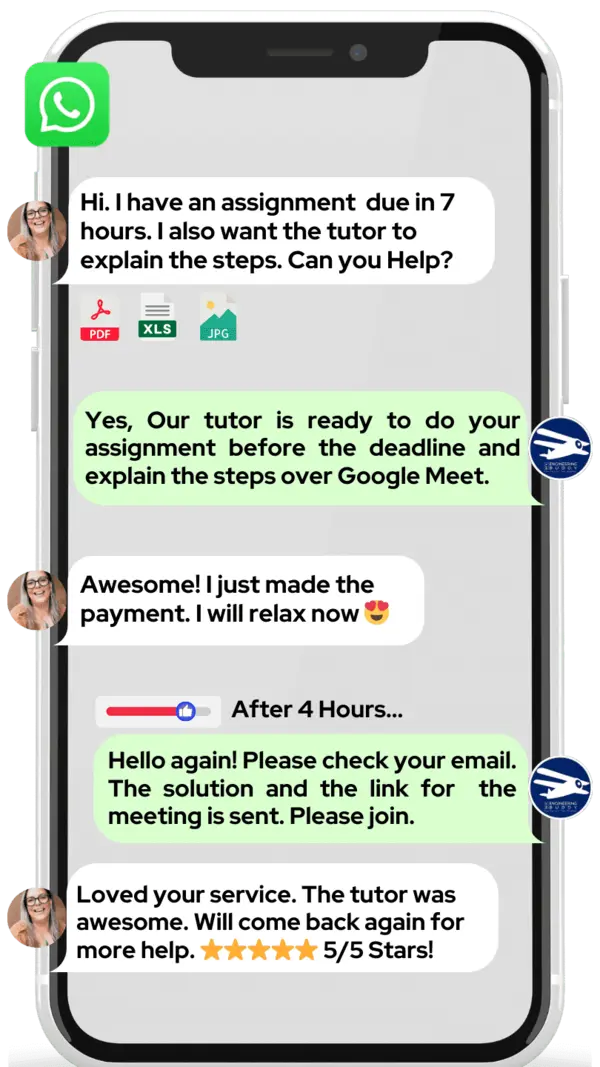
WhatsApp MEB for a quick quote — average response time under 1 minute.
Who This Radar Systems Tutoring Is For
Radar systems sits at the intersection of electromagnetics, signal processing, and systems engineering. Students who struggle usually aren’t weak — they’re working through a subject that demands fluency in three disciplines simultaneously.
- Undergraduate EE students taking a radar or microwave systems module for the first time
- Graduate students whose radar coursework feeds directly into thesis or dissertation work
- Students retaking after a failed first attempt — especially those who lost marks on radar range equation derivations or SNR calculations
- Students with a university conditional offer depending on their final grade in an EE course that includes radar
- Research students at institutions like Georgia Tech, MIT, TU Delft, Imperial College, or the University of Adelaide who need project-level depth in SAR or phased array systems
- Defence or aerospace engineers updating their knowledge of modern radar architectures
- Students needing signals and systems help as a prerequisite to mastering radar processing
1:1 Tutoring vs Self-Study vs AI vs YouTube vs Online Courses
Self-study works if you’re disciplined, but radar systems has enough derivation depth that gaps compound fast. AI tools give quick answers — they can’t spot where your Doppler shift reasoning breaks down in real time. YouTube covers radar overviews well; it stops at the point you need someone to check your matched filter derivation. Online courses are structured but fixed-pace, with no one correcting your specific errors. 1:1 tutoring with MEB is live, tied to your exact syllabus, and corrects the exact mistake — not a generic version of it.
Outcomes: What You’ll Be Able To Do in Radar Systems
After focused sessions with an MEB radar systems tutor, students consistently report measurable progress on the problems that previously stopped them. You’ll be able to apply the radar range equation to calculate maximum detection range under given SNR conditions, analyse pulse compression ratios and range resolution for LFM waveforms, model Doppler frequency shifts for moving target scenarios, explain MTI and pulse-Doppler filtering for clutter rejection, and present the signal processing chain from transmitted pulse to CFAR detection in a coherent, exam-ready argument.
Based on feedback from 40,000+ sessions collected by MEB from 2022 to 2025, 58% of students improved by one full grade after approximately 20 hours of 1:1 tutoring in subjects like Radar Systems. A further 23% achieved at least a half-grade improvement.
Source: MEB session feedback data, 2022–2025.
At MEB, we’ve found that radar systems students often arrive having memorised the radar range equation without understanding where each term comes from. The first session almost always involves rebuilding that derivation from Maxwell’s equations forward — and once it clicks, everything else follows faster than students expect.
Try the $1 trial before booking a full package — 30 minutes is enough to work through one real derivation together and see whether the tutor’s approach fits how you think.
What We Cover in Radar Systems (Syllabus / Topics)

Track 1: Radar Fundamentals and System Architecture
- Radar range equation — derivation, SNR, and maximum range calculation
- Pulse radar vs continuous wave (CW) radar — operating principles and trade-offs
- Radar cross section (RCS) — target scattering, Swerling models
- Transmitter and receiver architecture — duplexer, LNA, mixer stages
- Antenna patterns, gain, beamwidth, and sidelobe characteristics
- Minimum detectable signal and noise figure derivation
Core texts: Skolnik, Introduction to Radar Systems (3rd ed.); Richards, Scheer & Holm, Principles of Modern Radar: Basic Principles.
Track 2: Waveform Design and Signal Processing
- Pulse compression — LFM chirp, matched filtering, range resolution
- Ambiguity function — range-Doppler coupling and waveform trade-offs
- FMCW radar — beat frequency, range and velocity measurement
- Moving target indication (MTI) — delay-line cancellers, clutter attenuation
- Pulse-Doppler processing — PRF selection, range and Doppler ambiguities
- CFAR detection — cell-averaging CFAR, false alarm rate control
- Doppler spectral analysis and clutter maps
Core texts: Richards, Fundamentals of Radar Signal Processing (2nd ed.); Mahafza, Radar Systems Analysis and Design Using MATLAB.
Track 3: Advanced Radar — SAR, Phased Arrays, and Electronic Warfare
- Synthetic aperture radar (SAR) — image formation, azimuth resolution, range migration
- Phased array antennas — beam steering, phase shifters, array factor computation
- Space-time adaptive processing (STAP) — clutter suppression in airborne radar
- Electronic counter-measures (ECM) and electronic counter-countermeasures (ECCM)
- Bistatic and multistatic radar geometries
- Over-the-horizon (OTH) radar propagation considerations
Core texts: Cumming & Wong, Digital Processing of Synthetic Aperture Radar Data; Mailloux, Phased Array Antenna Handbook.
What a Typical Radar Systems Session Looks Like
The tutor opens by checking where the previous topic — often matched filter derivation or MTI clutter cancellation — was left. Within the first five minutes, you’ve identified exactly where the confusion sits. The session moves to the live problem: working through a pulse compression ratio calculation or Doppler ambiguity analysis on a shared digital whiteboard, with the tutor writing each step using a pen-pad so you can follow the algebra in real time. You replicate the approach on a related problem while the tutor watches and corrects reasoning errors before they become habits. The session closes with two or three targeted practice problems set for before next time, and the next topic — usually ambiguity function geometry or CFAR threshold setting — is noted so you can skim ahead.
How MEB Tutors Help You with Radar Systems (The Learning Loop)
Diagnose: In the first session, the tutor identifies exactly which part of the radar processing chain is causing problems — whether it’s the SNR derivation, the matched filter output, or the Doppler-range ambiguity diagram. No time is wasted on topics you already understand.
Explain: The tutor works through live examples using a digital pen-pad on Google Meet. Waveform design problems, RCS calculations, and system-level link budgets are solved step by step, not summarised.
Practice: You attempt the next problem while the tutor observes. This is where most students catch the errors they didn’t know they were making — sign errors in Doppler derivations, incorrect PRF selection logic, misapplied CFAR equations.
Students consistently tell us that radar systems starts making sense the moment someone draws the radar range equation derivation from first principles on a whiteboard — not from the textbook version, but from the physics up. That’s what every first session at MEB does.
Feedback: The tutor explains exactly where marks were lost and why — not just the correct answer. For exam-style questions, this means going through the mark scheme logic so you know how to earn partial credit even when a final answer is wrong.
Plan: After each session, the tutor sets the next topic sequence. Whether you need to get through MTI and pulse-Doppler before a coursework deadline or build toward SAR image formation over eight weeks, the plan is yours specifically — not a generic module outline.
Sessions run on Google Meet with a digital pen-pad or iPad and Apple Pencil. Before your first session, share your course outline or module handbook, a past assignment you struggled with, and your exam or submission date. The first session covers diagnostics and the first real topic — usually within 90 minutes of connecting.
Start with the $1 trial — 30 minutes of live tutoring that also serves as your first diagnostic.
Tutor Match Criteria (How We Pick Your Tutor)
Not every radar specialist suits every student. MEB matches on four criteria.
Subject depth: Tutors are matched by the specific radar domain you need — undergraduate fundamentals, graduate SAR processing, phased array design, or defence-context radar systems. A tutor covering undergraduate pulse radar is not automatically right for a graduate STAP assignment.
Tools: Every tutor uses Google Meet with a digital pen-pad or iPad and Apple Pencil. Derivation-heavy subjects like radar systems need a live whiteboard, not a static slide.
Time zone: Matched to your region — US, UK, Gulf, Canada, or Australia. No scheduling across an eight-hour gap.
Goals: Exam performance, conceptual depth, homework completion, or research support — the tutor brief is set before the match, not after.
Unlike platforms where you fill out a form and wait days, MEB responds in under a minute, 24/7. Tutor match takes under an hour. The $1 trial means you test the fit before committing to a package. Everything runs over WhatsApp — no logins, no intake forms, no friction.
Study Plans (Pick One That Matches Your Goal)
After the diagnostic session, the tutor builds a plan around your timeline. Catch-up plans run 1–3 weeks and focus on closing the gaps most likely to cost marks — typically radar range equation applications, MTI filter behaviour, and SNR margin calculations. Exam prep plans run 4–8 weeks and move through the full radar signal processing chain in sequence. Weekly ongoing support aligns to your semester schedule and coursework deadlines. The tutor maps the exact sequence after your first session — not before, because the diagnostic determines what’s actually needed.
Pricing Guide
Standard radar systems tutoring runs $20–$40/hr for most undergraduate modules. Graduate and specialist radar — STAP, SAR, phased array synthesis, electronic warfare — runs up to $100/hr depending on tutor background and topic complexity. Rate factors include your level, the specific topics, how tight your deadline is, and tutor availability in your time zone.
For students targeting positions at defence contractors, aerospace firms, or research labs — or graduate programmes at institutions known for radar research — tutors with professional radar systems backgrounds are available at higher rates. Share your specific goal and MEB matches the tier to what you actually need.
Availability tightens during end-of-semester project submission windows. Start with the $1 trial — 30 minutes, no registration, no commitment. WhatsApp MEB for a quick quote.
MEB has covered communication systems tutoring, electromagnetic field theory help, and radar systems under one roof since 2008 — so the tutor who covers your radar module can connect with the team covering your wider EE programme.
Source: My Engineering Buddy, 2008–2025.
Try your first session for $1 — 30 minutes of live 1:1 tutoring or one homework question explained in full. No registration. No commitment.
WhatsApp MEB now
and get matched within the hour.
FAQ
Is radar systems hard?
It’s one of the more demanding EE modules. The difficulty isn’t one topic — it’s that radar draws on electromagnetics, signal processing, and probability theory simultaneously. Students who struggle in one of those prerequisites usually feel the pressure by week four or five.
How many sessions are needed?
Most students close a specific gap — a failed assignment or one exam component — in 3–5 sessions. A full-semester support plan typically runs 15–25 sessions depending on starting level and how many topics need to be rebuilt from scratch.
Can you help with homework and assignments?
Yes. MEB tutoring is guided learning — you understand the work, then submit it yourself. See our Academic Integrity policy and Why MEB page for full details on what we help with and what we don’t.
Will the tutor match my exact syllabus or exam board?
Yes. Share your course outline or module handbook before the first session. Tutors are matched to your specific syllabus — whether it follows Skolnik, Richards, or a university-specific curriculum — not a generic radar overview.
What happens in the first session?
The tutor runs a short diagnostic — usually 15–20 minutes — to locate exactly where understanding breaks down. The rest of the session covers the first real topic. You leave with a practice task and a clear plan for the next session.
Is online tutoring as effective as in-person?
For radar systems, yes — provided the tutor uses a live digital whiteboard. Derivations written in real time on a pen-pad are easier to follow than static slides or typed explanations. MEB tutors work this way by default.
Can I get radar systems help at midnight?
Yes. MEB operates across US, UK, Gulf, and Australian time zones. WhatsApp response averages under a minute at most hours. Tutors in matching time zones mean a midnight session in New York or Dubai is routine, not an exception.
What if I don’t like my assigned tutor?
Tell MEB via WhatsApp immediately. A replacement tutor is matched without debate or delay. The $1 trial exists precisely so this decision is low-risk — you’re not locked in after one session.
Do you cover MATLAB-based radar simulation assignments?
Yes. Many radar systems courses use MATLAB for waveform simulation, ambiguity function plots, and CFAR threshold analysis. MEB tutors who cover radar signal processing typically work in MATLAB and can guide you through simulation assignments step by step.
What’s the difference between pulse radar and FMCW — and why does it matter for my exam?
Pulse radar measures range by timing a discrete transmitted burst. FMCW measures range via beat frequency from a continuously swept signal, enabling simultaneous range and velocity measurement. Exam questions often test whether you can select the right architecture for a given scenario and justify the trade-offs.
Do you help with SAR image formation specifically?
Yes. SAR image formation — range migration correction, azimuth compression, and two-dimensional matched filtering — is one of the more specialised graduate-level topics MEB covers. Tutors with SAR backgrounds are available for both coursework guidance and research-level support.
How do I get started?
Start with the $1 trial: 30 minutes of live tutoring or one homework question explained in full. Three steps: WhatsApp MEB → get matched to a radar systems tutor within the hour → begin your trial session. No forms, no waiting.
Trust & Quality at My Engineering Buddy
Every MEB tutor goes through subject-specific vetting — not a general screening. For radar systems, that means demonstrating working knowledge of the radar range equation derivation, matched filter theory, and at least one advanced domain (SAR, phased arrays, or pulse-Doppler processing). Tutors complete a live demo evaluation and are reviewed after every session. Rated 4.8/5 across 40,000+ verified reviews on Google.
MEB tutoring is guided learning — you understand the work, then submit it yourself. For full details on what we help with and what we don’t, read our Academic Integrity policy and Why MEB.
MEB has served 52,000+ students across the US, UK, Canada, Australia, the Gulf, and Europe since 2008 — across 2,800+ subjects. In Electrical Engineering, that includes analog signal processing tutoring, wireless communication help, and radar systems, all under one platform. See our tutoring methodology for how sessions are structured and quality is maintained.
The arXiv Computer Science archive is a widely used reference for current research in radar signal processing and machine learning applied to radar — a growing area MEB tutors also support at graduate level.
Source: arXiv.org
Our experience across thousands of sessions shows that radar systems students who arrive with a solid grip on Fourier analysis and basic probability move through the signal processing material roughly twice as fast. If those prerequisites are shaky, the tutor addresses them in the first two sessions rather than leaving them as hidden blockers.
Explore Related Subjects
Students studying Radar Systems often also need support in:
- Satellite Communications
- Transmission Lines and Waveguides
- Analog Communication
- FPGA Design
- Control Systems
- Optical Communications
- Sensors and Actuators
Next Steps
Before your first session, have ready: your course syllabus or module handbook, a recent assignment or exam question you struggled with, and your submission or exam date. The tutor handles the rest.
- Share your exam board or university module code, the hardest topic, and your current timeline
- Share your availability and time zone
- MEB matches you with a verified radar systems tutor — usually within 24 hours
- First session starts with a diagnostic so every minute is used well
Visit www.myengineeringbuddy.com for more on how MEB works.
WhatsApp to get started or email meb@myengineeringbuddy.com.
Reviewed by Subject Expert
This page has been carefully reviewed and validated by our subject expert to ensure accuracy and relevance.

