Hire Verified & Experienced
Automotive Electronics Tutors
4.8/5 40K+ session ratings collected on the MEB platform



Hire The Best Automotive Electronics Tutor
Top Tutors, Top Grades. Without The Stress!

52,000+ Happy Students From Various Universities





How Much For Private 1:1 Tutoring & Hw Help?
Private 1:1 Tutoring and HW help Cost $20 – 35 per hour* on average.
Your CAN bus trace makes no sense, your ECU won’t communicate, and your exam is in five weeks. That’s exactly where an Automotive Electronics tutor makes the difference.
Automotive Electronics Tutor Online
Automotive Electronics is the study of electrical and electronic systems in modern vehicles — covering ECUs, sensor networks, CAN bus protocols, power electronics, and embedded control systems. It equips students to design, diagnose, and validate the electronic architectures that drive today’s vehicles.
MEB connects you with a verified Automotive Electronics tutor near me — online, available across every major time zone, and matched to your exact course level and syllabus. Whether you’re working through embedded systems coursework or diagnosing signal faults in a lab assignment, MEB offers 1:1 online Automotive Electronics tutoring built around your specific gaps.
- 1:1 online sessions tailored to your exact course or university module
- Expert verified tutors with hands-on automotive electronics and embedded systems knowledge
- Flexible scheduling across US, UK, Canada, Australia, and Gulf time zones
- Structured learning plan built after a diagnostic session in your first hour
- Ethical homework and assignment guidance — you understand the work before you submit it
52,000+ students across the US, UK, Canada, Australia, and the Gulf have used MEB since 2008 — across 2,800+ subjects, from AP Calculus to A Level Music Technology to Data Science.
Source: My Engineering Buddy, 2008–2025.
How Much Does an Automotive Electronics Tutor Cost?
Most Automotive Electronics tutoring sessions run $20–$40 per hour, depending on your level and the complexity of the topics you’re working through. The $1 trial gets you 30 minutes of live 1:1 tutoring or a full explanation of one homework question — no registration required.
| Level / Need | Typical Rate | What’s Included |
|---|---|---|
| Standard (most undergrad levels) | $20–$35/hr | 1:1 sessions, homework guidance, progress tracking |
| Advanced / Graduate / Specialist | $35–$100/hr | Expert tutor, embedded systems depth, thesis support |
| $1 Trial | $1 flat | 30 min live session or one full homework Q explained |
Tutor availability tightens significantly during semester finals and exam periods. Book early if you’re within six weeks of a deadline.
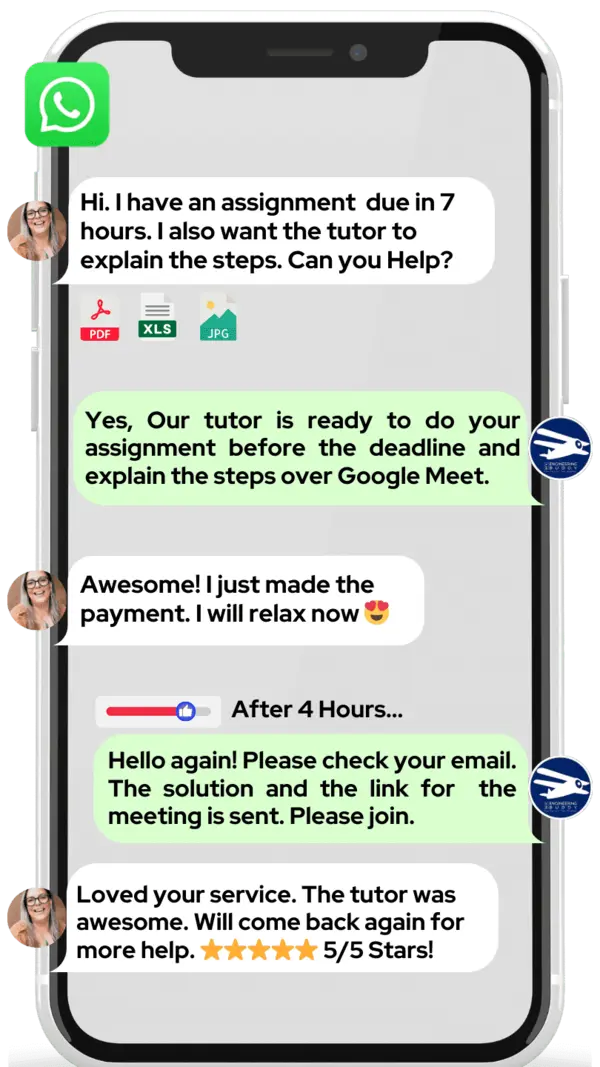
WhatsApp MEB for a quick quote — average response time under 1 minute.
Who This Automotive Electronics Tutoring Is For
Automotive Electronics draws students from electrical engineering, mechatronics, and automotive engineering programs across the US, UK, Canada, and Australia. The material is dense, the lab work is practical, and online resources rarely match your specific module’s depth.
- Undergraduate students working through ECU architecture, CAN bus protocols, or power electronics modules
- Graduate and MEng students tackling embedded control systems or AUTOSAR-based software design
- Students retaking after a failed first attempt who need structured, targeted work on the exact topics where marks were lost
- Students whose university conditional offer depends on passing this module at the required grade
- Engineers in professional development who need to bridge a gap in vehicle electronics knowledge
- Students needing support with lab reports and assignment write-ups on sensor networks or actuator systems
Students in this subject often come from programs at universities such as Michigan, Georgia Tech, Coventry, TU Munich, Delft, RMIT, and University of Toronto — where automotive electronics spans multiple modules across two or three years.
1:1 Tutoring vs Self-Study vs AI Tools
Self-study works for motivated students, but Automotive Electronics has a particular problem: the mistakes you make in CAN bus timing analysis or ECU interrupt handling tend to look correct until they fail in simulation or on hardware. Without someone reviewing your reasoning in real time, you can practice the wrong approach for weeks. AI tools can explain what a differential pressure sensor does, but they cannot watch you trace a faulty signal on an oscilloscope waveform, spot that you’re misreading the data frame structure, and correct it on the spot — which is exactly what goes wrong in practical assessments. MEB gives you the flexibility of online sessions with a structured feedback loop calibrated to your exact module, not a generic course outline.
Outcomes: What You’ll Be Able To Do in Automotive Electronics
After working with an MEB Automotive Electronics tutor, you will be able to analyze CAN bus message frames and identify arbitration faults with confidence. You will apply interrupt-driven programming logic to embedded microcontroller designs used in real ECU architectures. You will solve power electronics problems involving voltage regulation and motor drive circuits specific to hybrid and electric drivetrains. You will explain the role of sensor fusion in ADAS systems and model signal processing pipelines from input transducer to control output. You will present fault diagnosis findings clearly in lab reports, using oscilloscope data and diagnostic trouble codes the way your assessors expect.
Supporting a student through Automotive Electronics? MEB works directly with parents to set up sessions, track progress, and keep coursework on schedule. WhatsApp MEB — average response time is under a minute, 24/7.
Based on feedback from 40,000+ sessions collected by MEB from 2022 to 2025, 58% of students improved by one full grade after approximately 20 hours of 1:1 tutoring in a single subject. A further 23% achieved at least a half-grade improvement.
Source: MEB session feedback data, 2022–2025.
What We Cover in Automotive Electronics (Syllabus / Topics)

Vehicle Communication Networks and Embedded Systems
- CAN bus architecture: message frames, arbitration, error handling
- LIN bus, FlexRay, and Automotive Ethernet protocols
- Microcontroller programming for real-time embedded control (C, AUTOSAR)
- Interrupt service routines and timing constraints in ECU software
- AUTOSAR layered software architecture and MCAL configuration
- ECU flashing, calibration, and OBD-II diagnostic protocols
- Cybersecurity basics for in-vehicle network architectures
Core texts for this track include Controller Area Network Projects by Zac with Dogan Ibrahim, Automotive Embedded Systems Handbook edited by Nicolas Navet, and relevant autonomous vehicles tutoring resources for students extending into ADAS modules.
Power Electronics and Electric Drivetrain Systems
- DC-DC converters: buck, boost, and bidirectional topologies for 12V/48V systems
- Inverter design and PWM control for three-phase AC motors
- Battery management systems: state-of-charge estimation, cell balancing
- Regenerative braking circuits and energy recovery systems
- Thermal management of power electronic components in EVs
- Gate driver circuits and switching loss analysis for IGBTs and MOSFETs
Recommended texts include Power Electronics by Ned Mohan, and students working on EV modules may benefit from electric and hybrid vehicle tutoring alongside this track. Electric Vehicle Technology Explained by Larminie and Lowry is also frequently used.
Sensors, Actuators, and Automotive Control Systems
- Engine management sensors: MAF, MAP, lambda, crankshaft position
- Actuator control: fuel injectors, throttle-by-wire, electronically controlled valves
- Signal conditioning, ADC conversion, and noise filtering for sensor data
- Closed-loop control: PID tuning for throttle, idle speed, and fuel trim
- ADAS sensor modalities: radar, LiDAR, ultrasonic, and camera systems
- Sensor fusion algorithms and data aggregation for safety-critical functions
Students use Automotive Control Systems by Uwe Kiencke and Lars Nielsen, and Sensors and Actuators by Clarence de Silva. Students doing powertrain-focused modules can also access powertrain engineering tutoring through MEB.
At MEB, we’ve found that students who arrive with a specific fault to trace — a message that won’t transmit, an ECU that won’t respond — learn CAN bus fundamentals three times faster than students who start from a textbook chapter. Real problems make abstract protocols concrete immediately.
What a Typical Automotive Electronics Session Looks Like
The tutor opens by checking where you left off — usually the CAN bus error frame analysis or the PWM switching exercise from the previous session. You share your screen or upload the lab worksheet, and the tutor uses a digital pen-pad to annotate the oscilloscope waveform directly, marking where the data frame structure breaks down. You work through a DC-DC converter design problem together: the tutor explains the inductor sizing calculation, then steps back while you attempt the next stage. When you get the duty cycle wrong, the tutor shows exactly where the reasoning broke, not just the answer. The session closes with a specific task — trace this LIN frame, or redo this state machine diagram — and the next topic is logged.
How MEB Tutors Help You with Automotive Electronics (The Learning Loop)
Diagnose: In the first session, the tutor identifies whether your gaps are conceptual — you don’t understand why arbitration works the way it does — or procedural, meaning you understand the theory but stall when the waveform doesn’t match expectations. Both require different approaches, and the tutor finds out which within 20 minutes.
Explain: The tutor works through problems live using a digital pen-pad or iPad with Apple Pencil. For embedded systems topics, screen sharing with live code annotation is standard. Nothing is left abstract.
Practice: You attempt the next problem while the tutor watches. No moving on until you can replicate the reasoning independently — not just recognise it when shown.
Feedback: Every error gets a clear explanation: which step went wrong, why it went wrong in that specific problem, and what an examiner or a hardware test bench would flag. This is where marks are actually recovered.
Plan: The tutor sets the next problem or topic before the session ends. There’s no ambiguity about what you’re working on before the next session. Progress is tracked session by session, not assumed.
Sessions run over Google Meet. The tutor uses a digital pen-pad or iPad with Apple Pencil for circuit diagrams, waveform annotation, and signal flow sketches. Before your first session, send over your module outline or assignment brief, a past paper question you struggled with, and your exam or submission date. The first session starts with a diagnostic — no time is wasted on topics you’ve already got. Whether you need a quick catch-up before an assessment, structured revision over four to eight weeks, or ongoing weekly support through the semester, the tutor maps the session plan after that first diagnostic.
Start with the $1 trial — 30 minutes of live tutoring that also serves as your first diagnostic.
Students consistently tell us that the moment things shift is when a tutor traces through their specific mistake on screen rather than explaining the correct method from scratch. Seeing exactly where your logic broke — not a model answer — is what changes how you approach the next problem.
Tutor Match Criteria (How We Pick Your Tutor)
Not every electronics tutor is an automotive electronics tutor. Here’s what MEB checks before the match.
Subject depth: The tutor must have specific knowledge of your level and focus — whether that’s undergraduate ECU architecture, graduate-level AUTOSAR configuration, or power electronics for EV drivetrains. General electrical engineering experience is not enough.
Tools: Every session uses Google Meet with a digital pen-pad or iPad and Apple Pencil for annotated circuit and protocol diagrams. For embedded systems and coding components, live screen sharing with code annotation is standard.
Time zone: MEB tutors cover New York, Los Angeles, Chicago, London, Dubai, Toronto, Sydney, and Melbourne — plus all standard US, UK, Gulf, Canadian, Australian, and European time zones, including evenings and weekends.
Learning style: Calibrated in the first session. Some students need heavy worked-example volume; others need conceptual grounding first. The tutor adjusts from session two onward.
Communication: Clear English, adapted to your level — whether you’re an international student working in a second language or a native speaker who finds the technical vocabulary dense.
Goals: Whether you’re aiming for a specific exam grade, completing a design assignment, working toward a thesis chapter, or building skills for a professional role, the tutor aligns the session plan accordingly.
Unlike platforms where you fill out a form and wait, MEB responds in under a minute, 24/7. Tutor match takes under an hour. The $1 trial means you test before you commit. Everything runs over WhatsApp — no logins, no intake forms.
Pricing Guide
Automotive Electronics tutoring starts at $20/hr for standard undergraduate modules. Graduate-level work, AUTOSAR-specific sessions, or support for research-intensive thesis chapters runs $40–$100/hr depending on the tutor’s background and your timeline.
Rate factors include your level, the specific topic area, how quickly you need sessions, and tutor availability. Rates for niche topics — such as automotive cybersecurity or hardware-in-the-loop simulation — reflect the depth of expertise required.
Availability tightens around semester finals and design project submission periods. If you’re within six weeks of a deadline, book sooner rather than later.
For students targeting roles at automotive OEMs, Tier 1 suppliers, or graduate programs in automotive systems engineering, tutors with relevant industry backgrounds — calibration engineers, ECU software developers, power electronics designers — are available at higher rates. Share your specific goal and MEB will match the tier to your ambition.
Start with the $1 trial — 30 minutes, no registration, no commitment. WhatsApp MEB for a quick quote.
Try your first session for $1 — 30 minutes of live 1:1 tutoring or one homework question explained in full. No registration. No commitment. WhatsApp MEB now and get matched within the hour.
FAQ
Is Automotive Electronics hard?
It is one of the more demanding engineering modules at undergraduate level. The challenge is that it combines electronics theory, embedded software, and physical vehicle systems simultaneously. Students who struggle usually have a gap in one of those three areas pulling the others down. A tutor identifies which gap quickly.
How many sessions are needed?
Students with a specific assignment gap typically need three to five sessions. Students working through a full semester module or preparing for an exam often do eight to fifteen sessions over four to eight weeks. The tutor sets a clear plan after the first diagnostic session so you know what you’re committing to.
Can you help with homework and assignments?
Yes — MEB tutors explain concepts, work through similar problems, and help you understand the method before you complete and submit your own work. MEB tutoring is guided learning — you understand the work, then submit it yourself. For full details on what we help with and what we don’t, read our Academic Integrity policy and Why MEB.
Will the tutor match my exact syllabus or exam board?
Yes. Before the match, MEB asks for your module name, university, and course outline. The tutor is selected based on familiarity with your specific syllabus content — not just the general subject area. If your module uses a specific microcontroller platform or simulation tool, that’s factored into the match.
What happens in the first session?
The tutor runs a short diagnostic — usually 10 to 15 minutes of questions and a worked problem — to locate exactly where your understanding breaks down. The rest of the session addresses the most pressing gap. You leave with a clear task and a plan for the next session.
Is online tutoring as effective as in-person?
For Automotive Electronics, yes — often more so. Circuit diagrams, CAN bus traces, and ECU code can all be annotated on screen in real time. Students in US, UK, Australian, and Gulf programs consistently report that the digital annotation is clearer than a whiteboard seen at an angle across a desk.
Can I get Automotive Electronics help at midnight?
MEB operates across time zones 24/7. If you’re in North America and your assignment is due in the morning, or you’re in the Gulf and it’s late evening, WhatsApp MEB and the team will find an available tutor or schedule the earliest possible slot. Response time is typically under a minute.
What if I don’t like my assigned tutor?
Tell MEB — that’s it. There’s no form, no complaints process, no waiting period. The team rematch you with a different tutor, usually within the same day. The $1 trial is specifically designed to let you assess fit before committing to a longer plan.
Do you support students working with specific simulation tools like MATLAB or CANalyzer?
Yes. MEB tutors with backgrounds in automotive testing and ECU calibration are familiar with tools including MATLAB/Simulink, Vector CANalyzer, INCA, and AUTOSAR configuration environments. Mention the tool when you contact MEB and it will be factored into the tutor match.
How do I get started?
Start with the $1 trial — 30 minutes of live tutoring or one question explained in full. Three steps: WhatsApp MEB, get matched to a tutor within the hour, and start your trial session. No registration, no commitment required before you decide.
Trust & Quality at My Engineering Buddy
Every MEB tutor goes through subject-specific screening that includes a review of their academic and professional background, a live demo evaluation by an experienced subject reviewer, and ongoing assessment based on student session feedback. Tutors covering Automotive Electronics typically hold engineering degrees with specialisations in electrical, mechatronic, or automotive systems, and many have direct industry experience in ECU development, power electronics, or vehicle diagnostics. Rated 4.8/5 across 40,000+ verified reviews on Google.
MEB tutoring is guided learning — you understand the work, then submit it yourself. For full details on what we help with and what we don’t, read our Academic Integrity policy and Why MEB.
MEB has been serving students across the US, UK, Canada, Australia, the Gulf, and Europe in 2,800+ subjects since 2008 — 52,000+ students and counting. Whether you need electric and hybrid vehicle tutoring alongside your automotive electronics module, support with powertrain engineering homework, or help connecting automotive systems knowledge to autonomous vehicles coursework, MEB covers the full engineering curriculum.
MEB’s tutoring methodology is built on a five-stage loop — diagnose, explain, practice, feedback, plan — applied consistently across 2,800+ subjects and refined across more than 52,000 student engagements since 2008.
Source: MEB Tutoring Methodology, My Engineering Buddy.
Our experience across thousands of sessions shows that students in technical engineering subjects make the most progress when the tutor works on the student’s actual assignment brief — not a generic problem set. Same topic, your specific constraints, your exact assessment criteria.
Explore Related Subjects
Students studying Automotive Electronics often also need support in:
From CAN bus fundamentals to full ECU architecture design, MEB tutors have supported students at every stage of automotive electronics study — with a 4.8/5 rating across 40,000+ reviews and tutors active across every major time zone.
Source: My Engineering Buddy, 2008–2025.
Next Steps
Getting started takes less than two minutes. Here’s what to have ready before your first session:
- Your module name, university, and course outline or syllabus document
- A recent assignment, past paper question, or lab task you struggled with
- Your exam date or submission deadline
Share your availability and time zone when you contact MEB. The team matches you with a verified Automotive Electronics tutor — usually within 24 hours, often the same day. The first session opens with a diagnostic so every minute is used on what actually matters for your grade.
Visit www.myengineeringbuddy.com for more on the MEB process, tutor vetting, and how sessions are structured.
WhatsApp to get started or email meb@myengineeringbuddy.com.
Reviewed by Subject Expert
This page has been carefully reviewed and validated by our subject expert to ensure accuracy and relevance.