Hire Verified & Experienced
Biomedical signal processing Tutors
4.8/5 40K+ session ratings collected on the MEB platform



Hire The Best Biomedical signal processing Tutor
Top Tutors, Top Grades. Without The Stress!
52,000+ Happy Students From Various Universities





How Much For Private 1:1 Tutoring & Hw Help?
Private 1:1 Tutoring and HW help Cost $20 – 35 per hour* on average.
Most students who struggle with biomedical signal processing aren’t weak at maths — they’ve never seen ECG artefact removal or Fourier decomposition taught in a way that connects to actual physiological data.
Biomedical Signal Processing Tutor Online
Biomedical signal processing is the application of digital signal processing techniques — filtering, spectral analysis, feature extraction — to physiological signals such as ECG, EEG, and EMG, equipping students to analyse and interpret biological data for clinical and research use.
If you’ve searched for a biomedical signal processing tutor near me, MEB offers something better: a verified 1:1 online biomedical signal processing tutor matched to your exact module, university syllabus, and time zone. As part of biomedical engineering programmes at undergraduate and graduate level, this subject sits at the intersection of engineering, mathematics, and physiology — and most students hit a wall somewhere between Z-transforms and adaptive filtering. One session with the right tutor clears that wall.
- 1:1 online sessions tailored to your university module or research project
- Expert-verified tutors with signal processing and biomedical engineering backgrounds
- Flexible time zones — US, UK, Canada, Australia, Gulf covered daily
- Structured learning plan built after a diagnostic session
- Ethical homework and assignment guidance — you understand the work, then submit it yourself
52,000+ students across the US, UK, Canada, Australia, and the Gulf have used MEB since 2008 — including students in Biomedical Engineering subjects like Biomedical Signal Processing, Bioinstrumentation, and Neural Engineering.
Source: My Engineering Buddy, 2008–2025.
How Much Does a Biomedical Signal Processing Tutor Cost?
Most biomedical signal processing tutoring sessions run $20–$40/hr depending on level and topic complexity. Graduate-level work — adaptive filters, wavelet transforms, BCI signal chains — can reach $60–$100/hr with specialist tutors. The $1 trial gives you 30 minutes of live 1:1 tutoring or a full explanation of one homework question before you commit to anything.
| Level / Need | Typical Rate | What’s Included |
|---|---|---|
| Undergraduate (years 1–3) | $20–$35/hr | 1:1 sessions, homework guidance |
| Advanced / Graduate | $35–$100/hr | Expert tutor, research-level depth |
| $1 Trial | $1 flat | 30 min live session or 1 homework question |
Tutor availability tightens during end-of-semester project deadlines and lab report submission windows. Book early if you’re working to a fixed date.
WhatsApp MEB for a quick quote — average response time under 1 minute.
Who This Biomedical Signal Processing Tutoring Is For
This tutoring is built for students at undergraduate and graduate level who are working through signal processing theory in a biomedical context — not just DSP in isolation, but DSP applied to ECG denoising, EEG band-power analysis, EMG feature extraction, and similar clinical data problems. If the maths is fine but the physiological application isn’t clicking, that’s exactly what MEB tutors work on.
- Undergraduate biomedical engineering students hitting the DSP module for the first time
- Masters students building signal processing pipelines for thesis research
- Students retaking after a failed first attempt — gaps in filter design or spectral analysis are common culprits
- PhD candidates needing a sounding board for EEG or ECG processing methodology
- Students with a coursework or lab report submission deadline approaching fast
- Parents watching a student’s confidence drop as the mathematics and physiology stop making sense together
Students at universities including Imperial College London, Johns Hopkins, University of Toronto, University of Melbourne, TU Delft, and ETH Zurich have used MEB for biomedical signal processing support. Graduate applicants conditional on strong module performance are among the most time-pressured students we work with.
At MEB, we’ve found that biomedical signal processing students most often lose marks not on the core maths but on connecting a transform or filter to what it actually does to a physiological waveform. The tutor’s job is to close that interpretation gap before it costs marks on an assignment or project.
1:1 Tutoring vs Self-Study vs AI vs YouTube vs Online Courses
Self-study works if you’re disciplined, but biomedical signal processing has no feedback loop — you can apply a filter incorrectly to ECG data and never know. AI tools give fast answers but can’t diagnose why your IIR filter is producing artefacts in your specific dataset. YouTube covers Fourier transforms well; it stops the moment you need to adapt that to a real EEG preprocessing pipeline. Online courses are structured but run at a fixed pace with no personalisation. With 1:1 tutoring through MEB, a tutor works through your actual data, your actual assignment, and your actual gaps — live, with corrections in the moment.
Outcomes: What You’ll Be Able To Do in Biomedical Signal Processing
After working with an online biomedical signal processing tutor through MEB, students can apply discrete Fourier and wavelet transforms to segment ECG and EEG recordings accurately. They can design and implement FIR and IIR filters in MATLAB or Python to remove powerline interference and motion artefact from physiological signals. Students learn to extract clinically meaningful features — R-peak detection, alpha-band power, RMS amplitude — and explain their methodology in lab reports and project documentation. They can also analyse and present signal-to-noise trade-offs for different filtering approaches in a way that holds up under academic scrutiny.
Based on feedback from 40,000+ sessions collected by MEB from 2022 to 2025, 58% of students improved by one full grade after approximately 20 hours of 1:1 tutoring in subjects like Biomedical Signal Processing. A further 23% achieved at least a half-grade improvement.
Source: MEB session feedback data, 2022–2025.
Try your first session for $1 — 30 minutes of live 1:1 tutoring or one homework question explained in full. No registration. No commitment. WhatsApp MEB now and get matched within the hour.
What We Cover in Biomedical Signal Processing (Syllabus / Topics)

Track 1: Signals, Systems, and Transforms
- Continuous vs discrete signals — sampling, aliasing, Nyquist theorem
- Fourier series and Discrete Fourier Transform (DFT / FFT)
- Z-transform — region of convergence, poles and zeros
- Short-Time Fourier Transform (STFT) for non-stationary biosignals
- Wavelet transform — Haar, Daubechies, applications to ECG
- Power spectral density estimation (Welch, periodogram)
Core texts: Proakis & Manolakis Digital Signal Processing; Oppenheim & Schafer Discrete-Time Signal Processing; Rangayyan Biomedical Signal Analysis.
Track 2: Filter Design and Noise Removal
- FIR filter design — windowing methods, Parks-McClellan algorithm
- IIR filter design — Butterworth, Chebyshev, Elliptic filters
- Adaptive filtering — LMS and RLS algorithms for ECG baseline wander
- Notch filters for powerline interference (50 Hz / 60 Hz removal)
- Motion artefact removal in wearable biosensor data
- Matched filtering and template-based detection
Core texts: Lyons Understanding Digital Signal Processing; Sörnmo & Laguna Bioelectrical Signal Processing in Cardiac and Neurological Applications.
Track 3: Feature Extraction and Clinical Applications
- ECG processing — QRS detection, R-peak algorithms (Pan-Tompkins)
- EEG band-power analysis — delta, theta, alpha, beta, gamma
- EMG signal processing — RMS, zero-crossing rate, mean frequency
- Principal Component Analysis (PCA) and Independent Component Analysis (ICA)
- Machine learning feature pipelines for biosignal classification
- Brain-computer interface (BCI) signal chains — P300, SSVEP paradigms
- MATLAB and Python implementation — SciPy, MNE, WFDB toolkits
Core texts: Sanei & Chambers EEG Signal Processing; Clifford, Azuaje & McSharry Advanced Methods and Tools for ECG Data Analysis. Research published on PubMed is a reliable source for current clinical signal processing methodology.
Platforms, Tools & Textbooks We Support
Biomedical signal processing coursework is almost always computational. MEB tutors are familiar with the specific environments and libraries students use in graded work.
- MATLAB — Signal Processing Toolbox, Biomedical Toolbox, Simulink
- Python — SciPy, NumPy, MNE-Python, WFDB, scikit-learn
- LabVIEW — for real-time signal acquisition and processing labs
- PhysioNet / MIT-BIH Arrhythmia Database — standard ECG datasets
- EEGLAB and BESA — EEG preprocessing and analysis
- Jupyter Notebooks — for documented, reproducible signal analysis
What a Typical Biomedical Signal Processing Session Looks Like
The tutor opens by checking the previous topic — usually filter design or a specific transform — and asking the student to explain what they did and where they got stuck. From there, the session moves to screen-shared MATLAB or Python code, with the tutor working through a specific problem: say, removing baseline wander from a 12-lead ECG using an adaptive LMS filter, or computing the alpha-band power from an EEG epoch. The tutor uses a digital pen-pad to annotate the signal and sketch the frequency response in real time. The student then replicates the steps or explains the reasoning out loud — whichever is harder for them that day. The session closes with a specific practice task set for before the next meeting and the next topic noted.
How MEB Tutors Help You with Biomedical Signal Processing (The Learning Loop)
Diagnose: In the first session, the tutor identifies exactly where the breakdown is — Z-transform algebra, filter stability, PSD interpretation, or something specific to the student’s assignment data. Most students arrive thinking the problem is broad; it rarely is.
Explain: The tutor works through live examples on a digital pen-pad — showing a Butterworth filter being designed step-by-step, or an ECG QRS detection algorithm being traced through sample by sample. No slides. No passivity.
Practice: The student attempts a parallel problem with the tutor watching. For signal processing, this means writing code, interpreting a spectrum, or designing a filter for a new specification — not just reading about it.
Feedback: The tutor corrects errors immediately, with an explanation of why the error would cost marks or produce a wrong clinical interpretation. This is the step most self-study approaches skip entirely.
Plan: Each session ends with a defined next topic, a practice task, and a realistic timeline to the assignment deadline or exam. No vague “review Chapter 5” — specific tasks with expected outputs.
Sessions run on Google Meet. The tutor uses a digital pen-pad or iPad with Apple Pencil to annotate signals and write filter equations live. Before your first session, share your module syllabus, any assignment brief, and the MATLAB or Python code you’re working with. The first session functions as both a diagnostic and a working session — nothing is wasted. Start with the $1 trial — 30 minutes of live tutoring that doubles as your first diagnostic.
Students consistently tell us that biomedical signal processing clicked only when they stopped treating it as abstract DSP and started working on real physiological data — even just a publicly available ECG record from PhysioNet. The data makes the theory land.
Tutor Match Criteria (How We Pick Your Tutor)
Not every signal processing tutor is right for biomedical work. MEB matches on four criteria.
Subject depth: Tutors are matched to your specific module content — undergraduate filter design, graduate adaptive signal processing, or BCI-focused research-level work. A tutor who covers general DSP is not the same as one who has worked with EEG preprocessing pipelines.
Tools: Tutor is confirmed to be fluent in the same platform you’re using — MATLAB, Python/SciPy, or LabVIEW — before the match is made.
Time zone: Matched to your region — US, UK, Gulf, Canada, or Australia — for session availability that actually works with your schedule.
Goals: Exam performance, assignment completion, conceptual depth for a research thesis, or preparation for a BCI or medical devices project. The match reflects the actual goal.
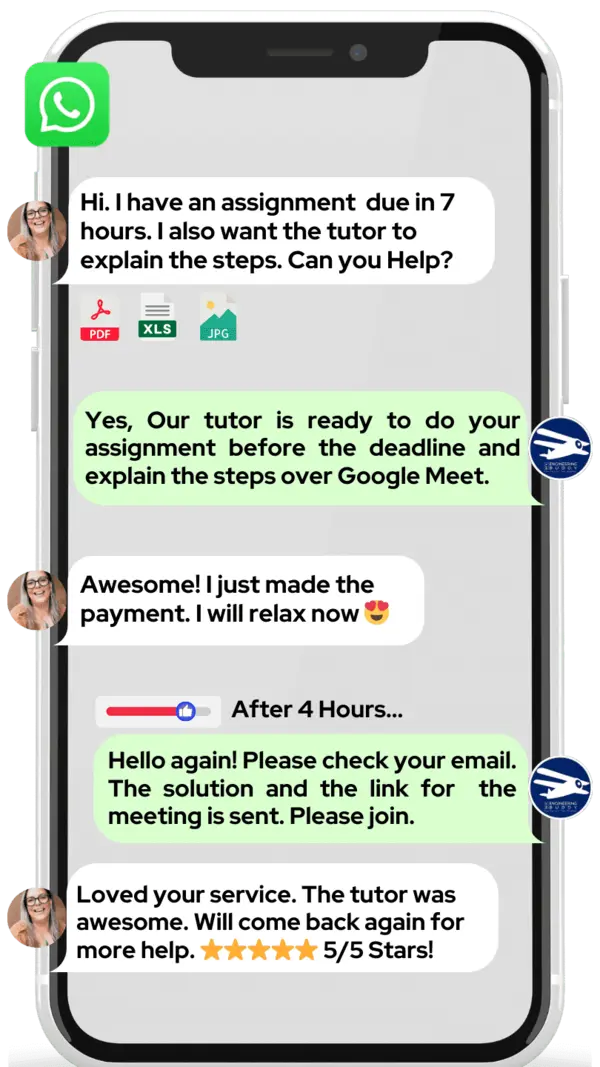
Unlike platforms where you fill out a form and wait, MEB responds in under a minute, 24/7. Tutor match takes under an hour. The $1 trial means you test before you commit. Everything runs over WhatsApp — no logins, no intake forms.
Study Plans (Pick One That Matches Your Goal)
After the first diagnostic session, the tutor builds a session sequence specific to your timeline. For most students, this fits one of three shapes: a 1–3 week catch-up targeting a specific assignment or lab report; a 4–8 week structured revision plan for a semester exam covering transforms, filter design, and feature extraction; or ongoing weekly support running alongside the module from week one. Students working on a thesis or research project often use a flexible ongoing model tied to chapter or submission milestones rather than a fixed weekly slot.
Pricing Guide
Rates run $20–$40/hr for most undergraduate biomedical signal processing modules. Graduate-level and research-focused sessions — adaptive signal processing, BCI design, advanced wavelet methods — typically fall in the $50–$100/hr range depending on tutor background and topic complexity.
Rate factors include module level, the specific toolchain required (MATLAB vs Python vs LabVIEW), timeline pressure, and tutor availability. Rates for tutors with clinical or industry signal processing backgrounds reflect that experience.
Availability shrinks significantly during end-of-semester submission periods. If you’re working to a hard deadline, reach out now rather than two days before.
For students targeting research positions, graduate programmes at leading engineering schools, or roles in medical devices and neurotech, tutors with relevant industry or PhD research backgrounds are available at higher rates — share your specific goal and MEB will match the tier to your ambition.
Start with the $1 trial — 30 minutes, no registration, no commitment. WhatsApp MEB for a quick quote.
MEB has worked with students in biomedical engineering and adjacent fields — including neural engineering and medical imaging — across 18 years and 52,000+ students. The platform runs 24/7 across every major time zone.
Source: My Engineering Buddy, 2008–2025.
FAQ
Is biomedical signal processing hard?
It is demanding. The subject requires solid foundations in both mathematics — particularly Fourier analysis and Z-transforms — and physiology. Students who struggle most are usually strong in one but not both. A 1:1 tutor bridges that gap by working on each student’s specific weak side rather than repeating the whole module.
How many sessions are needed?
Most students with a specific assignment gap clear it in 2–4 sessions. Students revising for a full semester exam covering transforms, filtering, and feature extraction typically need 8–12 sessions over 4–6 weeks. Research-level students often use ongoing weekly sessions tied to project milestones.
Can you help with homework and assignments?
Yes. MEB tutoring is guided learning — you understand the work, then submit it yourself. Tutors explain the methodology, work through the approach with you, and help you interpret your results. See our Academic Integrity policy and Why MEB page for full details on what we help with and what we don’t.
Will the tutor match my exact syllabus or exam board?
Yes. Share your module outline, university, and any assignment brief when you contact MEB. Tutors are matched to the specific content — not just “signal processing” generically. Different universities weight filter design, spectral analysis, or clinical applications differently, and the session plan reflects that.
What happens in the first session?
The tutor starts with a diagnostic — usually asking you to walk through a problem you’ve attempted or explain a concept in your own words. That takes about 10 minutes and makes the rest of the session precise. The first session is a working session, not an orientation. Nothing is wasted.
Is online tutoring as effective as in-person?
For signal processing, often more so. Screen sharing lets the tutor see your actual MATLAB or Python code and output. The digital pen-pad annotates signals and equations in real time. Students report that working on their own dataset — rather than a textbook example — makes the concepts stick faster than any lecture or in-person session.
Can I get biomedical signal processing help at short notice — including late at night?
Yes. MEB operates 24/7 via WhatsApp. If you have a lab report due in 36 hours and haven’t understood the IIR filter design section, reach out now. Tutors are available across time zones, and matching typically takes under an hour even outside standard business hours.
What if I don’t like my assigned tutor?
Request a replacement immediately via WhatsApp. No forms, no waiting. MEB re-matches you, usually within the same day. The $1 trial is specifically designed so you can test the fit before committing to a full block of sessions.
Do I need MATLAB, or can sessions be done in Python?
Both are fully supported. MEB tutors fluent in MATLAB Signal Processing Toolbox, Python SciPy and MNE, and LabVIEW are available. Tell MEB your module’s required toolchain when you first make contact — the tutor matched will already be working in the same environment as you.
What’s the difference between biomedical signal processing and general digital signal processing?
General DSP covers the mathematical and engineering theory. Biomedical signal processing applies those tools specifically to physiological signals — ECG, EEG, EMG — where noise sources, signal characteristics, and the clinical meaning of features are all domain-specific. A tutor versed in both is essential; one in only DSP theory is not enough.
How do I get started?
Start with the $1 trial — 30 minutes of live tutoring or one homework question explained in full. Three steps: WhatsApp MEB, get matched with a verified tutor in under an hour, and begin your trial session. No registration, no upfront commitment.
Trust & Quality at My Engineering Buddy
Every MEB tutor goes through subject-specific vetting — not a generic interview. For biomedical signal processing, that means demonstrating working knowledge of filter design, spectral estimation, and physiological signal interpretation, not just general DSP theory. Tutors complete a live demo evaluation before being listed, and ongoing session feedback is reviewed. Rated 4.8/5 across 40,000+ verified reviews on Google. MEB has been operating since 2008 across 2,800+ advanced subjects — the track record is not marketing, it’s verifiable.
MEB tutoring is guided learning — you understand the work, then submit it yourself. For full details on what we help with and what we don’t, read our Academic Integrity policy and Why MEB.
MEB serves students across the US, UK, Canada, Australia, the Gulf, and Europe in subjects spanning the full breadth of biomedical engineering — from biosensors tutoring and computational biology help to clinical engineering tutoring. If your programme includes related modules, MEB can support those alongside your biomedical signal processing coursework in the same tutor relationship.
A common pattern our tutors observe is that students arrive with the maths half-right and the physiological interpretation entirely wrong. Two or three sessions correcting that specific misalignment — not retaught everything — and the assignment grade shifts noticeably. Targeted correction beats general revision every time.
Explore Related Subjects
Students studying Biomedical Signal Processing often also need support in:
Next Steps
When you contact MEB, have the following ready:
- Your module syllabus or course outline, and your university and year of study
- A recent assignment, lab report, or problem set you’ve attempted and struggled with
- Your exam or submission deadline date and your available time zones for sessions
The tutor handles the session plan from there. MEB typically matches a verified biomedical signal processing tutor within 24 hours — often within the hour. The first session starts with a diagnostic so every minute is used on your actual gaps, not a general overview.
Visit www.myengineeringbuddy.com for more on how MEB works.
WhatsApp to get started or email meb@myengineeringbuddy.com.
Reviewed by Subject Expert
This page has been carefully reviewed and validated by our subject expert to ensure accuracy and relevance.