Hire Verified & Experienced
Civil Engineering Tutors
4.8/5 40K+ session ratings collected on the MEB platform
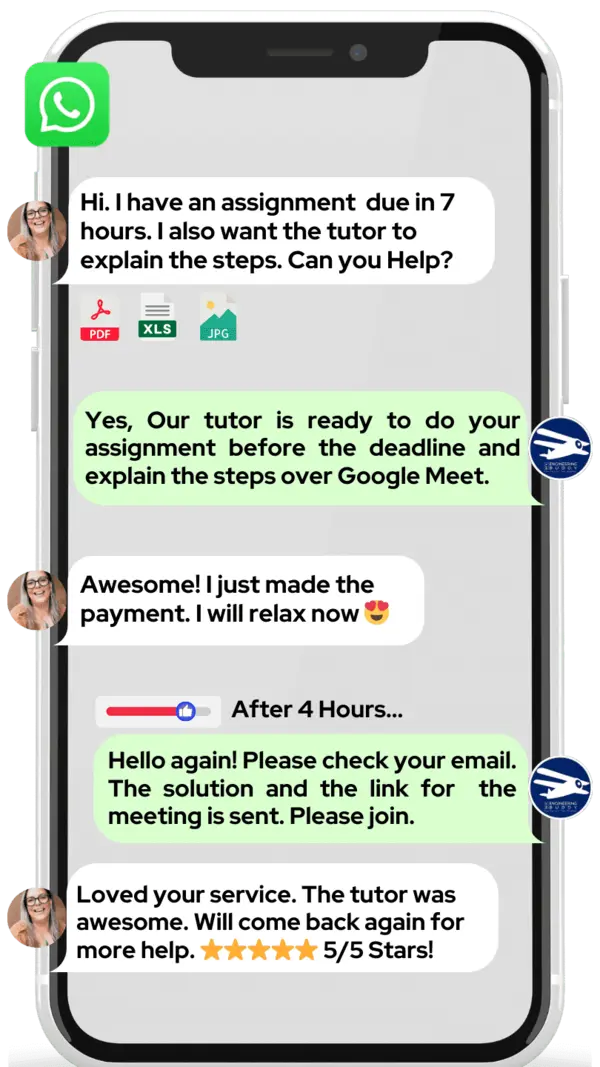



Hire The Best Civil Engineering Tutor
Top Tutors, Top Grades. Without The Stress!





52,000+ Happy Students From Various Universities






How Much For Private 1:1 Tutoring & Hw Help?
Private 1:1 Tutoring and HW help Cost $20 – 35 per hour* on average.
Structural calculations failing mid-problem. Fluid mechanics. Soil mechanics. Three topics, one deadline, zero clarity.
Civil Engineering Tutor Online
Civil Engineering is the design, analysis, and construction of infrastructure — bridges, dams, roads, water systems, and buildings. It applies principles of structural mechanics, geotechnics, hydraulics, and materials science to solve real-world engineering problems.
MEB offers 1:1 online tutoring and homework help in 2,800+ advanced subjects, including Engineering and its sub-disciplines. Whether you’re searching for a Civil Engineering tutor near me or need an expert online at short notice, MEB matches you within the hour. You work through problems with a real engineer, not a generalist, and you leave each session knowing exactly why your answer was right or wrong.
- 1:1 online sessions tailored to your exact course or university syllabus
- Expert-verified tutors with Civil Engineering degrees and professional backgrounds
- Flexible time zones — US, UK, Canada, Australia, Gulf covered
- Structured learning plan built after a diagnostic session
- Ethical homework and assignment guidance — you understand before you submit
52,000+ students across the US, UK, Canada, Australia, and the Gulf have used MEB since 2008 — including students in Engineering subjects like Civil Engineering, Structural Engineering, Geomatics, and Environmental Engineering.
Source: My Engineering Buddy, 2008–2025.
How Much Does a Civil Engineering Tutor Cost?
Most Civil Engineering tutoring sessions run $20–$40/hr. Advanced topics — finite element analysis, advanced geotechnics, postgraduate structural design — can reach $70–$100/hr depending on tutor background. The $1 trial gets you 30 minutes of live 1:1 tutoring or one full homework question explained from start to finish.
| Level / Need | Typical Rate | What’s Included |
|---|---|---|
| Undergraduate (most levels) | $20–$40/hr | 1:1 sessions, homework guidance |
| Advanced / Postgraduate | $40–$100/hr | Expert tutor, specialist depth |
| $1 Trial | $1 flat | 30 min live session or 1 HW question |
Tutor availability tightens around end-of-semester and finals periods — especially for structural analysis and hydraulics. Book early if your deadline is within three weeks.
WhatsApp MEB for a quick quote — average response time under 1 minute.
Who This Civil Engineering Tutoring Is For
Civil Engineering covers a wide span — from first-year statics through to final-year thesis projects involving soil mechanics or reinforced concrete design. The gap between understanding the theory and solving a real exam problem is often larger than students expect.
- First and second-year undergraduates hitting the wall on structural mechanics or fluid flow equations
- Third and fourth-year students tackling design projects, geotechnical assignments, or transportation planning work
- Masters and PhD candidates needing targeted support on research methods, finite element modelling, or thesis structure
- Students retaking after a failed first attempt — especially in core modules like Strength of Materials or Hydraulics
- Students with a conditional offer from universities like MIT, Imperial College London, ETH Zurich, University of Toronto, or UNSW — where one module grade can decide everything
- Parents watching a child’s confidence in technical subjects fall alongside their marks
The $1 trial removes the risk of committing to the wrong tutor. Try one session, then decide.
1:1 Tutoring vs Self-Study vs AI vs YouTube vs Online Courses
Self-study works if you’re disciplined — but Civil Engineering problems rarely fail in obvious places, and there’s no one to catch the error in your free-body diagram. AI tools will explain Bernoulli’s equation clearly, but they can’t watch you set up a beam problem and tell you where your sign convention broke. YouTube is useful for overviews of moment distribution or Darcy’s law, but it stops the moment your specific problem diverges from the example. Online courses are structured but fixed-pace — they don’t accelerate when you’re strong and slow down when you’re lost. 1:1 tutoring with MEB is live, calibrated to your exact syllabus and exam board, and corrects errors as they happen. For Civil Engineering — where one wrong assumption in a structural model cascades through every answer — real-time correction matters.
Outcomes: What You’ll Be Able To Do in Civil Engineering
After consistent sessions, students solve statically indeterminate structures using force and displacement methods, analyze open-channel flow with Manning’s equation, model soil consolidation for foundation design, apply limit state design principles to reinforced concrete beams, and explain their reasoning clearly in written exam answers — not just arrive at a number. Confidence in design calculations and code-referenced problems grows session by session, not all at once.
Supporting a student through Civil Engineering? MEB works directly with parents to set up sessions, track progress, and keep coursework on schedule. WhatsApp MEB — average response time is under a minute, 24/7.
“Based on feedback from 40,000+ sessions collected by MEB from 2022 to 2025, 58% of students improved by one full grade after approximately 20 hours of 1:1 tutoring in subjects like Civil Engineering. A further 23% achieved at least a half-grade improvement.”
Source: MEB session feedback data, 2022–2025.
What We Cover in Civil Engineering (Syllabus / Topics)

Structural Engineering and Mechanics
- Statics: equilibrium, free-body diagrams, support reactions
- Mechanics of materials: stress, strain, bending, shear, torsion
- Structural analysis: trusses, frames, influence lines, moment distribution
- Reinforced concrete design to ACI 318 or Eurocode 2
- Steel design to AISC or Eurocode 3
- Finite element analysis (FEA) concepts and software application
- Earthquake engineering and dynamic loading fundamentals
Core references: Hibbeler’s Structural Analysis, MacGregor’s Reinforced Concrete, Leet’s Fundamentals of Structural Analysis.
Geotechnics and Foundation Engineering
- Soil classification, grain size distribution, Atterberg limits
- Effective stress, pore water pressure, seepage and flow nets
- Consolidation theory and settlement prediction
- Shear strength: Mohr-Coulomb, direct shear, triaxial testing
- Shallow and deep foundation design
- Slope stability and retaining structures
Core references: Das’s Principles of Geotechnical Engineering, Coduto’s Foundation Design, Craig’s Soil Mechanics.
Hydraulics, Hydrology and Environmental Engineering
- Fluid statics and pressure distributions
- Pipe flow: Darcy-Weisbach, Hazen-Williams, network analysis
- Open-channel flow: Manning’s equation, hydraulic jump, gradually varied flow
- Hydrology: rainfall-runoff, unit hydrographs, flood frequency
- Water treatment processes and wastewater system design
- Stormwater management and sustainable drainage
Core references: Munson’s Fundamentals of Fluid Mechanics, Chaudhry’s Open Channel Hydraulics, Metcalf & Eddy’s Wastewater Engineering.
At MEB, we’ve found that Civil Engineering students often understand the theory but lose marks on the same three steps: sign conventions in structural analysis, unit consistency in hydraulics problems, and failure to state design code assumptions explicitly. Catching these patterns early changes exam results.
What a Typical Civil Engineering Session Looks Like
The tutor opens by reviewing where the previous session ended — usually a specific design problem or concept like beam deflection or consolidation settlement — and checking whether the practice task landed. Then student and tutor work through problems together on screen: a reinforced concrete beam design to Eurocode 2, an open-channel flow calculation, or a slope stability analysis using the method of slices. The tutor uses a digital pen-pad to draw diagrams, annotate free-body diagrams, and mark up the student’s working in real time. The student replicates the reasoning step by step. The session closes with one concrete practice problem set and the next topic noted — so there’s no dead time at the start of the following session.
How MEB Tutors Help You with Civil Engineering (The Learning Loop)
Diagnose: In the first session, the tutor identifies exactly which concepts are missing — not just “structural analysis” but whether the gap is in setting up the moment equation, applying boundary conditions, or interpreting the result. Specific, not vague.
Explain: The tutor works through a live problem using a digital pen-pad, talking through every step. Not a lecture — a worked solution with the student watching and questioning in real time.
Practice: The student attempts the next problem with the tutor present. The tutor stays quiet until the student gets stuck or makes an error, then intervenes at precisely the right moment.
Feedback: Every error gets a root-cause explanation. Not “that’s wrong” — but “your shear force diagram is correct to this point, then you’ve assumed a pin where there’s a fixed support, and here’s what that changes downstream.” This is where marks are recovered.
Plan: The tutor sets the next problem sequence, flags the topic to tackle in the next session, and tracks progress across sessions. Students don’t repeat the same mistakes in week four that they made in week one.
Sessions run on Google Meet. The tutor uses a digital pen-pad or iPad with Apple Pencil. Before your first session, share your course syllabus or module guide, a recent assignment you struggled with, and your exam or submission date. The tutor uses that to map the first session and set the sequence from there. Whether you need a quick catch-up before a final exam, structured revision across eight weeks, or ongoing weekly support through your semester, the tutor builds the plan after the diagnostic.
Start with the $1 trial — 30 minutes of live tutoring that also serves as your first diagnostic.
Students consistently tell us that the moment things click in Civil Engineering is rarely a big revelation. It’s usually the third time a tutor shows them the same moment diagram from a different angle — and suddenly the logic behind every similar problem becomes obvious. Repetition with variation is the mechanism.
Tutor Match Criteria (How We Pick Your Tutor)
Not every Civil Engineering graduate is right for every student. MEB matches on four criteria.
Subject depth: Tutor must have a degree in Civil Engineering or a directly related discipline, with demonstrated competence in the student’s specific module — structural, geotechnical, hydraulic, or transport.
Tools: All tutors use Google Meet with a digital pen-pad or iPad and Apple Pencil — essential for annotating structural diagrams and design calculations live.
Time zone: Matched to the student’s region. US, UK, Gulf, Canada, and Australia are all covered without scheduling friction.
Goals: Whether the objective is exam scores, conceptual understanding of a tricky module, homework completion, or research support at masters level — the tutor’s background is matched to the specific goal.
Unlike platforms where you fill out a form and wait, MEB responds in under a minute, 24/7. Tutor match takes under an hour. The $1 trial means you test before you commit. Everything runs over WhatsApp — no logins, no intake forms.
Study Plans (Pick One That Matches Your Goal)
Civil Engineering coursework runs on semester cycles with hard deadlines — there’s no catch-up window once the exam date is set. MEB offers three plan structures: a catch-up plan for students with 1–3 weeks before an exam and specific gaps to close; a structured exam prep plan running 4–8 weeks covering topic-by-topic revision with past paper practice; and weekly ongoing support aligned to your semester timetable and assignment deadlines. The tutor builds the specific topic sequence after the first diagnostic session, not before — because the gaps in Civil Engineering vary significantly from student to student even within the same course.
Pricing Guide
Civil Engineering tutoring starts at $20/hr for most undergraduate-level topics. Graduate-level structural design, advanced geotechnics, and finite element analysis typically run $40–$70/hr. Niche or specialist postgraduate topics can reach $100/hr depending on tutor background and availability.
Rate factors: level of study, topic complexity, how quickly you need sessions, and tutor availability. Availability tightens fast in the two weeks before finals — particularly for structural analysis and geotechnics tutors.
For students targeting programmes at institutions like MIT, ETH Zurich, Imperial College London, or the University of Melbourne, tutors with professional structural engineering or research backgrounds are available at higher rates. Share your specific goal and MEB will match the tier to your timeline.
Start with the $1 trial — 30 minutes, no registration, no commitment. WhatsApp MEB for a quick quote.
MEB has been operating since 2008 — 18 years, 52,000+ students, and a 4.8/5 rating across 40,000+ reviews. In that time, Civil Engineering has consistently been among the highest-demand subjects, especially structural analysis and geotechnics.
Source: My Engineering Buddy, 2008–2025.
FAQ
Is Civil Engineering hard?
It’s demanding. The combination of mathematical rigour, design code application, and multi-step problem solving trips up even strong students. The most common failure points are structural analysis sign conventions, soil mechanics consolidation theory, and hydraulics unit handling — not the concepts themselves, but the execution under exam conditions.
How many sessions are needed?
Most students see meaningful improvement in 8–12 sessions. Students with significant gaps — or multiple failing modules — typically need 15–20 sessions. The first session diagnostic sets the realistic number based on what’s actually missing, not a generic estimate.
Can you help with homework and assignments?
Yes. MEB tutoring is guided learning — you understand the work, then submit it yourself. See our Academic Integrity policy and Why MEB page for full details on what we help with and what we don’t. Tutors explain the method, walk through similar worked examples, and check your reasoning — the submission is always yours.
Will the tutor match my exact syllabus or exam board?
Yes. Civil Engineering syllabi vary significantly between universities and countries — ACI vs Eurocode for concrete design, for example, or different hydraulics textbook traditions in the US vs UK. Share your course outline or module guide before the first session and the tutor works to that standard, not a generic one.
What happens in the first session?
The tutor reviews your syllabus, asks targeted questions to locate gaps, and works through one or two problems with you live. By the end of 30 minutes, you have a clear topic priority list and the start of a session plan. It’s a diagnostic and a tutoring session simultaneously.
Is online tutoring as effective as in-person?
For Civil Engineering problem-solving, yes — often more so. The digital pen-pad replicates the whiteboard experience. Screen sharing lets the tutor annotate your working directly. Students report faster error correction online because both parties are looking at exactly the same diagram or equation simultaneously.
Can I get Civil Engineering help at midnight or over weekends?
Yes. MEB operates 24/7 across time zones. WhatsApp the team at any hour — average response time is under a minute. Tutors are available in Gulf, US, UK, Canadian, and Australian time zones, so someone is always available regardless of when your deadline hits.
What if I don’t like my assigned tutor?
Request a switch. It happens, and it’s not a problem. MEB will match you with a different tutor, typically within the same day. The $1 trial exists precisely so you test the match before committing to a session package.
What’s the difference between Eurocode and ACI for reinforced concrete design — which does my tutor cover?
Both. Tutors are matched to your specific design code — Eurocode 2 for most UK and European universities, ACI 318 for North American programmes. Share your course specification when you WhatsApp MEB and the match is made accordingly. The two codes differ substantially in partial factors, cover requirements, and detailing rules.
Can MEB help with Civil Engineering thesis or dissertation work at masters or PhD level?
Yes, at the postgraduate level MEB supports research methodology, data analysis, structural modelling review, and technical writing for Civil Engineering dissertations and theses. Tutors available for this work have relevant postgraduate or professional research backgrounds. Share your thesis topic and current stage when making contact.
How do I get started?
Three steps: WhatsApp MEB, get matched with a verified Civil Engineering tutor, then start the $1 trial — 30 minutes of live tutoring or one homework question explained in full from start to finish. No registration. No commitment beyond that first session.
Do you offer group Civil Engineering sessions?
MEB specialises in 1:1 sessions only. Group tutoring introduces pace mismatches — one student’s confusion in beam theory slows everyone else. Every session is built around what that specific student needs that day, not a shared schedule.
Trust & Quality at My Engineering Buddy
Every MEB tutor goes through subject-specific screening: degree verification, a live demo session evaluated by MEB staff, and ongoing review based on student feedback after each session. Tutors covering Civil Engineering hold degrees in the discipline or a directly related field — not general STEM backgrounds applied loosely to engineering topics. Rated 4.8/5 across 40,000+ verified reviews on Google.
MEB tutoring is guided learning — you understand the work, then submit it yourself. For full details on what we help with and what we don’t, read our Academic Integrity policy and Why MEB.
MEB has served 52,000+ students across the US, UK, Canada, Australia, the Gulf, and Europe since 2008, covering 2,800+ subjects. Engineering is one of MEB’s highest-demand categories — students regularly come to us for mechanical engineering tutoring, electrical engineering help, and structural engineering tutoring alongside Civil Engineering. The systems engineering and materials science and engineering pages show the breadth of specialist tutors on the platform. Read more about how sessions are structured at our tutoring methodology page.
A common pattern our tutors observe is that Civil Engineering students who arrive frustrated have usually been re-reading the same textbook chapter three times. One session that replaces passive re-reading with active problem-solving consistently produces more progress than a full week of solo study.
The World Economic Forum consistently identifies infrastructure and civil engineering skills among the most in-demand technical competencies globally. Employers in the sector increasingly expect graduates who can apply design codes, not just recall theory.
Source: World Economic Forum.
Try your first session for $1 — 30 minutes of live 1:1 tutoring or one homework question explained in full. No registration. No commitment. WhatsApp MEB now and get matched within the hour.
Explore Related Subjects
Students studying Civil Engineering often also need support in:
- Architectural Engineering
- Geomatics
- Computer-Aided Design
- Engineering Management
- Contract Management
- Industrial Engineering
- Quality Control
Next Steps
When you WhatsApp MEB, share three things: your exam board or university, the module or topic giving you the most trouble, and your exam or submission date. Also send your current time zone — MEB will match you to a tutor available in your window, usually within 24 hours.
Before your first session, have ready:
- Your course outline or module syllabus
- A recent assignment or past paper attempt you struggled with
- Your exam date or coursework deadline
The tutor handles the rest. First session is a diagnostic — no time wasted on topics you already know.
Visit www.myengineeringbuddy.com for more on how MEB works.
WhatsApp to get started or email meb@myengineeringbuddy.com.
Reviewed by Subject Expert
This page has been carefully reviewed and validated by our subject expert to ensure accuracy and relevance.