Hire Verified & Experienced
Computational Fluid Dynamics (CFD) Tutors
4.8/5 40K+ session ratings collected on the MEB platform
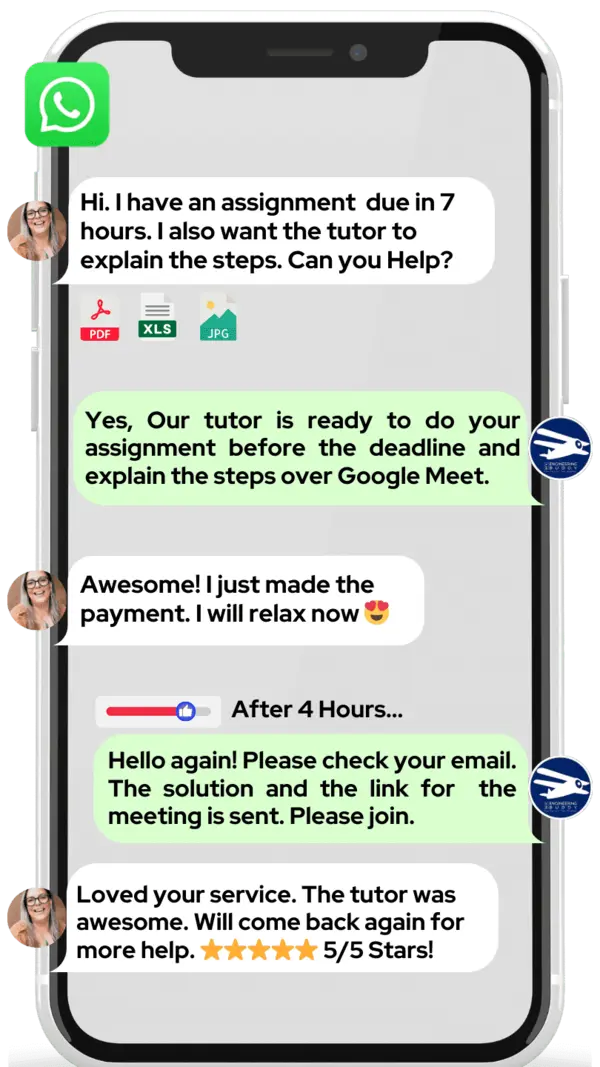



Hire The Best Computational Fluid Dynamics (CFD) Tutor
Top Tutors, Top Grades. Without The Stress!





52,000+ Happy Students From Various Universities






How Much For Private 1:1 Tutoring & Hw Help?
Private 1:1 Tutoring and HW help Cost $20 – 35 per hour* on average.
Most CFD students hit a wall at the same place: turbulence modeling or mesh convergence. A tutor who has worked through it before gets you past it in one session.
Computational Fluid Dynamics (CFD) Tutor Online
Computational Fluid Dynamics (CFD) is the numerical simulation of fluid flow, heat transfer, and related phenomena using methods such as finite volume and finite element analysis. It equips students to model real-world flow problems using solvers like ANSYS Fluent, OpenFOAM, and STAR-CCM+.
Looking for a Computational Fluid Dynamics (CFD) tutor near me? MEB connects you with a verified Computational Fluid Dynamics (CFD) tutor online for 1:1 sessions built around your exact course, solver, and deadline. Whether you are working through RANS equations for the first time or preparing a graduate-level CFD assignment, MEB has a tutor with direct subject experience.
- 1:1 online sessions aligned to your course syllabus and chosen solver
- Expert, verified tutors with graduate-level CFD knowledge and industry experience
- Flexible scheduling across US, UK, Canada, Australia, and Gulf time zones
- Structured learning plan built after a short diagnostic in your first session
- Ethical homework and assignment guidance — you understand the work before you submit it
52,000+ students across the US, UK, Canada, Australia, and the Gulf have used MEB since 2008 — across 2,800+ subjects, from AP Calculus to A Level Music Technology to Data Science.
Source: My Engineering Buddy, 2008–2025.
How Much Does a Computational Fluid Dynamics (CFD) Tutor Cost?
CFD tutoring at MEB starts at $20–$40/hr for undergraduate-level work. Graduate and specialist topics — turbulence modeling, large eddy simulation, aeroelasticity — run higher. You can test everything with the $1 trial before committing to regular sessions.
| Level / Need | Typical Rate | What’s Included |
|---|---|---|
| Undergraduate CFD | $20–$40/hr | 1:1 sessions, homework guidance, solver walkthroughs |
| Graduate / Research CFD | $40–$100/hr | Expert tutor, LES/DNS, turbulence modeling, thesis support |
| $1 Trial | $1 flat | 30 min live session or one full homework question explained |
Tutor availability tightens around semester deadlines and dissertation submission periods. Book early if you have a hard date.
WhatsApp MEB for a quick quote — average response time under 1 minute.
Who This Computational Fluid Dynamics (CFD) Tutoring Is For
CFD draws students from aerospace, mechanical, chemical, and civil engineering — as well as physics and applied mathematics. The subject rewards structured practice, and most students who struggle are not weak at the underlying maths; they are missing a clear map of how the pieces connect.
- Undergraduate students in aerospace or mechanical engineering taking a first CFD module
- Graduate students working on RANS, LES, or DNS simulations for thesis research
- Students who need help setting up and running ANSYS Fluent, OpenFOAM, or STAR-CCM+ correctly
- Students retaking a CFD module after a failed attempt who need to close specific gaps before resits
- Students whose university conditional offer depends on passing their current CFD course
- Researchers needing guidance on post-processing, validation, and interpreting simulation results
Students working toward graduate programmes at institutions such as MIT, Stanford, Imperial College London, TU Delft, ETH Zurich, Caltech, and Georgia Tech consistently use MEB to sharpen CFD competency before admissions and coursework deadlines. If you need turbulence modeling tutoring or support with a specific solver track, MEB has tutors who cover both.
1:1 Tutoring vs Self-Study vs AI Tools
Self-study with textbooks works for building foundational theory, but it gives you no feedback on whether your mesh is actually well-structured or your boundary conditions are physically reasonable. AI tools can explain the Navier-Stokes equations quickly, but they cannot watch you set up a ANSYS Fluent case, catch a discretization error live, or tell you why your residuals are diverging in that specific simulation. CFD has enough solver-specific behaviour that real-time human diagnosis — someone who has run hundreds of cases — changes outcomes faster than any reference material. MEB gives you that, over Google Meet, on your exact course and solver setup.
Outcomes: What You’ll Be Able To Do in Computational Fluid Dynamics (CFD)
After working with a CFD tutor at MEB, you will be able to set up and solve incompressible and compressible flow problems using finite volume methods, apply RANS turbulence models such as k-ε and k-ω SST to boundary layer flows with confidence, analyze mesh quality metrics and correct common errors in structured and unstructured grids, model heat transfer in conjugate problems across fluid-solid interfaces, and present simulation results — velocity contours, pressure distributions, residual plots — with a clear explanation of what the physics shows and where the model’s limits are.
Based on feedback from 40,000+ sessions collected by MEB from 2022 to 2025, 58% of students improved by one full grade after approximately 20 hours of 1:1 tutoring in a single subject. A further 23% achieved at least a half-grade improvement.
Source: MEB session feedback data, 2022–2025.
What We Cover in Computational Fluid Dynamics (CFD) (Syllabus / Topics)

Track 1: Governing Equations and Numerical Methods
- Navier-Stokes equations: derivation, physical interpretation, simplifications
- Finite volume method: discretization of convection, diffusion, and source terms
- Pressure-velocity coupling: SIMPLE, SIMPLEC, and PISO algorithms
- Boundary conditions: inlet profiles, wall functions, outflow, symmetry
- Convergence criteria: residual monitoring, mass imbalance, force tracking
- Finite difference and finite element approaches: when and why they differ from FVM
Core texts: An Introduction to Computational Fluid Dynamics by Versteeg & Malalasekera; Computational Fluid Dynamics by Anderson; Numerical Heat Transfer and Fluid Flow by Patankar.
Track 2: Turbulence Modeling and Advanced Simulation
- Reynolds-averaged Navier-Stokes (RANS): k-ε, k-ω, and SST models
- Large Eddy Simulation (LES): subgrid-scale models, filter width, computational cost
- Direct Numerical Simulation (DNS): scope, resolution requirements, research use
- Near-wall treatment: y+ requirements, wall functions vs. low-Reynolds approaches
- Transition modeling: from laminar to turbulent boundary layers
- Hybrid RANS-LES methods: DES and SAS for separated flows
Core texts: Turbulent Flows by Pope; An Introduction to Turbulence and Its Measurement by Bradshaw; Large Eddy Simulation for Incompressible Flows by Sagaut.
Track 3: Applied CFD — Solvers, Meshing, and Post-Processing
- Geometry cleanup and meshing in ANSYS Meshing, Pointwise, and Gmsh
- ANSYS Fluent: solver setup, material properties, UDF basics, case troubleshooting
- OpenFOAM: case directory structure, blockMesh, snappyHexMesh, solver selection
- STAR-CCM+: pipeline workflow, physics continua, report and monitor setup
- Post-processing: ParaView, CFD-Post — contours, streamlines, surface integrals
- Validation and verification: comparing simulation to experimental or analytical data
- Heat transfer and multiphase flow applications: natural convection, VOF method
Core texts: ANSYS Fluent Theory Guide (ANSYS Inc.); OpenFOAM User Guide (OpenFOAM Foundation); CFD Online Documentation for solver-specific reference.
Platforms, Tools & Textbooks We Support
CFD work is software-intensive, and the tutor matches your exact toolchain. MEB supports all major CFD platforms used at university and research level, including:
- ANSYS Fluent and ANSYS CFX
- OpenFOAM (all major versions)
- STAR-CCM+ (Siemens)
- COMSOL Multiphysics (fluid modules)
- SU2 (open-source, common in aerospace research)
- Pointwise and Gmsh (meshing)
- ParaView and CFD-Post (post-processing)
- MATLAB for CFD scripting and data analysis
What a Typical Computational Fluid Dynamics (CFD) Session Looks Like
The tutor opens by checking where you left off — usually the boundary condition setup or turbulence model selection from last time. You share your screen so both of you can see the solver interface or your mesh in ANSYS Meshing or Gmsh. You work through the problem together: the tutor uses a digital pen-pad to annotate flow domain sketches, highlight divergence sources, or walk through the discretization of a convection term while you follow along and replicate the steps. When you hit a residual convergence issue or a physically unrealistic result, the tutor does not just give the fix — they ask you to explain what you think is happening first. The session closes with one concrete task: run a mesh independence study on your current case, or re-run with a corrected wall y+ value, and bring the results next time.
How MEB Tutors Help You with Computational Fluid Dynamics (CFD) (The Learning Loop)
Diagnose: In the first session the tutor asks you to walk through a problem you have already attempted. This reveals exactly where the gap is — whether it is the physics, the numerics, the solver setup, or the post-processing interpretation.
Explain: The tutor works through a live example on the digital pen-pad — deriving the discretized form of the momentum equation, or showing why your inlet turbulence intensity is producing unrealistic results downstream.
Practice: You attempt the next problem with the tutor present. This is where most students find out they understood the explanation but had not yet owned the method.
Feedback: The tutor identifies each error by type — conceptual misunderstanding, solver input mistake, mesh quality issue — and explains specifically why it matters and how marks or simulation accuracy are affected.
Plan: Before the session ends, the tutor notes the next topic in sequence, sets a short practice task, and confirms the focus for the following session.
Sessions run over Google Meet with screen sharing. The tutor uses a digital pen-pad or iPad with Apple Pencil for live annotation. Before your first session, share your course outline, the solver you are using, and any simulation results or homework you have already attempted. The first session covers diagnosis and the highest-priority gap. Start with the $1 trial — 30 minutes of live tutoring that also serves as your first diagnostic.
At MEB, we have found that CFD students who bring a failed simulation to the first session — not just a textbook question — make faster progress. The real case forces the tutor to diagnose your specific workflow, not a generic version of it.
Tutor Match Criteria (How We Pick Your Tutor)
Not every CFD tutor is the right fit for every student. Here is what MEB checks before the match.
Subject depth: The tutor must have graduate-level knowledge of CFD and direct experience with your specific solver and course level — undergraduate RANS-based work and PhD-level LES are different assignments requiring different tutors.
Tools: All sessions run over Google Meet with screen sharing. Tutors use a digital pen-pad or iPad with Apple Pencil for flow diagram annotation and equation derivation. For solver-heavy sessions, screen sharing of your simulation environment is standard.
Time zone: MEB covers New York, Los Angeles, Chicago, London, Dubai, Toronto, Sydney, Melbourne, and all major European time zones — evenings and weekends included.
Learning style: The tutor calibrates to you after the first session — whether you need more theory or more applied walkthrough.
Communication: Clear English, adapted to your course level and background.
Goals: Whether your goal is passing a resit, completing a simulation for your thesis, or building deep understanding of turbulence physics, the tutor aligns to that specific aim.
Unlike platforms where you fill out a form and wait, MEB responds in under a minute, 24/7. Tutor match takes under an hour. The $1 trial means you test before you commit. Everything runs over WhatsApp — no logins, no intake forms.
Study Plans (Pick One That Matches Your Goal)
If you are three weeks behind on your CFD module, the tutor runs a short catch-up plan targeting your weakest topics first — typically mesh generation, boundary conditions, or turbulence model selection. For a structured exam or assignment revision over four to eight weeks, the tutor maps a session sequence against your submission date and covers each topic in order of dependency. For ongoing weekly support through the semester, sessions align to your lecture schedule and assignment deadlines. The tutor builds the specific sequence after the diagnostic — no generic plans.
Pricing Guide
CFD tutoring starts at $20–$40/hr for most undergraduate levels. Graduate and research-level work — turbulence modeling, LES, aeroelastic simulations, thesis support — runs up to $100/hr depending on tutor specialisation and topic depth. Rate factors include course level, solver complexity, timeline, and tutor availability.
Availability is limited during peak dissertation and coursework submission periods. If you have a hard deadline, get in touch as early as possible.
For students targeting research positions, graduate programmes at top aerospace and mechanical engineering departments, or industry roles requiring validated CFD experience, tutors with professional research and industry simulation backgrounds are available at higher rates — share your specific goal and MEB will match the tier to your ambition.
Start with the $1 trial — 30 minutes, no registration, no commitment. WhatsApp MEB for a quick quote.
MEB tutors cover the full CFD stack — from governing equations and numerical schemes through to solver setup, turbulence modeling, and simulation post-processing — calibrated to your exact course, level, and deadline.
Source: My Engineering Buddy, 2008–2025.
FAQ
Is Computational Fluid Dynamics (CFD) hard?
CFD is genuinely demanding. It combines partial differential equations, numerical methods, and software-specific workflow into one subject. Most students find the gap between understanding the theory and making a solver produce a physically correct result wider than expected. Structured 1:1 support closes that gap faster than self-study alone.
How many sessions are needed?
It depends on your starting point and goal. Students filling one specific gap — mesh quality or turbulence model selection — often need three to five sessions. Students building full CFD competency from scratch, or preparing a dissertation simulation, typically need ten to twenty sessions spread across a semester.
Can you help with CFD homework and assignments?
Yes. MEB tutors guide you through the problem — explaining the method, checking your approach, and helping you understand where your simulation or derivation went wrong — so you can complete and submit the work yourself.
MEB tutoring is guided learning — you understand the work, then submit it yourself. For full details on what we help with and what we don’t, read our Academic Integrity policy and Why MEB.
Will the tutor match my exact syllabus or exam board?
Yes. Before the match, you share your course outline, the solver your university uses, and any specific assessment components. MEB assigns a tutor with direct experience at that level and with that toolchain — not a generalist fluid mechanics tutor.
What happens in the first session?
The tutor asks you to walk through something you have already attempted — a simulation case, a homework problem, or a derivation. This diagnostic identifies your specific gaps and sets the session sequence. No time is spent on material you already understand well.
Is online CFD tutoring as effective as in-person?
For CFD specifically, online is often better. Screen sharing means the tutor can see your actual solver setup, mesh, and residual plots in real time. A digital pen-pad lets them annotate your geometry directly. There is no whiteboard in an in-person session that does that.
Can I get CFD help late at night or on weekends?
Yes. MEB operates 24/7 across all major time zones. If you are in the US, UK, Gulf, or Australia and need a session at 11 pm the night before a submission, WhatsApp MEB and you will get a response in under a minute. Tutor match typically takes under an hour.
What if I do not get along with my assigned tutor?
Tell MEB after the first session. No explanation required. MEB will match you with a different tutor at no charge. The $1 trial exists precisely so you test the fit before committing to a block of sessions.
Do you offer group CFD sessions?
MEB specialises in 1:1 sessions. Group sessions are not currently offered. The 1:1 format is deliberate — CFD problems are specific to your mesh, your solver settings, and your assignment. Group sessions cannot diagnose individual workflow errors the way a single tutor working only with you can.
How do I get started?
Three steps. WhatsApp MEB with your course details and the topic you need help with first. MEB matches you with a verified CFD tutor — usually within an hour. Your first session is the $1 trial: 30 minutes of live tutoring or one full homework question explained from setup to result.
Trust & Quality at My Engineering Buddy
Every MEB tutor goes through subject-specific screening before they are matched with students. That includes a live demo evaluation, review of their academic and professional background, and ongoing session feedback review. For CFD, tutors must demonstrate direct solver experience — not just fluid mechanics knowledge. Rated 4.8/5 across 40,000+ verified reviews on Google.
MEB tutoring is guided learning — you understand the work, then submit it yourself. We guide — you submit your own work. Read our Academic Integrity policy for the full picture of what MEB helps with and how.
MEB has served 52,000+ students across the US, UK, Canada, Australia, Gulf, and Europe since 2008, covering 2,800+ subjects. Students who need compressible flow tutoring, aerodynamics help, or support with gas dynamics assignment help will find specialist tutors across all three areas at MEB. Our tutoring methodology is described in full at MEB’s tutoring methodology page.
Students consistently tell us that the moment things click in CFD is not when they read the theory — it is when a tutor watches them run a case live and says exactly why the residuals are behaving the way they are. That is what the 1:1 format makes possible.
MEB has been operating since 2008 — before most of today’s tutoring platforms existed. That track record, combined with tutor screening and a $1 trial, is why students return and refer others.
Source: My Engineering Buddy, 2008–2025.
Explore Related Subjects
Students studying Computational Fluid Dynamics (CFD) often also need support in:
- Turbulence Modeling
- Aerodynamics
- Compressible Flow
- Gas Dynamics
- Propulsion
- Aeroacoustics
- Aerospace Propulsion
Next Steps
Getting started takes about two minutes.
- Share your course outline or exam board, the topic you are stuck on, and your deadline
- Share your availability and time zone
- MEB matches you with a verified CFD tutor — usually within 24 hours
Before your first session, have ready: your syllabus or course outline, a recent simulation case or homework you struggled with, and your exam or submission deadline date. The tutor handles the rest.
Visit www.myengineeringbuddy.com for more on how MEB works, tutor screening, and the full subject list.
Try your first session for $1 — 30 minutes of live 1:1 tutoring or one homework question explained in full. No registration. No commitment. WhatsApp MEB now and get matched within the hour.
WhatsApp to get started or email meb@myengineeringbuddy.com.
Reviewed by Subject Expert
This page has been carefully reviewed and validated by our subject expert to ensure accuracy and relevance.