Hire Verified & Experienced
Edexcel Early Years and Working with Children Tutors
4.8/5 40K+ session ratings collected on the MEB platform



Hire The Best Edexcel Early Years and Working with Children Tutor
Top Tutors, Top Grades. Without The Stress!
52,000+ Happy Students From Various Universities





How Much For Private 1:1 Tutoring & Hw Help?
Private 1:1 Tutoring and HW help Cost $20 – 35 per hour* on average.
Most students who struggle with Edexcel Early Years and Working with Children aren’t missing effort — they’re missing someone who can explain child development frameworks clearly and connect them to real practice settings.
Edexcel Early Years and Working with Children Tutor Online
Edexcel Early Years and Working with Children is a vocational qualification covering child development, safeguarding, play, and learning environments. It equips students to work professionally in early years, childcare, and educational support settings across the UK.
MEB provides 1:1 online tutoring and homework help in 2,800+ advanced subjects — including an Edexcel specialist tutor for every level from BTEC First through Level 3. Whether you’re searching for an Edexcel Early Years and Working with Children tutor near me or need after-hours help with a specific unit, MEB matches you with a verified expert — usually within the hour. Sessions are built around your actual assignment brief, not a generic script.
- 1:1 online sessions tailored to your Edexcel unit and assessment criteria
- Expert verified tutors with subject-specific Early Years knowledge
- Flexible time zones — US, UK, Canada, Australia, Gulf
- Structured learning plan built after a diagnostic session
- Ethical homework and assignment guidance — you understand the work before you submit
52,000+ students across the US, UK, Canada, Australia, and the Gulf have used MEB since 2008 — including students in Edexcel vocational subjects like Early Years and Working with Children, Edexcel Health and Social Care, and Edexcel Education and Training.
Source: My Engineering Buddy, 2008–2025.
How Much Does an Edexcel Early Years and Working with Children Tutor Cost?
Rates start at $20–$35/hr for standard BTEC and Level 2/3 units. Specialist support for Level 3 extended diplomas or niche assignments runs $35–$70/hr. Try the $1 trial first — 30 minutes of live tutoring or one full homework question explained.
| Level / Need | Typical Rate | What’s Included |
|---|---|---|
| BTEC Level 2 / Standard Units | $20–$35/hr | 1:1 sessions, assignment guidance |
| Level 3 Extended Diploma | $35–$70/hr | Expert tutor, deeper unit coverage |
| $1 Trial | $1 flat | 30 min live session or 1 assignment question |
Availability tightens significantly around assignment submission windows and end-of-year assessments. Book early if your deadline is within four weeks.
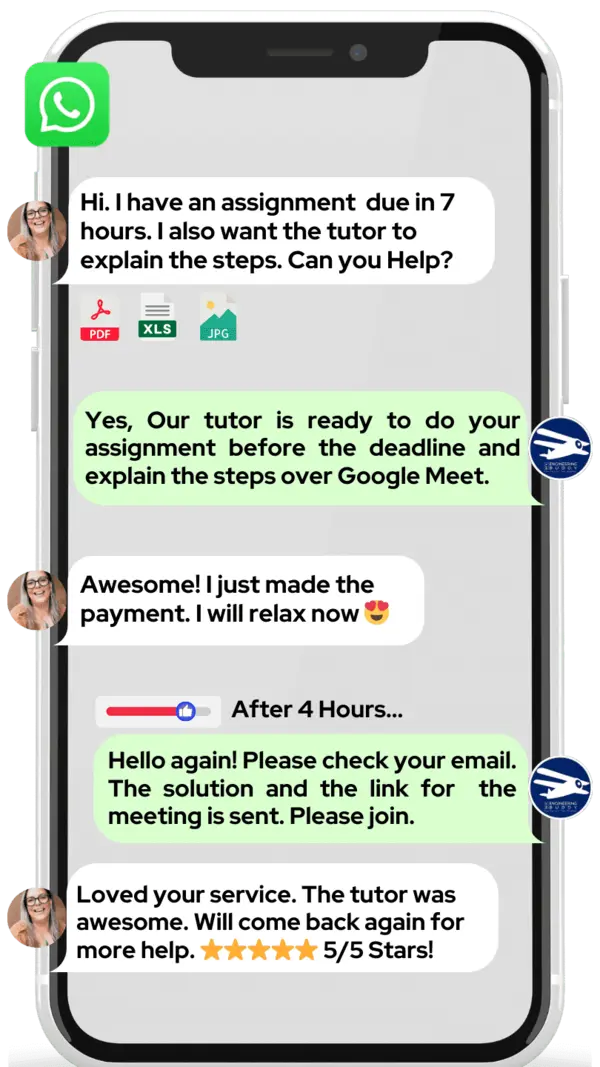
WhatsApp MEB for a quick quote — average response time under 1 minute.
Who This Edexcel Early Years and Working with Children Tutoring Is For
This tutoring is for students who know what the qualification asks for but can’t quite get their written responses or practical evidence to match the Pass, Merit, or Distinction criteria. It’s also for students who haven’t worked in a childcare setting yet and need help connecting theory to placement scenarios.
- BTEC and Level 3 students struggling to meet Distinction criteria on written units
- Students with a placement or portfolio submission deadline approaching
- Students retaking a unit after a referral decision
- Students with a university or college conditional offer that depends on this grade
- Parents watching a child’s confidence drop alongside their assignment grades
- Students at Staffordshire University, Leeds Beckett, Edge Hill, or similar institutions progressing from Level 3 to Early Childhood Studies degrees
At MEB, we’ve found that Early Years students often lose marks not because they don’t understand child development — but because they write about it too generally. Tutors trained on Edexcel’s unit specifications know exactly which evidence descriptors assessors are looking at.
1:1 Tutoring vs Self-Study vs AI vs YouTube vs Online Courses
Self-study works if you’re disciplined, but Edexcel assignment briefs have very specific criteria — reading the textbook doesn’t tell you why your answer missed Merit. AI tools give fast definitions but can’t look at your draft and say which descriptor you’ve failed to address. YouTube explains child development theory well but stops the moment you need feedback on your actual written response. Online courses follow a fixed structure that doesn’t bend to your submission date. 1:1 tutoring with MEB is calibrated to your exact unit, your current draft, and your assessor’s marking grid — correcting errors in the moment, not after you’ve already submitted.
Outcomes: What You’ll Be Able To Do in Edexcel Early Years and Working with Children
After sessions with an MEB tutor, you’ll be able to apply child development theories — Piaget, Vygotsky, Bowlby — to real placement scenarios rather than just defining them in the abstract. You’ll analyse the role of play in early learning and link it to specific EYFS or curriculum frameworks with enough precision to hit Distinction criteria. You’ll explain safeguarding legislation in context, present case study responses that meet Edexcel’s evidence descriptors, and write up reflective practice logs that actually sound like professional reflection rather than a retold story.
Supporting a student through Edexcel Early Years and Working with Children? MEB works directly with parents to set up sessions, track progress, and keep assignment submissions on schedule. WhatsApp MEB — average response time is under a minute, 24/7.
Based on feedback from 40,000+ sessions collected by MEB from 2022 to 2025, 58% of students improved by one full grade after approximately 20 hours of 1:1 tutoring in subjects like Edexcel Early Years and Working with Children. A further 23% achieved at least a half-grade improvement.
Source: MEB session feedback data, 2022–2025.
What We Cover in Edexcel Early Years and Working with Children (Syllabus / Topics)

Child Development and Learning Theories
- Cognitive development — Piaget’s stages and schema theory
- Social learning — Vygotsky’s zone of proximal development
- Attachment theory — Bowlby and the key person approach
- Emotional and social development milestones (0–8 years)
- The role of play — heuristic, imaginative, and structured play types
- Language acquisition and communication development
- Physical development — gross and fine motor progression
Core texts include Child Development by Berk, How Children Learn by Lindon, and Edexcel’s own unit specifications and learner resource guides.
Safeguarding, Legislation, and Professional Practice
- Children Act 1989 and 2004 — key duties and implications
- Working Together to Safeguard Children guidance
- Types of abuse — recognition, recording, and referral procedures
- Roles of multi-agency teams: social services, health visitors, SENCO
- The Early Years Foundation Stage (EYFS) statutory framework
- Equality Act 2010 — inclusion and anti-discriminatory practice
- Whistle-blowing, confidentiality, and data protection in settings
Supporting references include Safeguarding and Child Protection by Beckley and the NSPCC’s practice guidance used across UK training programmes.
Learning Environments, Curriculum, and Assessment
- Planning and evaluating activities for different developmental stages
- Observation methods — time sampling, event sampling, narrative records
- Creating inclusive environments for children with SEND
- Forest school and outdoor learning principles
- Transition planning — settings, key stages, and parental partnership
- Reflective practice — Gibbs’ cycle and its application to placements
Useful texts include Reflective Practice in the Early Years by Paige-Smith and Craft, alongside NHS Health Education England guidance on workforce development in children’s health settings.
What a Typical Edexcel Early Years and Working with Children Session Looks Like
The tutor opens by checking what you covered last time — usually a specific unit task, such as an observation log or a theory-to-practice question on Vygotsky’s ZPD. If you’ve attempted a draft, you share it on screen and the tutor reads it against the Edexcel unit specification descriptor by descriptor, marking where the evidence is thin. You and the tutor work through a rewrite of one or two paragraphs together — the tutor uses a digital pen-pad to annotate directly on your text and models how a Distinction-level response is structured differently from a Pass. Then you attempt a paragraph independently while the tutor watches, giving feedback on whether your argument actually evidences the criterion or just restates it. The session closes with a concrete task: finish section two of the assignment, include two referenced theories, and bring it back next session for a final review before submission.
How MEB Tutors Help You with Edexcel Early Years and Working with Children (The Learning Loop)
Diagnose: In the first session, the tutor identifies where your marks are being lost — whether that’s missing theoretical links, weak case study analysis, or reflective writing that describes rather than evaluates. Most Early Years students have one or two recurring gaps, not ten.
Explain: The tutor works through the specific unit criteria live on screen. Using a digital pen-pad, they annotate a sample response and show you precisely what Distinction-level evidence looks like versus a Pass answer for the same question.
Practice: You attempt a response or section of your assignment with the tutor present. This isn’t the tutor writing it — it’s you writing it while the tutor monitors your reasoning and asks questions that push you to develop the point further.
Feedback: The tutor corrects errors step by step, naming the descriptor you’ve missed and explaining why the assessor would not award the higher grade without that evidence. You see exactly where the mark was lost.
Plan: At the end of each session, the tutor sets a specific task — not “review chapter three” but “write the reflective practice section of Unit 5 using Gibbs’ cycle with two examples from your placement.” Next session picks up from there.
Sessions run on Google Meet. The tutor uses a digital pen-pad or iPad with Apple Pencil to annotate your work or draw frameworks on a shared whiteboard. Before your first session, have your assignment brief, the unit specification, and any draft work ready to share. The first session is always diagnostic — finding the gap before fixing it. Start with the $1 trial — 30 minutes of live tutoring that also serves as your first diagnostic.
Students consistently tell us that Early Years assignments feel vague until someone sits with them and maps their draft to the actual marking descriptors. Once they can see the gap, they know exactly what to add. That’s what the first session does.
Tutor Match Criteria (How We Pick Your Tutor)
Not every tutor who knows child development can teach Edexcel’s vocational assessment model. Here’s how we match.
Subject depth: Tutors are matched to your specific Edexcel level and unit — BTEC First, Level 2 Certificate, or Level 3 Extended Diploma — not just “Early Years” as a general category.
Tools: All tutors work on Google Meet with a digital pen-pad or iPad and Apple Pencil for live annotation of your assignments and drafts.
Time zone: Matched to your region — UK students get UK-hours availability; Gulf, Canada, and Australia students are matched accordingly.
Goals: Whether you need to hit a Merit on a specific unit, complete a reflective practice portfolio, or close a grade gap before a conditional offer deadline, the tutor is briefed on your exact target before session one.
Unlike platforms where you fill out a form and wait, MEB responds in under a minute, 24/7. Tutor match takes under an hour. The $1 trial means you test before you commit. Everything runs over WhatsApp — no logins, no intake forms.
Study Plans (Pick One That Matches Your Goal)
If your assignment is due in one to three weeks, the tutor works through your current draft, targets the weakest unit sections first, and focuses every session on submission-ready output. For students four to eight weeks out, sessions follow a structured unit-by-unit revision plan with timed practice tasks. Ongoing weekly support tracks your semester deadlines and keeps coursework moving so nothing piles up before the final submission window. The tutor builds the specific sequence after the first diagnostic session.
MEB has supported students in Edexcel Personal Growth and Wellbeing and related vocational subjects since 2008 — the same tutor network covers Early Years across all Edexcel levels.
Source: My Engineering Buddy, 2008–2025.
Pricing Guide
Most Edexcel Early Years and Working with Children sessions run $20–$40/hr. Level 3 extended diploma work with specialist tutors reaches $70/hr. Rates depend on unit complexity, your timeline, and tutor availability.
For students targeting Early Childhood Studies degree programmes at universities like Leeds Beckett, Edge Hill, or Staffordshire, tutors with professional childcare or EYFS advisory backgrounds are available at higher rates — share your specific goal and MEB will match the tier to your ambition.
Availability drops sharply during peak assignment submission periods in January and May. Book before those windows close.
Start with the $1 trial — 30 minutes, no registration, no commitment. WhatsApp MEB for a quick quote.
FAQ
Is Edexcel Early Years and Working with Children hard?
The content itself — child development theory, safeguarding law, reflective practice — is manageable. What trips students up is writing in the analytical way Edexcel’s unit descriptors require. Pass answers describe; Distinction answers evaluate and link theory to evidence. That gap is where tutoring helps most.
How many sessions are needed?
Most students see a clear grade step-up in four to six sessions when they work consistently. Students with multiple units to cover or a tight deadline typically book eight to twelve sessions over four to six weeks. The first diagnostic session gives a clearer picture of the actual gap.
Can you help with homework and assignments?
MEB tutoring is guided learning — you understand the work, then submit it yourself. Tutors explain the unit criteria, help you structure your argument, and give feedback on your drafts. See our Academic Integrity policy and Why MEB page for full details on what we help with and what we don’t.
Will the tutor match my exact syllabus or exam board?
Yes. Tutors are matched to your specific Edexcel level and unit — not just the general subject area. Share your unit number, assignment brief, and current level when you message, and MEB will confirm the right tutor before your first session.
What happens in the first session?
The tutor starts with a diagnostic — reviewing your current work, assignment brief, and unit specification together. They identify where your responses are missing higher-grade evidence and build a session plan from there. Nothing is assumed; everything is checked against your actual Edexcel unit criteria.
Is online tutoring as effective as in-person?
For written assignment support, online is often better. The tutor can annotate your draft directly on screen, and you can share your document in real time. Students consistently report that seeing their work marked up live is more useful than a verbal explanation alone.
Can you help with the difference between Pass, Merit, and Distinction criteria?
This is one of the most common requests. Tutors work through your draft against the exact descriptor table in your unit specification, showing line by line what’s missing for the higher grade. Most students who’ve been stuck at Pass move to Merit within two or three targeted sessions.
What if my assignment involves placement evidence I haven’t collected yet?
Tutors help you plan what to observe and record during placement, which observation methods to use, and how to write up your findings to meet Edexcel’s evidence requirements. If your placement is upcoming, early sessions focus on preparation so you collect what you actually need.
Do you offer help with reflective practice logs and portfolios?
Yes. Reflective writing is one of the hardest parts of the Early Years qualification for most students — it needs to evaluate rather than describe. Tutors work through reflective frameworks like Gibbs’ cycle with you and show you how to apply them to placement scenarios in a way that meets Edexcel’s criteria.
How do I find an Edexcel Early Years and Working with Children tutor in my area?
MEB operates fully online, so location doesn’t limit your tutor options. Students across the UK, US, Canada, Australia, and the Gulf access the same tutor network. Sessions run on Google Meet — no travel, no fixed location, available around your timetable and placement schedule.
How do I get started?
Message MEB on WhatsApp with your unit, current grade, and deadline. MEB matches you with a verified tutor — usually within the hour. Your first session is the $1 trial: 30 minutes of live 1:1 tutoring or one assignment question explained in full. No registration, no commitment.
Trust & Quality at My Engineering Buddy
Every MEB tutor goes through subject-specific vetting — not a general interview. For Early Years and Working with Children, that means confirming knowledge of Edexcel’s unit specifications, the EYFS framework, current safeguarding legislation, and the assessment model tutors will be working within. Tutors then complete a live demo session before being matched with students. Rated 4.8/5 across 40,000+ verified reviews on Google. Ongoing feedback from every session is reviewed and tutors with declining satisfaction scores are removed from the pool.
MEB tutoring is guided learning — you understand the work, then submit it yourself. For full details on what we help with and what we don’t, read our Academic Integrity policy and Why MEB.
MEB has served 52,000+ students across the US, UK, Canada, Australia, Gulf, and Europe in 2,800+ subjects since 2008. The Edexcel vocational range is one of MEB’s strongest areas — tutors cover Edexcel Health and Social Care tutoring, Edexcel Psychology help, and the full Early Years pathway at every level. See how MEB’s tutoring methodology works for more on the diagnostic-first approach used across all subjects.
Explore Related Subjects
Students studying Edexcel Early Years and Working with Children often also need support in:
- Edexcel General Studies
- Edexcel Citizenship
- Edexcel Home Economics
- Edexcel Religious Studies
- Edexcel English
- Edexcel Physical Education and Sport
- Edexcel Beauty Therapy and Hairdressing
Next Steps
When you message MEB, have these ready:
- Your Edexcel level, unit number, and assignment brief
- Your current grade or where you’re stuck — Pass but want Merit, or referral you need to overturn
- Your submission deadline and availability for sessions
Before your first session, have ready: your Edexcel unit specification (downloadable from the Edexcel/Pearson site), a recent assignment attempt or draft you struggled with, and your submission date. The tutor handles the rest.
MEB matches you with a verified Early Years tutor — usually within 24 hours. The first session starts with a diagnostic so every minute is used well.
Visit www.myengineeringbuddy.com for more on how MEB works.
WhatsApp to get started or email meb@myengineeringbuddy.com.
Reviewed by Subject Expert
This page has been carefully reviewed and validated by our subject expert to ensure accuracy and relevance.