Contact MEB Today To Get The Best
International Law (Public/Comparative) Tutoring Online
Email: [email protected]



~1 min
Average Reply Time
~1 hour
To Be Matched With A Tutor
30 Min Trial
75% Find Their Tutor On The 1st Trial
$20-35+/hr
Premium Yet Affordable Learning
International law essays look manageable until you’re asked to compare the ICJ’s jurisdiction with domestic constitutional frameworks — and suddenly three weeks of reading feel useless.
International Law (Public/Comparative) Tutor Online
International law (public/comparative) covers the rules governing relations between states and international bodies, examining treaties, customary law, and how different national legal systems approach shared legal problems — equipping students to analyse cross-border legal obligations and disputes.
MEB’s law tutoring covers the full spectrum of public and comparative international law — from UN Charter obligations to how civil law and common law systems handle sovereignty differently. If you’ve searched for an international law tutor near me, the sessions here are online, live, and built around your exact course materials. An online international law tutor from MEB works through your specific readings, seminar questions, and essay structure with you — not a generic syllabus.
- 1:1 online sessions tailored to your module, exam board, or postgraduate syllabus
- Expert-verified tutors with subject-specific knowledge in public and comparative law
- Flexible time zones — US, UK, Canada, Australia, Gulf covered
- Structured learning plan built after a diagnostic session
- Ethical academic guidance — you understand the work, then submit it yourself
52,000+ students across the US, UK, Canada, Australia, and the Gulf have used MEB since 2008 — including students in Law subjects like International Law (Public/Comparative), international humanitarian law tutoring, and Constitutional Law.
Source: My Engineering Buddy, 2008–2025.
How Much Does an International Law (Public/Comparative) Tutor Cost?
Most international law tutoring sessions at MEB run $20–$40/hr. Graduate-level and specialist comparative law tutors — covering systems like EU law, ASEAN frameworks, or Islamic international law — may reach up to $100/hr. The $1 trial gives you 30 minutes of live 1:1 tutoring or a full explanation of one homework question before you commit to anything.
| Level / Need | Typical Rate | What’s Included |
|---|---|---|
| Undergraduate (most modules) | $20–$35/hr | 1:1 sessions, essay guidance, case analysis |
| Postgraduate / Specialist | $35–$100/hr | Expert tutor, comparative depth, thesis support |
| $1 Trial | $1 flat | 30 min live session or 1 homework question explained |
Tutor availability tightens in the weeks before exam season and dissertation deadlines. Book early if you’re working toward a fixed submission date.
WhatsApp MEB for a quick quote — average response time under 1 minute.
Who This International Law (Public/Comparative) Tutoring Is For
This isn’t for students who are cruising. It’s for students who’ve hit a wall — whether that’s the sources of international law, applying the ICJ Statute to a problem question, or comparing civilian and common law approaches to treaty interpretation.
- Undergraduate law students covering public international law modules at universities like Oxford, NYU, Georgetown, Melbourne, or the University of Toronto
- LLM and postgraduate students doing comparative constitutional or international legal systems coursework
- Students who received a conditional university offer and need to perform at a specific grade level
- Students 4–6 weeks from an exam with significant gaps in treaty law, state responsibility, or comparative methodology still to close
- Researchers and PhD candidates needing structured guidance on international legal theory and sources
- Students needing structured academic guidance — you understand the argument, then write it yourself
1:1 Tutoring vs Self-Study vs AI vs YouTube vs Online Courses
Self-study works if you’re disciplined — but international law problem questions need feedback, not more reading. AI tools explain doctrine fast but can’t tell you why your essay argument doesn’t hold under the Vienna Convention. YouTube handles overviews well and stalls when you’re applying customary international law to a specific fact pattern. Online courses are structured but move at a fixed pace with no adaptation to your actual exam. 1:1 tutoring with MEB is calibrated to your exact module — your tutor catches the reasoning errors that your lecturer’s written feedback missed.
Outcomes: What You’ll Be Able To Do in International Law (Public/Comparative)
After working with an international law tutor online, students consistently report being able to analyse state responsibility under the ILC Articles with precision, apply treaty interpretation rules from the Vienna Convention on the Law of Treaties to unseen scenarios, explain the differences between monist and dualist approaches to international law in national legal systems, write comparative legal essays that structure civil law and common law frameworks side by side without conflating them, and present arguments before a moot court or seminar with a clear command of sources and jurisdiction.
Based on feedback from 40,000+ sessions collected by MEB from 2022 to 2025, 58% of students improved by one full grade after approximately 20 hours of 1:1 tutoring in subjects like International Law (Public/Comparative). A further 23% achieved at least a half-grade improvement.
Source: MEB session feedback data, 2022–2025.
Students consistently tell us that international law feels abstract until someone walks them through how the ICJ actually applied a principle in a real case. That’s the difference between knowing doctrine and being able to use it in an exam answer. At MEB, we anchor every concept to a decided case or treaty provision — immediately.
What We Cover in International Law (Public/Comparative) (Syllabus / Topics)

Track 1: Public International Law — Sources, Subjects, and Institutions
- Sources of international law: Article 38 ICJ Statute, treaties, custom, general principles
- Subjects of international law: states, international organisations, individuals
- State recognition, sovereignty, and jurisdiction
- The United Nations system: Charter obligations, Security Council, General Assembly
- International Court of Justice: jurisdiction, admissibility, and contentious cases
- State responsibility under the ILC Articles on State Responsibility
- Law of the sea: UNCLOS zones, rights, and dispute resolution
Core texts include Shaw’s International Law (9th ed.), Brownlie’s Principles of Public International Law (Crawford), and Cassese’s International Law.
Track 2: Treaty Law and International Dispute Resolution
- Vienna Convention on the Law of Treaties: formation, interpretation, invalidity, termination
- Reservations to multilateral treaties and their legal effects
- Jus cogens norms and obligations erga omnes
- WTO dispute settlement and investor-state arbitration (ICSID)
- International criminal law: ICC jurisdiction and complementarity principle
- Human rights treaty bodies: enforcement and state reporting mechanisms
Key texts: Aust’s Modern Treaty Law and Practice, Schabas’s An Introduction to the International Criminal Court, and Simma’s The Charter of the United Nations: A Commentary.
Track 3: Comparative Legal Systems and Methodology
- Legal families: common law, civil law, mixed systems, and Islamic law traditions
- Comparative constitutional law: rights enforcement across different systems
- How different legal systems incorporate international law (monism vs dualism)
- Comparative contract and tort: method and limits
- EU law as a hybrid supranational system
- Comparative methodology: functional, historical, and critical approaches
Core texts include Zweigert and Kötz’s An Introduction to Comparative Law, Örücü and Nelken’s Comparative Law: A Handbook, and Michaels’s comparative law chapters in standard international law anthologies.
A common pattern our tutors observe is that students can recite the ICJ Nicaragua case but struggle to explain what it actually established about customary international law. Knowing the name of a case is not the same as knowing how to use it. Our tutors spend time on the second part — not the first.
What a Typical International Law (Public/Comparative) Session Looks Like
The tutor opens by checking where the previous session ended — usually treaty interpretation or a specific ILC Article. From there, the student walks through a seminar problem question or essay plan on screen, with the tutor pushing back on weak arguments in real time. The tutor uses a digital pen-pad to annotate the fact pattern, marking where jurisdiction is established or where state responsibility fails. The student then drafts a counter-argument while the tutor watches — not correcting every word, but flagging where the legal reasoning breaks down. The session closes with a specific reading task: one treaty provision and one ICJ advisory opinion, with a short answer question to bring to the next session.
How MEB Tutors Help You with International Law (Public/Comparative) (The Learning Loop)
Diagnose: In the first session, the tutor identifies whether the gap is doctrinal (confused about sources of law), analytical (can’t apply rules to facts), or structural (essays that describe rather than argue). These are different problems. They need different fixes.
Explain: The tutor works through a case or treaty provision live — not from slides, but from the actual text. Digital pen-pad annotation shows how a judge reasoned, step by step. Students who’ve read a case three times often find this is the first time they actually understood it.
Practice: The student attempts a problem question or essay paragraph with the tutor present. No pre-writing the answer. The student does the work; the tutor watches for where the argument drifts.
Feedback: The tutor explains exactly where marks were lost and why — not just “the argument is weak” but which element of state responsibility the student skipped over, or where the treaty interpretation departed from the Vienna Convention framework.
Plan: Before the session ends, the next topic is confirmed, the gap being closed is named, and the student leaves with one concrete task. Progress is tracked session to session.
Sessions run on Google Meet. The tutor uses a digital pen-pad or iPad with Apple Pencil for annotations on treaty text and case extracts. Before your first session, have your module outline, a recent essay or problem question attempt, and your exam or submission date ready. Start with the $1 trial — 30 minutes of live tutoring that also serves as your first diagnostic.
Tutor Match Criteria (How We Pick Your Tutor)
Not every law tutor can cover comparative legal systems alongside the ICJ Statute. MEB matches on specifics.
Subject depth: Tutors are matched by the exact track — public international law, treaty law, or comparative systems — not just “law” as a category. Tools: Every tutor uses Google Meet and a digital pen-pad or iPad with Apple Pencil for live annotation. Time zone: Matched to your region — US, UK, Gulf, Canada, or Australia. Goals: Whether you need seminar preparation, exam question practice, dissertation framing, or legal research help, the match reflects your actual objective.
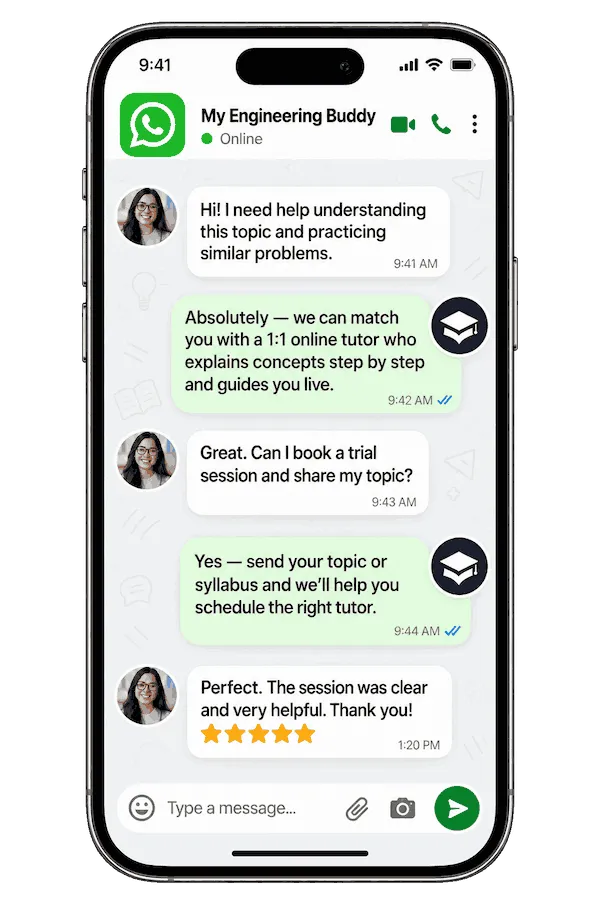
Unlike platforms where you fill out a form and wait, MEB responds in under a minute, 24/7. Tutor match takes under an hour. The $1 trial means you test before you commit. Everything runs over WhatsApp — no logins, no intake forms.
Study Plans (Pick One That Matches Your Goal)
Catch-up (1–3 weeks): for students behind on treaty law or comparative methodology with an exam or seminar coming fast. Exam prep (4–8 weeks): structured revision session by session, covering each assessed component in sequence. Weekly support: ongoing sessions aligned to your semester’s lecture and seminar schedule. The tutor maps the exact sequence after the first diagnostic — not before.
Pricing Guide
International law tutoring at MEB runs $20–$40/hr for most undergraduate modules. Postgraduate and specialist comparative law sessions — covering EU law, ASEAN legal systems, or Islamic international law — reach up to $100/hr. Rate factors include course level, topic complexity, how close you are to a deadline, and tutor availability.
For students targeting top LLM programmes at schools like Harvard Law, LSE, Columbia, or the European University Institute, tutors with academic research and professional international law backgrounds are available at higher rates — share your specific goal and MEB will match accordingly.
Tutor slots fill up during exam periods and dissertation submission windows. Book ahead. Start with the $1 trial — 30 minutes, no registration, no commitment. WhatsApp MEB for a quick quote.
Try your first session for $1 — 30 minutes of live 1:1 tutoring or one homework question explained in full. No registration. No commitment. WhatsApp MEB now and get matched within the hour.
FAQ
Is international law (public/comparative) hard?
It’s conceptually demanding — especially where public international law meets comparative methodology. The hardest part for most students is applying abstract doctrine (state responsibility, treaty interpretation) to unseen fact patterns. That’s exactly what tutoring sessions focus on.
How many sessions are needed?
Most students working toward an exam or essay deadline see clear improvement across 8–12 focused sessions. Students with a specific gap — one doctrine or one essay component — often need fewer. The first session diagnostic gives a clearer answer.
Can you help with practice exercises?
MEB tutoring is guided learning — you understand the work, then submit it yourself. The tutor works through the legal reasoning with you, not for you. See our Academic Integrity policy and Why MEB page for full details on what we help with and what we don’t.
Will the tutor match my exact syllabus or exam board?
Yes. Tutors are matched to your specific module — whether that’s a US JD first-year public international law course, an LLM comparative law module at a UK university, or an undergraduate international law paper in Australia or Canada.
What happens in the first session?
The tutor runs a short diagnostic — reviewing a recent essay or problem answer to identify where reasoning breaks down. From there, the session moves to your most pressing topic, and a session plan is confirmed before you finish.
Is online tutoring as effective as in-person?
For law subjects, yes — and often more so. Document sharing, case annotation on screen, and essay markup in real time work better digitally. The Law Society has consistently noted the shift toward digital legal education delivery across the profession. Students in multiple time zones report no practical disadvantage.
What’s the difference between public international law and private international law?
Public international law governs relations between states and international bodies — treaties, sovereignty, the UN system. Private international law (conflict of laws) handles cross-border private disputes — which court has jurisdiction, which law applies. MEB tutors cover both, but they’re separate subjects.
Can a tutor help with international law moot court preparation?
Yes. Tutors work through oral argument structure, written memorials, and case strategy for moot competitions including the Philip Jessup International Law Moot. Preparation covers jurisdictional arguments, evidentiary standards, and cross-examination technique specific to international tribunals.
Do you cover EU law as part of comparative international law?
EU law sits at the intersection of international and comparative law — many modules treat it as a comparative case study in supranational legal integration. MEB tutors with EU law specialisation cover primary legislation, CJEU jurisprudence, and comparative analysis alongside public international law modules.
Can I get international law help at short notice — evenings or weekends?
MEB operates 24/7. Tutors across US, UK, Gulf, and Australian time zones mean evening and weekend sessions are standard, not exceptional. WhatsApp response averages under one minute regardless of when you message.
What if my tutor doesn’t know my specific comparative legal system?
MEB re-matches if the initial tutor isn’t the right fit — no cost, no delay. Tutors covering civilian systems, mixed jurisdictions, and Islamic international law are on the platform. Specify your system when you message and the match will reflect it.
How do I get started?
Three steps: WhatsApp MEB with your module and current challenge, get matched with a verified international law tutor within the hour, then start with the $1 trial — 30 minutes live or one assignment question explained in full. No forms, no waiting.
Trust & Quality at My Engineering Buddy
Every MEB tutor goes through subject-specific screening before their first session — including a live demo evaluation assessed for clarity, depth, and ability to adapt to a student mid-explanation. Tutors covering international and comparative law hold postgraduate degrees and, in many cases, professional experience in international legal practice, arbitration, or academic research. Rated 4.8/5 across 40,000+ verified reviews on Google. Feedback from every session feeds into ongoing quality review — tutors with declining student outcomes are removed from the platform.
MEB tutoring is guided learning — you understand the work, then submit it yourself. For full details on what we help with and what we don’t, read our Academic Integrity policy and Why MEB.
MEB has served 52,000+ students across the US, UK, Canada, Australia, the Gulf, and Europe since 2008 — across 2,800+ subjects including Law, constitutional law tutoring, human rights law help, and environmental law tutoring. The platform’s methodology is documented at MEB’s tutoring methodology page.
MEB has matched students across public international law, comparative legal systems, and treaty law with tutors who hold LLMs, PhDs, and active international legal practice backgrounds — across 18 years and six continents.
Source: My Engineering Buddy, 2008–2025.
At MEB, we’ve found that students who struggle with international law essays almost always have the same underlying problem: they describe what happened in a case instead of using the case to prove a legal point. That’s an argument-construction problem, not a knowledge problem — and it’s fixable in a session or two once it’s named.
Explore Related Subjects
Students studying International Law (Public/Comparative) often also need support in:
- Administrative Law
- Jurisprudence
- International Humanitarian Law
- Legal Theory
- Immigration Law
- Maritime Law
- Treaty Law
Next Steps
Here’s what to do now:
- Share your exam board or module name, the topic giving you the most trouble, and your current timeline
- Share your time zone and availability — MEB operates across US, UK, Gulf, Canada, and Australian hours
- MEB matches you with a verified international law tutor — usually within 24 hours, often faster
- First session starts with a diagnostic so every minute is spent on the right thing
Before your first session, have ready: your module outline or syllabus, a recent essay attempt or problem question you struggled with, and your exam or submission date. The tutor handles the rest.
Visit www.myengineeringbuddy.com for more on how MEB works.
WhatsApp to get started or email [email protected].
Reviewed by Subject Expert
This page has been carefully reviewed and validated by our subject expert to ensure accuracy and relevance.