~1 min
Average Reply Time
~1 hour
To Be Matched With A Tutor
30 Min Trial
75% Find Their Tutor On The 1st Trial
$20-35+/hr
Premium Yet Affordable Learning
Most students don’t fail postcolonial literature because it’s too hard. They fail because no one explained Fanon before the essay was due.
Postcolonial Literature Tutor Online
Postcolonial literature examines writing produced in the context of colonialism and its aftermath, exploring themes of identity, resistance, and cultural displacement. It spans authors and texts from formerly colonised regions across Africa, South Asia, the Caribbean, and beyond.
MEB connects you with a specialist postcolonial literature tutor online — someone who knows the texts, the theoretical frameworks, and the essay expectations that come with your specific course. If you’ve searched for a postcolonial literature tutor near me, you already know what you need: someone who can sit with you in the gaps, not just hand you a reading list. Our literature tutoring covers over 2,800 advanced subjects, and postcolonial studies is one of our most requested areas. One focused session often shifts what three weeks of solo reading couldn’t.
- 1:1 online sessions tailored to your exact course, module, or syllabus
- Expert verified tutors with deep knowledge of postcolonial theory and texts
- Flexible time zones — US, UK, Canada, Australia, Gulf
- Structured learning plan built after a diagnostic session
- Ethical academic guidance — you understand the work, then submit it yourself
52,000+ students across the US, UK, Canada, Australia, and the Gulf have used MEB since 2008 — including students in Literature subjects like postcolonial literature, comparative literature, and postmodern literature.
Source: My Engineering Buddy, 2008–2025.
How Much Does a Postcolonial Literature Tutor Cost?
Most postcolonial literature sessions run $20–$40/hr depending on level and topic complexity. Graduate and doctoral-level support — particularly for dissertation chapters or theory-heavy modules — can reach $60–$100/hr. The $1 trial gives you 30 minutes of live 1:1 tutoring or a full explanation of one essay question before you spend anything more.
| Level / Need | Typical Rate | What’s Included |
|---|---|---|
| Undergraduate / A Level | $20–$35/hr | 1:1 sessions, essay and assignment guidance |
| Graduate / Doctoral | $40–$100/hr | Theory depth, dissertation support, expert tutor |
| $1 Trial | $1 flat | 30 min live session or one essay question explained |
Availability tightens around semester submission windows — especially in November and April. Book early if you have a coursework deadline approaching.
WhatsApp MEB for a quick quote — average response time under 1 minute.
Who This Postcolonial Literature Tutoring Is For
Postcolonial literature sits at the crossroads of history, politics, and close reading. Students often arrive knowing the texts but struggling to apply theory — or knowing Spivak in the abstract but freezing when an essay question arrives. This tutoring is for anyone who needs those two things connected, fast.
- Undergraduates taking postcolonial literature as a core or elective module
- Students with a university conditional offer depending on this grade
- MA and PhD students working through theory-dense coursework or dissertation chapters
- Students who read the novels but can’t yet write analytically about colonial discourse
- Students retaking after a failed first attempt at a postcolonial studies essay or exam
- Parents watching a child’s confidence drop alongside their grades in English Literature
Students have come to MEB from programmes at universities including Yale, Oxford, the University of Toronto, the University of Melbourne, NYU, and Sciences Po — across postcolonial, world literature, and English studies programmes.
At MEB, we’ve found that most postcolonial literature students aren’t struggling with the reading — they’re struggling with the theoretical vocabulary. Once the language of Bhabha, Said, or Achebe clicks, the essays follow. That usually takes one or two well-structured sessions, not a semester.
1:1 Tutoring vs Self-Study vs AI vs YouTube vs Online Courses
Self-study works if you’re disciplined, but with postcolonial theory there’s no feedback on whether you’ve actually understood Spivak or just summarised her. AI tools give fast definitions but can’t tell you why your essay argument is circular. YouTube handles overview well — it stops short when you’re stuck on applying hybridity to a specific passage. Online courses are structured but move at a fixed pace with no room for your particular text or exam board. 1:1 tutoring with MEB is live, calibrated to your exact module, and catches misreadings before they reach your submitted work.
Outcomes: What You’ll Be Able To Do in Postcolonial Literature
After focused sessions with an MEB postcolonial literature tutor, you’ll be able to apply frameworks from Said, Fanon, Bhabha, and Spivak directly to primary texts — not as a summary exercise, but as a genuine analytical move. You’ll write essays that explain how a specific novel constructs colonial subjectivity or enacts resistance. You’ll analyze the relationship between narrative voice and imperial ideology in texts like Things Fall Apart, Midnight’s Children, or Wide Sargasso Sea. You’ll present arguments about diaspora, hybridity, and mimicry that hold up to close-reading scrutiny. You’ll solve the common essay problem of describing postcolonial themes without arguing a position.
Supporting a student through postcolonial literature? MEB works directly with parents to set up sessions, track progress, and keep coursework on schedule. WhatsApp MEB — average response time is under a minute, 24/7.
Based on feedback from 40,000+ sessions collected by MEB from 2022 to 2025, 58% of students improved by one full grade after approximately 20 hours of 1:1 tutoring in subjects like postcolonial literature. A further 23% achieved at least a half-grade improvement.
Source: MEB session feedback data, 2022–2025.
What We Cover in Postcolonial Literature (Syllabus / Topics)

Track 1: Postcolonial Theory and Critical Frameworks
- Edward Said and Orientalism — how the colonial gaze constructs the “Other”
- Frantz Fanon — colonial violence, the colonised psyche, and decolonisation
- Homi Bhabha — hybridity, mimicry, and the ambivalence of colonial discourse
- Gayatri Chakravorty Spivak — the subaltern, representation, and Can the Subaltern Speak?
- Gloria Anzaldúa and borderlands theory — mestiza consciousness and third space
- Applying theory to close reading without reducing texts to illustrations
Key texts: Said’s Orientalism, Fanon’s The Wretched of the Earth, Bhabha’s The Location of Culture.
Track 2: Canonical Postcolonial Texts
- Chinua Achebe — Things Fall Apart: language, colonial encounter, and cultural disintegration
- Salman Rushdie — Midnight’s Children: history, nation, and magical realism as resistance
- Jean Rhys — Wide Sargasso Sea: rewriting the imperial archive and silenced voices
- Ngugi wa Thiong’o — language as colonial weapon, decolonising the mind
- Derek Walcott — Caribbean identity, the wound of history, and poetic form
- Arundhati Roy and the postcolonial novel in a globalised world
Key texts: Achebe’s Things Fall Apart, Rhys’s Wide Sargasso Sea, Walcott’s Omeros.
Track 3: Essay Writing, Argument Construction, and Exam Technique
- Moving from description to argument — what a strong postcolonial essay claim looks like
- Integrating theory without summarising it — how to use Spivak or Bhabha analytically
- Close reading under time pressure — selecting quotations that do argumentative work
- Structuring comparative essays across multiple texts or traditions
- Responding to unseen passage questions in postcolonial and world literature exams
- Dissertation chapter planning for MA and PhD students
Useful references: Lois Tyson’s Critical Theory Today, Elleke Boehmer’s Stories of Women, Bill Ashcroft et al.’s The Empire Writes Back.
What a Typical Postcolonial Literature Session Looks Like
The tutor opens by checking the previous session’s focus — usually a specific theoretical concept or text passage you were working through, such as Bhabha’s notion of the third space or Achebe’s use of Igbo proverbs. From there, you and the tutor work directly on the current problem: maybe it’s a draft paragraph that describes mimicry but doesn’t argue anything about it. The tutor uses a digital pen-pad to annotate your writing on screen, showing exactly where the argument collapses and how to rebuild it. You rewrite the passage in real time and explain your reasoning back. The session closes with a concrete task — one timed paragraph on a set question — and a note of the next topic to tackle, whether that’s Fanon’s stages of national consciousness or the unseen passage component of your exam.
Students consistently tell us that the moment postcolonial literature clicks is when they stop treating theory as a checklist and start using it as a question to put to the text. A good tutor accelerates that shift by several weeks.
How MEB Tutors Help You with Postcolonial Literature (The Learning Loop)
Diagnose: In the first session, the tutor identifies the specific gap — whether it’s theoretical vocabulary, close reading technique, essay structure, or a particular text you haven’t fully processed. Most students arrive with a mix of all four.
Explain: The tutor works through a live example on the digital pen-pad — annotating a passage from Midnight’s Children, say, or walking through how to cite Said without just describing him. You see the reasoning in real time, not as a finished product.
Practice: You attempt the next example while the tutor watches. This is where most tutoring platforms stop — MEB doesn’t. You write; the tutor responds immediately.
Feedback: Step-by-step correction follows. Not “this is vague” — but exactly which word choice lost argumentative precision and why that costs marks in a postcolonial literary analysis essay.
Plan: Each session ends with a clear next step: a specific text section, a timed essay question, or a theoretical concept to work through before the next session. The tutor tracks progress across sessions.
Sessions run on Google Meet with a digital pen-pad or iPad and Apple Pencil. Before your first session, have your essay brief or exam question, the texts you’re working with, and any feedback from previous submissions. Start with the $1 trial — 30 minutes of live tutoring that also serves as your first diagnostic.
Whether you need a quick catch-up before a submission deadline, structured revision over four to eight weeks, or ongoing weekly support through the semester, the tutor maps the session plan after the first diagnostic.
Tutor Match Criteria (How We Pick Your Tutor)
Not every literature tutor can work at the level postcolonial studies demands. Here’s what we match on.
Subject depth: Tutors hold postgraduate degrees in English literature, comparative literature, or postcolonial studies — with demonstrable knowledge of the theoretical canon, not just the primary texts. Tools: All sessions use Google Meet plus a digital pen-pad or iPad with Apple Pencil for real-time annotation of your writing. Time zone: Matched to your region — US, UK, Canada, Australia, or Gulf — so session times aren’t a negotiation. Goals: Whether you need essay-level argument construction, theory application, dissertation support, or exam technique, the tutor is selected for that specific need.
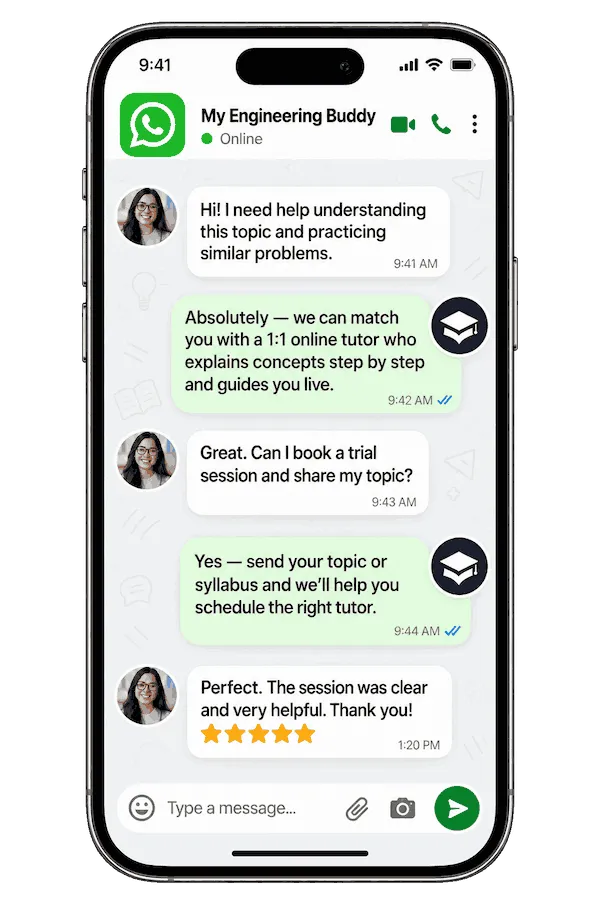
Unlike platforms where you fill out a form and wait, MEB responds in under a minute, 24/7. Tutor match takes under an hour. The $1 trial means you test before you commit. Everything runs over WhatsApp — no logins, no intake forms.
Study Plans (Pick One That Matches Your Goal)
The tutor builds your specific sequence after the diagnostic, but most students fall into one of three plans: a catch-up sprint of one to three weeks for students behind on a text or theory unit; a four-to-eight-week exam or submission prep block structured around your deadline; or ongoing weekly support aligned to your module schedule and coursework calendar. If you’re a PhD student working on a dissertation chapter, the tutor will map the sessions around your draft timeline instead.
Pricing Guide
Standard postcolonial literature tutoring runs $20–$40/hr for undergraduate and A Level students. Graduate-level and dissertation support typically falls in the $40–$100/hr range depending on theoretical complexity and tutor seniority. Rate factors include your level, the specific texts and frameworks involved, your timeline, and tutor availability.
Availability tightens at semester end and during major submission windows. If your deadline is within two weeks, flag that when you WhatsApp.
For students targeting top-ranked MA programmes or PhD positions in postcolonial and world literature, tutors with active research backgrounds in the field are available at higher rates — share your specific goal and MEB will match the tier to your ambition.
Start with the $1 trial — 30 minutes, no registration, no commitment. WhatsApp MEB for a quick quote.
MEB has supported students in postcolonial literature, literary criticism, and world literature tutoring since 2008 — across essay-based undergraduate modules, MA seminars, and PhD dissertation chapters.
Source: My Engineering Buddy, 2008–2025.
FAQ
Is postcolonial literature hard?
It’s demanding rather than hard in the technical sense. The theoretical vocabulary — hybridity, subaltern, mimicry, Orientalism — is unfamiliar at first. Once you have a working understanding of three or four key theorists and can apply them to a text, the subject becomes manageable quickly.
How many sessions are needed?
Most students see clear essay improvement within four to six sessions. Students with a dissertation chapter or a full module to cover typically work across eight to twelve sessions. The diagnostic in session one sets the realistic timeline for your specific situation.
Can you help with homework and assignments?
Yes — MEB tutoring is guided learning. The tutor explains the concepts, frameworks, and essay structure so you understand the work fully, then you submit it yourself. See our Academic Integrity policy and Why MEB page for full details on what we help with and what we don’t.
Will the tutor match my exact syllabus or exam board?
Yes. When you WhatsApp MEB, share your course name, institution, and any set texts or essay questions. The tutor is matched to that specific syllabus — not a general postcolonial literature curriculum that may not align with your assessment.
What happens in the first session?
The tutor runs a diagnostic — asking you to summarise a key text or theorist, or walk through a recent essay attempt. This identifies exactly where understanding breaks down. The session then addresses one or two of those gaps directly, so you leave with something concrete.
Is online tutoring as effective as in-person?
For literature and essay-based subjects, online tutoring is often more effective. The tutor annotates your work in real time on a shared screen. You can paste in essay drafts, share PDF passages, and get line-level feedback without printing anything. Most students adapt within the first session.
What’s the difference between postcolonial literature and world literature?
World literature is a broader category covering texts from across global traditions without a specific political framework. Postcolonial literature focuses specifically on writing shaped by colonial histories and their aftermath — it carries a theoretical dimension that world literature study doesn’t always require. Many courses overlap, but the essay expectations differ significantly.
Do I need to have read all the set texts before starting tutoring?
No. The tutor can work with you through a text you haven’t finished, help you extract what’s analytically relevant, and teach you how to read for argument rather than plot. Many students arrive mid-module with incomplete reading and still make strong progress within a few sessions.
Can I get postcolonial literature help at midnight or on weekends?
Yes. MEB operates 24/7 across time zones. If you’re in the US, UK, Canada, Australia, or the Gulf, there’s a tutor available in your window. WhatsApp MEB at any hour — median response time is under one minute.
Do you offer group postcolonial literature sessions?
MEB is 1:1 by design. Group sessions dilute the diagnostic precision that makes postcolonial literature tutoring work — theory application is personal to the student’s argument, not a lecture. If you and a study partner want sessions, each books separately and both benefit more.
How do I get started?
WhatsApp MEB with your course details and the essay or exam you’re working toward. You get matched with a verified tutor — usually within the hour. The first session is the $1 trial: 30 minutes of live tutoring or one essay question explained in full. Three steps: WhatsApp, match, start.
Can tutors help with postcolonial theory at PhD level, not just reading novels?
Yes. MEB has tutors with active research backgrounds in postcolonial studies who work at dissertation and thesis level — including literature reviews, chapter argumentation, and engagement with current debates in the field. Share your research question when you make contact.
Trust & Quality at My Engineering Buddy
Every MEB tutor goes through a structured vetting process: subject knowledge screening, a live demo session evaluation, and ongoing review based on student feedback. Tutors in postcolonial literature hold postgraduate degrees in English, comparative literature, or postcolonial studies — and are assessed on their ability to teach theory application, not just content recall. Rated 4.8/5 across 40,000+ verified reviews on Google.
MEB tutoring is guided learning — you understand the work, then submit it yourself. For full details on what we help with and what we don’t, read our Academic Integrity policy and Why MEB.
MEB has been running since 2008, serving 52,000+ students across the US, UK, Canada, Australia, Gulf, and Europe in 2,800+ subjects. Literature is one of our core areas — including literary analysis tutoring, British literature help, and postcolonial studies at every level from A Level to doctoral dissertation. Our tutoring methodology is built around diagnostic-first sessions and structured feedback loops — not generic lesson plans.
Cambridge International offers postcolonial and world literature components through A Level English Literature — a qualification taken by students across the UK, US, Australia, Canada, and the Gulf. MEB tutors are matched to specific Cambridge Assessment International Education syllabuses on request.
Source: Cambridge Assessment International Education.
Try your first session for $1 — 30 minutes of live 1:1 tutoring or one homework question explained in full. No registration. No commitment.
WhatsApp MEB now
and get matched within the hour.
Explore Related Subjects
Students studying postcolonial literature often also need support in:
Next Steps
When you WhatsApp MEB, share your exam board or course name, the texts or theorists you’re working with, and your submission or exam date. Include your time zone and availability. MEB matches you with a verified postcolonial literature tutor — usually within 24 hours, often within the hour.
Before your first session, have ready:
- Your course outline or essay brief, plus any set texts
- A recent essay attempt or a passage you’re struggling to analyze
- Your exam or submission deadline
The tutor handles the rest. The first session starts with a diagnostic so every minute is used well.
Visit www.myengineeringbuddy.com for more on how MEB works.
WhatsApp to get started or email [email protected].
Reviewed by Subject Expert
This page has been carefully reviewed and validated by our subject expert to ensure accuracy and relevance.