Hire Verified & Experienced
Sass (Syntactically Awesome Style Sheets) Tutors
4.8/5 40K+ session ratings collected on the MEB platform



Hire The Best Sass (Syntactically Awesome Style Sheets) Tutor
Top Tutors, Top Grades. Without The Stress!


52,000+ Happy Students From Various Universities






How Much For Private 1:1 Tutoring & Hw Help?
Private 1:1 Tutoring and HW help Cost $20 – 35 per hour* on average.
Your Sass partials are compiling fine — but your codebase is a mess and you know it.
Sass (Syntactically Awesome Style Sheets) Tutor Online
Sass (Syntactically Awesome Style Sheets) is a CSS preprocessor that extends standard CSS with variables, nesting, mixins, and functions, enabling developers to write more maintainable, modular stylesheets for complex web projects.
If you’re searching for a Sass tutor near me, MEB connects you with verified 1:1 online tutors for front-end development project help — from your first @mixin to production-ready component libraries. Sessions are live, adaptive, and built around what you’re actually building right now.
- 1:1 online sessions tailored to your project or course syllabus
- Expert-verified tutors with hands-on Sass and front-end experience
- Flexible time zones — US, UK, Canada, Australia, Gulf
- Structured learning plan built after a diagnostic session
- Guided project support — we explain, you build
52,000+ students across the US, UK, Canada, Australia, and the Gulf have used MEB since 2008 — including students in Front-End Development subjects like Sass, CSS tutoring, and Bootstrap help.
Source: My Engineering Buddy, 2008–2025.
How Much Does a Sass Tutor Cost?
Most Sass tutoring sessions run $20–$40/hr. For students working on advanced component systems or design tokens at a professional level, rates go up to $100/hr. You can test the whole thing for $1 before committing to anything.
| Level / Need | Typical Rate | What’s Included |
|---|---|---|
| Standard (most levels) | $20–$35/hr | 1:1 sessions, project guidance |
| Advanced / Specialist | $35–$100/hr | Expert tutor, architecture depth |
| $1 Trial | $1 flat | 30 min live session or 1 project question |
Tutor availability tightens during university project deadlines and bootcamp sprints — book early if you’re on a fixed timeline.
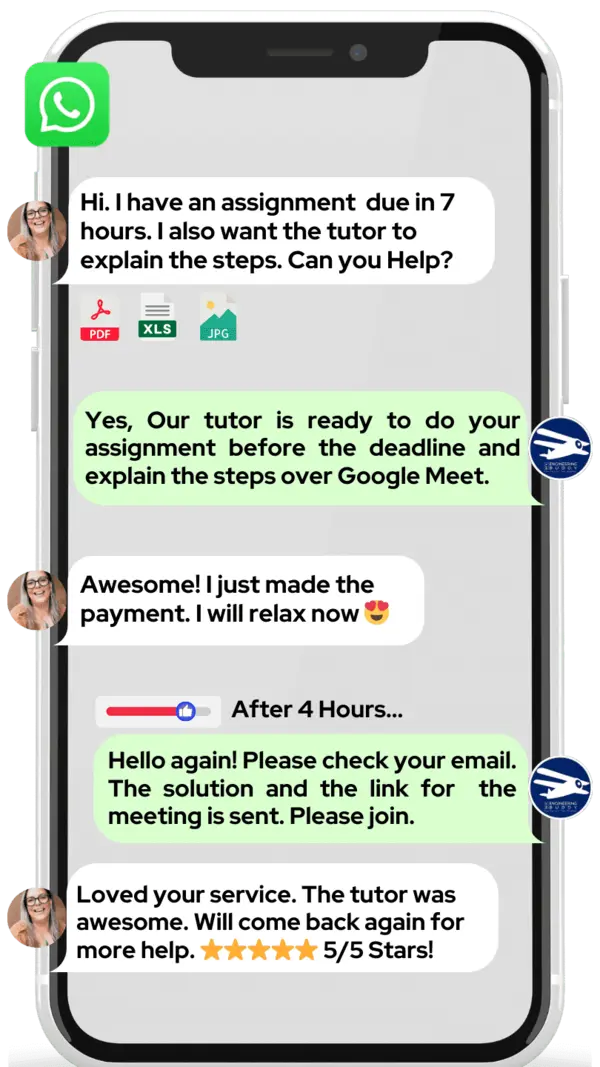
WhatsApp MEB for a quick quote — average response time under 1 minute.
Who This Sass Tutoring Is For
Most students arrive with working CSS knowledge but hit a wall when Sass structure gets complicated. Variables, maps, loops, and architecture patterns trip people up fast — especially under deadline pressure.
- Students in web development or UI engineering courses dealing with Sass for the first time
- Bootcamp students whose curriculum introduced Sass but moved on before it clicked
- Front-end developers building their first component library and unsure how to structure partials
- Students with a portfolio deadline approaching and unresolved issues in their stylesheet architecture
- Students retaking a front-end module after a failed first attempt where CSS and Sass were weak points
- Developers at MIT, Carnegie Mellon, Georgia Tech, University of Michigan, University of Toronto, ETH Zurich, and UCL working on design-system-heavy capstone projects
The $1 trial is the lowest-risk way to see whether the tutor matches your level before you book anything further.
1:1 Tutoring vs Self-Study vs AI vs YouTube vs Online Courses
Self-study works if you’re disciplined, but Sass errors often look like CSS errors — no one tells you why the architecture is wrong. AI tools explain syntax fast but can’t watch you structure a 10-file partial system and catch the flaw in real time. YouTube covers @mixin basics well, then stops exactly when your specific project problem starts. Online courses move at a fixed pace, and Sass modules are rarely where courses spend their budget. With 1:1 Sass tutoring at MEB, a tutor watches your actual codebase, spots the @use vs @import confusion or the specificity bleed, and corrects it during the session — not in a forum reply three days later.
Outcomes: What You’ll Be Able To Do in Sass
After working through Sass 1:1 with an MEB tutor, you’ll be able to write modular stylesheets using the 7-1 architecture pattern, apply mixins and functions to eliminate repetitive CSS across components, use maps and loops to generate consistent design tokens, and explain the difference between @use, @forward, and legacy @import to a team. You’ll also be able to configure a Sass build pipeline in a real project environment.
Based on feedback from 40,000+ sessions collected by MEB from 2022 to 2025, students working 1:1 on Sass consistently report faster debugging of stylesheet conflicts, clearer understanding of preprocessing architecture, and noticeably more confident output in front-end project reviews.
Source: MEB session feedback data, 2022–2025.
At MEB, we’ve found that most Sass confusion isn’t really about syntax — it’s about architecture. Students who understand why you split partials the way you do stop fighting their own stylesheets and start moving fast. That shift usually happens within two or three focused sessions.
Try your first session for $1 — 30 minutes of live 1:1 tutoring or one project question explained in full. No registration. No commitment. WhatsApp MEB now and get matched within the hour.
What We Cover in Sass (Syllabus / Topics)

Core Sass Syntax and Language Features
- Variables: declaring, scoping, and using
!defaultflags - Nesting: rules, properties, and avoiding specificity bloat
- Partials and the
@use/@forwardmodule system - Mixins: defining, including, and passing arguments with defaults
- Functions: built-in colour and math functions, custom function creation
- Operators: arithmetic in stylesheets and unit handling
- Placeholder selectors and
%extendpatterns
Recommended references: Sass and Compass in Action by Wynn Netherland et al.; the official Sass documentation at sass-lang.com.
Architecture and Project Organisation
- The 7-1 pattern: abstracts, base, components, layout, pages, themes, vendors
- Naming conventions: BEM inside Sass partials
- Maps for design tokens: colours, spacing, breakpoints
@eachand@forloops for generating utility classes- Managing responsive design breakpoints with Sass mixins
- Structuring partials for team-scale codebases
- Avoiding common pitfalls: over-nesting, selector explosion, global leakage
Recommended references: CSS Architecture by Philip Walton; Harry Roberts’ ITCSS methodology documentation.
Sass in Build Pipelines and Frameworks
- Compiling Sass with npm scripts and the Dart Sass CLI
- Integrating Sass into Angular component stylesheets
- Using Sass with Bootstrap: overriding variables and importing only needed modules
- Source maps: debugging compiled output back to source partials
- Linting Sass with Stylelint and sass-lint configurations
- Migrating legacy
@importcodebases to the@usemodule system
Recommended references: Dart Sass official documentation; Bootstrap 5 source documentation for Sass customisation.
MEB tutors cover the full Sass stack — from first variables to production-grade design token systems — across Angular, Bootstrap, and custom build environments used at leading tech programmes worldwide.
Source: My Engineering Buddy, 2008–2025.
Platforms, Tools & Textbooks We Support
Sass development happens across several environments, and your tutor works within whichever setup you’re already using. No need to switch tools for the session.
- Dart Sass CLI and Node Sass (legacy)
- VS Code with Sass-specific extensions (Live Sass Compiler, Stylelint)
- WebStorm and JetBrains IDEs
- Webpack, Vite, and Parcel build toolchains
- Angular CLI and Create React App Sass configurations
- Figma — for mapping design tokens from Figma to Sass variable systems
- GitHub and GitLab — reviewing Sass file structure in pull requests
What a Typical Sass Session Looks Like
The tutor starts by checking what you worked on since the last session — usually a specific partial or mixin you were asked to write. You share your screen and open the relevant files. If there’s a compile error or an unexpected output, the tutor walks through it live using a digital pen-pad to annotate the structure. You might be working on a broken @use import chain, a loop generating wrong class names, or a mixin that isn’t scoping colour correctly. The tutor asks you to explain your logic before correcting it — that’s where the real learning happens. By the end, you have a concrete task: rewrite the partial, add a new function, or apply what you’ve learned to a new component. The next topic is noted and ready for session two.
How MEB Tutors Help You with Sass (The Learning Loop)
Diagnose: In the first session, the tutor asks you to open your actual project — not a practice file. They look at your folder structure, your variable naming, and how you’re using (or misusing) nesting. That gives a clear map of what to fix first.
Explain: The tutor works through the concept live — drawing on a digital pen-pad, annotating your code, showing the right pattern alongside the broken one. No slides. No pre-built demos that look nothing like your actual project.
Practice: You write the corrected version while the tutor watches. Not after the session — during it. That’s when mistakes surface and get fixed before they become habits.
Feedback: Every error gets explained at the root level. Why did the loop generate duplicate selectors? Why is the mixin argument not being recognised? The tutor traces it back so you understand the rule, not just the fix.
Plan: Before the session ends, the tutor sets a specific task and outlines what the next session covers. You don’t arrive next time wondering where you left off.
Sessions run on Google Meet. Tutors use a digital pen-pad or iPad with Apple Pencil for annotations. Before your first session, share your project files or repository link and note which part of the Sass architecture is giving you trouble. The first session covers a diagnostic review of your setup and resolves at least one real issue in your codebase. Start with the $1 trial — 30 minutes of live tutoring that also serves as your first diagnostic.
Students consistently tell us that the moment Sass clicks isn’t when they read the docs — it’s when a tutor points to their own code and says “here’s what’s happening and why.” That moment is worth more than three hours of reading alone.
Tutor Match Criteria (How We Pick Your Tutor)
Not every front-end tutor is a Sass tutor. MEB matches on specifics.
Subject depth: Tutors are matched to your exact context — bootcamp project, university module, component library build, or migration from legacy Sass to the module system. A tutor who only knows @import doesn’t get assigned to a @use/@forward session.
Tools: Every session runs on Google Meet with a digital pen-pad or iPad and Apple Pencil. Your tutor can annotate your code directly on screen.
Time zone: Matched to US, UK, Gulf, Canada, or Australia — no awkward scheduling workarounds.
Goals: Whether you need to pass a module, finish a portfolio project, or refactor a production codebase, the tutor match reflects that priority from day one.
Unlike platforms where you fill out a form and wait, MEB responds in under a minute, 24/7. Tutor match takes under an hour. The $1 trial means you test before you commit. Everything runs over WhatsApp — no logins, no intake forms.
Pricing Guide
Sass tutoring runs $20–$40/hr for most levels. Graduate-level or professional front-end architecture work — think design system audits, monorepo Sass strategy, or token pipeline design — goes up to $100/hr. Rate depends on level, the complexity of your project, your timeline, and tutor availability.
For students targeting roles at top-tier tech companies or design-led agencies, tutors with professional front-end engineering backgrounds are available at higher rates — share your specific goal and MEB will match the tier to your ambition.
Peak availability tightens around university project submission windows and bootcamp graduation sprints. Book early if you have a fixed deadline.
Start with the $1 trial — 30 minutes, no registration, no commitment. WhatsApp MEB for a quick quote.
FAQ
Is Sass hard to learn?
The syntax is approachable if you know CSS. The challenge is architecture — knowing how to split files, when to use a mixin versus a function, and how to avoid specificity problems at scale. That’s where most students need support.
How many sessions are typically needed?
Students with basic CSS knowledge usually resolve their core Sass confusion in 3–5 sessions. Larger goals — like learning the full 7-1 pattern or integrating Sass into a framework — take 8–15 sessions depending on starting level.
Can you help with projects and portfolio work?
Yes. MEB tutors work through your actual project files — reviewing your partial structure, explaining what’s broken, and guiding you to fix it yourself. MEB provides guided learning support. All project work is produced and submitted by the student. See our Policies page for details.
Will the tutor match my exact course or framework?
Yes. Tell MEB which framework or build environment you’re using — Angular, Bootstrap, Webpack, Vite, or a custom setup — and the tutor is matched to that context. Bootcamp and university module syllabi are both covered.
What happens in the first session?
The tutor reviews your project or asks diagnostic questions about where you’re stuck. From that, they map what to prioritise. Most students resolve at least one real issue in the first 30 minutes.
Are online Sass lessons as effective as in-person?
For Sass specifically, online is often better. Screen sharing lets the tutor see your exact codebase, annotate it live, and work on your actual files — something an in-person whiteboard session rarely achieves this directly.
What’s the difference between Sass and SCSS, and does MEB cover both?
Sass has two syntaxes: the indented Sass syntax and SCSS, which uses standard CSS brackets. SCSS is now the default and what most projects use. MEB tutors cover both, though almost all students work in SCSS. Your tutor will match whichever syntax your project uses.
Should I learn Sass if CSS custom properties now exist?
Both have a place. CSS custom properties are runtime variables; Sass variables and logic run at compile time. For large codebases with complex theming, mixins, and loops, Sass still solves problems CSS custom properties can’t. A tutor can help you decide what your specific project actually needs.
Can I get Sass help at midnight or on weekends?
Yes. MEB tutors are available across time zones, including late-night slots for US and UK students and morning slots for Gulf and Australian students. WhatsApp MEB at any hour — average response time is under a minute.
What if I don’t like my assigned tutor?
Request a replacement via WhatsApp. MEB will match you with a different tutor, usually within the same day. The $1 trial exists specifically so you can test the fit before committing to a longer plan.
How do I get started?
WhatsApp MEB, share your syllabus or project details and your time zone. You get matched with a verified tutor, usually within 24 hours. The first session is the $1 trial — 30 minutes live or one question fully explained.
How do I find a Sass tutor if I’m based outside the US?
MEB covers the UK, Canada, Australia, Gulf states, and mainland Europe. Time zone matching is handled automatically. Students in Dubai, Sydney, London, and Toronto all book through the same WhatsApp — location makes no difference to availability.
Trust & Quality at My Engineering Buddy
Every MEB tutor goes through subject-specific screening — not just a general coding test. Sass tutors are evaluated on their knowledge of the module system, architecture patterns, and real project experience. They complete a live demo evaluation before being matched to students, and ongoing session feedback is reviewed to maintain quality. Rated 4.8/5 across 40,000+ verified reviews on Google.
MEB provides guided learning support. All project work is produced and submitted by the student. For full details on what we help with and what we don’t, read our Academic Integrity policy and Why MEB.
MEB has served 52,000+ students since 2008 across 2,800+ subjects in the US, UK, Canada, Australia, Gulf, and Europe. In front-end development, that includes HTML tutoring, TypeScript help, and UX/UI design tutoring — alongside Sass, which sits at the intersection of design systems and front-end engineering.
A common pattern our tutors observe is that students who struggle with Sass are usually strong at CSS — they just haven’t been shown how to think in abstractions yet. Once that shift happens, the architecture patterns follow quickly.
MEB’s tutoring methodology is built on diagnosis first, explanation second, and student-led practice third — the sequence that produces durable learning rather than session-dependent performance.
Source: My Engineering Buddy, 2008–2025.
Explore Related Subjects
Students studying Sass often also need support in:
Next Steps
Before your first session, have ready: your course outline or project brief, a specific file or component where Sass is giving you trouble, and your deadline or submission date. The tutor handles the rest.
- Share your framework, current project, and hardest Sass problem via WhatsApp
- Share your availability and time zone
- MEB matches you with a verified tutor — usually within 24 hours
The first session starts with a diagnostic review of your actual codebase, so no time is wasted on problems you’ve already solved.
Visit www.myengineeringbuddy.com for more on how MEB works.
WhatsApp to get started or email meb@myengineeringbuddy.com.
Reviewed by Subject Expert
This page has been carefully reviewed and validated by our subject expert to ensure accuracy and relevance.