Hire Verified & Experienced
Spectroscopy Tutors
4.8/5 40K+ session ratings collected on the MEB platform
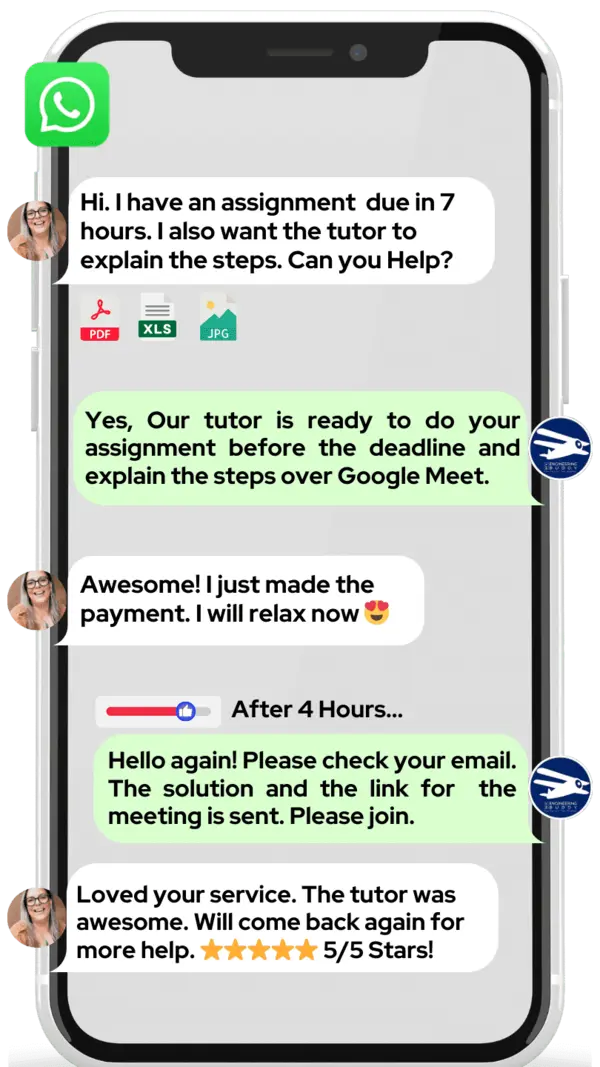



Hire The Best Spectroscopy Tutor
Top Tutors, Top Grades. Without The Stress!
52,000+ Happy Students From Various Universities






How Much For Private 1:1 Tutoring & Hw Help?
Private 1:1 Tutoring and HW help Cost $20 – 35 per hour* on average.
Most students who struggle with spectroscopy don’t have a concept problem. They have a pattern-recognition problem — and no one has ever sat with them long enough to fix it.
Spectroscopy Tutor Online
Spectroscopy is the study of how matter interacts with electromagnetic radiation. It equips students to identify molecular structures, analyse chemical composition, and interpret spectra across techniques including IR, NMR, UV-Vis, and mass spectrometry.
MEB offers 1:1 online Materials Science and Engineering tutoring across the full subject family — including a dedicated spectroscopy tutor online for every level from undergraduate analytical chemistry to graduate research methods. If you’ve been searching for a spectroscopy tutor near me, online is faster, more flexible, and just as effective. Sessions are calibrated to your exact course, exam board, and the specific spectra giving you trouble.
- 1:1 online sessions tailored to your syllabus — IR, NMR, UV-Vis, mass spec, or combined
- Expert-verified tutors with postgraduate-level subject knowledge
- Flexible time zones — US, UK, Canada, Australia, Gulf covered
- Structured session plan built after a diagnostic in your first session
- Ethical homework and assignment guidance — you understand the problem, then submit it yourself
52,000+ students across the US, UK, Canada, Australia, and the Gulf have used MEB since 2008 — including students in Materials Science and Engineering subjects like Spectroscopy, Physical Metallurgy, and Polymer Science and Engineering.
Source: My Engineering Buddy, 2008–2025.
How Much Does a Spectroscopy Tutor Cost?
Most spectroscopy tutoring sessions run $20–$40/hr. Graduate-level or research-methods work can reach $70–$100/hr depending on tutor depth and session complexity. Before you commit, try the $1 trial — 30 minutes of live 1:1 tutoring or one full homework question explained with working shown.
| Level / Need | Typical Rate | What’s Included |
|---|---|---|
| Undergraduate (most levels) | $20–$40/hr | 1:1 sessions, homework guidance, spectrum interpretation |
| Advanced / Graduate | $40–$100/hr | Research-grade support, instrument theory, data analysis |
| $1 Trial | $1 flat | 30 min live session or one full homework question explained |
Tutor availability tightens significantly during undergraduate finals periods and postgraduate submission windows. WhatsApp MEB for a quick quote — average response time under 1 minute.
Who This Spectroscopy Tutoring Is For
Spectroscopy sits at the intersection of physics, chemistry, and materials analysis. Students hit walls fast — especially when moving from theory to actual spectrum interpretation. This is for anyone who knows the name of the technique but can’t yet reliably extract the structural information from a real spectrum.
- Undergraduate chemistry, biochemistry, or materials science students tackling IR and NMR for the first time
- Graduate students preparing for qualifying exams that include spectroscopic analysis components
- Students retaking an analytical chemistry module after a failed first attempt
- Researchers who need to interpret experimental spectra but had minimal formal spectroscopy instruction
- Students with a coursework or lab report deadline approaching who are stuck on spectral assignment problems
- Parents supporting an undergraduate who has gone quiet about their chemistry results
Students have come to MEB from programmes at institutions including MIT, Imperial College London, University of Toronto, University of Melbourne, ETH Zurich, and universities across the Gulf region. The $1 trial is the lowest-risk way to see whether the match works before you book anything further.
At MEB, we’ve found that spectroscopy is one of those subjects where students know they’re behind but can’t pinpoint exactly where the understanding broke down. The first session is almost always diagnostic in practice — even when it isn’t labelled that way. Finding the gap early saves three weeks of unfocused revision.
1:1 Tutoring vs Self-Study vs AI vs YouTube vs Online Courses
Self-study works if you’re disciplined, but spectroscopy interpretation requires feedback — you won’t know your peak assignments are wrong until a marker tells you. AI tools explain concepts quickly but can’t watch you misread a coupling pattern and correct it live. YouTube is solid for overview lectures on IR stretches or NMR chemical shift regions, but it stops the moment your specific spectrum doesn’t match the example. Online courses are structured but fixed-pace, and spectroscopy problems don’t wait for the next module release. With MEB, a tutor works through your actual spectra with you in real time — correcting the reasoning, not just the answer.
Outcomes: What You’ll Be Able To Do in Spectroscopy
After focused 1:1 spectroscopy tutoring, students can analyse an IR spectrum and confidently assign key functional group absorptions, including distinguishing between broad O–H stretches and sharp N–H peaks. They can interpret ¹H NMR spectra — solve splitting patterns, apply the n+1 rule, and use integration data to determine hydrogen environments. Students can apply UV-Vis absorbance data to identify conjugated systems and use Beer-Lambert calculations in quantitative analysis. They can work through mass spectrometry fragmentation pathways and identify molecular ion peaks, base peaks, and common fragment losses. Most importantly, they can combine data from multiple techniques to propose a consistent structural assignment under exam conditions.
Based on feedback from 40,000+ sessions collected by MEB from 2022 to 2025, 58% of students improved by one full grade after approximately 20 hours of 1:1 tutoring in subjects like Spectroscopy. A further 23% achieved at least a half-grade improvement.
Source: MEB session feedback data, 2022–2025.
Try your first session for $1 — 30 minutes of live 1:1 tutoring or one homework question explained in full. No registration. No commitment. WhatsApp MEB now and get matched within the hour.
What We Cover in Spectroscopy (Syllabus / Topics)

Track 1: Infrared and UV-Vis Spectroscopy
- Molecular vibrations: stretching and bending modes
- Functional group identification from IR absorption bands (carbonyl, hydroxyl, amine, alkene)
- Fingerprint region interpretation and its limitations
- Beer-Lambert law and quantitative UV-Vis analysis
- Chromophores, auxochromes, and conjugation effects on λmax
- ATR-FTIR instrumentation and sample preparation
- Comparing experimental spectra against reference databases
Key texts: Silverstein, Webster & Kiemle Spectrometric Identification of Organic Compounds; Skoog, Holler & Crouch Principles of Instrumental Analysis.
Track 2: NMR Spectroscopy
- Nuclear spin, resonance frequency, and the chemical shift scale (δ ppm)
- ¹H NMR: integration, multiplicity, and the n+1 splitting rule
- ¹³C NMR: DEPT experiments and carbon environment assignment
- Coupling constants (J values) and their structural significance
- 2D NMR techniques: COSY, HSQC, HMBC for complex molecule elucidation
- Solvent choice, TMS reference, and spectrum acquisition parameters
- Common NMR artefacts: spinning sidebands, impurity peaks
Key texts: Clayden, Greeves & Warren Organic Chemistry; Keeler Understanding NMR Spectroscopy.
Track 3: Mass Spectrometry and Combined Structure Elucidation
- Ionisation methods: EI, ESI, MALDI and their applications
- Molecular ion peak (M+), base peak, and isotope pattern analysis
- Common fragmentation pathways: alpha cleavage, McLafferty rearrangement
- High-resolution mass spectrometry and exact mass calculations
- Combining IR, NMR, and MS data to assign an unknown structure
- Tandem MS (MS/MS) and its role in pharmaceutical and proteomics workflows
Key texts: Gross Mass Spectrometry: A Textbook; Silverstein, Webster & Kiemle Spectrometric Identification of Organic Compounds (MS chapters).
Spectroscopy sits inside a broader analytical toolkit. Students who get the interpretation logic right in spectroscopy consistently find their performance in adjacent analytical modules — chromatography, electrochemistry, surface analysis — improves alongside it.
Source: My Engineering Buddy tutor observation, 2022–2025.
What a Typical Spectroscopy Session Looks Like
The tutor opens by checking the previous topic — usually whether the student attempted the NMR integration problem or the IR functional group identification exercise set at the end of the last session. From there, the session moves into the current problem: the student shares their screen or uploads the spectrum file, and the tutor works through it using a digital pen-pad, annotating peaks, marking shift regions, and building the structural argument step by step. The student then replicates the reasoning on a new spectrum — independently, with the tutor watching. Errors in logic (not just wrong answers) are corrected immediately. The session closes with a specific practice task: typically two to three spectra for independent interpretation before the next session, with a note on which technique the next session will extend.
How MEB Tutors Help You with Spectroscopy (The Learning Loop)
Diagnose: In the first session, the tutor works out exactly where the breakdown is. For most spectroscopy students, it’s one of three places: they can identify peaks but can’t build the structural argument, they understand individual techniques but can’t combine them, or they’ve memorised rules without understanding why the physics produces the pattern. The tutor identifies which of these applies within the first 20 minutes.
Explain: The tutor works live problems on screen using a digital pen-pad — annotating spectra, showing the reasoning sequence, and narrating the decision tree. No pre-recorded slides. The explanation is built around your specific spectrum, your actual confusion, not a textbook example that happens to be close.
Practice: The student attempts the next spectrum while the tutor watches. This is not optional. Students who skip to more explanation without attempting problems under observation don’t retain the pattern-recognition skills that spectroscopy requires.
Feedback: Error correction is step-by-step — not “that’s wrong, here’s the right answer” but “you assigned that carbonyl correctly, but then you ignored the integration ratio on the adjacent peak, which changes the structural candidate.” Students leave knowing exactly which reasoning step failed.
Plan: At the end of every session, the tutor sets the next topic, names the specific spectra or problem sets for independent practice, and flags the area most likely to cause difficulty before the next meeting.
Sessions run on Google Meet. The tutor uses a digital pen-pad or iPad with Apple Pencil for spectrum annotation. Before your first session, have ready: your course syllabus or exam specification, a recent spectrum or assignment problem you struggled with, and your exam or submission date. The first session covers diagnostic problems and the tutor builds the session sequence from there. Whether you need a quick catch-up before an exam, structured revision over four to eight weeks, or ongoing weekly support through the semester, the tutor maps the plan after that first diagnostic.
Start with the $1 trial — 30 minutes of live tutoring that also serves as your first diagnostic.
Students consistently tell us that spectroscopy clicked for them not when they learned more theory, but when someone sat with them while they worked through a spectrum live. The moment of correction — in real time, on their actual problem — is where the pattern recognition finally lands. That’s what 1:1 does that nothing else can replicate.
Tutor Match Criteria (How We Pick Your Tutor)
Not every analytical chemist is the right match for every spectroscopy student. Here’s what MEB checks before assigning your tutor.
Subject depth: Tutors are matched to your specific techniques — an undergraduate needing NMR fundamentals gets a different tutor profile than a graduate student working on 2D NMR for structure elucidation of novel compounds.
Tools: Every MEB spectroscopy tutor uses Google Meet with a digital pen-pad or iPad and Apple Pencil. Spectrum annotation is live, not described verbally.
Time zone: Matched to your region — US, UK, Canada, Australia, or Gulf. Sessions scheduled around your timetable, not ours.
Goals: Whether you need to pass a module, interpret your own research spectra, or build the skills for a dissertation chapter, the tutor is briefed on your goal before session one.
Unlike platforms where you fill out a form and wait, MEB responds in under a minute, 24/7. Tutor match takes under an hour. The $1 trial means you test before you commit. Everything runs over WhatsApp — no logins, no intake forms.
Pricing Guide
Spectroscopy tutoring runs $20–$40/hr for most undergraduate-level work. Graduate-level support — including research-grade spectral interpretation, instrument theory, or dissertation chapter support — reaches up to $100/hr. Rate factors include the specific techniques covered, the depth of the session, your timeline, and tutor availability at your preferred hours.
Peak exam and submission periods see tutor availability drop quickly. Book early if you have a fixed deadline.
For students targeting graduate programmes at research-intensive universities or positions in pharmaceutical, materials, or environmental analysis roles, tutors with professional and research backgrounds in spectroscopic methods are available at higher rates. Share your specific goal and MEB will match the tier to what you’re trying to achieve.
Start with the $1 trial — 30 minutes, no registration, no commitment. WhatsApp MEB for a quick quote.
FAQ
Is spectroscopy hard?
Spectroscopy is pattern-intensive, not mathematically brutal. Students find it hard because the rules are learnable but applying them to a real, unfamiliar spectrum requires practised reasoning. Most students who struggle improve significantly once someone shows them the decision sequence live on an actual spectrum.
How many sessions are needed?
Most students need four to eight sessions to move from shaky fundamentals to confident spectrum interpretation. Graduate students working on research-grade or combined-technique problems typically need eight to twelve. The tutor maps a specific sequence after the first diagnostic session.
Can you help with homework and assignments?
Yes — MEB tutoring is guided learning. The tutor explains the approach, works through the reasoning with you, and you write up and submit the work yourself. See our Academic Integrity policy and Why MEB page for full details on what we help with and what we don’t.
Will the tutor match my exact syllabus or exam board?
Yes. Before the first session, share your course code, institution, and exam board if applicable. MEB matches tutors who have worked with that specific syllabus or equivalent content level. Bring your course outline and the tutor will map sessions directly to it.
What happens in the first session?
The tutor runs a short diagnostic — usually two or three problems across the techniques you’re studying — to identify exactly where the reasoning breaks down. From there, the tutor proposes a session sequence and you agree on the pace and schedule together. Nothing is wasted.
Is online tutoring as effective as in-person?
For spectroscopy specifically, online is often better. Spectrum files can be shared directly on screen, the tutor annotates in real time with a digital pen-pad, and the student can zoom into peaks, overlay reference spectra, and work through software-based problems in the same session window.
Can I get spectroscopy help at short notice — even late at night?
Yes. WhatsApp MEB any time. Average response is under a minute. If your exam is in 48 hours or your assignment is due tomorrow, say so — MEB will prioritise the match and get a tutor confirmed as fast as possible.
What’s the difference between 1D and 2D NMR, and do you cover both?
1D NMR (¹H and ¹³C) gives shift and integration data for individual nuclei. 2D techniques — COSY, HSQC, HMBC — show correlations between nuclei and are essential for elucidating complex or novel structures. MEB tutors cover both, calibrated to your course level.
Do you offer group spectroscopy sessions?
MEB is 1:1 only. Group sessions aren’t offered because spectroscopy learning is too individualised — the gaps differ student to student, and a group session can’t correct one student’s reasoning error without losing the rest of the group’s time.
How do I find a spectroscopy tutor near me?
You don’t need to. Online spectroscopy tutoring removes geography from the equation entirely. MEB tutors cover the US, UK, Canada, Australia, and the Gulf — sessions run on Google Meet, and spectrum files are shared directly in the session.
How do I get started?
WhatsApp MEB, share your course level and the technique you’re stuck on, and you’ll be matched with a tutor — usually within an hour. The first session is the $1 trial: 30 minutes of live 1:1 tutoring or one full problem explained with working. No registration required.
What types of spectra problems come up most in undergraduate exams?
The most common exam formats are: assign all peaks in a given IR spectrum and justify each assignment; determine the structure of an unknown compound using combined NMR and MS data; and calculate degree of unsaturation before proposing candidates. MEB tutors drill all three formats to exam standard.
The ability to read a spectrum is one of the most transferable analytical skills in chemistry and materials science. Students who build it properly at undergraduate level carry it through research, industry, and postgraduate study without needing to relearn from scratch.
Source: My Engineering Buddy tutor observation, 2022–2025.
Trust & Quality at My Engineering Buddy
Every MEB spectroscopy tutor is screened before they take a session. Screening includes subject-specific vetting — tutors demonstrate their ability to interpret spectra and explain reasoning under the same conditions a student would face. Ongoing feedback from every session is reviewed. Rated 4.8/5 across 40,000+ verified reviews on Google.
MEB tutoring is guided learning — you understand the work, then submit it yourself. For full details on what we help with and what we don’t, read our Academic Integrity policy and Why MEB.
MEB has served 52,000+ students across the US, UK, Canada, Australia, the Gulf, and Europe since 2008 — across 2,800+ subjects. The Materials Science and Engineering subject family includes phase transformations tutoring and tribology help alongside Spectroscopy. Each subject area has tutors with direct academic or industry backgrounds in that field — not generalists covering everything at surface level. See our tutoring methodology for how sessions are structured.
Explore Related Subjects
Students studying Spectroscopy often also need support in:
Next Steps
Getting started takes under two minutes.
- Share your exam board or course outline, the specific technique giving you trouble, and your exam or submission date
- Share your availability and time zone
- MEB matches you with a verified spectroscopy tutor — usually within 24 hours, often faster
- First session starts with a diagnostic so every minute is used on the right problems
Before your first session, have ready: your course syllabus or exam specification, a recent spectrum or assignment problem you struggled with, and your exam or deadline date. The tutor handles the rest.
Visit www.myengineeringbuddy.com for more on how MEB works.
WhatsApp to get started or email meb@myengineeringbuddy.com.
Reviewed by Subject Expert
This page has been carefully reviewed and validated by our subject expert to ensure accuracy and relevance.