Hire Verified & Experienced
Team Collaboration Tutors
4.8/5 40K+ session ratings collected on the MEB platform
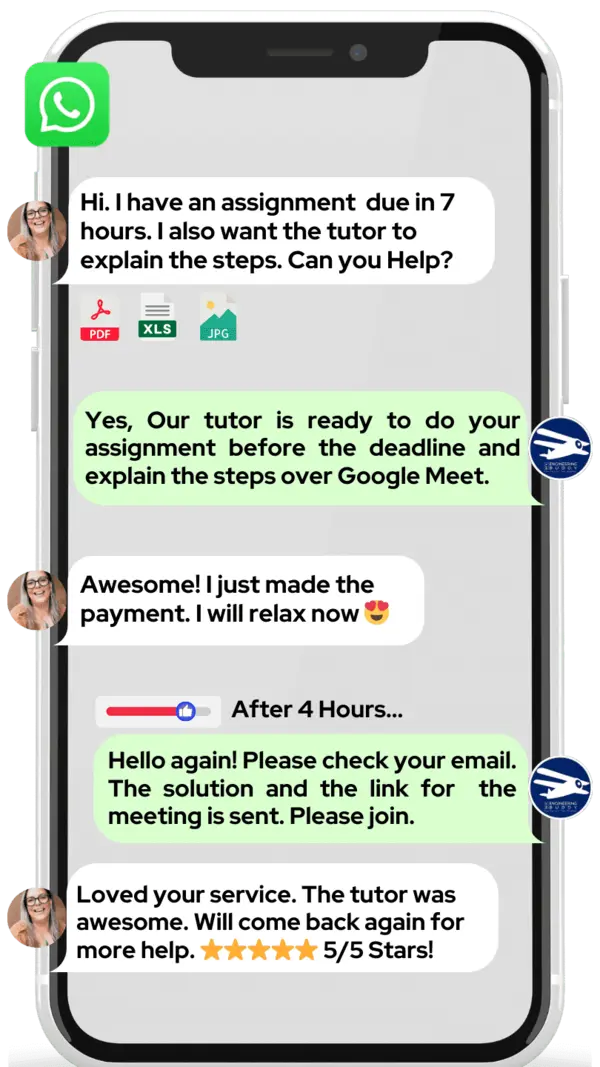



Hire The Best Team Collaboration Tutor
Top Tutors, Top Grades. Without The Stress!




52,000+ Happy Students From Various Universities






How Much For Private 1:1 Tutoring & Hw Help?
Private 1:1 Tutoring and HW help Cost $20 – 35 per hour* on average.
Group projects tanking your grade? Most students lose marks not on content — but on collaboration frameworks they were never taught.
Team Collaboration Tutor Online
Team Collaboration is the study of structured methods for working effectively in groups — covering communication, role distribution, conflict handling, and decision-making frameworks used in academic, professional, and organisational contexts.
MEB offers 1:1 online tutoring and homework help in Team Collaboration as part of its broader Business Management tutoring coverage. If you’ve searched for a Team Collaboration tutor near me, the 1:1 online format gives you access to verified specialists regardless of where you’re based — US, UK, Canada, Australia, or the Gulf. Tutors work directly with your course outline, assignment brief, or textbook. No two sessions look the same.
- 1:1 online sessions tailored to your exact course syllabus or module guide
- Expert-verified tutors with subject-specific knowledge in organisational behaviour and group dynamics
- Flexible time zones — sessions available across US, UK, Canada, Australia, and Gulf regions
- Structured learning plan built after a diagnostic session in your first hour
- Ethical homework and assignment guidance — you understand the work before you submit it
52,000+ students across the US, UK, Canada, Australia, and the Gulf have used MEB since 2008 — including students in Business Management subjects like Team Collaboration, Organisational Behaviour, and Conflict Management.
Source: My Engineering Buddy, 2008–2025.
How Much Does a Team Collaboration Tutor Cost?
Most Team Collaboration tutoring sessions run $20–$40/hr depending on your level and the complexity of your coursework. Start with the $1 trial — 30 minutes of live 1:1 tutoring or one full homework question explained in detail.
| Level / Need | Typical Rate | What’s Included |
|---|---|---|
| Standard (most undergraduate levels) | $20–$35/hr | 1:1 sessions, assignment guidance |
| Advanced / Specialist (MBA, grad-level) | $35–$70/hr | Expert tutor, case study depth |
| $1 Trial | $1 flat | 30 min live session or 1 full HW question |
Tutor availability tightens significantly around semester-end submission periods and MBA intake windows. Book early if your deadline is within three weeks.
WhatsApp MEB for a quick quote — average response time under 1 minute.
Who This Team Collaboration Tutoring Is For
This is for students who know the theory but freeze when it comes to applying it — group reports due tomorrow, a reflective essay on team dynamics, or a presentation where half the group went silent. It’s also for students who need to build the frameworks from scratch before their next assessed project.
- Undergraduate and postgraduate students taking organisational behaviour, management, or MBA modules with a team-dynamics component
- Students retaking a failed group-work assessment or reflective report who need to understand what went wrong
- Students with a university conditional offer depending on passing a management module that includes team collaboration coursework
- Students 4–6 weeks from submission with significant gaps in their understanding of collaboration models (Belbin, Tuckman, RACI)
- Students struggling to connect lecture content on Organisational Theory with real assessed scenarios
- Parents watching a student’s confidence drop as group project marks consistently underperform their individual grades
Students have come to MEB from programmes at universities including Cornell, Warwick, Melbourne, Toronto, Erasmus, and NYU Stern. No need to name a school — just share your module guide.
At MEB, we’ve found that Team Collaboration is one of those subjects where students feel they “get it” from lectures but can’t apply it under exam conditions or in a graded reflective essay. The gap is almost always in how the frameworks are practised — not how they’re explained.
1:1 Tutoring vs Self-Study vs AI vs YouTube vs Online Courses
Self-study works if you’re disciplined, but Team Collaboration theory means little without someone challenging how you’re applying it. AI tools give fast definitions — they can’t tell you why your Tuckman analysis missed the mark on a specific brief. YouTube covers the basics of Belbin or RACI well enough, but stops when you’re stuck on a real assessed scenario. Online courses move at a fixed pace with no room to dig into your actual assignment. 1:1 tutoring with MEB is calibrated to your exact module, your submission deadline, and the specific collaboration model your course uses — errors get caught and corrected in the session, not after the grade comes back.
Outcomes: What You’ll Be Able To Do in Team Collaboration
After working with a Team Collaboration tutor online through MEB, students can apply Tuckman’s stages of group development to real team scenarios and explain why a team stalled at the norming phase. They can analyse role distribution using Belbin’s team roles and present a justified RACI matrix for a project brief. Students learn to write reflective reports that connect lived group experience to academic frameworks — the exact skill most graders are looking for. They can present conflict resolution strategies drawn from Thomas-Kilmann and explain the conditions under which each approach is appropriate.
Based on feedback from 40,000+ sessions collected by MEB from 2022 to 2025, 58% of students improved by one full grade after approximately 20 hours of 1:1 tutoring in subjects like Team Collaboration. A further 23% achieved at least a half-grade improvement.
Source: MEB session feedback data, 2022–2025.
Supporting a student through Team Collaboration? MEB works directly with parents to set up sessions, track progress, and keep coursework on schedule. WhatsApp MEB — average response time is under a minute, 24/7.
Try your first session for $1 — 30 minutes of live 1:1 tutoring or one homework question explained in full. No registration. No commitment. WhatsApp MEB now and get matched within the hour.
What We Cover in Team Collaboration (Syllabus / Topics)

Track 1: Team Dynamics and Group Development Models
- Tuckman’s stages: forming, storming, norming, performing, adjourning
- Belbin’s team roles — identifying and assigning roles to team members
- Group cohesion, social loafing, and free-rider problems in assessed projects
- Psychological safety and its effect on team output quality
- Virtual and hybrid team dynamics — specific challenges and mitigation strategies
- RACI matrices and responsibility assignment in project-based coursework
Core texts include Katzenbach & Smith’s The Wisdom of Teams, Hackman’s Leading Teams, and Lencioni’s The Five Dysfunctions of a Team. Tutors work with your prescribed reading list.
Track 2: Communication and Conflict in Teams
- Communication frameworks for team settings — active listening, feedback loops, clarity
- Thomas-Kilmann conflict modes: competing, collaborating, compromising, avoiding, accommodating
- Interest-based negotiation applied to intra-team disagreements
- Written and verbal communication in cross-functional teams
- Business Communication tools within team contexts — meeting structures, agendas, minutes
- Cultural dimensions of team communication (Hofstede, Trompenaars)
Commonly used texts: Adler & Elmhorst’s Communicating at Work, Ury’s Getting to Yes, and Thomas & Kilmann’s original conflict mode instrument materials.
Track 3: Leadership, Decision-Making, and Performance in Teams
- Shared and distributed leadership models within teams
- Decision-making frameworks — consensus, majority vote, leader decides, consultative
- Goal-setting in teams: SMART objectives and OKRs applied to group projects
- Performance Management at the team level — KPIs, review cadence, accountability
- Reflective practice: writing post-project team evaluations graders want to read
- Linking team performance data to broader Organisational Development outcomes
Relevant texts include Northouse’s Leadership: Theory and Practice, Druskat & Wolff’s Harvard Business Review work on team emotional intelligence, and your institution’s module handbook.
What a Typical Team Collaboration Session Looks Like
The tutor opens by checking where you left off — usually a specific model like Tuckman’s norming phase or a Belbin role analysis you attempted since the last session. From there, you work through your actual assignment brief on screen together: the tutor annotates your draft reflective essay or walks through a RACI matrix you’ve started, marking exactly where the reasoning breaks down and why a marker would deduct points. You use the tutor’s digital pen-pad to trace how the argument should be restructured. Then you attempt the revision yourself, explaining your reasoning aloud. The session closes with a concrete task — rewrite this paragraph using Tuckman, or map these three team members to Belbin roles and justify — and the next topic is agreed before the call ends.
How MEB Tutors Help You with Team Collaboration (The Learning Loop)
Diagnose: In the first session, the tutor identifies which frameworks you can define but can’t apply, whether your reflective writing is descriptive rather than analytical, and how far your current draft is from what the marking rubric actually rewards.
Explain: The tutor works through a live example on a digital pen-pad — showing you not just what Belbin says, but how to use it in a sentence that earns marks. Real assignment language, not textbook summaries.
Practice: You attempt the same type of analysis on a parallel scenario while the tutor watches. This is where most students discover the gap between understanding and doing.
Feedback: Every error is corrected step by step. The tutor explains why the reasoning failed, not just that it did. Students covering Leadership theory alongside Team Collaboration often find this is where the two subjects start to connect clearly.
Plan: Before the session ends, the tutor sets the next topic, notes what to revisit, and agrees a specific task. Progress is tracked across sessions — not reset each time.
Sessions run over Google Meet with a digital pen-pad or iPad and Apple Pencil. Before your first session, have your module handbook or assignment brief ready, along with any draft work or past feedback. The first session serves as your diagnostic — every minute is used. Start with the $1 trial — 30 minutes of live tutoring that also works as your first diagnostic.
Students consistently tell us that the biggest shift in Team Collaboration isn’t learning new theory — it’s finally understanding how to use the theory they already know inside an answer that a marker can follow. That shift usually happens within the first two or three sessions.
Tutor Match Criteria (How We Pick Your Tutor)
Match happens within the hour. Here’s what MEB checks before confirming.
Subject depth: Tutors are matched to your specific module level — undergraduate group dynamics, MBA team leadership, or postgraduate organisational behaviour. Tutors covering Team Collaboration typically hold degrees in management, Human Resource Management, or organisational psychology, with direct experience teaching the frameworks your course uses.
Tools: Every session runs on Google Meet with a digital pen-pad or iPad and Apple Pencil. The tutor shares their screen and annotates in real time — you see the reasoning, not just the conclusion.
Time zone: Matched to your region. US students get US-compatible hours. UK, Gulf, Canada, and Australia are covered without exception.
Goals: Your tutor is selected for your specific aim — assignment rescue, conceptual depth, exam prep for a management module, or ongoing weekly support through semester.
Unlike platforms where you fill out a form and wait, MEB responds in under a minute, 24/7. Tutor match takes under an hour. The $1 trial means you test before you commit. Everything runs over WhatsApp — no logins, no intake forms.
Study Plans (Pick One That Matches Your Goal)
After the diagnostic session, the tutor builds a session sequence specific to your deadline and gaps. Three common patterns: Catch-up (1–3 weeks) — rapid coverage of core frameworks you’ve missed, focused on your submission brief; Exam prep (4–8 weeks) — structured revision across all assessed topics with timed practice answers and mark-scheme analysis; Weekly support — ongoing alignment to your semester timetable, covering each topic as it becomes assessed. The tutor maps the sequence after the first session — you don’t need to arrive with a plan.
Pricing Guide
Team Collaboration tutoring starts at $20/hr for standard undergraduate modules. Graduate and MBA-level work, or sessions requiring specialist knowledge of specific assessment frameworks, runs $35–$70/hr. Niche or accelerated-deadline requests can reach up to $100/hr.
Rate depends on your level, the complexity of the assignment or exam component, your timeline, and tutor availability. Rates firm up once MEB understands your goal — share those details over WhatsApp and you’ll have a quote in under a minute.
For students targeting top MBA programmes or roles at management consultancies, tutors with professional consulting or HR leadership backgrounds are available at higher rates — share your specific goal and MEB will match the tier to your ambition.
Start with the $1 trial — 30 minutes, no registration, no commitment. WhatsApp MEB for a quick quote.
MEB has worked with students across more than 2,800 subjects since 2008 — with a 4.8/5 rating built on 40,000+ verified reviews. Tutors are screened, not just listed.
Source: My Engineering Buddy platform data, 2008–2025.
FAQ
Is Team Collaboration hard?
It depends on where the difficulty sits. Most students find the theory straightforward. The hard part is applying frameworks like Belbin or Tuckman to a specific scenario under time pressure, or writing a reflective essay that goes beyond description into genuine analysis.
How many sessions are needed?
For a single assignment, two to four sessions usually covers diagnosis, explanation, and practice. For a full module with multiple assessed components, students typically work with a tutor across six to twelve sessions spread over the semester.
Can you help with homework and assignments?
Yes — MEB tutoring is guided learning. The tutor explains the framework, works through an example with you, and helps you understand how to structure your answer. You write and submit your own work. See our Academic Integrity policy and Why MEB page for full details on what we help with and what we don’t.
Will the tutor match my exact syllabus or exam board?
Yes. Share your module guide, assignment brief, or reading list when you contact MEB. Tutors are matched to your specific course structure — whether that’s a UK business school module, a North American MBA programme, or an Australian undergraduate management unit.
What happens in the first session?
The tutor runs a diagnostic — reviews your brief or past feedback, identifies which frameworks you can apply confidently and which are causing the gaps, and builds a session plan from there. The first session is working time, not orientation.
Is online tutoring as effective as in-person?
For Team Collaboration, the format works well online. The tutor annotates your actual draft on screen, models framework application in real time, and you respond live. Most students report that the screen-based annotation is clearer than a whiteboard would be in person.
Can I get Team Collaboration help at midnight?
Yes. MEB operates across time zones, and WhatsApp contact is monitored around the clock. If your assignment is due tomorrow and you message at midnight, you’ll have a reply and a matched tutor within the hour in most cases.
What if I don’t understand Belbin or Tuckman even after my tutor explains them?
The tutor tries a different angle — a different worked example, a different scenario, a breakdown into smaller steps. If the match isn’t right after two sessions, MEB will reassign you to a different tutor. No extra cost for the swap.
Do Team Collaboration sessions cover reflective writing as well as theory?
Yes. Reflective essays and post-project team evaluations are among the most commonly requested session types. The tutor works on both the framework understanding and the academic writing style required to score well on the reflective component.
How do I find a Team Collaboration tutor in my city?
You don’t need to. MEB sessions run entirely online via Google Meet — your tutor could be based anywhere and sessions still feel immediate and interactive. Students across the US, UK, Canada, Australia, and the Gulf all access the same tutor pool.
What’s the difference between Team Collaboration and Organisational Behaviour tutoring?
Team Collaboration focuses specifically on group dynamics, roles, communication, and decision-making at the team level. Organisational Behaviour tutoring covers a wider scope including motivation theory, culture, and individual behaviour. Many students need support in both — tutors can cover either or bridge the two.
How do I get started?
Start with the $1 trial — 30 minutes of live 1:1 tutoring or one homework question explained in full. Three steps: WhatsApp MEB, get matched to a verified tutor usually within the hour, then start your trial session. No forms, no waiting.
Trust & Quality at My Engineering Buddy
Every tutor on MEB goes through a screening process that includes credential verification, a live demo session evaluated by a senior subject lead, and ongoing feedback review based on student ratings. Tutors covering Team Collaboration hold degrees in management, organisational psychology, or related fields — many have taught at university level or worked in HR and consulting roles where team dynamics were part of their professional practice. Rated 4.8/5 across 40,000+ verified reviews on Google.
MEB tutoring is guided learning — you understand the work, then submit it yourself. For full details on what we help with and what we don’t, read our Academic Integrity policy and Why MEB.
MEB has served 52,000+ students across the US, UK, Canada, Australia, the Gulf, and Europe since 2008 — covering 2,800+ subjects from first-year undergraduate modules through to PhD-level research support. In Business Management, tutors regularly cover subjects alongside Team Collaboration including Business Analysis, Business Ethics, and Management. The MEB tutoring methodology is built around the diagnostic-explain-practise-feedback loop described above.
A common pattern our tutors observe is that students who struggle with Team Collaboration assignments are often excellent individual workers — the difficulty is translating that ability into a group context where roles, communication, and accountability need to be made explicit and documented.
Explore Related Subjects
Students studying Team Collaboration often also need support in:
- Cross-Cultural Management
- Knowledge Management
- Negotiation
- Design Thinking
- Principles of Management
- Management Consulting
- Corporate Strategy
Next Steps
When you contact MEB, have these ready:
- Your module guide, assignment brief, or exam syllabus
- A recent piece of work you struggled with — draft, feedback, or past submission
- Your deadline or exam date, and your available time zones
MEB matches you to a verified Team Collaboration tutor — usually within 24 hours, often within the hour. The first session starts with a diagnostic so every minute is used on the right material.
Visit www.myengineeringbuddy.com for more on how MEB works.
WhatsApp to get started or email meb@myengineeringbuddy.com.
Reviewed by Subject Expert
This page has been carefully reviewed and validated by our subject expert to ensure accuracy and relevance.