




~1 min
Average Reply Time
~1 hour
To Be Matched With A Tutor
1 Trial
75% Find Their Tutor On The 1st Trial
$1
Your First 30 Minutes
Hire The Best Symbolic logic Tutor
Top Tutors, Top Grades. Without The Stress!

Related Subjects
Most students who fail symbolic logic don’t misunderstand the concepts — they misread the notation. One session fixes that faster than ten hours of re-reading notes.
Symbolic Logic Tutor Online
Symbolic logic is the formal study of reasoning using symbols, truth tables, and inference rules to represent and evaluate arguments. It equips students to construct valid proofs, test logical consistency, and analyse argument structure with precision.
If you’re searching for a symbolic logic tutor near me, MEB connects you with expert online tutors who know the subject at every level — from introductory propositional logic through to predicate calculus, modal logic, and formal proof systems. MEB has offered 1:1 online tutoring and homework help in 2800+ advanced subjects since 2008. Find a philosophy tutor or go straight to symbolic logic — either way, you start with a diagnostic session that maps exactly where you need work.
- 1:1 online sessions tailored to your course syllabus and exam board
- Expert-verified tutors with formal training in logic, philosophy of mathematics, or analytic philosophy
- Flexible scheduling across US, UK, Canada, Australia, and Gulf time zones
- Structured learning plan built after a first diagnostic session
- Ethical homework and assignment guidance — you understand the work, then submit it yourself
52,000+ students across the US, UK, Canada, Australia, and the Gulf have used MEB since 2008 — including students in Philosophy subjects like symbolic logic, philosophical logic, and analytic philosophy.
Source: My Engineering Buddy, 2008–2025.
How Much Does a Symbolic Logic Tutor Cost?
Most symbolic logic tutoring sessions run between $20 and $40 per hour, depending on the level — introductory undergraduate through to graduate formal logic. Niche or highly advanced work (e.g. modal logic, proof theory, type theory) can reach up to $100/hr. You can start with the $1 trial: 30 minutes of live 1:1 tutoring or a full solution and explanation for one homework question.
| Level / Need | Typical Rate | What’s Included |
|---|---|---|
| Introductory / Undergraduate | $20–$35/hr | 1:1 sessions, homework guidance |
| Advanced / Graduate Logic | $35–$100/hr | Expert tutor, proof systems, modal/predicate logic |
| $1 Trial | $1 flat | 30 min live session or 1 homework question explained |
Tutor availability tightens around end-of-semester logic exam periods. Book early if you’re within four weeks of a deadline.
WhatsApp MEB for a quick quote — average response time under 1 minute.
Who This Symbolic Logic Tutoring Is For
Symbolic logic attracts students from philosophy, mathematics, computer science, and linguistics — but the notation and proof methods trip up people at every level. If you’ve been staring at a Fitch-style proof for an hour and can’t see where it breaks, you’re in the right place.
- Undergraduate students in a required logic or critical reasoning course
- Philosophy majors hitting formal methods for the first time
- Students retaking after a failed first attempt — often one session on scope and quantifier rules is enough to shift things
- Graduate students whose programme assumes logic fluency they never fully built
- Students with a coursework or proof portfolio deadline approaching fast
- Computer science students needing logic foundations for discrete maths or formal verification
Students from universities including NYU, University of Toronto, University of Edinburgh, UCLA, University of Melbourne, Leiden University, and King’s College London have used MEB for logic support at undergraduate and graduate level.
You can try MEB risk-free: the $1 trial gets you 30 minutes with a verified tutor before you commit to anything further.
1:1 Tutoring vs Self-Study vs AI vs YouTube vs Online Courses
Self-study works if the textbook clicks — but symbolic logic notation often doesn’t without someone who can catch where your reading went wrong. AI tools like ChatGPT give fast answers but can’t watch you work through a proof and catch the line where your logic breaks. YouTube covers truth tables and basic connectives well; it stops being useful the moment you’re stuck on a specific proof strategy. Online courses are paced for an average cohort — if you’re ahead or behind that average, you drift. With a 1:1 symbolic logic tutor, the session is built around your exact proof, your exact error, your exact exam format — live, in the moment, corrected before it becomes a habit.
Outcomes: What You’ll Be Able To Do in Symbolic Logic
After working with an MEB symbolic logic tutor, students can construct valid propositional proofs using natural deduction or truth-table methods without second-guessing each step. They can apply universal and existential quantifiers correctly in predicate logic arguments. Students learn to analyse and formalise natural-language arguments — a skill directly tested in analytic philosophy assessments. They can explain why an argument is valid or invalid using formal rules rather than intuition, and write clear justifications for each proof line in formats expected by their specific course or exam board.
Supporting a student through symbolic logic? MEB works directly with parents to set up sessions, track progress, and keep coursework on schedule. WhatsApp MEB — average response time is under a minute, 24/7.
Based on feedback from 40,000+ sessions collected by MEB from 2022 to 2025, 58% of students improved by one full grade after approximately 20 hours of 1:1 tutoring in subjects like symbolic logic. A further 23% achieved at least a half-grade improvement.
Source: MEB session feedback data, 2022–2025.
At MEB, we’ve found that symbolic logic students improve fastest when they stop trying to memorise rules and start working through proofs with someone watching in real time. The error pattern is almost always visible by the third line — and correcting it once is worth more than a week of re-reading.
What We Cover in Symbolic Logic (Syllabus / Topics)

Propositional Logic
- Logical connectives: negation, conjunction, disjunction, conditional, biconditional
- Well-formed formulas (WFFs) and parsing
- Truth tables: construction and interpretation
- Tautologies, contradictions, and logical equivalence
- Natural deduction: introduction and elimination rules
- Fitch-style and Gentzen-style proof systems
- Semantic tableaux (truth trees)
Core texts include Bergmann, Moor & Nelson’s The Logic Book and Hurley’s A Concise Introduction to Logic — widely used across US and UK undergraduate programmes.
Predicate (First-Order) Logic
- Individual constants, variables, and predicate letters
- Universal and existential quantifiers — scope and binding
- Translating English sentences into predicate logic notation
- Proof strategies: universal instantiation, existential generalisation
- Counterexample construction to show invalidity
- Identity and function symbols
Texts include Barwise & Etchemendy’s Language, Proof and Logic (with the Grade Grinder software widely used at institutions using this course) and Sider’s Logic for Philosophy.
Modal and Applied Logics
- Necessity and possibility operators in modal logic
- Kripke semantics and possible worlds
- Systems K, T, S4, S5 — axioms and proof rules
- Deontic logic basics (obligation, permission)
- Connections to computer science: propositional satisfiability, formal verification
- Applications in philosophy of language and formal semantics
Key references include Priest’s An Introduction to Non-Classical Logics and Hughes & Cresswell’s A New Introduction to Modal Logic.
What a Typical Symbolic Logic Session Looks Like
The tutor opens by checking the previous session’s topic — usually a specific proof rule like existential instantiation or a truth-table exercise that wasn’t fully resolved. The student shares their current problem set on screen: a Fitch-style proof that stalled, a translation exercise where the quantifier scope keeps going wrong, or a formal argument they need to evaluate. The tutor uses a digital pen-pad to annotate in real time — marking the exact line where the reasoning broke and showing the correct inference step alongside it. The student then attempts the next step themselves. The session closes with two or three practice proofs assigned at a level just above what was worked through, and the next topic is named before the call ends.
How MEB Tutors Help You with Symbolic Logic (The Learning Loop)
Diagnose: In the first session, the tutor asks the student to attempt a proof or translation exercise unprompted. This surfaces the real pattern — whether it’s scope errors in quantified formulas, confusion between semantic and syntactic validity, or failure to apply elimination rules in the right order.
Explain: The tutor works through a parallel problem on a digital pen-pad, labelling each inference step explicitly. Every rule used is named — not assumed. The student sees a complete, annotated proof before attempting one independently.
Practice: The student attempts the next problem with the tutor present. Questions are answered at the line level, not the conclusion level — so the student doesn’t just get the answer, they understand why each move is permitted.
Feedback: After each attempt, the tutor identifies the specific rule misapplied or the step skipped. For predicate logic, this often comes down to variable scope or the order of quantifier introduction. The student understands which marks they would have lost and why.
Plan: The session ends with a clear topic progression: what was covered, what comes next, and what to attempt independently before the next session. For students with upcoming exams, the tutor maps remaining topics against the exam date.
Sessions run on Google Meet with a digital pen-pad or iPad and Apple Pencil. Before your first session, have ready: your course syllabus or exam board specification, any proof exercises you’ve already attempted, and your exam or assignment deadline. Whether you need a quick catch-up before an exam, structured revision over four to eight weeks, or ongoing weekly support through the semester, the tutor maps the session plan after the first diagnostic.
Start with the $1 trial — 30 minutes of live tutoring that also serves as your first diagnostic.
Students consistently tell us that the first thing that changes in symbolic logic is how they read a proof. Once the notation stops feeling arbitrary and starts feeling like a language, the proof-writing follows naturally. That shift usually happens in session one or two.
Tutor Match Criteria (How We Pick Your Tutor)
Every tutor is matched on four criteria before a session is confirmed.
Subject depth: The tutor must have formal training in logic at the level the student needs — introductory propositional logic, graduate-level predicate calculus, or modal and non-classical systems. Tutors for this subject typically hold philosophy or mathematics degrees with logic specialisations, or teach critical thinking and formal reasoning at university level.
Tools: Every tutor uses Google Meet with a digital pen-pad or iPad and Apple Pencil. No exceptions — symbolic logic proofs need to be written out, not described.
Time zone: Tutors are matched to your region. US, UK, Gulf, Canada, and Australia are all covered across early morning and late evening slots.
Goals: Exam pass, conceptual depth, homework completion, or research support — the tutor brief is set before matching so the first session doesn’t waste time on orientation.
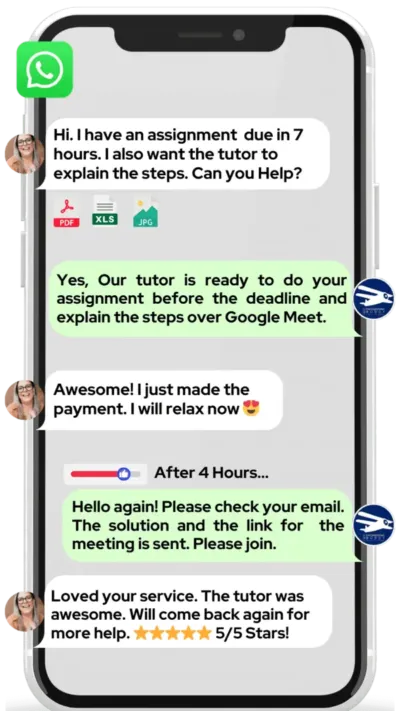
Unlike platforms where you fill out a form and wait, MEB responds in under a minute, 24/7. Tutor match takes under an hour. The $1 trial means you test before you commit. Everything runs over WhatsApp — no logins, no intake forms.
Study Plans (Pick One That Matches Your Goal)
After the diagnostic, your tutor builds a session sequence around one of three structures. Catch-up (one to three weeks): focused on the specific proof rules or quantifier concepts causing the most damage — fastest way to close a gap before an exam. Exam prep (four to eight weeks): full syllabus coverage in order, timed proof practice, and past paper review in the final two weeks. Weekly support: ongoing sessions aligned to your lecture schedule, with homework review built into each session. The tutor sets the specific sequence after the first diagnostic — nothing is fixed in advance.
Pricing Guide
Symbolic logic tutoring starts at $20/hr for introductory undergraduate level. Graduate-level formal logic, modal logic, and proof theory sessions typically run $50–$100/hr depending on tutor background and topic complexity. Rate factors include the level of the course, how quickly you need to progress, and tutor availability. Availability narrows significantly in the four weeks before end-of-semester logic exams — book early.
For students targeting places at programmes with strong analytic philosophy or formal methods requirements — at universities like Oxford, MIT, Carnegie Mellon, or Amsterdam — tutors with research or teaching backgrounds in formal logic are available at higher rates. Share your specific goal and MEB will match the tier to your situation.
Start with the $1 trial — 30 minutes, no registration, no commitment. WhatsApp MEB for a quick quote.
Try your first session for $1 — 30 minutes of live 1:1 tutoring or one homework question explained in full. No registration. No commitment. WhatsApp MEB now and get matched within the hour.
FAQ
Is symbolic logic hard?
It’s not conceptually complex — the rules are finite and learnable. Most students struggle with the notation and scope conventions, not the underlying ideas. A tutor who can catch your specific reading errors usually moves things faster than any textbook re-read.
How many sessions do I need?
Students with a specific gap — one proof system, quantifier rules — typically see a clear shift in two to four sessions. A full semester’s content from scratch takes eight to twelve sessions for most undergraduates. Your tutor will estimate after the first diagnostic.
Can you help with homework and assignments?
Yes — MEB tutoring is guided learning. You understand the work, then submit it yourself. See our Academic Integrity policy and Why MEB page for full details on what we help with and what we don’t.
Will the tutor match my exact syllabus or exam board?
Yes. Share your course outline, institution, and exam board before the first session. Whether your course uses Fitch-style natural deduction, semantic tableaux, or a specific textbook system like Language, Proof and Logic, the tutor works within your actual framework.
What happens in the first session?
The tutor gives you an unseen proof or translation exercise to attempt. This maps your current level and the exact error pattern. The rest of the session addresses the most urgent gap. You leave with specific practice problems and a topic plan for subsequent sessions.
Is online tutoring as effective as in-person?
For symbolic logic, it’s often better. The tutor’s pen-pad annotation is clearer than most whiteboards, the session is recorded for review, and you’re not constrained to tutors in your city. Proof work translates well to a shared screen.
Can I get symbolic logic help at midnight?
Yes. MEB operates across time zones and responds on WhatsApp around the clock. If your deadline is at 9am and you’re stuck at midnight, message MEB — a tutor is usually confirmed within the hour.
What’s the difference between propositional logic and predicate logic, and do I need both?
Propositional logic deals with whole statements connected by operators. Predicate logic adds quantifiers and internal structure to those statements. Most undergraduate logic courses cover both in sequence — your tutor covers whichever your syllabus requires, or both if needed.
Do you offer group symbolic logic sessions?
No. MEB sessions are exclusively 1:1. Group sessions dilute the diagnostic precision that makes logic tutoring effective — your error pattern is not the same as your classmate’s, and the tutor’s time needs to be focused on you.
What’s the difference between syntactic and semantic validity in symbolic logic, and why does it matter for exams?
Syntactic validity means a conclusion follows from premises by formal proof rules. Semantic validity means it holds in every interpretation. Many exam questions test whether you can distinguish them — your tutor clarifies this distinction early and applies it directly to your exam format.
My course uses the Grade Grinder software with Barwise and Etchemendy — can MEB help?
Yes. Several MEB tutors have worked with Language, Proof and Logic and the Grade Grinder submission system. Share the specific exercise set and your current attempt, and the tutor works through it with you line by line.
How do I get started?
Three steps: WhatsApp MEB, get matched with a verified symbolic logic tutor — usually within one hour — then start the $1 trial. Thirty minutes of live tutoring or one full homework question explained. No forms, no wait.
Trust & Quality at My Engineering Buddy
Every MEB tutor goes through a subject-specific screening process — credentials review, live demo session, and ongoing feedback monitoring. For symbolic logic, tutors are required to demonstrate working knowledge of at least two proof systems and one formal semantics framework before being placed with students. Rated 4.8/5 across 40,000+ verified reviews on Google, MEB has matched students with logic tutors since 2008 across undergraduate, graduate, and professional level courses.
MEB tutoring is guided learning — you understand the work, then submit it yourself. For full details on what we help with and what we don’t, read our Academic Integrity policy and Why MEB.
MEB serves students across the US, UK, Canada, Australia, the Gulf, and Europe in 2,800+ subjects — from symbolic logic and epistemology tutoring through to ethics help and metaphysics tutoring. Philosophy is one of MEB’s strongest subject clusters, with tutors covering everything from formal logic to continental and applied ethics. The same diagnostic-first, proof-checked approach that works in symbolic logic applies across the full philosophy of science curriculum and beyond. Find out more about MEB’s approach at our tutoring methodology page.
MEB has supported students in formal logic, proof theory, and symbolic reasoning since 2008 — across philosophy, mathematics, and computer science programmes at universities in the US, UK, Canada, Australia, and the Gulf.
Source: My Engineering Buddy, 2008–2025.
A common pattern our tutors observe is that students who struggle with symbolic logic haven’t failed to understand logic — they’ve failed to learn the notation as a system. Once the notation clicks, the proofs almost write themselves. That’s what we work on first.
Explore Related Subjects
Students studying symbolic logic often also need support in:
- Aesthetics
- Ancient Philosophy
- Bioethics
- Continental Philosophy
- Existentialism
- Moral Philosophy
- Ontology
- Meta-Ethics
Next Steps
To get matched with the right symbolic logic tutor, share three things when you message: your exam board or course outline, the topic or proof type you’re stuck on, and your exam or assignment deadline. Include your time zone so the tutor match covers your available hours.
MEB confirms a tutor match — usually within 24 hours, often within the hour. The first session starts with a diagnostic so no time is wasted on material you already know.
Before your first session, have ready:
- Your exam board and syllabus or course outline
- A recent proof attempt or homework question you struggled with
- Your exam or assignment deadline date
The tutor handles the rest. Visit www.myengineeringbuddy.com for more on how MEB works.
WhatsApp to get started or email [email protected].
52,000+ Happy Students From Various Universities




Reviewed by Subject Expert
This page has been carefully reviewed and validated by our subject expert to ensure accuracy and relevance.

