Hire Verified & Experienced
VCE Philosophy Tutors
4.8/5 40K+ session ratings collected on the MEB platform



Hire The Best VCE Philosophy Tutor
Top Tutors, Top Grades. Without The Stress!
52,000+ Happy Students From Various Universities



How Much For Private 1:1 Tutoring & Hw Help?
Private 1:1 Tutoring and HW help Cost $20 – 35 per hour* on average.
Most students don’t fail VCE Philosophy because the ideas are too hard. They fail because no one showed them how to argue — clearly, structurally, in the format the assessors actually want.
VCE Philosophy Tutor Online
VCE Philosophy is a Victorian Certificate of Education subject delivered by the Victorian Curriculum and Assessment Authority (VCAA), equipping students to construct and evaluate philosophical arguments across ethics, epistemology, and metaphysics.
If you’ve searched for a VCE Philosophy tutor near me, MEB offers 1:1 online tutoring and homework help across the full VCE programme — including Philosophy. Our tutors know the VCAA study design, the School-Assessed Coursework (SAC) structure, and exactly what the end-of-year written examination expects. You won’t just learn the content — you’ll learn how to write arguments that score.
- 1:1 online sessions tailored to the VCAA VCE Philosophy study design
- Expert verified tutors with subject-specific philosophical knowledge
- Flexible time zones — US, UK, Canada, Australia, Gulf
- Structured learning plan built after a diagnostic session
- Ethical homework and assignment guidance — you understand the work before you submit it
52,000+ students across the US, UK, Canada, Australia, and the Gulf have used MEB since 2008 — including students in VCE subjects like VCE Philosophy, VCE Global Politics, and VCE Psychology.
Source: My Engineering Buddy, 2008–2025.
How Much Does a VCE Philosophy Tutor Cost?
Most VCE Philosophy tutoring sessions run $20–$40/hr. If you want to test the service before committing, the $1 trial gets you 30 minutes of live tutoring or a full explanation of one homework question.
| Level / Need | Typical Rate | What’s Included |
|---|---|---|
| Standard VCE (Units 1–4) | $20–$35/hr | 1:1 sessions, SAC and exam prep, homework guidance |
| Advanced / Specialist | $35–$70/hr | Expert tutor, argument analysis, extended essay support |
| $1 Trial | $1 flat | 30 min live session or one homework question explained in full |
Tutor availability tightens in the weeks before October/November exams and SAC submission windows. Book early if your timeline is short.
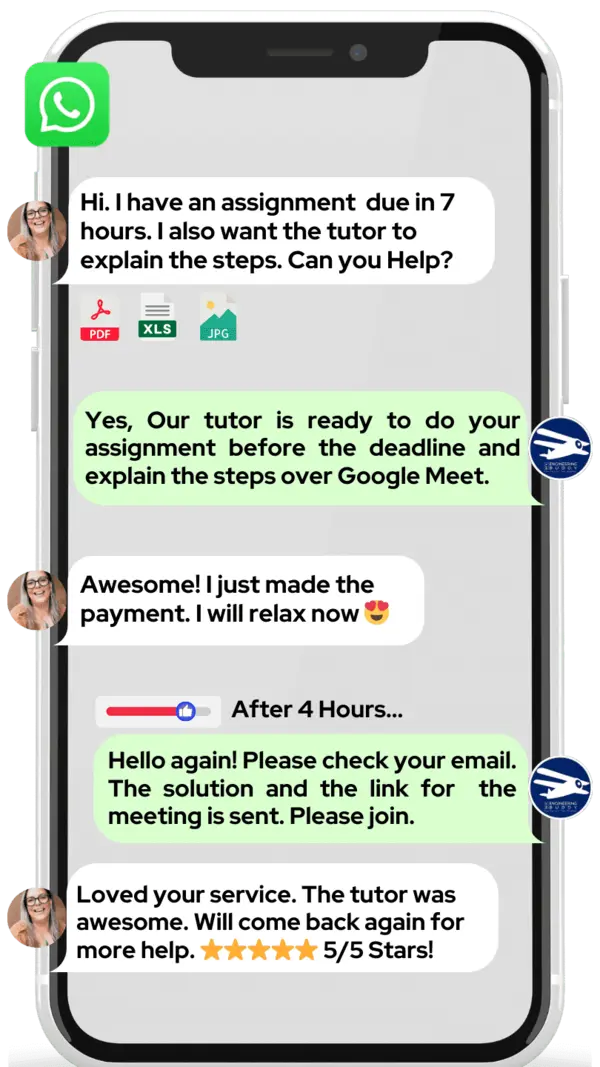
WhatsApp MEB for a quick quote — average response time under 1 minute.
Who This VCE Philosophy Tutoring Is For
VCE Philosophy attracts students who are genuinely curious — but curiosity alone doesn’t guarantee a high score. The subject rewards structured argumentation, and that’s a skill most students have to be taught explicitly.
- Year 11 and 12 students working through Units 1–4 of the VCAA study design
- Students who understand the ideas but can’t translate them into scored written arguments
- Students with a university conditional offer that depends on their final ATAR-contributing Philosophy score
- Students 4–6 weeks from the written examination with significant gaps in argument structure or topic coverage
- Parents watching a capable student underperform because the assessment format isn’t clicking
- Students returning for a second attempt after an unsatisfactory SAC result
Students heading to Philosophy, Law, Politics, or Humanities programmes at universities including the University of Melbourne, Monash, ANU, the University of Sydney, and the University of Queensland regularly use MEB to lock in the ATAR score they need.
At MEB, we’ve found that VCE Philosophy students rarely struggle with understanding Descartes or Singer — they struggle with presenting a tight, assessor-ready argument under timed conditions. That gap between comprehension and performance is exactly what 1:1 tutoring closes.
1:1 Tutoring vs Self-Study vs AI vs YouTube vs Online Courses
Self-study works if you’re disciplined, but philosophy argument structure needs external feedback — you can’t mark your own reasoning gaps. AI tools give fast definitions but can’t tell you why your argument structure would lose marks on a VCAA rubric. YouTube is useful for overview lectures on Plato or utilitarianism, but stops when you need line-by-line feedback on your written response. Online courses move at a fixed pace with no adjustment for your specific SAC weaknesses. 1:1 tutoring with MEB is live, calibrated to the VCAA study design, and corrects argument errors in real time — the kind of correction that changes your next SAC result, not just your notes.
Outcomes: What You’ll Be Able To Do in VCE Philosophy
After consistent 1:1 sessions, you’ll be able to construct a logically valid argument from a philosophical premise and defend it against objections — the core skill every VCAA Philosophy examiner is looking for. You’ll analyse competing positions in ethics, such as utilitarian versus deontological frameworks, and explain where each breaks down. You’ll apply epistemological concepts like Descartes’ method of doubt or Gettier problems to unseen scenarios. You’ll write a timed philosophical essay in the format the end-of-year examination rewards, hitting the structural markers for high-band scores. You’ll present your reasoning clearly enough that a marker following your argument never has to guess what you mean.
Supporting a student through VCE Philosophy? MEB works directly with parents to set up sessions, track progress, and keep SAC coursework on schedule. WhatsApp MEB — average response time is under a minute, 24/7.
Based on feedback from 40,000+ sessions collected by MEB from 2022 to 2025, 58% of students improved by one full grade after approximately 20 hours of 1:1 tutoring in subjects like VCE Philosophy. A further 23% achieved at least a half-grade improvement.
Source: MEB session feedback data, 2022–2025.
Try your first session for $1 — 30 minutes of live 1:1 tutoring or one homework question explained in full. No registration. No commitment. WhatsApp MEB now and get matched within the hour.
What We Cover in VCE Philosophy (Syllabus / Topics)
MEB tutors cover all four units of the VCAA VCE Philosophy study design. The tracks below map directly to what appears in your SACs and the end-of-year written examination.
Unit 1 & 2 — Introduction to Philosophy: Reality and Morality
- The nature of philosophical inquiry and argument construction
- Metaphysics: what exists, substance, and the mind-body problem
- Epistemology: knowledge, belief, justification, and Descartes’ method of doubt
- Introduction to ethics: moral reasoning, relativism, and objectivism
- Applied ethics: case studies in environmental, biomedical, or social justice contexts
- Logical validity, soundness, and identifying fallacies in argument
Recommended texts: Philosophy: A Text with Readings (Velasquez); Think: A Compelling Introduction to Philosophy (Blackburn); VCAA study design documents.
Unit 3 & 4 — Minds, Metaphysics, and Moral Philosophy
- Philosophy of mind: dualism, physicalism, functionalism, and consciousness
- Personal identity over time: psychological continuity vs bodily continuity
- Epistemology: the Gettier problem, reliabilism, and internalism vs externalism — see the Stanford Encyclopedia of Philosophy on Epistemology for foundational definitions
- Normative ethics: utilitarianism (Mill, Singer), deontology (Kant), and virtue ethics (Aristotle)
- Metaethics: moral realism, anti-realism, emotivism, and error theory
- Constructing and critiquing philosophical arguments in extended written response format
Recommended texts: Ethical Theory: An Anthology (Shafer-Landau); Problems of Philosophy (Russell); VCAA past examination papers and marking guides.
SAC and Examination Format
| Assessment Component | Type | Typical Weighting |
|---|---|---|
| School-Assessed Coursework (SACs) — Units 3 & 4 | Written tasks, argument analysis, extended response | ~34% of study score |
| End-of-Year Written Examination | Short answer and extended philosophical essay | ~66% of study score |

What a Typical VCE Philosophy Session Looks Like
The tutor opens by checking the previous session’s topic — usually a specific argument structure like Kant’s categorical imperative or the problem of personal identity — and asking you to summarise it in your own words. From there, you’ll work through a SAC-style question or past examination prompt together on screen. The tutor uses a digital pen-pad to annotate your written response line by line, showing you exactly where the argument loses coherence and how to rebuild it. You’ll then rewrite a section yourself while the tutor watches, stepping in only when the logic slips. The session closes with one practice task — a timed 20-minute argument on a set topic — and a clear note of which examiner criterion to target next.
How MEB Tutors Help You with VCE Philosophy (The Learning Loop)
Diagnose: In the first session, the tutor identifies whether your gap is conceptual (you don’t understand the theory), structural (you can’t build a valid argument), or presentational (you understand but can’t write it in the format the VCAA rubric rewards). These require different fixes.
Explain: The tutor works through a live example — say, reconstructing Singer’s argument for global poverty obligations — on the digital pen-pad, showing how each premise connects and how the conclusion follows. You see the argument built from scratch, not handed to you fully formed.
Practice: You attempt the next argument yourself with the tutor present. No safety net — just you working through it, which is what the examination will actually require.
Feedback: The tutor marks your attempt against VCAA criteria, identifies where marks would be lost, and explains why. Not “this is wrong” — but “a marker following this argument would stop here because the inference is invalid.”
Plan: Every session ends with a note of what to practise before next time, which topic comes next, and what the tutor will check at the start of the following session. Accountability is built in.
Sessions run over Google Meet. The tutor uses a digital pen-pad or iPad with Apple Pencil for live annotation. Before your first session, share your current SAC results or a recent written response you struggled with, plus your exam date. The first session is a diagnostic — the tutor maps where you are against where the study score requires you to be. Start with the $1 trial — 30 minutes of live tutoring that also serves as your first diagnostic.
Students consistently tell us that the shift from “I understand the idea” to “I can argue it clearly under exam pressure” takes about four to six dedicated sessions. The first session diagnoses the gap. The next three build the habit. The last two test it under timed conditions.
Tutor Match Criteria (How We Pick Your Tutor)
Not every philosophy tutor knows the VCAA study design. We match on specifics.
Subject depth: Tutors hold undergraduate or postgraduate qualifications in Philosophy or closely related disciplines and have direct experience with the VCAA Units 3 and 4 curriculum and examination format.
Tools: Every tutor works via Google Meet with a digital pen-pad or iPad and Apple Pencil — essential for annotating written arguments in real time.
Time zone: Matched to your region — Australia, UK, US, Gulf, or Canada — so sessions run at a time that doesn’t wreck your sleep schedule before an exam.
Goals: Whether you need a SAC rescue, structured exam preparation, or ongoing weekly support through the year, the tutor match reflects your specific target, not a generic profile.
Unlike platforms where you fill out a form and wait, MEB responds in under a minute, 24/7. Tutor match takes under an hour. The $1 trial means you test before you commit. Everything runs over WhatsApp — no logins, no intake forms.
Study Plans (Pick One That Matches Your Goal)
After the diagnostic session, your tutor builds a specific session sequence. Most students fall into one of three plans: a rapid catch-up over 1–3 weeks targeting a specific SAC weakness or imminent exam topic; a structured 4–8 week exam preparation sequence working through argument types, ethics frameworks, and timed writing practice; or ongoing weekly support running alongside the school semester, aligned to your SAC calendar and coursework deadlines. The tutor selects and adjusts the sequence — you don’t have to plan it yourself.
Pricing Guide
VCE Philosophy tutoring starts at $20/hr and typically runs $20–$40/hr depending on the unit, the complexity of the topic, and how close you are to an examination date. Graduate-level or highly specialist philosophy support can reach up to $100/hr.
Rate factors include the unit level (1–2 vs 3–4), whether you need SAC-specific coaching or full examination preparation, your timeline, and tutor availability. Availability drops sharply in the six weeks before October/November exams — the further out you book, the more choice you have.
For students targeting high ATAR scores for entry into Law, Philosophy, or Humanities programmes at competitive universities, tutors with postgraduate research backgrounds in philosophy are available at higher rates. Share your target score and MEB will match the tutor tier to what you’re aiming for.
Start with the $1 trial — 30 minutes, no registration, no commitment. WhatsApp MEB for a quick quote.
MEB has been matching students with verified subject tutors since 2008 — across VCE, VCE Economics tutoring, and 2,800+ other subjects worldwide. The platform doesn’t operate on algorithms. A human reads your message and responds.
Source: My Engineering Buddy, 2008–2025.
FAQ
Is VCE Philosophy hard?
The content isn’t harder than other VCE humanities subjects — but the assessment format is demanding. VCAA Philosophy rewards precise, structured argumentation. Students who’ve never been taught how to build a valid philosophical argument in written form often find the first SAC difficult. That’s fixable with targeted practice.
How many sessions are needed?
Most students see a measurable improvement in argument quality within 4–6 sessions. Students doing full examination preparation typically do 12–20 hours across the term. The diagnostic first session sets the number — your tutor won’t pad it beyond what the goal actually requires.
Can you help with homework and assignments?
Yes — MEB tutoring is guided learning. Your tutor explains the task, works through the reasoning with you, and helps you understand the argument before you write and submit it yourself. See our Academic Integrity policy and Why MEB page for full details on what we help with and what we don’t.
Will the tutor match my exact syllabus or exam board?
Yes. MEB matches to the VCAA VCE Philosophy study design specifically — not a generic philosophy curriculum. Your tutor will know the Units 1–4 content, the SAC format, and the end-of-year written examination structure. Mention your current unit when you contact us.
What happens in the first session?
The tutor runs a diagnostic — they look at a recent SAC, homework response, or practice attempt to identify exactly where your argument breaks down. From that point, the session plan is built around your specific gaps, not a generic syllabus walkthrough.
Is online tutoring as effective as in-person for Philosophy?
For a writing-intensive subject like VCE Philosophy, online works well. The tutor annotates your written arguments in real time using a digital pen-pad over Google Meet. Many students find it easier to focus on their own writing when they’re not sitting across from someone at a table.
Can I get VCE Philosophy help at short notice before a SAC?
Yes. WhatsApp MEB and specify your SAC date and the topic being assessed. MEB matches tutors within the hour in most cases. Short-notice sessions are available, though availability is tighter in exam periods — contact as soon as you know the date.
What if I don’t like my assigned tutor?
Tell MEB via WhatsApp and a different tutor is arranged — usually within 24 hours. No penalty, no explanation required. The $1 trial exists partly to make sure the match works before you commit to a longer schedule.
Do you cover both the SAC component and the written examination?
Both. SAC preparation focuses on the specific task types your school uses — argument analysis, extended response, or commentary — while examination preparation covers timed writing, topic breadth across Units 3 and 4, and marking-guide strategy. Most students need both at different points in the year.
What’s the difference between Units 1–2 and Units 3–4 in VCE Philosophy?
Units 1–2 introduce philosophical inquiry, basic argumentation, and foundational topics in metaphysics, epistemology, and ethics. Units 3–4 go deeper — philosophy of mind, personal identity, normative and metaethics — and contribute directly to the ATAR study score. Most exam-focused tutoring concentrates on Units 3 and 4.
How do I get started?
WhatsApp MEB, tell them your current unit, your exam or SAC date, and what you’re finding hardest. You’ll be matched with a verified VCE Philosophy tutor and can start with the $1 trial — 30 minutes live or one question explained in full. No registration, no forms.
Trust & Quality at My Engineering Buddy
Every MEB tutor goes through a subject-specific screening process: qualifications check, live demo session evaluation, and ongoing feedback review tied to student outcomes. Tutors covering VCE Philosophy hold degrees in Philosophy or closely related disciplines and are assessed on their knowledge of the VCAA study design before they’re matched with students. Rated 4.8/5 across 40,000+ verified reviews on Google.
MEB tutoring is guided learning — you understand the work, then submit it yourself. For full details on what we help with and what we don’t, read our Academic Integrity policy and Why MEB.
MEB has served 52,000+ students across the US, UK, Canada, Australia, the Gulf, and Europe since 2008 — covering 2,800+ subjects. VCE subjects including VCE Literature tutoring and VCE Psychology help are among the most frequently requested alongside Philosophy. Every tutor is matched to your subject, your level, and your timeline — not drawn from a general pool.
Tutoring methodology at MEB is built on a diagnostic-first model — see the MEB tutoring methodology for the full framework, including how tutors are selected, evaluated, and matched to students.
Source: My Engineering Buddy.
A common pattern our tutors observe is that VCE Philosophy students write vague conclusions because they haven’t been pushed to state their argument in a single sentence before expanding it. One session spent on that habit alone tends to shift written response quality noticeably.
Explore Related Subjects
Students studying VCE Philosophy often also need support in:
Next Steps
Getting started takes about two minutes. Here’s what MEB needs from you:
- Your current VCE Philosophy unit, your SAC schedule or examination date, and the topic or argument type you’re finding hardest
- Your availability and time zone — sessions are matched to your region
- MEB matches you with a verified VCE Philosophy tutor, usually within the hour
Before your first session, have ready: the VCAA study design for your unit (or a recent SAC task sheet), a written response or past paper attempt you struggled with, and your examination or SAC date. The tutor handles the rest.
Visit www.myengineeringbuddy.com for more on how MEB works.
WhatsApp to get started or email meb@myengineeringbuddy.com.
Reviewed by Subject Expert
This page has been carefully reviewed and validated by our subject expert to ensure accuracy and relevance.