




~1 min
Average Reply Time
~1 hour
To Be Matched With A Tutor
1 Trial
75% Find Their Tutor On The 1st Trial
$1
Your First 30 Minutes
Hire The Best Causal Inference Tutor
Top Tutors, Top Grades. Without The Stress!
Related Subjects
Most students can run a regression. Fewer can tell you whether it means anything — that’s where Causal Inference breaks down in week 3.
Causal Inference Tutor Online
Causal Inference is the branch of statistics that distinguishes correlation from causation, using frameworks such as potential outcomes, directed acyclic graphs (DAGs), and quasi-experimental designs to identify true causal effects from observational or experimental data.
Looking for a Causal Inference tutor near me who actually knows the Rubin potential outcomes model, Pearl’s do-calculus, or difference-in-differences? MEB connects you with 1:1 online Causal Inference tutoring and homework help, drawn from a pool of verified tutors across statistics and statistics tutoring at every level — undergraduate, graduate, and doctoral. You get a tutor matched to your exact course, not a generalist who googles your syllabus before the session.
- 1:1 online sessions aligned to your course, exam board, or research programme
- Expert-verified tutors with graduate-level statistics and econometrics backgrounds
- Flexible time zones — US, UK, Canada, Australia, Gulf covered 24/7
- Structured learning plan built after a first diagnostic session
- Ethical homework and assignment guidance — you understand the work, then submit it yourself
52,000+ students across the US, UK, Canada, Australia, and the Gulf have used MEB since 2008 — including students in Statistics subjects like Causal Inference, Bayesian Statistics, and Regression Analysis.
Source: My Engineering Buddy, 2008–2025.
How Much Does a Causal Inference Tutor Cost?
Most Causal Inference tutoring sessions run $20–$40/hr. Graduate-level work — dissertation chapters, quasi-experimental design reviews, or advanced DAG construction — can reach $70–$100/hr depending on tutor depth and timeline pressure. The $1 trial gets you 30 minutes of live tutoring or one homework question explained in full before you commit to anything.
| Level / Need | Typical Rate | What’s Included |
|---|---|---|
| Undergraduate (intro/intermediate) | $20–$35/hr | 1:1 sessions, homework guidance, RCT and OLS fundamentals |
| Graduate / Research Level | $35–$70/hr | DAGs, IV, DID, RDD, potential outcomes framework |
| Doctoral / Dissertation Support | $70–$100/hr | Expert tutor, niche depth, research design review |
| $1 Trial | $1 flat | 30 min live session or one full homework question explained |
Tutor availability tightens significantly during semester finals and dissertation submission windows. WhatsApp MEB for a quick quote — average response time under 1 minute.
Who This Causal Inference Tutoring Is For
Causal Inference sits at the intersection of statistics, research design, and domain knowledge. Most students hit a wall not because they can’t do algebra, but because the conceptual leap from association to causation isn’t taught with enough precision in lectures alone.
- Undergraduate students in economics, public health, political science, or psychology taking their first causal methods course
- Master’s students applying DID, RDD, or IV to thesis research and struggling with the identifying assumptions
- PhD students whose dissertation committee has pushed back on their causal identification strategy
- Students retaking a failed first attempt at a graduate econometrics or research methods module
- Students with a conditional offer from programmes at Chicago, LSE, Columbia, Michigan, Toronto, or Melbourne that depend on a strong quantitative methods grade
- Working professionals in data science, health economics, or policy analysis who need to apply causal methods correctly at work
Start with the $1 trial — it doubles as your diagnostic session and tells you exactly where your gaps are.
1:1 Tutoring vs Self-Study vs AI vs YouTube vs Online Courses
Self-study works if you’re disciplined and already have strong statistical intuition — most people aren’t and don’t. AI tools explain definitions quickly but can’t spot why your specific IV violates the exclusion restriction. YouTube covers the intuition behind DAGs reasonably well but stops the moment you need to debug your R code or justify your identification strategy in writing. Online courses like Coursera’s causal inference tracks are well-structured but move at one pace regardless of where you’re stuck. 1:1 tutoring with MEB is live, matched to your exact dataset or assignment, and corrects the precise mistake you’re making — not a generic version of it. In Causal Inference, where one flawed assumption can invalidate an entire analysis, that difference matters.
Outcomes: What You’ll Be Able To Do in Causal Inference
After focused 1:1 sessions, you’ll be able to construct and interpret a directed acyclic graph for your own research question, apply the potential outcomes framework to assess treatment effect estimates, model a difference-in-differences design and test the parallel trends assumption, explain the logic of instrumental variables and identify valid instruments in your field, and present your identification strategy clearly enough to satisfy a dissertation committee or peer reviewer.
Based on feedback from 40,000+ sessions collected by MEB from 2022 to 2025, 58% of students improved by one full grade after approximately 20 hours of 1:1 tutoring in subjects like Causal Inference. A further 23% achieved at least a half-grade improvement.
Source: MEB session feedback data, 2022–2025.
At MEB, we’ve found that students who struggle with Causal Inference almost always have the same underlying issue: they’ve memorised the method without internalising the assumption. One session on why the parallel trends assumption matters — not just what it is — shifts everything that follows.
What We Cover in Causal Inference (Syllabus / Topics)

Track 1: Foundations — Potential Outcomes and Identification
- The Rubin Causal Model and potential outcomes notation
- Average Treatment Effect (ATE), ATT, and ATU — definitions and estimation
- Selection bias and the fundamental problem of causal inference
- Randomised controlled trials (RCTs) as the identification benchmark
- Conditional independence assumption and matching estimators
- Propensity score matching and inverse probability weighting
Core texts: Angrist & Pischke Mostly Harmless Econometrics; Imbens & Rubin Causal Inference for Statistics, Social, and Biomedical Sciences.
Track 2: Quasi-Experimental Designs
- Difference-in-differences (DID): setup, parallel trends, and extensions
- Staggered DID and heterogeneous treatment timing (Callaway-Sant’Anna)
- Regression discontinuity design (RDD): sharp vs fuzzy, bandwidth selection
- Instrumental variables (IV): relevance, exclusion restriction, monotonicity
- Two-stage least squares (2SLS) and weak instrument diagnostics
- Synthetic control methods for single-unit comparative case studies
Core texts: Angrist & Pischke Mastering Metrics; Cattaneo, Idrobo & Titiunik A Practical Introduction to Regression Discontinuity Designs.
Track 3: Graphical Models and DAG-Based Inference
- Directed acyclic graphs (DAGs): nodes, edges, paths, and d-separation
- Pearl’s do-calculus and the backdoor criterion
- Identifying confounders, mediators, and colliders correctly
- Front-door criterion and its applications
- DAG construction for observational health, economics, and social science research
- Software implementation: dagitty, ggdag in R, and DoWhy in Python
Core texts: Pearl, Glymour & Jewell Causal Inference in Statistics: A Primer; Hernán & Robins Causal Inference: What If (freely available at HSPH — note this link is for the book page only).
Students consistently tell us that DAGs are the part of Causal Inference that finally makes the whole subject click. Once you can draw the causal graph for your research question, the choice of method — DID, IV, RDD — becomes obvious rather than arbitrary.
What a Typical Causal Inference Session Looks Like
The session opens with the tutor checking your last topic — usually the identifying assumption you were working on, such as the exclusion restriction in an IV setup or the parallel trends test in a DID model. From there, you and the tutor work through the problem on screen: the tutor uses a digital pen-pad to walk through the DAG construction or the 2SLS estimation step by step, then hands it back to you to replicate the reasoning. If you’re working from an assignment, the tutor focuses on where your logic breaks down rather than patching your answer. The session closes with a concrete practice task — typically one identification problem to attempt independently before next time — and a note of which assumption or method comes next. By the end, you know what you did and why, not just what the answer is.
How MEB Tutors Help You with Causal Inference (The Learning Loop)
Diagnose. In the first session, the tutor identifies exactly where your reasoning breaks down — whether that’s confusing correlation with causation at the DAG stage, misapplying the parallel trends assumption, or selecting an invalid instrument. This shapes every session that follows.
Explain. The tutor works through live examples on a digital pen-pad — a DID setup drawn from a real policy context, an IV problem built from a study in your field, or a DAG constructed around your actual research question. You see the reasoning, not just the answer.
Practice. You attempt the next problem with the tutor present. No waiting, no asynchronous feedback — the tutor catches the error the moment it happens.
Feedback. The tutor explains what went wrong at the assumption level, not just the arithmetic level. Understanding why your instrument fails the exclusion restriction matters more than knowing it does.
Plan. At the end of each session, the tutor maps the next topic in sequence — from identification strategy to estimation to robustness checks — and sets a specific task for independent work before the next meeting.
Sessions run over Google Meet with a digital pen-pad or iPad + Apple Pencil for live annotation. Before your first session, share your course syllabus or assignment brief, a past paper or problem set you’ve attempted, and your exam or submission deadline. The first session is your diagnostic — and the $1 trial gives you 30 minutes of live tutoring that serves exactly that purpose.
Whether you need a quick catch-up before a finals week problem set, structured revision over four to eight weeks ahead of a comprehensive exam, or ongoing weekly support through your dissertation analysis phase, the tutor maps the session plan after that first diagnostic.
Causal Inference is one of the fastest-growing methodological requirements across economics, public health, political science, and data science PhD programmes — proficiency in quasi-experimental design is now a baseline expectation, not a specialisation.
Source: SSRN, working paper trends across social science fields, 2015–2024.
Try your first session for $1 — 30 minutes of live 1:1 tutoring or one homework question explained in full. No registration. No commitment. WhatsApp MEB now and get matched within the hour.
Tutor Match Criteria (How We Pick Your Tutor)
Not every statistician understands causal identification. MEB matches on specifics, not credentials alone.
Subject depth. Tutors are vetted on the specific methods your course covers — potential outcomes, DAGs, quasi-experimental design — not just general statistical theory. A tutor who only knows OLS won’t be matched to a student working on synthetic control.
Tools. All sessions run on Google Meet with a digital pen-pad or iPad + Apple Pencil. Tutors working with R or Python students are matched accordingly — if your course uses R programming for causal analysis, your tutor works in R.
Time zone. Matched to your region — US, UK, Gulf, Canada, or Australia — so you’re not booking at 2am to get help before a morning deadline.
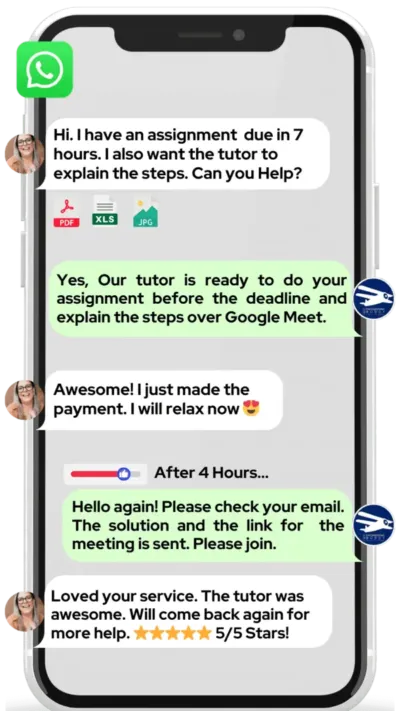
Goals. Exam scores, dissertation identification strategy, homework completion, or conceptual depth — the tutor brief specifies which. Unlike platforms where you fill out a form and wait, MEB responds in under a minute, 24/7. Tutor match takes under an hour. The $1 trial means you test before you commit. Everything runs over WhatsApp — no logins, no intake forms.
Pricing Guide
Causal Inference tutoring starts at $20/hr for undergraduate-level work. Graduate and doctoral-level sessions — especially dissertation identification strategy reviews or quasi-experimental design consultations — run $35–$100/hr depending on tutor specialisation and deadline urgency. Rate factors include topic complexity (DID extensions vs basic RCT framing), timeline pressure, and tutor availability.
Availability tightens during semester finals and dissertation submission periods — particularly in January, April, and August across US and UK academic calendars.
For students targeting research programmes at top universities or positions at policy institutes and consultancies where causal methods proficiency is assessed directly, tutors with active research or industry backgrounds in causal inference are available at higher rates — share your specific goal and MEB will match the tier to your ambition.
Start with the $1 trial — 30 minutes, no registration, no commitment. WhatsApp MEB for a quick quote.
FAQ
Is Causal Inference hard?
It’s conceptually demanding rather than computationally difficult. The maths is mostly linear algebra and probability. The challenge is understanding why an identification strategy works — and when it doesn’t. Most students find that two to three focused sessions unlock the logic of the whole subject.
How many sessions are needed?
Students with foundational gaps in regression and probability typically need eight to twelve hours to reach confident exam-level performance. Those with solid statistics backgrounds working on a specific method — RDD or synthetic control, for instance — often need three to five sessions.
Can you help with homework and assignments?
Yes. MEB tutoring is guided learning — you understand the work, then submit it yourself. The tutor explains the method, walks through an analogous example, and checks your reasoning. See our Academic Integrity policy and Why MEB page for full details on what we help with and what we don’t.
Will the tutor match my exact syllabus or exam board?
Yes. Share your course outline or assignment brief when you message MEB. Tutors are matched to your specific course — not a generic Causal Inference syllabus. Graduate econometrics, public health methods, and political science research design courses all have distinct emphases that the tutor match accounts for.
What happens in the first session?
The tutor runs a short diagnostic — usually ten to fifteen minutes reviewing a problem or past paper you’ve attempted — to identify your specific gaps. The remaining time is spent on the highest-priority topic. You leave with a clear picture of what to work on and in what order.
Is online tutoring as effective as in-person?
For a subject like Causal Inference, yes — and often better. The digital pen-pad lets tutors annotate DAGs and regression tables live on screen. You can share your R output or Stata log directly. Students in the US, UK, Canada, and Australia consistently report the same quality of live interaction as face-to-face sessions.
What’s the difference between Causal Inference and regular regression?
Regression tells you the association between variables. Causal Inference asks whether that association reflects a true causal effect — and if not, what design or assumption is needed to isolate one. Knowing which estimator to use and why your identification strategy is valid is what separates causal analysis from descriptive statistics.
Do I need to know R or Python before starting?
No prior coding experience is required to begin, but most graduate courses implement methods in R or Python. Your tutor will cover the software alongside the concepts. If you need dedicated coding support, MEB also offers R tutoring as a standalone subject alongside your Causal Inference sessions.
Can I get help with causal inference for a specific dissertation chapter or research paper?
Yes. This is one of MEB’s most common use cases at the graduate and doctoral level. Share your research question, dataset structure, and the identification strategy you’re considering. The tutor reviews whether your design is internally valid and helps you articulate and defend the key assumptions in writing.
What if I’m struggling specifically with DAGs — is that something a tutor covers?
DAGs are a core track in MEB’s Causal Inference sessions. The tutor will build a DAG from your specific research context, walk through d-separation and the backdoor criterion, and help you identify confounders, colliders, and mediators correctly. Most students find DAG logic clicks within one to two dedicated sessions.
Can I get help at midnight or on weekends?
Yes. MEB operates 24/7. Tutors are available across US, UK, Gulf, and Australian time zones. WhatsApp MEB at any time — average response is under one minute, and tutor matching typically happens within the hour regardless of when you message.
How do I get started?
Three steps: WhatsApp MEB with your course or research brief, get matched with a verified Causal Inference tutor within the hour, and start your $1 trial — 30 minutes of live tutoring or one full homework question explained, no registration required.
Trust & Quality at My Engineering Buddy
Every MEB tutor goes through subject-specific screening before their first session — not a generic interview, but a live evaluation on the methods they claim to teach. For Causal Inference, that means demonstrating the ability to work through identification problems, construct DAGs under questioning, and explain the assumptions behind quasi-experimental designs to a non-specialist. Tutors also receive feedback from every session and are reviewed on student progress outcomes. Rated 4.8/5 across 40,000+ verified reviews on Google.
MEB tutoring is guided learning — you understand the work, then submit it yourself. For full details on what we help with and what we don’t, read our Academic Integrity policy and Why MEB.
MEB has served 52,000+ students across the US, UK, Canada, Australia, the Gulf, and Europe since 2008 — across 2,800+ subjects including Statistics, Advanced Statistics tutoring, Applied Statistics help, and Causal Inference. Our tutoring methodology is built on diagnostic-first sessions and a structured learning loop rather than ad hoc question answering.
Our experience across thousands of sessions shows that students who bring a specific problem — a problem set question, a dissertation identification challenge, or a past paper they’ve attempted — get dramatically more out of a session than those who come with a vague topic to review. Come prepared. The tutor will do the rest.
Explore Related Subjects
Students studying Causal Inference often also need support in:
- Hypothesis Testing
- Linear Regression
- Design of Experiments
- Epidemiology
- Biostatistics
- Research Methodology
- Inferential Statistics
- Logistic Regression
Next Steps
Before your first session, have ready: your course syllabus or dissertation chapter outline, a recent problem set or assignment you’ve attempted (especially one where you weren’t sure your identification strategy held), and your exam date or submission deadline. The tutor handles the rest.
- Share your exam board, hardest method or concept, and current timeline
- Share your availability and time zone
- MEB matches you with a verified Causal Inference tutor — usually within the hour
First session starts with a diagnostic so every minute is used well. Visit www.myengineeringbuddy.com for more on how MEB works.
WhatsApp to get started or email [email protected].
52,000+ Happy Students From Various Universities



Reviewed by Subject Expert
This page has been carefully reviewed and validated by our subject expert to ensure accuracy and relevance.

