

Hire Verified & Experienced
Apache Storm Tutors
Email: [email protected]
4.8/5 40K+ session ratings collected on the MEB platform



Hire The Best Apache Storm Tutor
Top Tutors, Top Grades. Without The Stress!
Your Storm topology crashes in production and your professor wants a working demo in 48 hours. MEB has tutors who’ve debugged this exact problem.
Apache Storm Tutor Online
Apache Storm is an open-source distributed real-time computation system that processes unbounded streams of data. It handles fault-tolerant, low-latency data pipelines using topologies composed of spouts and bolts, equipping developers to build scalable stream processing applications.
If you’ve searched for an Apache Storm tutor near me and come up empty, you’re not alone — this is a niche tool, and most tutoring platforms don’t cover it. MEB does. Our tutors have hands-on experience with Storm topologies, Nimbus configuration, and integration with Apache Kafka tutoring and Apache ZooKeeper help in real distributed systems. Get an online Apache Storm tutor matched to your project stack and timeline — one who actually knows the difference between at-least-once and exactly-once processing guarantees.
- 1:1 online sessions tailored to your course syllabus or project specification
- Expert verified tutors with hands-on distributed systems experience
- Flexible time zones — US, UK, Canada, Australia, Gulf
- Structured learning plan built after a diagnostic session
- Guided project support — we explain the architecture, you build it
52,000+ students across the US, UK, Canada, Australia, and the Gulf have used MEB since 2008 — including students in Software Engineering subjects like Apache Storm, Apache Spark tutoring, and Apache Kafka.
Source: My Engineering Buddy, 2008–2025.
How Much Does an Apache Storm Tutor Cost?
Apache Storm tutoring starts at $20–$40/hr for most undergraduate and graduate project sessions. Specialist tutors with production-level distributed systems experience run $60–$100/hr. The $1 trial gets you 30 minutes of live 1:1 tutoring or a full explanation of one project problem — no registration required.
| Level / Need | Typical Rate | What’s Included |
|---|---|---|
| Standard (undergrad / coursework) | $20–$40/hr | 1:1 sessions, topology walkthrough, project guidance |
| Advanced / Specialist | $60–$100/hr | Production-grade Storm, integration architecture, performance tuning |
| $1 Trial | $1 flat | 30 min live session or one project question explained in full |
Tutor availability tightens significantly at end-of-semester project crunch periods. Book early if you have a fixed submission date.
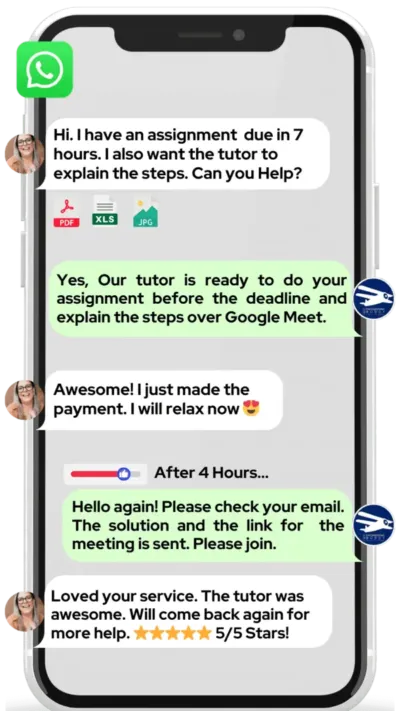
WhatsApp MEB for a quick quote — average response time under 1 minute.
Who This Apache Storm Tutoring Is For
Apache Storm sits at the intersection of distributed computing, Java, and real-time data engineering. Students hit walls fast — topology design errors, worker process failures, or misunderstanding the ACK mechanism. This tutoring is for anyone stuck on the specifics, not just the concepts.
- Graduate and postgraduate students building Storm-based capstone or thesis projects
- Undergraduates in distributed systems, big data, or cloud computing courses
- Students with a project submission deadline approaching and a topology that won’t run
- Developers moving from batch processing (Hadoop/Spark) into real-time stream processing
- Students retaking a distributed systems module after a failed first attempt
- Professionals preparing for data engineering roles where Storm or Flink is part of the stack
MEB has worked with students at Georgia Tech, Carnegie Mellon, University of Toronto, ETH Zurich, Imperial College London, TU Delft, and King Abdullah University — among others. Storm is taught differently across programmes; your tutor adapts to your specific course context.
1:1 Tutoring vs Self-Study vs AI vs YouTube vs Online Courses
Self-study works if you’re disciplined — but Storm’s documentation assumes you already understand distributed systems internals. AI tools give fast answers to syntax questions but can’t debug a live cluster or explain why your spout is emitting duplicates. YouTube covers topology basics and stops the moment your Nimbus won’t connect to ZooKeeper. Online courses give you the theory at a fixed pace with no room for your specific project errors. 1:1 tutoring with MEB is calibrated to your exact Storm version, your topology design, and the error you’re staring at right now.
Outcomes: What You’ll Be Able To Do in Apache Storm
After working with an MEB Apache Storm tutor online, you’ll be able to design fault-tolerant topologies from scratch, explain the difference between at-least-once and exactly-once processing to an examiner or interviewer, and resolve common failures like worker process crashes and tuple timeout errors. You’ll apply Storm’s DRPC (Distributed RPC) pattern for synchronous computation and integrate a Storm topology with Kafka as a spout source. You’ll present your architecture decisions — parallelism hints, executor counts, task allocation — with the confidence that comes from having built and debugged them yourself.
Based on feedback from 40,000+ sessions collected by MEB from 2022 to 2025, 58% of students improved by one full grade after approximately 20 hours of 1:1 tutoring in subjects like Apache Storm. A further 23% achieved at least a half-grade improvement.
Source: MEB session feedback data, 2022–2025.
At MEB, we’ve found that students who bring a broken topology to the first session — something that actually doesn’t run — make faster progress than those who start from a blank slate. Concrete errors are the best teaching material Storm can offer.
What We Cover in Apache Storm (Topics)

Track 1: Storm Core Concepts and Topology Design
- Storm architecture: Nimbus, Supervisors, Workers, Executors, Tasks
- Topology components: Spouts (IRichSpout), Bolts (IRichBolt, IBasicBolt)
- Stream groupings: shuffle, fields, all, global, direct, local-or-shuffle
- Tuple anchoring and the ACK mechanism for reliability
- Parallelism configuration: parallelism hints, executor counts, task allocation
- At-least-once vs exactly-once processing semantics
- Trident API for stateful stream processing and micro-batching
Recommended references: Learning Apache Storm by Ankit Jain; Storm Applied by Sean T. Allen, Matthew Jankowski, and Peter Pathirana (Manning Publications).
Track 2: Integration, Deployment, and Real-Time Data Pipelines
- Integrating Storm with Apache Kafka as a real-time spout source
- ZooKeeper coordination: what Storm delegates to ZooKeeper and why
- Deploying Storm on a local cluster vs a multi-node cluster
- Storm UI: interpreting topology stats, latency, throughput, and failure rates
- Configuring worker processes and memory settings in storm.yaml
- Connecting Storm to Apache HBase and Redis for state persistence
- DRPC (Distributed RPC) for synchronous real-time query topologies
Recommended references: Apache Storm official documentation; Big Data: Principles and best practices of scalable realtime data systems by Nathan Marz and James Warren (Manning Publications).
Track 3: Debugging, Performance Tuning, and Storm vs Alternatives
- Common failure modes: spout emit loops, bolt blocking, tuple timeouts
- Diagnosing worker crashes from Storm logs and the UI dashboard
- Backpressure handling and how to avoid topology stalls under high load
- Benchmarking topology throughput: events per second, end-to-end latency
- Storm vs Apache Flink and Apache Spark Streaming — when each tool fits
- Migrating legacy Storm topologies to newer frameworks
Recommended references: MIT OpenCourseWare covers relevant distributed systems fundamentals at MIT OpenCourseWare; Nathan Marz’s original Storm design papers.
Platforms, Tools & Textbooks We Support
Apache Storm runs on a specific ecosystem. MEB tutors support sessions across the full local and cluster development stack — covering setup, configuration, and debugging in whichever environment your course or project uses.
- Apache Storm (all current versions, local and cluster mode)
- IntelliJ IDEA and Eclipse for Java-based topology development
- Apache Maven and Gradle for Storm project builds
- Apache ZooKeeper, Apache Kafka, Apache HBase for pipeline integration
- Docker and Kubernetes for containerised Storm cluster environments
- Storm UI dashboard for topology monitoring and performance analysis
- Linux (Ubuntu, CentOS) for cluster node management
What a Typical Apache Storm Session Looks Like
The tutor starts by checking where you left off — usually the spout configuration or a bolt that’s not emitting correctly. You share your screen on Google Meet and walk through the topology definition together. The tutor uses a digital pen-pad to annotate the data flow in real time, showing exactly where tuples are being dropped or acknowledgements are timing out. You replicate the fix in your own code while the tutor watches, asking you to explain the change so the understanding sticks. By the end, you have a running topology, a clear note on the next component to tackle, and a specific practice task — usually writing a second bolt variant and running it against a test spout before the next session.
How MEB Tutors Help You with Apache Storm (The Learning Loop)
Diagnose: In the first session, the tutor looks at your existing code or project brief, identifies where your understanding breaks down — whether that’s stream groupings, the ACK chain, or cluster deployment — and sets the session sequence from there.
Explain: The tutor works through problems live using a digital pen-pad or iPad with Apple Pencil, drawing the topology graph, annotating data flow, and running code alongside you. No pre-recorded clips. No static slides.
Practice: You attempt the next problem — write the bolt, configure the grouping, deploy the topology — while the tutor is present. Getting it wrong in front of the tutor is the point.
Feedback: The tutor catches errors immediately: why the spout is replaying tuples, why the parallelism hint isn’t doing what you expected, where your DRPC call is blocking. Precise, step-by-step, no vague suggestions.
Plan: Each session ends with a specific next topic, a practice task, and an accountability checkpoint. The sequence builds — you’re not just fixing today’s bug, you’re building the ability to debug the next one yourself.
Sessions run over Google Meet. Before your first session, share your project brief, your current topology code (even if broken), and your submission or exam date. The first session is diagnostic and usually covers topology structure and the specific error blocking your progress. Start with the $1 trial — 30 minutes of live tutoring that also serves as your first diagnostic.
Students consistently tell us that the moment Storm “clicks” is when they see the ACK tree drawn out in real time — not in a textbook diagram, but while their own topology is running. That’s what a pen-pad and a live session make possible.
Tutor Match Criteria (How We Pick Your Tutor)
Not every distributed systems developer knows Storm specifically. MEB vets for it.
Subject depth: Tutors have hands-on Storm experience — topology design, Trident API, cluster deployment — not just conceptual familiarity with stream processing.
Tools: All Storm tutors use Google Meet with a digital pen-pad or iPad and Apple Pencil. Visual explanation of data flow is non-negotiable for this subject.
Time zone: Matched to your region — US, UK, Gulf, Canada, Australia — so sessions happen at working hours, not midnight.
Goals: Whether you need a topology running by Friday, conceptual depth for an exam, or ongoing project support through a semester, the tutor is briefed on your specific goal before session one.
Unlike platforms where you fill out a form and wait, MEB responds in under a minute, 24/7. Tutor match takes under an hour. The $1 trial means you test before you commit. Everything runs over WhatsApp — no logins, no intake forms.
Pricing Guide
Apache Storm tutoring runs $20–$40/hr for most undergraduate and graduate coursework sessions. Tutors with production distributed systems backgrounds — those who’ve run Storm clusters at scale or built real-time pipelines integrating Kafka, HBase, and Storm — are available at $60–$100/hr.
Rate depends on your level, the complexity of your topology, your timeline, and tutor availability. Demand peaks sharply at end-of-semester project submission periods — if you have a fixed deadline, don’t leave matching until the last week.
For students targeting data engineering roles at companies like Meta, Amazon, or Google — or graduate research positions requiring real-time systems expertise — tutors with professional engineering backgrounds are available at higher rates. Share your goal and MEB matches the tier to your ambition.
Start with the $1 trial — 30 minutes, no registration, no commitment. WhatsApp MEB for a quick quote.
MEB has matched students with verified Apache Storm and distributed systems tutors across 40+ countries. Sessions are live, subject-specific, and built around your actual project — not a generic big data curriculum.
Source: My Engineering Buddy, 2008–2025.
FAQ
Is Apache Storm hard to learn?
It’s not beginner-friendly. Storm assumes you’re comfortable with Java, understand distributed systems basics, and can reason about concurrency. The topology abstraction makes sense quickly — but debugging a running cluster, tuning parallelism, and handling fault tolerance correctly takes structured practice with real feedback.
How many sessions do students typically need?
Students fixing a specific project error or topology bug often need 2–4 sessions. Those building Storm competence from the ground up for a course or job role typically work over 8–12 sessions. The tutor sets a realistic sequence after the first diagnostic session.
Can you help with projects and portfolio work?
Yes. MEB provides guided project support — the tutor explains the architecture, the design decisions, and the debugging approach. You build and submit the work yourself. See our Policies page for full details on what we help with and what we don’t.
Will the tutor match my exact syllabus or exam board?
Yes. Storm appears in distributed systems, big data engineering, and cloud computing courses across different universities and programmes. When you contact MEB, share your course outline or project spec and the tutor is briefed on your exact context before session one.
What happens in the first session?
The tutor reviews your current code or project brief, identifies the specific gaps or errors, and sets a clear session sequence. If you have a running topology with a bug, that’s where you start. If you’re starting from scratch, the first session covers topology structure and your first working spout-bolt pair.
Are online sessions as effective as in-person for Apache Storm?
For code-based subjects like Storm, online is often better. Screen sharing lets the tutor see your exact environment. The digital pen-pad adds visual annotation on top of your live code. Students in the US, UK, and Gulf consistently report that the live debugging format works better than any in-person whiteboard session they’ve tried.
Apache Storm vs Apache Flink — does MEB cover both?
Yes. If your course or project compares Storm and Flink — or you’re deciding which to use — MEB tutors can cover both. Flink has largely overtaken Storm in industry, but Storm remains active in academic distributed systems curricula. Your tutor will cover whichever your course requires, and can explain the architectural trade-offs between them if that’s relevant to your project.
Can I get Apache Storm help at short notice — same day or midnight?
Yes. MEB operates 24/7 across time zones. WhatsApp response is typically under a minute. If a tutor is available, same-day sessions are common. For urgent project deadlines, message MEB directly and state your timeline — the team will match you to whoever is available fastest.
What if I don’t like my assigned tutor?
Request a different one. There’s no friction. WhatsApp MEB, explain what didn’t fit — pace, explanation style, depth — and a second tutor is matched, usually within an hour. The $1 trial exists precisely so this doesn’t cost you anything to discover early.
How does Apache Storm relate to the broader big data ecosystem?
Storm handles the real-time, unbounded stream layer — it pairs with Kafka for ingestion, HBase or Redis for state, and ZooKeeper for coordination. Understanding Storm means understanding how each component hands off data. Your tutor covers these integrations as part of the topology design track, not as separate optional topics.
How do I get started?
Start with the $1 trial — 30 minutes of live 1:1 tutoring or one project question explained in full. WhatsApp MEB, share your project brief or the error you’re stuck on, and you’ll be matched with a verified Storm tutor, usually within the hour. No forms, no waiting.
Trust & Quality at My Engineering Buddy
Every MEB tutor passes a subject-specific vetting process: live demo evaluation, degree and professional background check, and ongoing review based on student session feedback. For Apache Storm, that means verified hands-on experience — not just theoretical familiarity with distributed systems. Rated 4.8/5 across 40,000+ verified reviews on Google. We don’t list a tutor until they’ve demonstrated they can debug a real topology, not just describe how one works.
MEB tutoring is guided learning — you understand the work, then submit it yourself. For full details on what we help with and what we don’t, read our Academic Integrity policy and Why MEB.
MEB has served 52,000+ students across the US, UK, Canada, Australia, Gulf, and Europe since 2008, covering 2,800+ subjects. In Software Engineering and adjacent fields, MEB tutors cover the full distributed and real-time systems stack — from Apache Hadoop help and Apache NiFi tutoring to Storm, Flink, and beyond. Learn more about MEB’s approach at our tutoring methodology page.
Explore Related Subjects
Students studying Apache Storm often also need support in:
Next Steps
Getting started is straightforward. Share your exam board or course outline, your hardest component or current error, and your submission or exam date. Tell MEB your time zone and availability — sessions run across all major regions. MEB matches you with a verified Apache Storm tutor, usually within 24 hours, and the first session starts with a diagnostic so no time is wasted.
Before your first session, have ready:
- Your course outline or project specification
- Your current topology code — even if it’s broken — or a homework problem you’re stuck on
- Your submission deadline or exam date
The tutor handles the rest.
Visit www.myengineeringbuddy.com for more on how MEB works.
WhatsApp to get started or email [email protected].
Try your first session for $1 — 30 minutes of live 1:1 tutoring or one homework question explained in full. No registration. No commitment. WhatsApp MEB now and get matched within the hour.
A common pattern our tutors observe is that students who’ve read the Storm documentation but never deployed a topology treat Nimbus and Supervisors as abstract ideas. One live cluster session changes that entirely — the architecture becomes physical, not conceptual.
52,000+ Happy Students From Various Universities



How Much For Private 1:1 Tutoring & Hw Help?
Private 1:1 Tutoring and HW help Cost $20 – 35 per hour* on average.
Reviewed by Subject Expert
This page has been carefully reviewed and validated by our subject expert to ensure accuracy and relevance.

