

Hire Verified & Experienced
Apache HBase Tutors
Email: [email protected]
4.8/5 40K+ session ratings collected on the MEB platform



Hire The Best Apache HBase Tutor
Top Tutors, Top Grades. Without The Stress!
Your HBase cluster is running. Your reads are slow. And your tutor from Stack Overflow stopped replying three days ago.
Apache HBase Tutor Online
Apache HBase is an open-source, distributed NoSQL database built on top of Hadoop HDFS, modelled after Google Bigtable. It enables random, real-time read/write access to large datasets organised in sparse, column-family tables.
Finding a qualified Apache HBase tutor online for this level of infrastructure is harder than it sounds — most platforms don’t have engineers who’ve actually worked with HBase in production. MEB does. Whether you’re working through a software engineering module, building a data pipeline for a graduate project, or hitting a wall on row key design, a 1:1 online Apache HBase tutor from MEB gives you live, calibrated support — not a YouTube playlist. Search Apache HBase tutor near me and you’ll find generic results; MEB gives you someone who knows HBase specifically.
- 1:1 online sessions tailored to your course, project, or production use case
- Expert-verified tutors with hands-on HBase and big data experience
- Flexible time zones — US, UK, Canada, Australia, Gulf
- Structured session plan built after an initial diagnostic
- Guided project support — we explain the architecture and logic, you build it
52,000+ students across the US, UK, Canada, Australia, and the Gulf have used MEB since 2008 — including students in Software Engineering subjects like Apache Hadoop tutoring, Apache Kafka help, and Apache HBase.
Source: My Engineering Buddy, 2008–2025.
How Much Does an Apache HBase Tutor Cost?
Most Apache HBase tutoring sessions run $20–$40/hr. Graduate-level or production-focused sessions with senior engineers go up to $100/hr. Not sure of your level yet? Start with the $1 trial — 30 minutes live or one full question explained, no registration required.
| Level / Need | Typical Rate | What’s Included |
|---|---|---|
| Undergraduate / Course Projects | $20–$35/hr | 1:1 sessions, project guidance |
| Graduate / Research / Advanced | $35–$70/hr | Expert tutor, architecture depth |
| Production / Senior Engineer Level | Up to $100/hr | Industry-background tutor, niche depth |
| $1 Trial | $1 flat | 30 min live session or 1 full question |
HBase tutors book up fast in semester project crunch periods — particularly November and April. WhatsApp MEB for a quick quote — average response time under 1 minute.
Who This Apache HBase Tutoring Is For
HBase sits at the intersection of distributed systems, Java, and big data — and most learners hit a wall fast. This tutoring is for people who need a real engineer, not a forum thread.
- Undergraduate and graduate students with a Hadoop ecosystem project or assignment
- Students whose capstone or dissertation involves distributed databases or real-time data access
- Students who failed or underperformed in a big data module and are retaking
- Developers moving from relational databases who need help with column-family thinking
- Students with a project submission deadline approaching and significant gaps still to close
- Professionals learning HBase for a data engineering or cloud architecture role
Students come from programmes at MIT, Carnegie Mellon, University of Toronto, Imperial College London, ETH Zurich, University of Melbourne, and NYU — among others. Start with the $1 trial and let the tutor run a diagnostic before you commit to a plan.
1:1 Tutoring vs Self-Study vs AI vs YouTube vs Online Courses
Self-study works if you already understand distributed systems — but HBase error messages are notoriously opaque and most self-learners plateau on region server tuning. AI tools like ChatGPT explain HBase concepts quickly but can’t diagnose why your specific scan is slow or what your row key design is actually doing. YouTube covers shell basics well; it stops at the point where your real project starts. Online courses give structure but won’t pause for your exact error log. With MEB, a 1:1 Apache HBase tutor looks at your actual schema, your actual code, and fixes the real problem in the session.
Outcomes: What You’ll Be Able To Do in Apache HBase
After working with an MEB Apache HBase tutor, you’ll be able to design row keys that avoid region hotspotting, explain the difference between Get and Scan operations and when each is appropriate, apply column family design principles to reduce I/O, write and debug HBase Shell commands and Java API calls, and model real-time data access patterns for large-scale datasets. These aren’t generic big data skills — they’re the specific HBase competencies that separate students who pass their module from those who don’t, and developers who can contribute to production pipelines from those who can’t.
“Based on feedback from 40,000+ sessions collected by MEB from 2022 to 2025, 58% of students improved by one full grade after approximately 20 hours of 1:1 tutoring in subjects like Apache HBase. A further 23% achieved at least a half-grade improvement.”
Source: MEB session feedback data, 2022–2025.
Try your first session for $1 — 30 minutes of live 1:1 tutoring or one homework question explained in full. No registration. No commitment. WhatsApp MEB now and get matched within the hour.
What We Cover in Apache HBase (Syllabus / Topics)

Track 1: HBase Architecture and Data Model
- HBase architecture: HMaster, RegionServers, ZooKeeper roles
- Column families, qualifiers, timestamps, and cell versioning
- Row key design and the hotspotting problem
- Compaction (minor and major), memstore flush cycles
- HFile structure and bloom filters
- Coprocessors: observer and endpoint types
- Namespace and table administration via HBase Shell
Recommended texts: HBase: The Definitive Guide by Lars George; Hadoop: The Definitive Guide by Tom White (chapters on HBase integration).
Track 2: HBase API, Java Client, and Shell Operations
- HBase Shell: create, put, get, scan, delete, disable, drop commands
- Java API: Connection, Table, Put, Get, Result, Scan classes
- Filters: RowFilter, ColumnPrefixFilter, SingleColumnValueFilter
- Batch operations and client-side buffering
- Error handling and retry logic in the Java client
- REST and Thrift gateways for non-Java access
Recommended texts: HBase: The Definitive Guide (API chapters); Apache HBase official reference guide (available at ACM Digital Library for related research papers on NoSQL systems).
Track 3: HBase in the Hadoop Ecosystem and Production Patterns
- HBase integration with Apache Hadoop HDFS and MapReduce
- Phoenix SQL layer for HBase: queries, secondary indexes
- Bulk loading with HFileOutputFormat2
- HBase with Apache Spark tutoring — Spark-HBase connector patterns
- Replication, snapshots, and backup strategies
- Monitoring with JMX metrics and integration with Apache ZooKeeper help
- Common production failure modes and tuning: GC pressure, region splits
Recommended texts: Learning HBase by Alex Holmes; course materials from graduate-level distributed systems modules at CMU and ETH Zurich.
At MEB, we’ve found that HBase students struggle most not with syntax but with mental model — they try to think relationally in a column-family world. The first session usually fixes that framing, and everything else follows faster than students expect.
What a Typical Apache HBase Session Looks Like
The tutor opens by checking where you ended last time — usually a row key design decision or a scan that returned unexpected results. From there, you work through your current problem on screen together: if it’s a schema design question, the tutor walks through the access pattern first, then models the table structure. If it’s a Java API error, you trace through the stack together using the digital pen-pad to annotate the call flow. You explain your reasoning back to the tutor — not to perform, but to catch where the gap actually is. The session closes with a concrete task: rewrite the Put logic, test the filter with a new dataset, or read a specific section of the HBase reference guide. Next topic is noted before you disconnect.
How MEB Tutors Help You with Apache HBase (The Learning Loop)
Diagnose: In the first session, the tutor identifies exactly where you’re stuck — whether that’s conceptual (not understanding how regions work), architectural (poor row key design), or practical (Java client errors you can’t trace). Generic gaps vs. your specific gaps. Those are different problems.
Explain: The tutor works through problems live using a digital pen-pad, drawing region server diagrams, annotating your schema, or stepping through Java API calls line by line. You see the reasoning, not just the answer.
Practice: You attempt the next problem with the tutor present — whether that’s designing a table schema for a given access pattern or writing a scan filter from scratch. The tutor watches and corrects in real time.
Feedback: Every mistake gets a specific explanation: why that row key will cause hotspotting, why that filter is being applied server-side vs. client-side, why that compaction setting will hurt throughput. No vague “try again.”
Plan: The tutor maps the next session before you finish — which topic, what to practice, what to read. Progress doesn’t reset between sessions.
Sessions run on Google Meet. The tutor uses a digital pen-pad or iPad with Apple Pencil to draw architecture diagrams and annotate your code. Before your first session, share your project brief or course module outline and any error logs or schema you’re working with. The first session is your diagnostic — the tutor builds the plan from there. Whether you need a fast catch-up before a submission deadline, structured work across 4–8 weeks, or ongoing support through the semester, the plan is built after that first conversation. Start with the $1 trial — 30 minutes of live tutoring that also serves as your first diagnostic.
Students consistently tell us that HBase clicked once they stopped asking “what’s the command” and started asking “what’s the access pattern.” Our tutors redirect that question every time — it’s the fastest route to actually understanding the system.
Tutor Match Criteria (How We Pick Your Tutor)
Not every engineer who knows Hadoop knows HBase. MEB matches on specifics.
Subject depth: Tutors are matched by actual HBase experience — cluster administration, Java client development, or big data pipeline integration — not just general distributed systems knowledge.
Tools: All tutors use Google Meet with a digital pen-pad or iPad and Apple Pencil. Architecture diagrams are drawn live, not pulled from slides.
Time zone: Matched to your region — US, UK, Gulf, Canada, or Australia. No waiting for a time slot that requires you to be awake at 3am.
Goals: Whether you need to pass a course module, complete a capstone project, or develop production-level HBase skills, the tutor match reflects that specific target.
Unlike platforms where you fill out a form and wait, MEB responds in under a minute, 24/7. Tutor match takes under an hour. The $1 trial means you test before you commit. Everything runs over WhatsApp — no logins, no intake forms.
Pricing Guide
Apache HBase tutoring starts at $20/hr for undergraduate course-level support. Graduate research and advanced pipeline work runs $35–$70/hr. Senior engineer-background tutors for production HBase environments are available up to $100/hr.
Rate factors include your level, the complexity of your specific use case, your timeline, and tutor availability. HBase tutors are in demand — availability tightens during semester project deadlines in November and April.
For students targeting roles at companies running large-scale HBase deployments — or graduate programmes with distributed systems research components — tutors with professional data engineering backgrounds are available at higher rates. Share your goal and MEB matches the tier to your target.
Start with the $1 trial — 30 minutes, no registration, no commitment. WhatsApp MEB for a quick quote.
FAQ
Is Apache HBase hard to learn?
HBase has a steep early curve — especially the shift from relational thinking to column-family design. The architecture concepts around regions and compaction trip most students initially. With guided 1:1 support, most learners get past that first wall within two to three sessions.
How many sessions will I need?
For a course project or module, four to eight sessions typically covers schema design, the Java API, and integration with Hadoop. For research or production-level depth, ten or more sessions is common. The tutor assesses this in the first diagnostic session and gives you a realistic plan.
Can you help with projects and portfolio work?
Yes — MEB provides guided project support. The tutor explains the architecture, logic, and implementation approach; you build and submit the work yourself. MEB tutoring is guided learning — you understand the work, then submit it yourself. See our Academic Integrity policy and Why MEB page for full details on what we help with and what we don’t.
Will the tutor match my exact syllabus or exam board?
Yes. Share your course module outline, university, and any specific topics flagged by your instructor before the first session. Tutors are matched to your specific curriculum — not a generic HBase overview. This applies whether your programme is at a US university, a UK institution, or elsewhere.
What happens in the first session?
The first session is a diagnostic. The tutor reviews what you’ve shared — your project brief, error logs, or course materials — identifies where the gaps are, and builds a session plan from there. You don’t waste the hour on background you already know.
Are online sessions as effective as in-person for a technical subject like HBase?
For a software and infrastructure subject, online is often better — screen sharing, live code annotation, and architecture diagrams on a digital pen-pad give you more than a whiteboard. Most MEB students report faster progress than they expected from their first session.
What’s the difference between HBase and Cassandra — and can MEB help with both?
HBase is tightly coupled to the Hadoop ecosystem and optimised for sequential reads on sparse data; Apache Cassandra tutoring covers a peer-to-peer architecture optimised for write-heavy workloads. They serve different access patterns. MEB has dedicated tutors for both — share your specific use case and MEB will match the right one.
Can you help me with HBase row key design specifically?
Row key design is one of the most common reasons students contact MEB for NoSQL help. A poorly designed row key causes region hotspotting and kills read performance. The tutor will work through your access patterns, model the correct key structure, and explain the trade-offs — not just give you a formula.
Do you offer group Apache HBase sessions?
MEB is 1:1 only — no group classes. Every session is built around your specific project, your specific errors, and your specific knowledge gaps. Group sessions average out to the slowest person in the room; 1:1 sessions move at your pace.
Can I get Apache HBase help at short notice — even late at night?
Yes. MEB operates 24/7 across time zones. WhatsApp MEB at any hour — average response time is under a minute. Tutor matching takes under an hour in most cases, even for same-day or late-night requests.
How do I get started?
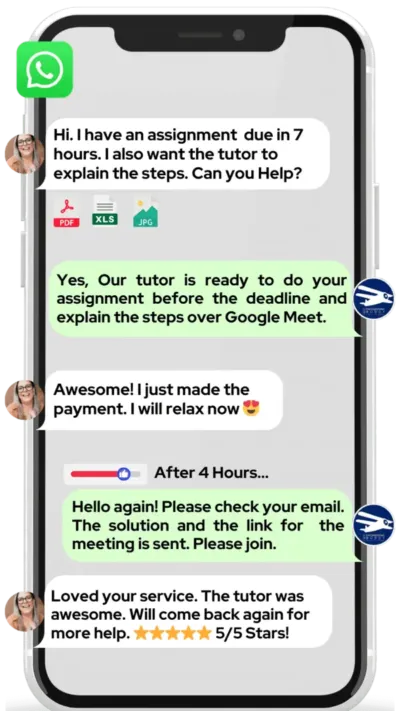
Three steps: WhatsApp MEB with your subject and goal, get matched with a verified Apache HBase tutor within the hour, then start your $1 trial — 30 minutes live or one full question explained. No registration, no intake form, no waiting.
Trust & Quality at My Engineering Buddy
Every MEB tutor goes through subject-specific vetting — not just a general technical interview. For HBase, that means demonstrated knowledge of HBase architecture, hands-on experience with the Java client or HBase Shell, and at minimum a relevant degree in computer science, data engineering, or a related field. Tutors also go through a live demo evaluation before being assigned to students, and ongoing session feedback keeps the quality bar in place. Rated 4.8/5 across 40,000+ verified reviews on Google.
MEB tutoring is guided learning — you understand the work, then submit it yourself. For full details on what we help with and what we don’t, read our Academic Integrity policy and Why MEB.
MEB has served 52,000+ students since 2008 across the US, UK, Canada, Australia, the Gulf, and Europe — in 2,800+ subjects spanning software engineering, data infrastructure, and systems design. Students working on Apache Kafka help, Apache Flink tutoring, and Apache HBase regularly move between these subjects as their big data projects grow. MEB tutors understand the full ecosystem — not just one tool in isolation.
Our experience across thousands of sessions shows that the students who improve fastest aren’t the ones who study more hours — they’re the ones who get corrective feedback earlier. One session that identifies the right gap is worth ten hours of self-directed review that misses it.
Explore Related Subjects
Students studying Apache HBase often also need support in:
Next Steps
Before your first session, have ready: your course module outline or project brief, any error logs or schema you’re already working with, and your submission or exam deadline. The tutor handles the rest.
- Share your module, project scope, and current sticking point
- Share your availability and time zone
- MEB matches you with a verified Apache HBase tutor — usually within an hour
The first session starts with a diagnostic so every minute counts. Visit www.myengineeringbuddy.com for more on how MEB works.
WhatsApp to get started or email [email protected].
52,000+ Happy Students From Various Universities



How Much For Private 1:1 Tutoring & Hw Help?
Private 1:1 Tutoring and HW help Cost $20 – 35 per hour* on average.
Reviewed by Subject Expert
This page has been carefully reviewed and validated by our subject expert to ensure accuracy and relevance.

