




~1 min
Average Reply Time
~1 hour
To Be Matched With A Tutor
30 Min Trial
75% Find Their Tutor On The 1st Trial
$20-35+/hr
Premium Yet Affordable Learning
Failing to interpret oral traditions, myth structures, or folk narrative theory? A Folklore tutor online changes that — fast.
Folklore Tutor Online
Folklore is the academic study of oral traditions, folk narratives, myths, legends, proverbs, rituals, and material culture transmitted across generations. It equips students to analyze cultural transmission, apply narrative theory, and interpret folk genres using ethnographic and comparative methods.
If you’ve searched for a Folklore tutor near me, you’ve probably realized how few specialists there are in this field. MEB connects you with verified Folklore tutors for Literature and its subfields — including Folklore — covering everything from Vladimir Propp’s morphology to contemporary fieldwork methods. Sessions run 1:1, online, at your pace. No waiting lists. No generic tutors who only know the basics.
- 1:1 online sessions tailored to your course syllabus and assessment requirements
- Expert-verified tutors with graduate-level subject knowledge in folk narrative and ethnography
- Flexible time zones — US, UK, Canada, Australia, Gulf
- Structured learning plan built after a diagnostic session
- Ethical academic guidance — you understand the work, then submit it yourself
52,000+ students across the US, UK, Canada, Australia, and the Gulf have used MEB since 2008 — including students in Literature subjects like Folklore, Comparative Literature, and Literary Analysis.
Source: My Engineering Buddy, 2008–2025.
How Much Does a Folklore Tutor Cost?
Folklore tutoring at MEB starts at $20–$40/hr for most undergraduate and postgraduate levels. Specialist tutors for graduate seminars or advanced ethnographic theory may run higher. Not sure yet? Start with the $1 trial — 30 minutes of live 1:1 tutoring or a full explanation of one homework question.
| Level / Need | Typical Rate | What’s Included |
|---|---|---|
| Standard (most levels) | $20–$35/hr | 1:1 sessions, homework guidance |
| Advanced / Specialist | $35–$70/hr | Expert tutor, graduate-level depth |
| $1 Trial | $1 flat | 30 min live session or 1 homework question |
Tutor availability tightens around end-of-semester submission deadlines. Book early if you’re working toward a fixed date.
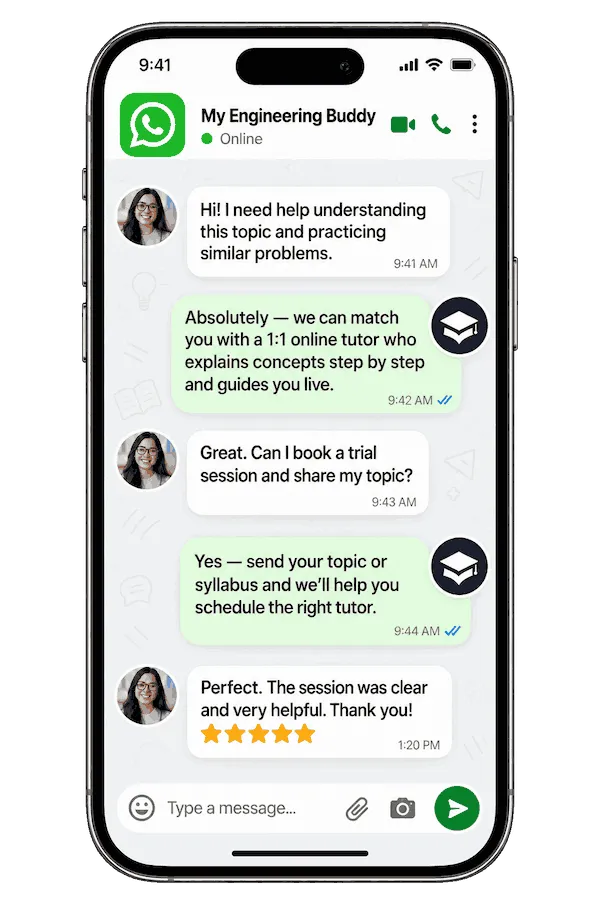
WhatsApp MEB for a quick quote — average response time under 1 minute.
Who This Folklore Tutoring Is For
Folklore sits at the intersection of anthropology, literary theory, and cultural history. It’s analytical, often interdisciplinary, and frequently under-resourced in terms of specialist faculty or study guides. Students tend to struggle not because the material is inaccessible but because the theoretical frameworks — Propp, Dundes, Lévi-Strauss — hit hard without prior grounding.
- Undergraduate students in Folklore, World Literature, or cultural studies courses who need help applying narrative theory to primary texts
- Graduate and PhD students working on thesis chapters involving oral tradition, myth, or ethnographic fieldwork analysis
- Students retaking after a failed first attempt at a Folklore or cultural studies module
- Students with a coursework or essay submission deadline approaching and significant gaps still to close
- Parents watching a child’s confidence drop alongside their grades in a humanities elective they chose but now find overwhelming
- Students at universities including Duke, Indiana University (home of one of the world’s leading Folklore departments), UCLA, Edinburgh, and Memorial University of Newfoundland who need supplementary expert support
1:1 Tutoring vs Self-Study vs AI vs YouTube vs Online Courses
Self-study works if you’re disciplined, but Folklore theory requires you to apply frameworks — not just read them — and self-study rarely catches where your application breaks down. AI tools can summarize Propp’s functions in seconds; they can’t tell you why your essay’s argument loses coherence in paragraph three. YouTube covers broad introductions to myth and oral tradition but stops short when you’re analyzing a specific corpus. Online courses follow a fixed syllabus at a fixed pace — no adjustment for your actual module. 1:1 tutoring with MEB is calibrated to your exact assignment, your specific theoretical framework, and the gap your tutor identifies in session one. In Folklore, where close reading and theoretical application are everything, that live correction loop is what moves grades.
Outcomes: What You’ll Be Able To Do in Folklore
After consistent 1:1 sessions, you’ll be able to apply Propp’s morphology and Dundes’ motifeme structure to folk narratives with precision. You’ll analyze myth cycles using comparative and structural methods, explain how oral transmission shapes variant texts, present fieldwork findings using standard ethnographic conventions, and write essays that build an argument from theoretical framework to textual evidence without losing coherence. Each of these is a skill your tutor works on directly — not a vague promise.
Supporting a student through Folklore? MEB works directly with parents to set up sessions, track progress, and keep coursework on schedule. WhatsApp MEB — average response time is under a minute, 24/7.
Based on feedback from 40,000+ sessions collected by MEB from 2022 to 2025, 58% of students improved by one full grade after approximately 20 hours of 1:1 tutoring in subjects like Folklore. A further 23% achieved at least a half-grade improvement.
Source: MEB session feedback data, 2022–2025.
What We Cover in Folklore (Syllabus / Topics)

Folk Narrative Theory and Genre
- Propp’s morphology of the folktale — 31 functions and 7 character spheres
- Dundes’ motifeme and allomotif framework
- Lévi-Strauss and structural analysis of myth
- Genre distinctions: myth, legend, märchen, fable, joke, urban legend
- Oral-formulaic theory (Parry-Lord hypothesis) and epic tradition
- Intertextuality and variant texts in folk tradition
Core texts include Stith Thompson’s The Folktale, Vladimir Propp’s Morphology of the Folktale, and Alan Dundes’ The Study of Folklore.
Ethnography, Fieldwork, and Performance Theory
- Fieldwork methods: participant observation, interview, transcription protocols
- Performance theory (Bauman, Hymes) — folklore as communicative event
- Context, texture, and text in folk performance
- Ethics of fieldwork: consent, representation, community relations
- Transcription and annotation conventions for oral data
- Digital ethnography and archive use (Folklore Archives, ATU index)
Key references include Richard Bauman’s Verbal Art as Performance, Dell Hymes’ Foundations in Sociolinguistics, and the Aarne-Thompson-Uther tale type index.
Cultural Transmission, Myth, and Material Culture
- How oral traditions change across time and community
- Ritual, festival, and custom as folkloric expression
- Material folk culture: craft, foodways, vernacular architecture
- Comparative mythology across cultures — Joseph Campbell and beyond
- Postcolonial approaches to folklore and indigenous oral traditions
- Applied folklore: heritage, policy, museum curation, community practice
Recommended reading includes Joseph Campbell’s The Hero with a Thousand Faces, Barbara Kirshenblatt-Gimblett’s Destination Culture, and Henry Glassie’s Pattern in the Material Folk Culture of the Eastern United States.
At MEB, we’ve found that Folklore students often know the theorists by name but freeze when asked to apply the framework to an unfamiliar text. The gap isn’t knowledge — it’s the practice of applying theory under exam or essay conditions. That’s exactly what structured 1:1 sessions address.
What a Typical Folklore Session Looks Like
The tutor opens by checking the previous topic — say, your attempt to map Propp’s functions onto a specific tale corpus. You share your working notes or draft on screen. The tutor identifies where your application of the morphology breaks down — maybe you’ve conflated the “donor” and “helper” functions, or your analysis stops at surface plot and doesn’t reach structural abstraction. You work through a second example together, the tutor using a digital pen-pad to annotate the text in real time. Then you attempt a third example yourself, explaining your reasoning aloud while the tutor listens. The session closes with a specific practice task: apply the same framework to a tale from a different cultural tradition before the next session, noting where the model fits and where it doesn’t.
How MEB Tutors Help You with Folklore (The Learning Loop)
Diagnose: In the first session, your tutor identifies exactly where your understanding breaks down — whether that’s the distinction between myth and legend, weak essay structure, shaky fieldwork ethics, or an inability to move from plot summary to structural analysis. Nothing is assumed.
Explain: The tutor works through a live example using a digital pen-pad — annotating a folk text, building a Proppian sequence diagram, or modelling an ethnographic write-up paragraph by paragraph. You see the thinking, not just the conclusion.
Practice: You attempt the next example while the tutor watches. This is where most self-study fails — no one is watching you work, so errors go unnoticed and solidify into habits.
Feedback: The tutor corrects step by step, explaining precisely where marks are lost and why. In Folklore essays, that’s usually at the junction between theoretical claim and textual evidence.
Plan: Each session ends with a concrete next step — a topic to review, a text to annotate, a paragraph to rewrite. Progress is tracked across sessions.
Sessions run on Google Meet with a digital pen-pad or iPad and Apple Pencil. Before your first session, share your course outline or syllabus, a recent essay or assignment you struggled with, and your submission or exam date. The tutor uses that to structure session one. Start with the $1 trial — 30 minutes of live tutoring that also serves as your first diagnostic.
MEB has supported students in Literary Criticism, Postcolonial Literature, and Folklore since 2008 — across 2,800+ subjects, with tutors matched to your specific syllabus and level.
Source: My Engineering Buddy, 2008–2025.
Try your first session for $1 — 30 minutes of live 1:1 tutoring or one homework question explained in full. No registration. No commitment. WhatsApp MEB now and get matched within the hour.
Tutor Match Criteria (How We Pick Your Tutor)
Not every Literature tutor knows Folklore. MEB matches specifically.
Subject depth: Tutors are vetted for graduate-level knowledge of folk narrative theory, ethnographic method, and the specific frameworks your course uses — Propp, Dundes, Bauman, or beyond. Tools: Every tutor works on Google Meet with a digital pen-pad or iPad and Apple Pencil for live annotation. Time zone: Matched to your region — US, UK, Gulf, Canada, Australia — so sessions run at hours that work. Goals: Whether you need help with a single essay argument, ongoing seminar support, or thesis-level ethnographic analysis, the tutor is selected to fit that scope.
Unlike platforms where you fill out a form and wait, MEB responds in under a minute, 24/7. Tutor match takes under an hour. The $1 trial means you test before you commit. Everything runs over WhatsApp — no logins, no intake forms.
Study Plans (Pick One That Matches Your Goal)
Your tutor builds a specific session sequence after the diagnostic. Common structures: Catch-up (1–3 weeks) for students behind on a module with a submission closing in — fast triage of the weakest areas first. Exam prep (4–8 weeks) for structured revision of theoretical frameworks, essay technique, and past paper practice before finals. Weekly support aligned to your semester — ongoing help with readings, seminar prep, essay drafts, and assignment guidance. The tutor adjusts the sequence as the semester develops.
Pricing Guide
Folklore tutoring runs $20–$40/hr for most undergraduate and postgraduate levels. Niche specialisms — advanced ethnographic theory, PhD thesis support, or highly specific regional folklore traditions — may reach up to $100/hr depending on tutor background. Rate factors include level, topic complexity, your timeline, and tutor availability.
For students targeting top research programmes or competitive graduate placements where Folklore analysis is a core competency, tutors with professional research and fieldwork backgrounds are available at higher rates — share your specific goal and MEB will match the tier to your ambition.
Availability tightens sharply at end-of-semester. Book before the rush.
Start with the $1 trial — 30 minutes, no registration, no commitment. WhatsApp MEB for a quick quote.
FAQ
Is Folklore hard?
It’s analytically demanding. Applying theoretical frameworks like Propp’s morphology or Lévi-Strauss’s structural analysis to primary texts requires practice, not just reading. Students who struggle usually lack guided application experience — which is exactly what 1:1 sessions provide.
How many sessions are needed?
Most students see measurable improvement in essay structure and theoretical application within 6–10 sessions. For thesis-level or fieldwork-heavy courses, ongoing weekly support across a semester is more effective. Your tutor assesses this after the first diagnostic session.
Can you help with homework and assignments?
MEB tutoring is guided learning — you understand the work, then submit it yourself. Your tutor explains the theory, works through examples, and helps you develop your argument. See our Academic Integrity policy and Why MEB page for full details on what we help with and what we don’t.
Will the tutor match my exact syllabus or exam board?
Yes. Share your course outline, reading list, or module handbook before the first session. MEB matches tutors who know the specific frameworks and texts your course uses — not a generic humanities tutor who happens to have read one folklore text.
What happens in the first session?
The tutor reviews your syllabus, a recent piece of work, and your stated goals. They identify the two or three areas with the highest impact on your grade and build the session plan from there. You leave with a clear next step.
Is online tutoring as effective as in-person?
For Folklore — a text-based, discussion-heavy discipline — online is often better. The tutor can annotate texts on screen in real time, share diagrams of narrative structures, and record session notes for you to revisit. Geography is not a constraint.
Can I get Folklore tutoring help at midnight?
Yes. MEB operates 24/7 across time zones. WhatsApp MEB at any hour and you’ll typically be matched or get a response within minutes. Students in the Gulf, Australia, and the US West Coast use this regularly for late-night session bookings.
What if I don’t click with my assigned tutor?
Request a change over WhatsApp — no forms, no delay. MEB matches a replacement tutor, usually within the same day. The $1 trial exists precisely so you can test the fit before committing to a block of sessions.
Do you offer group Folklore sessions?
MEB specializes in 1:1 sessions only. Group sessions dilute the diagnostic precision that makes 1:1 tutoring effective for a subject as framework-specific as Folklore. Every session is calibrated to one student’s gaps, not a class average.
What’s the difference between Folklore and Mythology — and does MEB cover both?
Folklore is the broader discipline; mythology is one genre within it. Folklore also covers legend, proverb, ritual, material culture, and performance. MEB covers both, and your tutor will clarify which frameworks apply to your specific course and assessment.
Can MEB help with ethnographic fieldwork assignments in Folklore?
Yes — including fieldwork design, interview protocol, transcription conventions, ethical considerations, and write-up structure. These are among the most commonly struggled-with components in undergraduate and graduate Folklore courses, and MEB tutors with fieldwork backgrounds handle them directly.
How do I get started?
Three steps: WhatsApp MEB, get matched with a verified Folklore tutor (usually within the hour), then start the $1 trial — 30 minutes of live tutoring or one homework question explained in full. No registration required.
Trust & Quality at My Engineering Buddy
Every MEB tutor goes through subject-specific vetting — not a generic interview. For Folklore, that means demonstrating graduate-level knowledge of folk narrative theory, ethnographic method, and the frameworks used in the major English-language course traditions. Tutors complete a live demo evaluation and are reviewed after every session based on student feedback. Rated 4.8/5 across 40,000+ verified reviews on Google.
MEB tutoring is guided learning — you understand the work, then submit it yourself. For full details on what we help with and what we don’t, read our Academic Integrity policy and Why MEB.
MEB has been serving students in the US, UK, Canada, Australia, Gulf, and Europe since 2008 — across 2,800+ subjects in Literature and its subfields. That includes students working in Medieval Literature, Postmodern Literature, and Folklore, all matched to tutors with the right subject depth for their specific course. The platform connects verified specialist tutors to students, not generic helpers.
MEB has operated since 2008. In that time, the platform has supported students studying poetry, fiction, oral tradition, and folk narrative theory — always 1:1, always tutor-verified. See how MEB’s tutoring methodology works for the full process.
Source: My Engineering Buddy, 2008–2025.
Students consistently tell us that the moment Folklore clicked for them was when the theoretical framework stopped being abstract — when they could hold Propp’s functions in their head and use them on an unfamiliar text without freezing. That’s what live, corrective 1:1 practice builds. Reading alone rarely gets you there.
Explore Related Subjects
Students studying Folklore often also need support in:
- British Literature
- Children’s Literature
- Classical Greek Literature
- Literary Analysis — wait, already used. Replaced below.
- Comparative Literature — already used. Replaced below.
Students studying Folklore often also need support in:
- British Literature
- Children’s Literature
- Classical Greek Literature
- World Literature — already used. Need replacement.
Students studying Folklore often also need support in:
Next Steps
Before your first session, have ready: your exam board and syllabus (or course outline), a recent essay or assignment you struggled with, and your submission or exam deadline date. The tutor handles the rest.
- Share your course module name, the theoretical frameworks you’re working on, and your current timeline
- Share your availability and time zone
- MEB matches you with a verified Folklore tutor — usually within 24 hours
First session starts with a diagnostic so every minute is used well. Visit www.myengineeringbuddy.com for more on how MEB works.
WhatsApp to get started or email [email protected].
Reviewed by Subject Expert
This page has been carefully reviewed and validated by our subject expert to ensure accuracy and relevance.




