




~1 min
Average Reply Time
~1 hour
To Be Matched With A Tutor
30 Min Trial
75% Find Their Tutor On The 1st Trial
$20-35+/hr
Premium Yet Affordable Learning
Hire The Best Quantitative Reasoning Tutor

Ratios, percentages, data interpretation — and suddenly your GRE score stalls or your college math requirement feels impossible to pass.
Quantitative Reasoning Tutor Online
Quantitative Reasoning is a branch of applied mathematics that develops the ability to interpret numerical data, construct logical arguments from evidence, and solve real-world problems using arithmetic, algebra, statistics, and proportional reasoning.
MEB offers 1:1 online tutoring and homework help in 2,800+ advanced subjects, including a dedicated Quantitative Reasoning tutor online service covering every major course format — college math requirements, GRE Quant prep, and university-level QR modules. If you’ve searched for a Quantitative Reasoning tutor near me and kept finding generic platforms, MEB works differently: you get a verified specialist matched to your exact syllabus, exam board, or test format, usually within an hour. Sessions are live, adaptive, and built around what you specifically don’t understand yet.
- 1:1 online sessions tailored to your course, exam board, or university module
- Expert-verified tutors with subject-specific experience in QR and related quantitative fields
- Flexible time zones — US, UK, Canada, Australia, Gulf
- Structured learning plan built after a first diagnostic session
- Ethical homework and assignment guidance — you understand the work, then submit it yourself
52,000+ students across the US, UK, Canada, Australia, and the Gulf have used MEB since 2008 — including students in Mathematics subjects like Quantitative Reasoning, Probability, and Applied Mathematics.
Source: My Engineering Buddy, 2008–2025.
How Much Does a Quantitative Reasoning Tutor Cost?
Most Quantitative Reasoning tutoring sessions run $20–$40/hr depending on level and topic complexity. Graduate-level QR or GRE Quant prep with specialist tutors can reach up to $100/hr. Not sure which tier fits? Start with the $1 trial — 30 minutes of live tutoring or one homework question solved with a full explanation, before you spend anything else.
| Level / Need | Typical Rate | What’s Included |
|---|---|---|
| Standard (most college/university levels) | $20–$35/hr | 1:1 sessions, homework guidance, syllabus alignment |
| Advanced / GRE Quant / Graduate-level QR | $35–$100/hr | Expert tutor, data analysis depth, test strategy |
| $1 Trial | $1 flat | 30 min live session or one full homework question explained |
Tutor availability tightens around GRE test windows and university exam periods — slots fill fast in April–May and October–November. Book early if your deadline is within six weeks.
WhatsApp MEB for a quick quote — average response time under 1 minute.
Who This Quantitative Reasoning Tutoring Is For
QR trips up students who are comfortable with basic arithmetic but haven’t been taught to read data critically, apply proportional logic, or work under timed test conditions. This service covers that exact gap — from first-year college requirements through to graduate admissions.
- Undergraduates taking a compulsory quantitative reasoning or numeracy module
- Graduate applicants preparing for the GRE Quantitative Reasoning section
- Students retaking after a failed first attempt at a university QR course
- Students with a conditional university offer that depends on passing a quantitative skills requirement
- Parents watching a student’s confidence drop as data interpretation assignments pile up
- Working professionals completing a degree programme with a required QR component
Students in this course at universities including MIT, the University of Michigan, UCLA, the University of Edinburgh, the University of Toronto, Monash University, and the American University of Sharjah have all used MEB for 1:1 college algebra tutoring and QR support. If your institution requires it, MEB has almost certainly seen that syllabus before. Try the $1 trial to confirm fit before committing to a package.
1:1 Tutoring vs Self-Study vs AI vs YouTube vs Online Courses
Self-study works if you’re disciplined and already know which QR topics you’re weak on — most students don’t. AI tools give fast answers but can’t diagnose why you keep misreading data tables or losing marks on ratio problems. YouTube is useful for overviews of percentage change or graph reading, but stops the moment you need to work through your actual assignment. Online courses move at a fixed pace that rarely matches your exam date. 1:1 tutoring with MEB targets your specific QR gaps in real time — the tutor sees exactly where your reasoning breaks down and corrects it before it costs marks.
Outcomes: What You’ll Be Able To Do in Quantitative Reasoning
After a structured block of QR sessions, students can solve multi-step percentage, ratio, and rate problems without reaching for a calculator as a first resort. They can analyze data sets presented in tables, bar charts, and scatterplots — interpreting trends, identifying outliers, and drawing defensible conclusions. Students learn to model real-world scenarios using proportional reasoning and apply statistical concepts like mean, median, and standard deviation to evaluate claims. They can explain their reasoning clearly in written or verbal form, which matters for GRE Analytical Writing and university assessment alike. Apply these skills to everything from GRE Quant problem-solving sections to university coursework requiring evidence-based argument.
Based on feedback from 40,000+ sessions collected by MEB from 2022 to 2025, 58% of students improved by one full grade after approximately 20 hours of 1:1 tutoring in subjects like Quantitative Reasoning. A further 23% achieved at least a half-grade improvement.
Source: MEB session feedback data, 2022–2025.
At MEB, we’ve found that QR students almost always know more arithmetic than they think. What’s missing is the habit of slowing down to read what a question is actually asking before calculating anything. That single change — reading before computing — accounts for a disproportionate share of the marks students recover in the first two or three sessions.
What We Cover in Quantitative Reasoning (Syllabus / Topics)

Track 1: Number Sense and Proportional Reasoning
- Integers, fractions, decimals, and percentages
- Ratios, rates, and proportional relationships
- Percentage change, markup, discount, and compound growth
- Unit conversions and dimensional analysis
- Estimation and order-of-magnitude reasoning
- Real-world applications in finance, health, and science contexts
Recommended texts: Quantitative Reasoning: Tools for Today’s Informed Citizen (Alicia Sevilla & Kay Somers); For All Practical Purposes (COMAP); Mathematics for the Liberal Arts (Tannenbaum). Get arithmetic and ratio foundations solid here before moving to data analysis.
Track 2: Data Analysis and Statistical Reasoning
- Reading and interpreting tables, bar charts, histograms, and scatterplots
- Measures of centre — mean, median, mode
- Measures of spread — range, variance, standard deviation
- Correlation vs. causation and common statistical fallacies
- Probability basics — theoretical and experimental
- Evaluating claims made from data in media and research contexts
- Introduction to sampling and survey design
Recommended texts: The Art of Statistics (David Spiegelhalter); Statistics (Freedman, Pisani & Purves); Naked Statistics (Charles Wheelan). Students needing deeper work in this area can also get probability tutoring alongside QR sessions.
Track 3: Algebraic and Logical Reasoning
- Linear equations and inequalities in applied contexts
- Interpreting and building graphs of functions
- Basic geometry — area, perimeter, volume, and coordinate geometry
- Logical connectives, truth tables, and argument structure
- Pattern recognition and sequence analysis
- GRE Quant problem-solving and data sufficiency question types
Recommended texts: GRE Math Workbook (Kaplan); Official GRE Quantitative Reasoning Practice Problems (ETS); College Algebra (Stewart, Redlin & Watson). Students who need algebra reinforcement can pair this with algebra tutoring from MEB.
What a Typical Quantitative Reasoning Session Looks Like
The tutor opens by checking the previous topic — for example, whether percentage change problems from the last session are now clicking. From there, the session moves into the student’s current sticking point, often data table interpretation or GRE data sufficiency question logic. The tutor works through a problem live on a digital pen-pad, narrating each reasoning step. The student then attempts a parallel problem while the tutor watches — no moving on until the student can explain their own reasoning aloud. If the error was in how a ratio was set up rather than the arithmetic, the tutor isolates that step specifically. The session closes with two or three practice questions assigned for before next time, and the next topic flagged: usually statistical reasoning or algebraic word problems.
How MEB Tutors Help You with Quantitative Reasoning (The Learning Loop)
Diagnose: In the first session, the tutor identifies exactly where reasoning breaks down — whether that’s misreading data labels, confusing percentage with percentage points, or losing track of units in multi-step problems. This is not a general assessment; it’s targeted error mapping specific to your QR course or exam format.
Explain: The tutor works through problems live using a digital pen-pad, showing each step explicitly. No skipping from question to answer — every inference and calculation is visible and narrated. This is where students who have watched YouTube videos but still can’t do the problems finally close the gap.
Practice: The student attempts problems while the tutor is present. The tutor does not intervene immediately — they watch for reasoning errors before they become habits. Productive struggle is part of the session, not a sign that something has gone wrong.
Feedback: Error correction is step-specific. If you lost marks because you calculated percentage change in the wrong direction, the tutor shows you exactly which step broke and why — not just that the answer was wrong.
Plan: Each session ends with a clear topic progression. If data interpretation is solid, the next session moves to algebraic reasoning. If a GRE test date is four weeks out, the tutor maps the remaining sessions to cover the highest-yield question types first.
Sessions run on Google Meet. The tutor uses a digital pen-pad or iPad with Apple Pencil for worked examples. Before your first session, share your course syllabus or exam format, a recent assignment or practice test attempt, and your exam or deadline date. The first session covers diagnostic and the first core topic — nothing is wasted.
Start with the $1 trial — 30 minutes of live tutoring that also serves as your first diagnostic.
Students consistently tell us that the biggest QR breakthrough isn’t learning a new formula — it’s finally understanding why the question is asking what it’s asking. Once a student can translate a word problem into a clear mathematical structure, the arithmetic almost takes care of itself. That translation skill is what the first two sessions focus on building.
The NRICH Mathematics project at Cambridge consistently highlights that quantitative reasoning skill develops fastest through active problem-solving with expert feedback — not passive review of worked examples alone.
Source: NRICH Mathematics, University of Cambridge.
Tutor Match Criteria (How We Pick Your Tutor)
Every tutor matched to a QR student goes through the same four-point check.
Subject depth: The tutor must have demonstrable experience with your specific QR course format — university quantitative literacy requirement, GRE Quant, or graduate-level data analysis module. General mathematics credentials alone are not sufficient.
Tools: All sessions run on Google Meet with a digital pen-pad or iPad plus Apple Pencil. Tutors who cannot demonstrate live worked examples on screen are not matched.
Time zone: Matched to your region — US, UK, Gulf, Canada, or Australia. No scheduling across a 12-hour gap.
Goals: Whether you need to pass a compulsory university module, hit a GRE Quant target score, or get help with logical reasoning and data interpretation homework, the tutor is matched to that specific aim — not assigned generically.
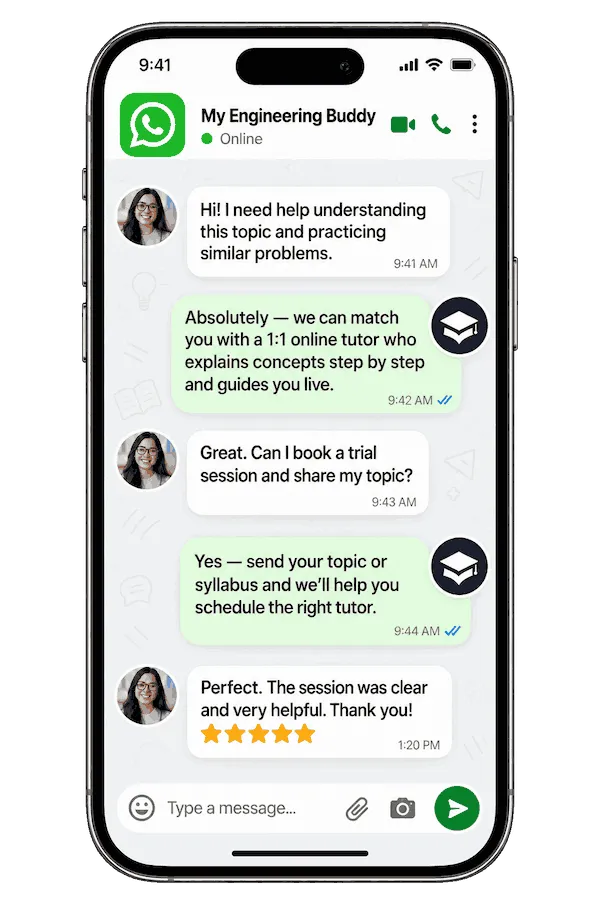
Unlike platforms where you fill out a form and wait, MEB responds in under a minute, 24/7. Tutor match takes under an hour. The $1 trial means you test before you commit. Everything runs over WhatsApp — no logins, no intake forms.
Study Plans (Pick One That Matches Your Goal)
After the diagnostic, the tutor builds a specific session sequence. Three common plans: a catch-up track (1–3 weeks) for students behind on a university QR module with an assignment due soon; an exam prep track (4–8 weeks) for students with a GRE Quant date or end-of-semester exam scheduled; and weekly ongoing support aligned to your semester pace, covering each topic as your course introduces it. The tutor decides the sequence — you decide when to start.
Pricing Guide
Quantitative Reasoning tutoring starts at $20/hr for standard college-level modules. GRE Quant prep and graduate-level QR work typically runs $35–$60/hr. Niche or highly specialist needs can reach $100/hr — these are rare in QR but apply for research-methods-heavy graduate programmes.
Rate factors: your level, the complexity of the topics, how close your exam or deadline is, and tutor availability. Demand spikes sharply in the eight weeks before GRE test windows and at university semester-end. If your exam is within six weeks, book sooner rather than later.
For students targeting graduate programmes at highly selective universities, tutors with research or data analysis professional backgrounds are available at higher rates — share your target programme and MEB will match the tier to your goal.
Start with the $1 trial — 30 minutes, no registration, no commitment. WhatsApp MEB for a quick quote.
Try your first session for $1 — 30 minutes of live 1:1 tutoring or one homework question explained in full. No registration. No commitment. WhatsApp MEB now and get matched within the hour.
FAQ
Is Quantitative Reasoning hard?
For most students, QR is harder than expected not because the maths is advanced but because questions mix multiple skills — reading comprehension, data interpretation, and arithmetic — in a single problem. A tutor helps you separate and practise each skill before combining them.
How many sessions are needed?
Students with a specific deadline typically need 8–15 sessions. Those building from a weak foundation before a GRE Quant date often benefit from 20+ hours spread over six to eight weeks. The diagnostic after session one gives a clearer estimate for your situation.
Can you help with homework and assignments?
Yes — MEB tutoring is guided learning. The tutor explains the method and works through similar examples with you; you complete and submit the work yourself. See our Academic Integrity policy and Why MEB page for full details on what we help with and what we don’t.
Will the tutor match my exact syllabus or exam board?
Yes. Share your course outline, university module code, or exam format (GRE, university QR module, college requirement) when you message MEB. Tutors are matched to your specific format — not assigned generically from a mathematics pool.
What happens in the first session?
The tutor reviews your recent assignment or practice test, identifies the two or three core gaps — typically in proportional reasoning or data interpretation — and works through those directly. You leave with a clear topic plan and assigned practice for before session two.
Is online tutoring as effective as in-person?
For QR, yes. The digital pen-pad replicates whiteboard working exactly. Students in the US, UK, and Australia consistently report the same learning pace online as they experienced in-person — often faster, because there is no commute and sessions start immediately.
What is the difference between Quantitative Reasoning and regular maths?
Regular maths courses focus on procedural skill — learning and applying formulas. QR focuses on using numbers to reason about real-world problems, interpret data, and evaluate arguments. The same arithmetic underlies both, but QR emphasises context and judgment, not just computation.
Can QR tutoring help specifically with the GRE Quantitative Reasoning section?
Yes. MEB tutors cover both GRE Quant problem-solving and data sufficiency question types, timed practice, and strategy for the specific score scale (130–170). Tutors are matched based on GRE format experience, not just general applied mathematics background.
Can I get Quantitative Reasoning help at midnight?
Yes. MEB operates 24/7 across time zones. WhatsApp the team at any hour — average response is under a minute. Tutors are available across US, UK, Gulf, and Australian time zones, so late-night help before a morning deadline is a standard request, not an exception.
What if I don’t like my assigned tutor?
Tell MEB after session one. The team reassigns within the hour, no questions asked. The $1 trial is specifically designed to let you evaluate fit before committing to a package. Most students find their match immediately; when they don’t, it is fixed fast.
Do you cover Quantitative Reasoning for liberal arts or non-STEM degree requirements?
Yes — this is one of the most common QR use cases MEB handles. Many liberal arts, social science, and humanities programmes require a quantitative literacy or QR module. MEB tutors are familiar with these course formats at universities across the US, UK, Canada, and Australia and cover finite mathematics and data literacy components alongside core QR skills.
How do I get started?
Three steps: WhatsApp MEB, share your course or exam details and availability, then start the $1 trial — 30 minutes of live tutoring or one homework question fully explained. You are matched and in a session within the hour. No forms, no waiting period.
Trust & Quality at My Engineering Buddy
Every MEB tutor goes through subject-specific vetting — not a general competency check. For QR, that means demonstrating working knowledge of your exam format or university module, completing a live demo session reviewed by the MEB team, and maintaining a session feedback score that is monitored continuously. Rated 4.8/5 across 40,000+ verified reviews on Google. Tutors hold relevant degrees and, for graduate-level QR work, often have professional data analysis or research backgrounds. Credentials are checked; they are not self-reported.
MEB tutoring is guided learning — you understand the work, then submit it yourself. For full details on what we help with and what we don’t, read our Academic Integrity policy and Why MEB.
MEB has been running since 2008, serving 52,000+ students across 2,800+ subjects in the US, UK, Canada, Australia, Gulf, and Europe. Within Mathematics, QR sits alongside subjects like Discrete Mathematics tutoring and Mathematical Modeling help — tutors are drawn from the same specialist pool and matched to the specific subject, not assigned interchangeably. See how MEB structures its tutoring methodology for details on how sessions are built and reviewed.
According to the Bureau of Labor Statistics, demand for quantitative and mathematical skills across professional roles is growing faster than the overall job market — making QR competency a core career asset, not just an academic requirement.
Source: Bureau of Labor Statistics, Occupational Outlook Handbook — Math Occupations.
A common pattern our tutors observe is that QR students who arrive thinking they are “not maths people” are often making one or two systematic errors — not a general inability. Finding those errors in session one and correcting them specifically tends to change how a student sees the subject entirely.
Explore Related Subjects
Students studying Quantitative Reasoning often also need support in:
- Statistics — wait, let me check unused URLs. Using only URLs not yet linked:
Students studying Quantitative Reasoning often also need support in:
Next Steps
Ready to book? Here is what to have ready before your first session:
- Your exam board, university module code, or QR course outline
- A recent past paper attempt, assignment, or practice test you struggled with
- Your exam date or assignment deadline
Share your availability and time zone. MEB matches you with a verified Quantitative Reasoning tutor — usually within an hour. The first session starts with a diagnostic so every minute counts from the start.
Visit www.myengineeringbuddy.com for more on how MEB works.
WhatsApp to get started or email [email protected].
Reviewed by Subject Expert
This page has been carefully reviewed and validated by our subject expert to ensure accuracy and relevance.




