

Hire Verified & Experienced
Social Policy Tutors
Email: [email protected]
4.8/5 40K+ session ratings collected on the MEB platform



Hire The Best Social Policy Tutor
Top Tutors, Top Grades. Without The Stress!
Most students don’t fail Social Policy because the content is too hard. They fail because nobody ever showed them how to connect theory to evidence — and then write it under exam pressure.
Social Policy Tutor Online
Social Policy is the academic study of government-designed programmes addressing welfare, healthcare, housing, education, and poverty. It examines how policy decisions are made, funded, and evaluated across different political and institutional contexts.
MEB offers 1:1 online tutoring and homework help in Social Policy — matched to your exact course, whether that’s an undergraduate module, a postgraduate programme, or a standalone unit within a social science degree. If you’ve searched for a Social Policy tutor near me and found only generic platforms, MEB is different. Every tutor is vetted for subject depth, not just general teaching ability. One session is usually enough to see the difference.
- 1:1 online sessions tailored to your specific course and syllabus
- Expert-verified tutors with graduate-level Social Policy knowledge
- Flexible time zones — US, UK, Canada, Australia, Gulf
- Structured learning plan built after a diagnostic session
- Ethical homework and assignment guidance — you understand before you submit
52,000+ students across the US, UK, Canada, Australia, and the Gulf have used MEB since 2008 — including students in Social Science subjects like sociology, political science, and Social Policy.
Source: My Engineering Buddy, 2008–2025.
How Much Does a Social Policy Tutor Cost?
Most Social Policy tutoring sessions run $20–$40/hr depending on level and topic complexity. Graduate and specialist modules can reach $70/hr. Not sure if it’s worth it? Start with the $1 trial — 30 minutes of live tutoring or one full assignment question explained.
| Level / Need | Typical Rate | What’s Included |
|---|---|---|
| Undergraduate (most modules) | $20–$35/hr | 1:1 sessions, essay and assignment guidance |
| Postgraduate / Specialist | $35–$70/hr | Expert tutor, advanced policy analysis |
| $1 Trial | $1 flat | 30 min live session or one homework question explained in full |
Tutor availability tightens during semester submission windows and around dissertation deadlines. Book early if you’re within six weeks of a major deadline.
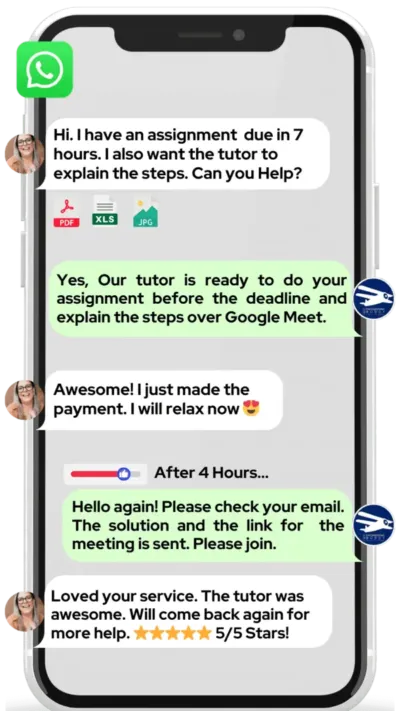
WhatsApp MEB for a quick quote — average response time under 1 minute.
Who This Social Policy Tutoring Is For
Social Policy attracts students from backgrounds in political sociology, law, and public administration — and the reading load is heavy from week one. If you’re behind, or if essays keep coming back with comments like “needs more critical analysis,” this is the right place.
- Undergraduates struggling to distinguish between welfare state models or apply comparative frameworks in essays
- Postgraduate students needing support with policy evaluation methods, literature reviews, or dissertation chapters
- Students retaking after a failed first attempt — especially where essay structure or argument coherence was flagged
- Students with a university conditional offer depending on passing this module
- Parents watching a student’s confidence drop alongside their grades in a seminar-heavy course
- Students at universities like LSE, UCL, Edinburgh, Toronto, ANU, or Sciences Po who want to close the gap between lectures and written output
If you’re at a Russell Group, Ivy-adjacent, or Go8 university and Social Policy is part of your degree core, a tutor who knows the literature — not just the textbook — matters.
1:1 Tutoring vs Self-Study vs AI vs YouTube vs Online Courses
Self-study works if you’re disciplined, but Social Policy essays need feedback — not just more reading. AI tools answer questions fast but can’t diagnose why your argument structure keeps losing marks. YouTube gives good overviews of Esping-Andersen or Beveridge, but stops the moment your specific essay question gets complex. Online courses move at a fixed pace with no personalisation. 1:1 tutoring with MEB is live, built around your exact Social Policy module, and corrects your reasoning in real time — not after you’ve already submitted.
Outcomes: What You’ll Be Able To Do in Social Policy
After working with an MEB Social Policy tutor online, you’ll be able to apply welfare state typologies — like Esping-Andersen’s three worlds — accurately in comparative essays. You’ll analyse healthcare or housing policy using established evaluation frameworks rather than summarising them. You’ll write arguments that distinguish between social democratic, conservative, and liberal approaches without conflating them. You’ll also present evidence from policy documents and academic sources in a way that actually answers the question set — not just surrounds it.
Based on feedback from 40,000+ sessions collected by MEB from 2022 to 2025, 58% of students improved by one full grade after approximately 20 hours of 1:1 tutoring in subjects like Social Policy. A further 23% achieved at least a half-grade improvement.
Source: MEB session feedback data, 2022–2025.
Supporting a student through Social Policy? MEB works directly with parents to set up sessions, track progress, and keep coursework on schedule. WhatsApp MEB — average response time is under a minute, 24/7.
Try your first session for $1 — 30 minutes of live 1:1 tutoring or one homework question explained in full. No registration. No commitment. WhatsApp MEB now and get matched within the hour.
What We Cover in Social Policy (Syllabus / Topics)

Welfare States and Comparative Policy
- Esping-Andersen’s three worlds of welfare capitalism
- Bismarckian vs Beveridgean welfare models
- Social democratic, liberal, and conservative regime types
- Decommodification and stratification concepts
- Comparative healthcare systems — NHS, Bismarckian insurance, US mixed model
- Pension reform and ageing population policy debates
- Policy convergence vs path dependency arguments
Recommended texts: Esping-Andersen, The Three Worlds of Welfare Capitalism; Bonoli & Natali, The Politics of the New Welfare State; Pierson, The New Politics of the Welfare State.
Housing, Education, and Poverty Policy
- Housing tenure models — social housing, private rental, homeownership policy
- Means testing vs universalism in benefit design
- Child poverty measurement — absolute vs relative definitions
- Education policy and social mobility debates
- Workfare, conditionality, and active labour market policy
- Food insecurity and in-work poverty in OECD nations
Recommended texts: Titmuss, Essays on the Welfare State; Lister, Poverty; Hills, Good Times, Bad Times.
Policy Analysis and Research Methods
- Policy evaluation frameworks — process, outcome, and impact evaluation
- Qualitative methods — interviews, discourse analysis, document analysis
- Quantitative methods — survey data, administrative data, regression basics
- Critical policy analysis and framing theory
- Using sources like the World Inequality Database for inequality evidence
- Writing policy briefs vs academic essays — different conventions
Recommended texts: Bochel & Duncan, Making Policy in Theory and Practice; Blaikie, Designing Social Research; Hill, The Public Policy Process.
What a Typical Social Policy Session Looks Like
The tutor usually opens by checking the previous topic — say, how well you can explain path dependency in pension reform without notes. Then you move to the current problem: maybe you’re writing an essay on means testing and you can’t articulate why universalism is the stronger position for your argument. The tutor works through it on screen, showing you how to structure the claim, how to bring in evidence from Titmuss or recent OECD data, and where the counter-argument goes. You replicate the structure yourself in a shorter example. The session closes with a specific task — usually redrafting one paragraph from a previous essay — and the next topic is agreed. Sessions run on Google Meet with a digital pen-pad for annotation.
How MEB Tutors Help You with Social Policy (The Learning Loop)
Diagnose: In the first session, the tutor identifies whether the problem is conceptual (you can’t explain the difference between social insurance and social assistance), structural (your essays describe rather than argue), or both. This shapes every session that follows.
Explain: The tutor works through live examples on screen — applying a welfare regime framework to a current policy debate, for instance — using a digital pen-pad to annotate arguments as they’re built. You see the reasoning, not just the conclusion.
Practice: You attempt the same type of task with the tutor present. Not later. Not as homework. Right there, so errors surface immediately.
Feedback: The tutor marks against the standard your course uses — whether that’s analytical depth, use of evidence, or clarity of argument — and explains exactly where marks are lost and why.
Plan: Each session ends with a specific next topic, a task, and a check on your timeline. If your deadline moved, the plan adjusts.
At MEB, we’ve found that Social Policy students who bring a recent marked essay to the first session — even a bad one — make faster progress than students who start from scratch. The feedback on that essay tells the tutor more in five minutes than a diagnostic quiz would in twenty.
All sessions run on Google Meet. The tutor uses a digital pen-pad or iPad with Apple Pencil to annotate policy diagrams, essay structures, and frameworks in real time. Before your first session, share your course outline or module guide, any marked work with feedback, and your assessment deadline. The first session covers a diagnostic check and the highest-priority gap. Start with the $1 trial — 30 minutes of live tutoring that also serves as your first diagnostic.
Students consistently tell us that the moment a Social Policy concept clicks isn’t when they read it — it’s when a tutor asks them to apply it to a real policy example and they have to think it through out loud.
Source: My Engineering Buddy, compiled from session feedback, 2008–2025.
Tutor Match Criteria (How We Pick Your Tutor)
Not every tutor who knows sociology can teach Social Policy well. MEB matches on four criteria.
Subject depth: Tutors hold postgraduate qualifications in Social Policy, Public Administration, or a directly related field. Familiarity with your specific module reading list is confirmed before matching.
Tools: All tutors work on Google Meet with a digital pen-pad or iPad and Apple Pencil — no whiteboard substitutes, no screen-share-only sessions.
Time zone: Matched to your region — US, UK, Gulf, Canada, or Australia — so sessions run at hours that don’t conflict with seminars or deadlines.
Goals: Whether you need exam preparation, essay structure support, dissertation chapter review, or ongoing weekly homework guidance, the tutor is matched to that specific goal — not just the subject name.
Unlike platforms where you fill out a form and wait, MEB responds in under a minute, 24/7. Tutor match takes under an hour. The $1 trial means you test before you commit. Everything runs over WhatsApp — no logins, no intake forms.
Study Plans (Pick One That Matches Your Goal)
Catch-up (1–3 weeks): for students behind on core frameworks or with a submission in days. Covers highest-priority gaps fast. Exam prep (4–8 weeks): structured revision across all major topics, with timed essay practice in the final two weeks. Weekly support: ongoing through the semester, aligned to lecture topics and assignment deadlines. The tutor builds the specific session sequence after the first diagnostic — not before it. You don’t need to arrive with a plan. Bring your syllabus and your current biggest problem.
Pricing Guide
Social Policy tutoring runs $20–$40/hr for most undergraduate modules. Postgraduate, dissertation support, and specialist policy analysis topics reach $70–$100/hr depending on tutor background and timeline urgency. Rate factors include your level, the complexity of the topic, how close your deadline is, and tutor availability in your time zone.
Availability tightens in November and April — peak essay and exam submission periods at most universities. If you’re within six weeks of a major deadline, book sooner rather than later.
For students targeting places at LSE, Sciences Po, Oxford’s Blavatnik School, or similar policy-focused postgraduate programmes, tutors with professional policy or public administration backgrounds are available at higher rates — share your specific goal and MEB will match the tier to your ambition.
Start with the $1 trial — 30 minutes, no registration, no commitment. WhatsApp MEB for a quick quote.
FAQ
Is Social Policy hard?
It’s conceptually demanding more than mathematically difficult. The challenge is applying theoretical frameworks accurately in analytical writing — a skill most students weren’t explicitly taught. A tutor who knows the literature closes that gap faster than rereading does.
How many sessions are needed?
Students with a specific essay or exam within four weeks typically need four to eight sessions. Ongoing weekly support through a semester averages one session per week. The tutor sets a clearer estimate after the first diagnostic session.
Can you help with homework and assignments?
Yes. MEB tutoring is guided learning — you understand the work, then submit it yourself. The tutor explains the argument, the framework, and the evidence structure. You write and submit your own work. See our Academic Integrity policy and Why MEB page for full details on what we help with and what we don’t.
Will the tutor match my exact syllabus or exam board?
Yes. Before matching, MEB confirms the tutor is familiar with your specific module, reading list, and assessment format — whether that’s a UK undergraduate module, a North American political science course, or a postgraduate programme at a specific institution.
What happens in the first session?
The tutor runs a short diagnostic — usually asking you to explain a core concept or talk through a recent assignment. This identifies the real gap. The rest of the session addresses the highest-priority problem immediately. Nothing is wasted on orientation.
Is online tutoring as effective as in-person?
For Social Policy — an essay and analysis-heavy subject — yes. Screen annotation, shared documents, and live essay walkthroughs work at least as well as in-person, and scheduling is significantly more flexible. Most MEB students prefer it after the first session.
Can I get Social Policy help at midnight or on weekends?
Yes. MEB operates 24/7 across time zones. WhatsApp is the fastest channel — median response time is under one minute. Tutors are available across US, UK, Gulf, and Australian time zones, including weekends and during university holiday periods.
What if I don’t like my assigned tutor?
Tell MEB on WhatsApp — immediately, no explanation required. You’ll be rematched within the hour. The $1 trial exists precisely so you can test fit before committing to a longer booking. No lock-in, no penalty.
What’s the difference between Social Policy and Sociology or Political Science?
Social Policy focuses specifically on the design, implementation, and evaluation of welfare programmes and public interventions. Sociology is broader — covering social structures and behaviour. Political Science covers governance and power. Social Policy sits at the intersection but uses its own distinct analytical frameworks and policy evaluation methods.
Do you cover comparative social policy — international welfare systems?
Yes. Comparative Social Policy is one of the most commonly requested areas. Tutors cover Esping-Andersen’s regime typology, cross-national healthcare comparisons, pension reform debates, and inequality evidence — including how to use data sources like the World Inequality Database in academic arguments.
How do I get started?
Three steps: WhatsApp MEB, get matched to a Social Policy tutor (usually within the hour), then start your $1 trial — 30 minutes of live tutoring or one full assignment question explained. No registration form, no waiting list, no commitment beyond the first session.
Trust & Quality at My Engineering Buddy
Every MEB tutor goes through subject-specific screening — not just a general teaching interview. Tutors in social work and Social Policy hold relevant postgraduate qualifications and are evaluated on a live demo session before being matched with students. Ongoing session feedback is reviewed and low-rated tutors are removed. Rated 4.8/5 across 40,000+ verified reviews on Google.
MEB tutoring is guided learning — you understand the work, then submit it yourself. For full details on what we help with and what we don’t, read our Academic Integrity policy and Why MEB.
MEB has served 52,000+ students in 2,800+ subjects since 2008 — across the US, UK, Canada, Australia, Gulf, and Europe. Within Social Science, some of the most in-demand areas alongside Social Policy include education policy tutoring and development studies help. See our tutoring methodology for how sessions are structured from diagnostic through to exam or submission.
Explore Related Subjects
Students studying Social Policy often also need support in:
Next Steps
Before your first session, have ready: your module guide or course outline, a recent essay or assignment you struggled with (marked work is ideal), and your submission or exam date. The tutor handles the rest.
- Share your exam board or course, your hardest component, and your current timeline
- Share your availability and time zone
- MEB matches you with a verified Social Policy tutor — usually within 24 hours
A common pattern our tutors observe is this: students arrive thinking they need to read more. Most of the time, what they actually need is to practise applying what they’ve already read — in writing, under the specific conditions their course demands. That’s what sessions are for.
Visit www.myengineeringbuddy.com for more on how MEB works.
WhatsApp to get started or email [email protected].
52,000+ Happy Students From Various Universities



How Much For Private 1:1 Tutoring & Hw Help?
Private 1:1 Tutoring and HW help Cost $20 – 35 per hour* on average.
Reviewed by Subject Expert
This page has been carefully reviewed and validated by our subject expert to ensure accuracy and relevance.

