

Hire Verified & Experienced
Social Work Tutors
Email: [email protected]
4.8/5 40K+ session ratings collected on the MEB platform



Hire The Best Social Work Tutor
Top Tutors, Top Grades. Without The Stress!


Social Work students fail placements — not because they lack empathy, but because the theory, research methods, and policy frameworks weren’t properly taught.
Social Work Tutor Online
Social Work is an academic and professional discipline focused on supporting individuals, families, and communities through direct practice, policy analysis, and research. It draws on psychology, sociology, ethics, and law across BSW, MSW, and doctoral-level programmes.
Finding a Social Work tutor near me who actually knows your programme — whether you’re navigating human behaviour theory at the BSW level, tackling HBSE frameworks as an MSW student, or working through research methods for a doctoral dissertation — is harder than it looks. MEB has matched students in social science and adjacent disciplines since 2008. A 1:1 online Social Work tutor from MEB works with your exact course readings, assignment rubrics, and field placement requirements — not a generic textbook outline.
- 1:1 online sessions tailored to your BSW, MSW, or PhD Social Work course
- Tutors with subject-specific knowledge in social policy, practice theory, and research methods
- Flexible time zones — US, UK, Canada, Australia, Gulf
- Structured learning plan built after a diagnostic session
- Ethical homework and assignment guidance — you understand the material, then submit it yourself
52,000+ students across the US, UK, Canada, Australia, and the Gulf have used MEB since 2008 — including students in Social Science subjects like Social Work, sociology, and psychology.
Source: My Engineering Buddy, 2008–2025.
How Much Does a Social Work Tutor Cost?
Most Social Work tutoring sessions run $20–$40/hr. Graduate-level support — MSW research methods, dissertation coaching, policy analysis — can reach $60–$100/hr depending on tutor background. Start with the $1 trial: 30 minutes of live 1:1 tutoring or one full homework question explained.
| Level / Need | Typical Rate | What’s Included |
|---|---|---|
| BSW / Undergraduate | $20–$35/hr | 1:1 sessions, assignment guidance, theory review |
| MSW / Graduate | $35–$70/hr | Advanced practice theory, research methods, policy |
| PhD / Dissertation | $60–$100/hr | Literature review, methodology, academic writing |
| $1 Trial | $1 flat | 30 min live session or 1 homework question explained |
Tutor availability tightens at the start of field placement semesters and around portfolio submission deadlines — book early if your timeline is fixed.
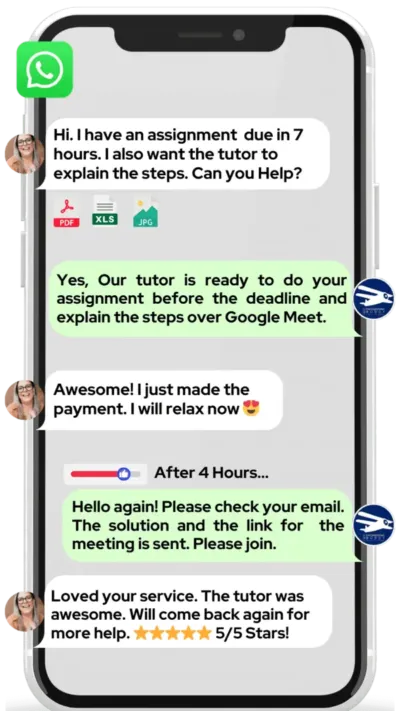
WhatsApp MEB for a quick quote — average response time under 1 minute.
Who This Social Work Tutoring Is For
Social Work draws students from very different starting points. Some come with years of volunteer or community experience. Others come straight from a general social science degree with no direct practice background. Both groups hit the same academic wall when practice theory, ethics frameworks, and research methods arrive simultaneously.
- BSW students struggling with human behaviour and the social environment (HBSE) theory
- MSW students working through advanced clinical practice, policy analysis, or macro social work
- Students failing or borderline-failing a placement because the theoretical underpinning wasn’t solid
- Students with a conditional programme offer depending on their undergraduate Social Work grade
- Parents watching a child’s confidence drop alongside their grades in a demanding BSW programme
- PhD and doctoral candidates needing support with qualitative research design, literature synthesis, or writing social work dissertations
Students at universities including Columbia, Michigan, Toronto, Edinburgh, Melbourne, and NYU have used MEB for 1:1 Social Work support at every level of study.
1:1 Tutoring vs Self-Study vs AI vs YouTube vs Online Courses
Self-study works if you’re disciplined — but Social Work theory is dense, contested, and rarely self-explanatory. AI tools give fast definitions of ecological systems theory or strengths-based practice, but they can’t tell you why your case study analysis is losing marks. YouTube covers broad overviews of social policy; it stops when you’re stuck on the specifics of your module’s framework. Online courses are structured but move at a fixed pace with no room for your placement timeline. 1:1 tutoring with MEB is live, calibrated to your exact course and reading list, and corrects your reasoning errors in the moment — which matters more in Social Work than in almost any other subject.
Outcomes: What You’ll Be Able To Do in Social Work
After working with an online Social Work tutor from MEB, you won’t just know the theories — you’ll be able to apply them. Analyse client situations using ecological systems theory, Bronfenbrenner’s framework, or the strengths-based model without fumbling the terminology. Write case formulations that correctly identify presenting problems, protective factors, and intervention goals. Explain the ethical tensions in mandatory reporting, dual relationships, or culturally competent practice in a way that holds up under academic scrutiny. Present research findings from your field placement using appropriate qualitative or quantitative framing. Apply social policy critique to real legislative examples — whether that’s the UK’s Children Act, the US Social Security Act, or comparable frameworks in Canada and Australia.
Based on feedback from 40,000+ sessions collected by MEB from 2022 to 2025, 58% of students improved by one full grade after approximately 20 hours of 1:1 tutoring in subjects like Social Work. A further 23% achieved at least a half-grade improvement.
Source: MEB session feedback data, 2022–2025.
Supporting a student through Social Work? MEB works directly with parents to set up sessions, track progress, and keep coursework on schedule. WhatsApp MEB — average response time is under a minute, 24/7.
What We Cover in Social Work (Syllabus / Topics)
Track 1: Human Behaviour, Theory, and Practice
- Ecological systems theory and Bronfenbrenner’s bioecological model
- Strengths-based and empowerment approaches to practice
- Psychodynamic, cognitive-behavioural, and solution-focused frameworks
- Human development across the lifespan — attachment theory, identity, aging
- Mental health, trauma-informed care, and crisis intervention models
- Anti-oppressive and anti-discriminatory practice (AOP/ADP)
- Group work theory and facilitation skills
Core texts: Payne’s Modern Social Work Theory, Howe’s An Introduction to Social Work Theory, Trevithick’s Social Work Skills and Knowledge.
Track 2: Social Policy and Law
- Welfare state theory — Beveridge, post-war settlements, neoliberal shifts
- Child welfare legislation — Children Act (UK), CAPTA (US), comparable frameworks in Canada and Australia
- Mental health law — Mental Health Act (UK), involuntary treatment frameworks (US)
- Poverty, inequality, and social exclusion — policy responses and critiques
- Housing policy, community care, and integrated health-social care systems
- Immigration and asylum — legal frameworks affecting social work clients
Core texts: Alcock’s Social Policy in Britain, Karger and Stoesz’s American Social Welfare Policy, Brayne and Carr’s Law for Social Workers.
Track 3: Research Methods and Dissertation
- Qualitative research — interviews, focus groups, thematic analysis, grounded theory
- Quantitative methods — surveys, descriptive statistics, basic inferential tests
- Mixed methods design in social work research
- Evidence-based practice — appraising research quality and applicability
- Ethics in social work research — informed consent, confidentiality, power dynamics
- Dissertation structure — research question, literature review, methodology, findings, discussion
Core texts: Bryman’s Social Research Methods, Rubin and Babbie’s Research Methods for Social Work, Creswell’s Research Design.

What a Typical Social Work Session Looks Like
The tutor opens by checking the previous topic — say, whether you’ve made sense of the ecological systems model since last time. From there, the session moves to whatever is most pressing: a case study analysis where your formulation kept losing marks on the “intervention rationale” section, or a policy essay where your argument kept collapsing because the legislative chronology wasn’t clear. The tutor works through the problem live on screen, annotating with a digital pen-pad — breaking down exactly what a strong answer requires versus what yours currently does. You then attempt a parallel example yourself, explaining your reasoning out loud. The tutor corrects at the point of error, not at the end. The session closes with a specific practice task — draft one section of your case formulation using the correct framework — and the next topic is noted so you arrive prepared.
How MEB Tutors Help You with Social Work (The Learning Loop)
Diagnose: In the first session, the tutor identifies exactly where understanding breaks down — whether that’s confusing the ecological model with attachment theory, misreading policy legislation, or writing case formulations that describe rather than analyse. This shapes everything that follows.
Explain: The tutor works through problems live, using a digital pen-pad to annotate frameworks, map theoretical relationships, and mark up your written work in real time. No pre-recorded slides. No generic handouts.
Practice: You attempt the next problem with the tutor present. In Social Work, that might mean writing a brief case formulation, explaining why a particular intervention is ethically justified, or critiquing a research design flaw. Doing it yourself — not watching — is what builds the skill.
Feedback: Step-by-step error correction, tied to the specific marking criteria your programme uses. You learn not just what was wrong, but why it costs marks and what the examiner was looking for instead.
Plan: Each session ends with a clear next topic, a short task, and a progress check against your deadline. The tutor tracks what’s been covered and what still needs work — so you never arrive at a session unsure what to do.
Sessions run on Google Meet. The tutor uses a digital pen-pad or iPad with Apple Pencil. Before your first session, share your course syllabus, the assignment brief or exam specification you’re working toward, and any recent marked work. The first session starts with a diagnostic so the tutor knows exactly where to focus. Start with the $1 trial — 30 minutes of live tutoring that also serves as your first diagnostic.
At MEB, we’ve found that Social Work students often know the theory names — ecological systems, strengths-based, anti-oppressive practice — but can’t yet use them analytically under exam or assignment pressure. That gap between recognition and application is exactly where 1:1 tutoring makes the sharpest difference.
Tutor Match Criteria (How We Pick Your Tutor)
Not every Social Work tutor is right for every student. MEB matches on specifics, not availability alone.
Subject depth: Tutors are matched to your level — BSW, MSW, or doctoral — and your specific module focus, whether that’s direct practice, social policy, or research methods.
Tools: Every session uses Google Meet with a digital pen-pad or iPad and Apple Pencil — so annotation, framework mapping, and written feedback happen live on screen.
Time zone: Matched to your region — US, UK, Gulf, Canada, or Australia — so sessions happen at times that actually work for you.
Goals: Whether you need essay technique, case formulation practice, criminology crossover support, or dissertation methodology help, the tutor is selected for that specific goal.
Unlike platforms where you fill out a form and wait, MEB responds in under a minute, 24/7. Tutor match takes under an hour. The $1 trial means you test before you commit. Everything runs over WhatsApp — no logins, no intake forms.
Study Plans (Pick One That Matches Your Goal)
Catch-up (1–3 weeks): for students behind on a module or facing an imminent assignment deadline with significant gaps in theory or policy knowledge. Exam prep (4–8 weeks): structured revision for Social Work finals or placement assessments, working through theory tracks, ethics, and past paper-style questions in sequence. Weekly support: ongoing sessions aligned to semester pacing, assignment deadlines, and field placement cycles. The tutor maps the exact session sequence after the first diagnostic — so the plan fits your actual situation, not a generic template.
Students consistently tell us that the hardest part of Social Work at MSW level isn’t the content — it’s learning to write analytically about contested frameworks without collapsing into description. That’s a skill the tutor builds deliberately, session by session.
Pricing Guide
Undergraduate Social Work tutoring starts at $20–$40/hr. MSW and graduate-level support — advanced clinical theory, macro practice, research design — typically runs $40–$70/hr. Doctoral and dissertation-stage work can reach $100/hr depending on tutor specialisation and timeline pressure.
Rate factors include your level, the complexity of the specific topic, how close your deadline is, and tutor availability. For students targeting competitive MSW placements at schools like Columbia SIPA, Michigan, or the LSE, tutors with professional social work or research backgrounds are available at higher rates — share your specific goal and MEB will match the tier to your need.
Availability tightens at the start of field placement semesters and around portfolio submission windows. Start with the $1 trial — 30 minutes, no registration, no commitment. WhatsApp MEB for a quick quote.
Most students arrive at their first MEB session with the same problem: they’ve read the theory but can’t apply it under time pressure. The $1 trial exists precisely to show you — in 30 minutes — whether 1:1 Social Work tutoring is the gap-closer you need.
Source: My Engineering Buddy, 2008–2025.
FAQ
Is Social Work hard?
Harder than most students expect. The theory is contested, the policy landscape shifts constantly, and programmes demand both analytical writing and reflective practice simultaneously. Students who struggle most often lack a tutor who can connect the abstract frameworks to assignment-specific application.
How many sessions are needed?
Most BSW and MSW students see clear improvement in essay and case formulation quality within 6–10 sessions targeting specific weak areas. Dissertation or research methods support typically runs longer — 12–20 sessions across the writing process.
Can you help with homework and assignments?
Yes. MEB tutoring is guided learning — you understand the work, then submit it yourself. See our Academic Integrity policy and Why MEB page for full details on what we help with and what we don’t.
Will the tutor match my exact syllabus or exam board?
Yes. Share your course outline, module handbook, and assignment brief before the first session. The tutor prepares to your specific programme — not a generic Social Work curriculum. This applies whether you’re studying in the US, UK, Canada, or Australia.
What happens in the first session?
The tutor runs a diagnostic — asking questions, reviewing recent marked work or an assignment brief, identifying exactly where your understanding breaks down. The remaining time targets the most urgent gap. You leave with a clear plan for subsequent sessions.
Is online tutoring as effective as in-person?
For Social Work, yes — and often more efficient. The digital pen-pad replicates whiteboard annotation. Essay and case study feedback happens live on screen. Students in remote regions or with placement commitments find the flexibility essential rather than a compromise.
Can I get Social Work help at midnight?
Yes. MEB operates 24/7. WhatsApp the team at any hour and the average response time is under a minute. Tutors span time zones from the US West Coast to the Gulf — a session within a few hours is realistic regardless of when you message.
What if I don’t like my assigned tutor?
Request a replacement immediately. MEB will rematch you — usually within the hour. No awkward process, no explanation required. Getting the right tutor-student fit matters more than any single session, and MEB treats switching as routine.
How do I find a Social Work tutor in my city?
You don’t need to. All MEB Social Work sessions are online — Google Meet, any device, any location. Students from New York to Toronto to Dubai to Sydney use the same platform. Location is never a limiting factor.
What is the difference between BSW and MSW, and does MEB cover both?
BSW programmes focus on foundational practice skills, generalist theory, and introductory policy. MSW programmes add specialisation — clinical practice, macro social work, advanced policy analysis. MEB covers both, with tutors matched to your exact level and programme requirements.
Can MEB help with field placement preparation and reflective journals?
Yes. Many Social Work programmes require reflective journals, practice portfolios, or placement supervision preparation. MEB tutors help you structure reflective writing using frameworks like Gibbs or Schön, connect placement experiences to theory, and meet the analytical standards examiners expect.
How do I get started?
WhatsApp MEB, share your course level and what you’re struggling with, and you’ll be matched with a verified Social Work tutor — usually within an hour. The first session is the $1 trial: 30 minutes of live 1:1 tutoring or one homework question fully explained.
Trust & Quality at My Engineering Buddy
Every MEB tutor goes through subject-specific screening — not just a CV check. Candidates complete a live demo session evaluated against a subject rubric, with ongoing review tied to student feedback scores. Tutors covering Social Work hold degrees in social work, social policy, sociology, or related disciplines, and many have direct practice experience in clinical, community, or policy settings. Rated 4.8/5 across 40,000+ verified reviews on Google.
MEB tutoring is guided learning — you understand the work, then submit it yourself. For full details on what we help with and what we don’t, read our Academic Integrity policy and Why MEB.
MEB has served 52,000+ students in 2,800+ subjects since 2008 — across the US, UK, Canada, Australia, Gulf, and Europe. The Social Science category is one of our most active, covering social inequality tutoring, sociology of health help, and political science tutoring alongside Social Work. You can learn more about how MEB matches tutors and structures sessions at our tutoring methodology page.
Try your first session for $1 — 30 minutes of live 1:1 tutoring or one homework question explained in full. No registration. No commitment. WhatsApp MEB now and get matched within the hour.
Explore Related Subjects
Students studying Social Work often also need support in:
- Anthropology
- Classical Sociological Theory
- Development Studies
- Gender Studies
- Social Constructivism
- Urban Sociology
- Family and Consumer Science
- Education Policy
Next Steps
Before your first session, have ready: your exam board and syllabus or course outline, a recent past paper attempt or assignment you struggled with, and your exam or submission deadline date. The tutor handles the rest.
- Share your programme level (BSW, MSW, PhD), the specific module or assignment, and your current timeline
- Share your availability and time zone
- MEB matches you with a verified Social Work tutor — usually within 24 hours
First session starts with a diagnostic so every minute is used well. Visit www.myengineeringbuddy.com for more on how MEB works.
WhatsApp to get started or email [email protected].
52,000+ Happy Students From Various Universities






How Much For Private 1:1 Tutoring & Hw Help?
Private 1:1 Tutoring and HW help Cost $20 – 35 per hour* on average.
Reviewed by Subject Expert
This page has been carefully reviewed and validated by our subject expert to ensure accuracy and relevance.

