




Since 2008
Established Tutoring Service
~1 min
Average First Response
Specialist Match
For Your Subject & Level
30-Min Trial
Try Tutoring Before a Longer Plan
Most students who struggle with Sociology of Education aren’t missing intelligence — they’re missing one tutor who can connect Bourdieu to their actual essay question.
Sociology of Education Tutor Online
Sociology of Education examines how social institutions, inequality, and power structures shape educational access and outcomes. It draws on theoretical frameworks from Durkheim, Bourdieu, and Freire to analyse schooling, curriculum, and achievement across different social groups.
MEB offers 1:1 online tutoring and academic guidance in Sociology of Education as part of a broader social science tutoring programme covering 2,800+ subjects. Whether you’re working through class reproduction theory, preparing a research paper, or untangling the distinction between functionalism and conflict theory, a Sociology of Education tutor near me — available online — can get you working at the right level within the first session. No guarantees, but students who show up consistently make real progress.
- 1:1 online sessions tailored to your specific course, module, or syllabus
- Expert-verified tutors with subject-specific knowledge in educational sociology
- Flexible time zones — US, UK, Canada, Australia, Gulf covered
- Structured learning plan built after a diagnostic first session
- Ethical academic guidance — you understand the work before you submit
52,000+ students across the US, UK, Canada, Australia, and the Gulf have used MEB since 2008 — including students in Social Science subjects like Sociology of Education, Sociology, and Education Policy.
Source: My Engineering Buddy, 2008–2025.
How Much Does a Sociology of Education Tutor Cost?
Most sessions run $20–$40/hr depending on level and topic complexity. Graduate and specialist work goes up to $100/hr. Try the $1 trial first — 30 minutes of live tutoring or one full homework question explained.
| Level / Need | Typical Rate | What’s Included |
|---|---|---|
| Undergraduate (intro/mid) | $20–$35/hr | 1:1 sessions, essay and reading guidance |
| Advanced / Graduate Level | $40–$100/hr | Expert tutor, thesis and research support |
| $1 Trial | $1 flat | 30 min live session or 1 full homework Q |
Tutor availability tightens around semester deadlines and essay submission windows — book early if you’re approaching one.
WhatsApp MEB for a quick quote — average response time under 1 minute.
Who This Sociology of Education Tutoring Is For
This isn’t a course for casual readers. Students come to MEB because their grades aren’t reflecting what they’re actually putting in — or because a deadline is close and the theory still isn’t clicking.
- Undergraduate students in sociology, education, or social science programmes struggling with theoretical frameworks
- Graduate students preparing dissertations or thesis chapters on educational inequality or policy
- Students retaking after a failed first attempt on a sociology or education module
- Students with a university conditional offer depending on their final sociology grade
- Parents watching a student’s confidence drop as essay marks consistently come back lower than expected
- Students at institutions including the University of Toronto, University of Manchester, UCLA, University of Sydney, and Sciences Po who need to close specific conceptual gaps before assessments
Start with the $1 trial — there’s no better way to know if the tutor match is right than testing it live.
At MEB, we’ve found that students who come in with a specific essay question or past paper excerpt get more from the first session than those who arrive with a vague goal like “understand Bourdieu.” A named problem is a solvable problem — bring one.
1:1 Tutoring vs Self-Study vs AI vs YouTube vs Online Courses
Self-study works if you can stay disciplined, but there’s no one to tell you when your reading of Bernstein’s code theory is off. AI tools give fast definitions — they can’t catch that your essay conflates cultural capital with social capital. YouTube handles overviews well and stops when the argument gets subtle. Online courses are structured but move at one pace for everyone. With a 1:1 online Sociology of Education tutor, the session adapts to your exact reading list, your module’s theoretical emphasis, and the specific paragraph in your essay where the argument breaks down.
Outcomes: What You’ll Be Able To Do in Sociology of Education
After a structured run of sessions, students can analyze how Bourdieu’s concepts of habitus and field apply to a specific school context they’re writing about. They can explain the functionalist vs conflict theory debate with enough precision to deploy it in an exam essay without mixing up the positions. They can apply Bernstein’s pedagogic discourse framework to curriculum analysis, write a coherent literature review section connecting macro-level policy to classroom-level outcomes, and present an argument about educational inequality that names specific mechanisms rather than restating the obvious.
Supporting a student through Sociology of Education? MEB works directly with parents to set up sessions, track progress, and keep coursework on schedule. WhatsApp MEB — average response time is under a minute, 24/7.
Based on feedback from 40,000+ sessions collected by MEB from 2022 to 2025, 58% of students improved by one full grade after approximately 20 hours of 1:1 tutoring in subjects like Sociology of Education. A further 23% achieved at least a half-grade improvement.
Source: MEB session feedback data, 2022–2025.
What We Cover in Sociology of Education (Syllabus / Topics)

Theoretical Foundations
- Functionalism and education: Durkheim, Parsons, and the role of schooling in social cohesion
- Conflict theory: Bowles and Gintis, correspondence principle, hidden curriculum
- Symbolic interactionism in classrooms: labelling theory, teacher expectation effects
- Bourdieu: cultural capital, habitus, field, and educational reproduction
- Feminist perspectives on gender and schooling: liberal, radical, and socialist approaches
- Critical race theory applied to educational access and achievement gaps
Core texts include Bourdieu and Passeron’s Reproduction in Education, Society and Culture, Bowles and Gintis’s Schooling in Capitalist America, and Bernstein’s Class, Codes and Control.
Inequality, Policy, and Access
- Social class and educational attainment: mechanisms and evidence
- Race and ethnicity in educational outcomes: US, UK, and comparative contexts
- Gender gaps in achievement and subject choice across school levels
- Special educational needs and inclusive education policy
- School choice, marketisation, and the impact on equity — education policy tutoring covers this in depth
- Global perspectives: UNESCO frameworks, comparative education systems
Recommended readings include Apple’s Ideology and Curriculum, Diane Ravitch’s The Death and Life of the Great American School System, and Ball’s Education Policy and Social Class.
Research Methods in Educational Sociology
- Ethnographic approaches to classroom and school research
- Survey design and quantitative analysis of educational data
- Discourse analysis of curriculum documents and policy texts
- Using National Center for Education Statistics datasets in secondary research
- Ethical considerations in research with minors and vulnerable groups
- Writing up sociological research: framing arguments, integrating theory
Useful texts: Bryman’s Social Research Methods, Cohen, Manion, and Morrison’s Research Methods in Education, and Flick’s An Introduction to Qualitative Research.
What a Typical Sociology of Education Session Looks Like
The tutor opens by checking where you got to with Bourdieu’s concept of field from the previous session — specifically whether you can distinguish it from habitus in your own words, not just the textbook definition. From there, you and the tutor work through a past essay question on screen together: the tutor uses a digital pen-pad to annotate your paragraph structure in real time, flagging where your argument slips from analysis into description. You attempt a rewrite of one paragraph while the tutor watches. They stop you at the exact sentence where the claim isn’t supported. By the end of the session, you have a concrete revision task — rework the introduction to your inequality essay using the conflict theory lens — and the tutor has flagged the next topic: Bernstein’s restricted and elaborated codes.
How MEB Tutors Help You with Sociology of Education (The Learning Loop)
Diagnose: In the first session, the tutor identifies which theoretical frameworks you’ve actually absorbed versus which ones you’re paraphrasing without understanding. For most students, the gap is between knowing a theorist’s name and being able to apply their framework to a novel case — that’s where the work starts.
Explain: The tutor works through live examples using a digital pen-pad — annotating essay extracts, building argument maps, or walking through a policy document line by line. This isn’t a lecture; it’s a worked example you participate in.
Practice: You attempt a short analytical task with the tutor present. This could be structuring an argument about educational inequality, applying Bourdieu to a school scenario, or drafting a paragraph that integrates two competing theories. The tutor watches and doesn’t jump in too quickly.
Feedback: The tutor goes through what worked and what didn’t — step by step, not as a general comment. If your essay conflated two distinct concepts, they name the exact sentence and show why the distinction matters for your mark.
Plan: Each session ends with a specific task for next time and a clear note on what topic follows. Students who work on social inequality tutoring alongside this module often find the conceptual overlap reinforces both.
Sessions run on Google Meet. The tutor uses a digital pen-pad or iPad with Apple Pencil to annotate in real time. Before your first session, share your module outline or essay brief and any past feedback you’ve received. The first session focuses on diagnosing your current level and setting the sequence for what follows. Start with the $1 trial — 30 minutes of live tutoring that also serves as your first diagnostic.
Students consistently tell us that the moment things shift in Sociology of Education is when they stop memorising what Bourdieu said and start being able to use it — apply it to an unseen case, defend it against a counterargument. That shift usually happens in session three or four.
Tutor Match Criteria (How We Pick Your Tutor)
Match quality matters more than speed. Here’s what goes into it.
Subject depth: The tutor must have specialist knowledge at your exact level — undergraduate theory survey, graduate seminar, or dissertation support. A tutor who knows classical theory but hasn’t worked with students on policy analysis isn’t a fit for a policy module.
Tools: Every tutor uses Google Meet with a digital pen-pad or iPad and Apple Pencil. No exceptions — this is how annotation and real-time feedback work in a social science session.
Time zone: Matched to your region — US, UK, Gulf, Canada, or Australia. No scheduling across 10-hour gaps.
Goals: Whether you need to pass a resit, improve your essay grade, or get dissertation chapter feedback, the tutor is matched to that specific goal. Students working on classical sociological theory tutoring or social policy tutoring benefit from tutors who can connect those subjects directly to the education module.
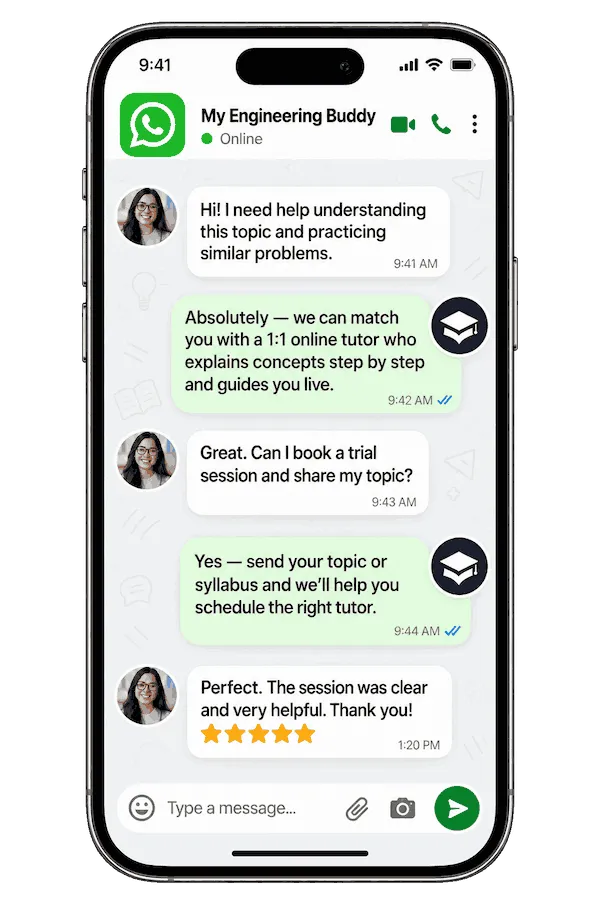
Unlike platforms where you fill out a form and wait, MEB responds in under a minute, 24/7. Tutor match takes under an hour. The $1 trial means you test before you commit. Everything runs over WhatsApp — no logins, no intake forms.
Study Plans (Pick One That Matches Your Goal)
The tutor builds the specific session sequence after the diagnostic, but here’s the general framework. Catch-up (1–3 weeks): for students behind on readings or with a submission due soon — focus on the highest-yield theory gaps first. Exam or essay prep (4–8 weeks): structured revision through the major theoretical debates, practice essay questions with tutor feedback each week. Weekly support: ongoing sessions aligned to your module schedule, covering new material as it’s introduced and returning to weak areas before assessments.
Pricing Guide
Rates start at $20/hr for standard undergraduate modules and rise to $40/hr for more complex or advanced coursework. Graduate-level support and dissertation work typically runs $50–$100/hr depending on the tutor’s background and your timeline.
Rate factors include your academic level, the specific topics you need covered, how close you are to a deadline, and tutor availability at your preferred times.
Availability tightens in the weeks before semester deadlines and major essay submission windows. If you know your dates, book sooner rather than later.
For students targeting strong grades at selective universities or preparing a thesis for postgraduate programmes, tutors with research backgrounds in educational sociology are available — share your specific goal and MEB will match the tier to what you’re aiming for.
Start with the $1 trial — 30 minutes, no registration, no commitment. WhatsApp MEB for a quick quote.
Try your first session for $1 — 30 minutes of live 1:1 tutoring or one homework question explained in full. No registration. No commitment. WhatsApp MEB now and get matched within the hour.
FAQ
Is Sociology of Education hard?
It’s conceptually demanding — not because the reading is dense but because the exam and essay questions expect you to apply theory, not just recall it. Most students can describe Bourdieu; fewer can deploy him in an argument about a specific school policy. That’s the real difficulty.
How many sessions will I need?
Students closing a single conceptual gap before an essay deadline often need 3–5 sessions. Those building from a shaky foundation through to exam readiness typically need 12–20 hours spread over a semester. The diagnostic first session gives a clearer estimate.
Can you help with homework and assignments?
Yes — MEB tutoring is guided learning. The tutor explains the concepts, works through the question with you, and helps you structure your thinking. You understand the work, then submit it yourself. See our Academic Integrity policy and Why MEB page for full details on what we help with and what we don’t.
Will the tutor match my exact syllabus or exam board?
Yes. Share your module outline, reading list, or course title before the first session. The tutor is matched to your specific syllabus — whether that’s a US sociology undergraduate module, a UK postgraduate education studies programme, or a comparative education course.
What happens in the first session?
The tutor reviews what you’ve covered, identifies which theoretical frameworks are solid and which are shaky, and then works through at least one applied example with you. By the end, you’ll have a session plan and a concrete task to work on before the next appointment.
Is online tutoring as effective as in-person for this subject?
For a humanities and social science subject like this, yes — essay annotation, argument mapping, and theory discussion all translate well to a shared screen with a digital pen-pad. Many students find the recorded session notes more useful than handwritten in-person notes.
How do I tell the difference between functionalism and conflict theory in an essay?
Functionalism treats education as a system that integrates society and allocates roles; conflict theory treats it as a mechanism that reproduces inequality. The tutor will show you how to deploy that distinction precisely, with examples drawn from your specific essay question or past paper prompt.
Can MEB help with a dissertation or thesis chapter on educational inequality?
Yes. Dissertation support covers literature review structuring, theoretical framework selection, methodology chapter planning, and chapter-by-chapter argument review. Tutors with research backgrounds in sociology of knowledge and political sociology are available for graduate-level work.
Do you offer group Sociology of Education sessions?
No — MEB is 1:1 only. Every session is calibrated to your specific module, your gaps, and your deadline. Group sessions average out the instruction and leave individual misconceptions unaddressed. One tutor, one student, every time.
Can I get help at midnight or over the weekend?
Yes. MEB operates 24/7 across time zones. Students in the Gulf, Australia, and North America regularly book sessions outside standard business hours. WhatsApp MEB any time — average response is under a minute.
How do I get started?
Three steps: WhatsApp MEB, get matched to a verified tutor within the hour, then start your $1 trial — 30 minutes live or one full assignment question explained. No registration required, no upfront commitment beyond the dollar.
What’s the difference between Sociology of Education and Education Policy as subjects?
Sociology of Education focuses on theoretical frameworks explaining how schooling reproduces or challenges social structures. Education policy is a separate subject concerned with how governments design, implement, and evaluate educational systems. The two overlap — many modules draw on both — but they have distinct essay conventions and assessment criteria.
Trust & Quality at My Engineering Buddy
Every MEB tutor goes through a subject-specific vetting process: academic qualifications are verified, a live demo session is evaluated by subject specialists, and ongoing session feedback is reviewed. Tutors covering Sociology of Education hold degrees in sociology, education studies, or closely related social science disciplines — several have postgraduate research backgrounds in educational inequality or policy analysis. Rated 4.8/5 across 40,000+ verified reviews on Google.
MEB tutoring is guided learning — you understand the work, then submit it yourself. For full details on what we help with and what we don’t, read our Academic Integrity policy and Why MEB.
MEB has served 52,000+ students across the US, UK, Canada, Australia, the Gulf, and Europe since 2008 — in 2,800+ subjects spanning social science, humanities, STEM, and professional fields. Students working on Sociology of Education often also need support with sociology of health tutoring, criminology help, and social work tutoring — tutors across all three are available on the same platform. Read more about how sessions are structured at MEB’s tutoring methodology.
MEB has matched students to specialist tutors across social science subjects — from Sociology of Education to critical race theory tutoring and gender studies help — since 2008, across every major time zone.
Source: My Engineering Buddy, 2008–2025.
Explore Related Subjects
Students studying Sociology of Education often also need support in:
- Anthropology
- Demography
- Development Studies
- Environmental Sociology
- Instructional Design
- Psychology
- Urban Sociology
Next Steps
Here’s what to have ready before your first session:
- Your module title, reading list, or course outline — and the specific essay question or exam component you’re working on
- A recent piece of written work you’ve received feedback on, or a past paper question you struggled with
- Your essay or exam deadline date
Share your availability and time zone. MEB matches you with a verified tutor — usually within 24 hours, often faster. The first session starts with a diagnostic so every minute is used on what actually matters.
Visit www.myengineeringbuddy.com for more on how MEB works.
WhatsApp to get started or email [email protected].
Our experience across thousands of sessions shows that students who share a specific essay question or piece of marked work before session one get faster, more targeted help. Don’t wait until you’re “ready” — the tutor’s job is to meet you where you are.
Reviewed by Subject Expert
This page has been carefully reviewed and validated by our subject expert to ensure accuracy and relevance.




