Hire Verified & Experienced
Analog Communication Tutors
4.8/5 40K+ session ratings collected on the MEB platform



Hire The Best Analog Communication Tutor
Top Tutors, Top Grades. Without The Stress!
52,000+ Happy Students From Various Universities



How Much For Private 1:1 Tutoring & Hw Help?
Private 1:1 Tutoring and HW help Cost $20 – 35 per hour* on average.
Most students who fail Analog Communication don’t misunderstand the theory — they can’t apply AM, FM, and noise analysis together under exam pressure.
Analog Communication Tutor Online
Analog Communication is a core undergraduate electrical engineering subject covering modulation techniques — AM, FM, PM — signal transmission, noise analysis, and receiver design, equipping students to analyse and build continuous-signal communication systems.
Finding a reliable Analog Communication tutor near me online is harder than it sounds — most generalist platforms don’t carry tutors who can walk you through Carson’s rule, PLL-based FM demodulation, or SNR derivations at the level your course demands. MEB has covered Electrical Engineering tutoring since 2008, with verified tutors across the full spectrum of communication systems. One session on your specific weak point can shift how the entire subject clicks.
- 1:1 online sessions tailored to your exact course and syllabus
- Expert-verified tutors with ECE or EEE degrees and subject-specific knowledge
- Flexible time zones — US, UK, Canada, Australia, Gulf
- Structured learning plan built after a diagnostic session
- Ethical homework and assignment guidance — you understand before you submit
52,000+ students across the US, UK, Canada, Australia, and the Gulf have used MEB since 2008 — including students in Electrical Engineering subjects like Analog Communication, Digital Communications, and Signals and Systems.
Source: My Engineering Buddy, 2008–2025.
How Much Does an Analog Communication Tutor Cost?
Most Analog Communication tutoring sessions run $20–$40/hr depending on your level and the complexity of the topics. Graduate-level work — noise figure analysis, advanced modulation theory, communication system design projects — can reach up to $100/hr. The $1 trial gets you 30 minutes of live tutoring or a full explanation of one homework question before you commit to anything.
| Level / Need | Typical Rate | What’s Included |
|---|---|---|
| Standard undergraduate | $20–$35/hr | 1:1 sessions, homework guidance |
| Advanced / Graduate | $35–$100/hr | Expert tutor, niche depth, research support |
| $1 Trial | $1 flat | 30 min live session or 1 homework question explained |
Tutor availability tightens significantly in the 3–4 weeks before end-of-semester exams. Book early if your exam window is approaching.
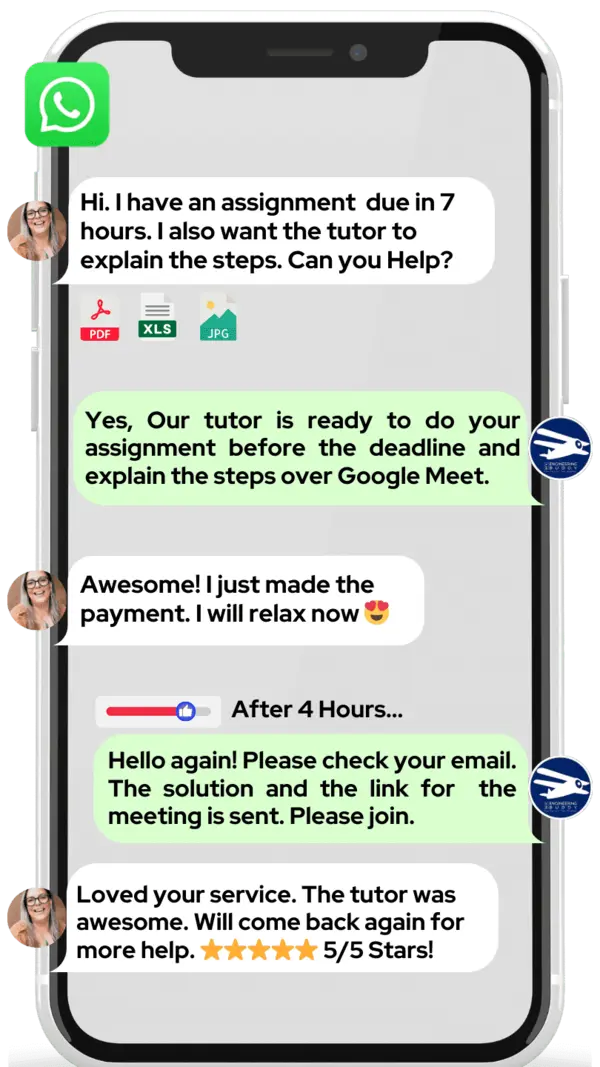
WhatsApp MEB for a quick quote — average response time under 1 minute.
Who This Analog Communication Tutoring Is For
Analog Communication sits in a difficult spot — it’s heavily mathematical, covers a wide range of modulation schemes, and is often taught at a pace that leaves gaps before the next topic arrives. Students who struggle usually aren’t weak at maths. They’re missing the intuition that ties the equations to what’s actually happening in the signal.
- Undergraduate ECE, EEE, or telecommunications students taking Analog Communication as a core module
- Students retaking after a failed first attempt — especially those who need to pass to stay on programme
- Students with a university conditional offer depending on clearing this subject
- Graduate students revisiting analog fundamentals for a communications or RF engineering course
- Students 4–6 weeks from their final exam with FM demodulation or noise analysis still unresolved
- Students needing homework and assignment guidance on modulation index calculations, bandwidth problems, or SNR derivations
MEB has tutored students at MIT, Georgia Tech, Imperial College London, University of Toronto, UNSW Sydney, TU Delft, and universities across the Gulf — all taking Analog Communication as part of their electrical or electronics engineering degree.
1:1 Tutoring vs Self-Study vs AI vs YouTube vs Online Courses
Self-study works if you’re disciplined, but Analog Communication has too many interdependent concepts — one gap in noise theory derails everything downstream. AI tools give fast formula lookups but can’t diagnose why you keep getting the wrong answer on SSB bandwidth problems. YouTube is fine for an overview of AM modulation — it stops when you need to derive the exact noise figure for your specific assignment. Online courses cover the syllabus at a fixed pace with no room for the question you’re actually stuck on. With a 1:1 Analog Signal Processing and Analog Communication tutor from MEB, the session adapts in real time — your exam paper, your course notes, your specific confusion corrected on the spot.
Outcomes: What You’ll Be Able To Do in Analog Communication
After targeted 1:1 sessions, you’ll be able to solve AM and FM modulation index problems without second-guessing the formula setup, analyse bandwidth requirements using Carson’s rule for real transmission scenarios, model noise performance using SNR and figure-of-merit comparisons across AM, DSB-SC, SSB, and FM systems, explain the working of superheterodyne receivers including IF stage selection and image frequency rejection, and apply phase-locked loop theory to FM demodulation problems the way your exam actually tests it. These aren’t abstract capabilities — they map directly to the calculation types that appear in your assessed coursework and end-of-year paper.
Supporting a student through Analog Communication? MEB works directly with parents to set up sessions, track progress, and keep coursework on schedule. WhatsApp MEB — average response time is under a minute, 24/7.
Based on feedback from 40,000+ sessions collected by MEB from 2022 to 2025, 58% of students improved by one full grade after approximately 20 hours of 1:1 tutoring in subjects like Analog Communication. A further 23% achieved at least a half-grade improvement.
Source: MEB session feedback data, 2022–2025.
At MEB, we’ve found that students who struggle with Analog Communication almost always have the same gap: they can apply a formula in isolation but can’t decide which formula to reach for when the problem is framed differently. That’s the gap the tutor closes in the first two sessions.
What We Cover in Analog Communication (Syllabus / Topics)

Track 1: Amplitude Modulation and Demodulation
- AM signal representation, modulation index, and power distribution
- Double Sideband Suppressed Carrier (DSB-SC) — generation and coherent detection
- Single Sideband (SSB) and Vestigial Sideband (VSB) modulation
- Envelope detector and product detector design principles
- Bandwidth calculations and Carson’s rule for AM signals
- Superheterodyne receiver architecture: IF selection, image rejection, sensitivity
Key references: Communication Systems by Haykin; Principles of Communication Systems by Taub and Schilling — both cover AM theory through to practical receiver design.
Track 2: Angle Modulation — FM and PM
- Frequency modulation: instantaneous frequency, modulation index, Bessel functions
- Phase modulation and the FM–PM relationship
- Narrowband and wideband FM — spectral analysis and bandwidth
- FM generation: direct (VCO-based) and indirect (Armstrong) methods
- FM demodulation: limiter-discriminator, Foster-Seeley, ratio detector, PLL
- Pre-emphasis and de-emphasis in FM broadcasting
- Comparison of FM and AM in terms of noise immunity and bandwidth efficiency
Key references: Communication Systems by Haykin (4th ed.); Modern Digital and Analog Communication Systems by Lathi — both used widely in undergraduate ECE programmes in the US, UK, and Australia.
Track 3: Noise in Analog Communication Systems
- Thermal noise, shot noise, and noise power spectral density
- Noise figure and noise temperature — cascaded systems
- SNR analysis for AM (envelope detection and coherent detection)
- SNR analysis for DSB-SC and SSB
- Figure of merit comparison across modulation schemes
- FM improvement effect and threshold effect in wideband FM
- Communication Systems noise modelling — link to broader system design
Key references: An Introduction to Analog and Digital Communications by Haykin and Moher; Lathi’s Modern Digital and Analog Communication Systems — noise chapters used in most graduate-level courses.
Students who arrive at MEB after failing Analog Communication mid-terms typically have one thing in common: they’ve been studying the equations without ever working through a full derivation live with someone who can stop them at the exact step where the error is. That’s what 1:1 Analog Electronics and Analog Communication tutoring does that no textbook can.
Source: My Engineering Buddy, 2008–2025.
What a Typical Analog Communication Session Looks Like
The tutor starts by checking where you left off — usually the last problem set, an FM demodulation derivation, or a noise figure cascade you couldn’t close. From there, you work through two or three core problems on screen together: the tutor writes the working in real time using a digital pen-pad, pauses at each decision point, and asks you to explain the next step before they show it. If you’re stuck on why a superheterodyne receiver rejects the image frequency, that gets unpacked at the circuit level, not just the formula level. By the end of the hour, you’ve attempted at least one problem independently with the tutor watching — then you get a specific task for before the next session and a note on which topic follows.
How MEB Tutors Help You with Analog Communication (The Learning Loop)
Diagnose: In the first session, the tutor identifies exactly where your understanding breaks — not just the topic, but the specific step. Most Analog Communication students have solid algebra but lose marks because they set up the SNR ratio incorrectly before the calculation even starts.
Explain: The tutor works through problems live on a digital pen-pad over Google Meet. No slides, no pre-recorded video — real-time worked examples matched to your course’s exact notation and question style.
Practice: You attempt the next problem while the tutor watches. This is the part most self-study and YouTube learning skips entirely. It’s where the real gaps surface.
Feedback: The tutor corrects errors step by step — not just marking wrong, but explaining which assumption failed and why that costs marks in your specific exam format.
Plan: Each session ends with a topic progression map. If FM bandwidth is solid, the next session moves to PLL demodulation. If noise figure analysis still needs work, that takes priority over the schedule.
Sessions run on Google Meet with a digital pen-pad or iPad and Apple Pencil. Before your first session, share your course syllabus or module outline, one past paper question or assignment problem you couldn’t solve, and your exam or submission date. The first session covers diagnostics and the two topics that will move your grade fastest. Start with the $1 trial — 30 minutes of live tutoring that also serves as your first diagnostic.
Try your first session for $1 — 30 minutes of live 1:1 tutoring or one homework question explained in full. No registration. No commitment. WhatsApp MEB now and get matched within the hour.
Tutor Match Criteria (How We Pick Your Tutor)
Not every ECE tutor can handle the noise analysis and modulation theory sections of Analog Communication at depth. Here’s how MEB matches you.
Subject depth: Tutor must have ECE, EEE, or telecommunications degree-level knowledge of Analog Communication — not just general electronics. We check for specific competency in AM/FM theory, noise modelling, and receiver design before assigning.
Tools: Every tutor works on Google Meet with a digital pen-pad or iPad and Apple Pencil — the right setup for working through signal diagrams and derivations live.
Time zone: Matched to your region — US, UK, Canada, Australia, Gulf — so sessions start at a time that actually works for your schedule.
Goals: Whether you need exam score improvement, conceptual depth on a specific modulation scheme, homework completion support, or research-level understanding, the tutor is matched to that goal — not assigned generically.
Unlike platforms where you fill out a form and wait, MEB responds in under a minute, 24/7. Tutor match takes under an hour. The $1 trial means you test before you commit. Everything runs over WhatsApp — no logins, no intake forms.
Study Plans (Pick One That Matches Your Goal)
Catch-up (1–3 weeks): for students behind on AM/FM theory with an exam approaching — sessions focus on the highest-mark topics first. Exam prep (4–8 weeks): structured revision across all modulation schemes, noise analysis, and past paper practice timed to your exam date. Weekly support: ongoing sessions aligned to your semester — one topic per week, homework reviewed each session, progress tracked against your module schedule. The tutor builds the specific session sequence after the diagnostic.
Pricing Guide
Analog Communication tutoring runs $20–$40/hr for most undergraduate students. Graduate-level sessions — particularly noise theory, advanced modulation, or communication system design projects — can reach up to $100/hr depending on tutor expertise and topic depth.
Rate factors include your level, which topics need coverage, how close your exam date is, and tutor availability. Availability drops sharply in the 3–4 weeks before finals — if your exam is coming, book now rather than later.
For students targeting roles at RF engineering firms, semiconductor companies, or graduate programmes at institutions like Stanford, Caltech, or ETH Zurich, tutors with professional industry backgrounds in communications hardware and RF design are available at higher rates — share your specific goal and MEB matches the tier to your ambition.
Start with the $1 trial — 30 minutes, no registration, no commitment. WhatsApp MEB for a quick quote.
FAQ
Is Analog Communication hard?
Yes — it’s one of the more calculation-heavy core modules in ECE programmes. Students find the jump from basic circuit theory to noise analysis and modulation theory steep. The maths isn’t extreme, but the volume of interconnected concepts catches most students off-guard.
How many sessions are needed?
Most students see a clear shift in 4–6 sessions. Students starting from significant gaps — multiple topics unresolved — typically need 10–15 hours to reach exam-ready confidence. The diagnostic session identifies exactly what’s needed before you commit to a schedule.
Can you help with homework and assignments?
Yes. MEB tutoring is guided learning — you understand the work, then submit it yourself. The tutor explains the method, you apply it. See our Academic Integrity policy and Why MEB page for full details on what we help with and what we don’t.
Will the tutor match my exact syllabus or exam board?
Yes. Share your university, module code, and course outline before the first session. The tutor aligns to your exact textbook, notation style, and assessment format — not a generic version of the subject.
What happens in the first session?
The tutor runs a short diagnostic — works through a problem with you to identify where your understanding breaks. From that, they build a topic priority list and start on the two areas that will move your marks fastest. No time is wasted on topics you already have.
Is online tutoring as effective as in-person?
For a subject like Analog Communication, yes. The digital pen-pad replicates whiteboard working precisely. Students report that being able to scroll back through the session’s working is actually an advantage over in-person sessions where the board gets erased.
What’s the difference between AM and FM tutoring difficulty?
AM modulation is more accessible — most students grasp the modulation index and bandwidth equations within one session. FM is harder: Bessel function spectrum analysis and the FM threshold effect require more time and careful worked examples. Most students need at least two dedicated FM sessions.
Can MEB help with noise analysis and SNR derivations specifically?
Yes — noise analysis is one of the most common reasons students contact MEB for Analog Circuits and Analog Communication help. SNR derivations for DSB-SC, SSB, and FM, noise figure calculations for cascaded amplifier chains, and the FM improvement theorem are all covered in regular sessions.
Can I get Analog Communication help at midnight?
Yes. MEB operates 24/7. WhatsApp the team at any hour and you’ll get a response in under a minute. Tutors are available across multiple time zones, so a midnight session in the US, UK, or Gulf is a standard booking.
What if I don’t like my assigned tutor?
Tell MEB over WhatsApp and you’ll be rematched, usually within the same day. The $1 trial is specifically designed so you can assess the tutor fit before committing to a full session package.
How do I get started?
Start with the $1 trial — 30 minutes of live tutoring or one Analog Communication question explained in full. Three steps: WhatsApp MEB, get matched to a tutor within the hour, start your trial session. No forms, no registration.
Do you cover PLL-based FM demodulation and phase discriminator circuits?
Yes. Phase-locked loop demodulation, Foster-Seeley discriminators, and ratio detectors are standard Analog Communication tutor topics at MEB. If your course covers Operational Amplifiers and PLL design as part of the FM section, the tutor works through both the theory and the circuit-level implementation.
Trust & Quality at My Engineering Buddy
Every MEB tutor goes through a multi-stage screening process: subject knowledge verification, a live demo session evaluated by an MEB subject lead, and ongoing review based on student feedback after each session. Tutors covering Analog Communication hold ECE, EEE, or telecommunications degrees and have demonstrated specific competency in modulation theory, noise analysis, and communication system design — not just general electronics. Rated 4.8/5 across 40,000+ verified reviews on Google.
MEB tutoring is guided learning — you understand the work, then submit it yourself. For full details on what we help with and what we don’t, read our Academic Integrity policy and Why MEB.
MEB has served 52,000+ students across the US, UK, Canada, Australia, the Gulf, and Europe in 2,800+ subjects since 2008. Electrical Engineering is one of MEB’s strongest subject areas — tutors regularly cover Digital Signal Processing tutoring, Microwave Engineering help, and full Analog Communication support within the same department. The tutoring methodology is documented at MEB’s tutoring methodology page.
Students consistently tell us that the moment Analog Communication clicks isn’t when they read the chapter again — it’s when a tutor stops them mid-derivation and asks, “Why did you choose that form of the equation here?” That question, asked live, is what shifts understanding from surface-level to reliable.
Explore Related Subjects
Students studying Analog Communication often also need support in:
- Wireless Communication
- Satellite Communications
- Radar Systems
- Electromagnetic Field Theory
- Semiconductor Devices
- Network Theory
- Transmission Lines and Waveguides
Engineers Australia and equivalent professional bodies in the US, UK, and Gulf consistently cite communication systems competency — including analog modulation and noise analysis — as a foundational requirement for graduate ECE engineers. Engineers Australia publishes graduate competency standards that frame Analog Communication directly within professional engineering practice.
Source: Engineers Australia.
A common pattern our tutors observe is that students preparing for Analog Communication exams spend most of their revision time on AM — which they mostly understand — and far too little on FM noise analysis and threshold effects, which is where the exam paper concentrates the harder marks.
Next Steps
To get matched with a verified Analog Communication tutor, share the following over WhatsApp:
- Your exam board, university, and module name (or course code)
- The specific topics you’re struggling with — AM, FM, noise, receiver design, or a combination
- Your exam or submission date and your availability for sessions
Before your first session, have ready: your course syllabus or module outline, a recent past paper attempt or homework problem you couldn’t solve, and your exam or deadline date. The tutor handles the rest.
MEB matches you with a verified tutor — usually within 24 hours, often within the hour. The first session starts with a diagnostic so every minute is used well. Visit www.myengineeringbuddy.com for more on how MEB works.
WhatsApp to get started or email meb@myengineeringbuddy.com.
Reviewed by Subject Expert
This page has been carefully reviewed and validated by our subject expert to ensure accuracy and relevance.