




~1 min
Average Reply Time
~1 hour
To Be Matched With A Tutor
1 Trial
75% Find Their Tutor On The 1st Trial
$1
Your First 30 Minutes
Hire The Best Bioethics Tutor
Top Tutors, Top Grades. Without The Stress!
Related Subjects
Most students don’t fail Bioethics because the arguments are too hard. They fail because nobody ever showed them how to structure one.
Bioethics Tutor Online
Bioethics is an interdisciplinary field examining the ethical dimensions of medicine, life sciences, and healthcare policy. It applies moral frameworks — including autonomy, beneficence, non-maleficence, and justice — to issues such as end-of-life care, genetic research, and clinical decision-making.
If you’ve searched for a Bioethics tutor near me and found only generic philosophy tutors, MEB is different. Our philosophy tutoring network includes specialists who work specifically in bioethical theory, applied ethics in healthcare, and medical humanities — covering undergraduate modules, graduate seminars, and professional programmes. Sessions are 1:1, built around your syllabus, and designed to get you arguing and writing with precision. Not vagueness.
- 1:1 online sessions tailored to your exact course or module
- Expert-vetted tutors with backgrounds in philosophy, medicine, and bioethics specifically
- Flexible time zones — US, UK, Canada, Australia, Gulf
- Structured learning plan built after a diagnostic session
- Ethical homework and assignment guidance — you understand the argument before you submit it
52,000+ students across the US, UK, Canada, Australia, and the Gulf have used MEB since 2008 — including students in Philosophy subjects like Bioethics, Moral Philosophy, and Ethics.
Source: My Engineering Buddy, 2008–2025.
How Much Does a Bioethics Tutor Cost?
Most Bioethics sessions run at $20–$40/hr. Graduate-level or dissertation-focused work with specialist tutors can reach $100/hr. The $1 trial gives you 30 minutes of live 1:1 tutoring or one homework question explained in full — no registration needed.
| Level / Need | Typical Rate | What’s Included |
|---|---|---|
| Undergraduate (most levels) | $20–$35/hr | 1:1 sessions, essay and argument guidance |
| Graduate / Specialist | $35–$100/hr | Expert tutor, research depth, dissertation support |
| $1 Trial | $1 flat | 30 min live session or one homework question explained |
Tutor availability is limited during peak essay and exam periods — particularly in April–May and November–December. Book early if you’re working to a deadline.
WhatsApp MEB for a quick quote — average response time under 1 minute.
Who This Bioethics Tutoring Is For
Bioethics sits at a difficult intersection — it demands philosophical rigour, scientific literacy, and the ability to argue across competing moral frameworks without losing coherence. Most students struggle with at least one of those three.
- Undergraduate students in Philosophy, Medicine, Nursing, or Health Sciences taking a Bioethics module
- Graduate and Masters students writing research papers on clinical ethics, genetic technology, or healthcare policy
- Students with a university conditional offer depending on this grade
- Pre-med students needing to pass a Bioethics requirement before clinical placement
- PhD candidates whose dissertation intersects with research ethics or bioethical frameworks
- Parents watching a child’s confidence drop alongside their grades as essay deadlines approach
Students come from programmes at institutions including Georgetown, Oxford, King’s College London, the University of Toronto, McGill, Sydney, NYU, and Johns Hopkins — where Bioethics is either a core requirement or a major component of health professions training.
1:1 Tutoring vs Self-Study vs AI vs YouTube vs Online Courses
Self-study works if you’re disciplined — but Bioethics requires someone to challenge your argument, not just confirm you’ve read the text. AI tools can define the four principles of bioethics in seconds; they can’t tell you why your essay on the trolley problem misses the deontological point. YouTube is useful for overviews of Principlism or Singer’s utilitarian position — it stops the moment you need feedback on your own reasoning. Online courses move at a fixed pace and won’t pause when you confuse autonomy with beneficence mid-argument. 1:1 tutoring with MEB is live, calibrated to your exact module, and corrects the error in the moment — before it costs you marks.
Outcomes: What You’ll Be Able To Do in Bioethics
After working with an MEB Bioethics tutor, you’ll be able to apply Beauchamp and Childress’s four principles to real clinical cases with precision. You’ll analyze end-of-life scenarios using both utilitarian and deontological lenses without conflating them. You’ll write structured ethical arguments that address counterpositions — a skill most Bioethics examiners say separates a B from an A. You’ll explain the difference between procedural and substantive justice in healthcare allocation. And you’ll present a coherent position on contested topics — gene editing, informed consent, resource scarcity — without hedging every claim into meaninglessness.
Based on feedback from 40,000+ sessions collected by MEB from 2022 to 2025, 58% of students improved by one full grade after approximately 20 hours of 1:1 tutoring in subjects like Bioethics. A further 23% achieved at least a half-grade improvement.
Source: MEB session feedback data, 2022–2025.
At MEB, we’ve found that students in Bioethics don’t usually fail because they lack opinions — they fail because they haven’t been taught how to argue those opinions with philosophical structure. That’s the first thing every tutor addresses in session one.
What We Cover in Bioethics (Syllabus / Topics)

Track 1: Foundations of Bioethical Theory
- The four principles: autonomy, beneficence, non-maleficence, justice (Principlism)
- Utilitarian approaches to medical decision-making (Singer, Bentham, Mill)
- Deontological ethics in clinical practice (Kant, Ross)
- Virtue ethics and its application to healthcare professionals
- Care ethics and relational approaches to patient autonomy
- Casuistry: case-based moral reasoning
- Rights-based frameworks in bioethical argument
Core texts include Beauchamp & Childress’s Principles of Biomedical Ethics, Peter Singer’s Practical Ethics, and Tom Beauchamp’s A History and Theory of Informed Consent.
Track 2: Clinical and Medical Ethics
- Informed consent — doctrine, capacity, and exceptions
- End-of-life decisions: euthanasia, assisted dying, palliative care ethics
- Resource allocation and healthcare rationing (QALYs, triage ethics)
- Patient confidentiality vs public health obligations
- Mental health ethics — involuntary treatment and competence
- Reproductive ethics: abortion, IVF, surrogacy, selective reduction
- Paternalism in medicine: when and whether clinicians can override patient choice
Recommended reading includes Jonsen, Siegler & Winslade’s Clinical Ethics, Onora O’Neill’s Autonomy and Trust in Bioethics, and Raanan Gillon’s essays on Principlism in the Journal of Medical Ethics.
Track 3: Research Ethics, Biotechnology, and Emerging Issues
- Research ethics: Belmont Report, Declaration of Helsinki, IRB oversight
- Gene editing and CRISPR — ethical frameworks for germline modification
- Human enhancement: cognitive, physical, and moral enhancement debates
- AI in medicine — algorithmic decision-making and accountability
- Global health ethics: justice, access, and the obligation of wealthier nations
- Animal experimentation and the ethics of non-human subjects
Key texts: Julian Savulescu & Nick Bostrom’s Human Enhancement, the American Nurses Association’s Code of Ethics for Nurses, and the American Nurses Association ethical guidance on professional practice.
What a Typical Bioethics Session Looks Like
The tutor opens by reviewing what was covered last time — usually a specific framework like Principlism or a case study on informed consent. From there, you and the tutor work through a live problem: often an essay question or a clinical scenario your course uses. The tutor uses a digital pen-pad to annotate arguments in real time — marking where a claim lacks support, where a counterargument is missing, or where you’ve applied a framework incorrectly. You attempt the next section yourself while the tutor watches your reasoning develop. The session closes with a concrete task: rewrite this paragraph using a deontological lens, or map the justice argument in the QALY rationing case before the next session.
How MEB Tutors Help You with Bioethics (The Learning Loop)
Diagnose: In the first session, the tutor identifies your specific weakness — whether that’s applying frameworks under exam pressure, writing structured arguments, distinguishing between ethical positions, or understanding the empirical background a case requires. Bioethics has multiple failure points; the tutor finds yours first.
Explain: The tutor works through a live example — a real past paper question or essay prompt from your module — using a digital pen-pad to show argument structure, not just content. You see how a strong Bioethics answer is built, not just described.
Practice: You attempt the next case or argument segment while the tutor is present. This is where most students discover what they actually understand versus what they thought they understood.
Feedback: The tutor gives step-by-step error correction. Not just “this is wrong” — but why the examiner would mark it down, and what the correct move looks like.
Plan: Each session ends with a clear next topic, a short task, and a note on where you are relative to your deadline or exam date. No session ends without a direction.
Sessions run on Google Meet. The tutor uses a digital pen-pad or iPad with Apple Pencil to annotate arguments live. Before your first session, share your module syllabus or reading list, a recent essay or homework you found difficult, and your submission or exam date. The first session functions as a diagnostic — so every minute from session two onward is used precisely. Start with the $1 trial — 30 minutes of live tutoring that also serves as your first diagnostic.
Students consistently tell us that the moment a Bioethics tutor maps their argument on screen — showing exactly where the reasoning breaks and why — is the moment the subject stops feeling subjective and starts feeling manageable. That’s what 1:1 does that nothing else does.
Tutor Match Criteria (How We Pick Your Tutor)
MEB matches you based on four factors — not just availability.
Subject depth: The tutor must have demonstrable expertise in the specific Bioethics track you need — clinical ethics, research ethics, or bioethical theory — at your level. A tutor covering undergraduate medical ethics is not automatically matched for a PhD dissertation on CRISPR governance.
Tools: Every tutor uses Google Meet with a digital pen-pad or iPad and Apple Pencil. No exceptions — this is the standard for annotation-based philosophy and ethics teaching.
Time zone: Matched to your region — US, UK, Gulf, Canada, or Australia — so sessions don’t require anyone to be awake at 3am.
Goals: Whether you need exam score improvement, stronger essay arguments, homework guidance, or research support for a dissertation — the tutor is selected for that specific goal.
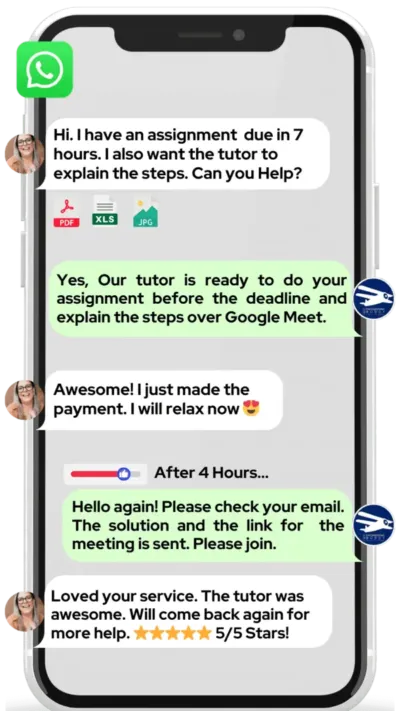
Unlike platforms where you fill out a form and wait, MEB responds in under a minute, 24/7. Tutor match takes under an hour. The $1 trial means you test before you commit. Everything runs over WhatsApp — no logins, no intake forms.
Study Plans (Pick One That Matches Your Goal)
Catch-up (1–3 weeks): for students behind on readings or struggling with a specific framework before an essay deadline. Exam prep (4–8 weeks): structured revision across all major Bioethics topics, with timed essay practice and argument-building sessions. Weekly support: ongoing, aligned to your semester — one or two sessions per week tracking your module as it progresses. After the first diagnostic session, the tutor builds the specific sequence that matches your timeline and gaps.
Pricing Guide
Bioethics tutoring runs at $20–$40/hr for most undergraduate and early graduate levels. Specialist tutors for dissertation work, research ethics consultancy, or advanced graduate seminars are available up to $100/hr. Rate factors include your level, the complexity of the topic (clinical cases vs philosophical theory), your timeline, and tutor availability.
Availability is limited during peak periods — typically April–May and November–December, when essay and exam deadlines cluster. Book ahead.
For students targeting competitive medical school programmes, law and bioethics joint degrees, or philosophy PhD positions, tutors with professional backgrounds in clinical practice, bioethics research, or healthcare policy are available at higher rates — share your specific goal and MEB will match the tier to your ambition.
Start with the $1 trial — 30 minutes, no registration, no commitment. WhatsApp MEB for a quick quote.
MEB has been running 1:1 online sessions since 2008 — with tutors covering Philosophy, Ethics, Bioethics, and Environmental Ethics across 2,800+ subjects, in every major time zone.
Source: My Engineering Buddy, 2008–2025.
FAQ
Is Bioethics hard?
It’s less about memorising theories and more about applying them under pressure. Most students find the arguments click once they’ve practised them on real cases — but without structured guidance, the frameworks blur together quickly. That’s exactly what 1:1 sessions are built to fix.
How many sessions are needed?
Students closing a specific essay gap typically need 3–5 sessions. Ongoing weekly support through a semester runs 1–2 sessions per week. Students targeting a full-grade improvement across a Bioethics module usually see consistent progress after 10–15 hours of focused 1:1 work.
Can you help with homework and assignments?
Yes — but MEB tutoring is guided learning. You understand the argument, you write the essay, you submit it yourself. See our Academic Integrity policy and Why MEB page for full details on what we help with and what we don’t. MEB does not write essays or submit work on your behalf.
Will the tutor match my exact syllabus or exam board?
Yes. Before matching, MEB asks for your module name, institution, and reading list or syllabus outline. Tutors are matched to your specific course — not a generic Bioethics overview. If you’re studying Principlism at Georgetown, that’s what the session covers.
What happens in the first session?
The first session is a diagnostic. The tutor identifies where your reasoning breaks down — framework application, argument structure, case analysis, or essay writing. From session two, every minute is spent on what actually costs you marks. Bring a past essay or homework you found difficult.
Is online tutoring as effective as in-person?
For Bioethics — yes. The tutor annotates arguments live on a digital pen-pad visible to you on screen. The feedback loop is identical to an in-person tutorial. Most students report no meaningful difference once they’ve had two or three sessions. The time zone flexibility is a clear advantage over in-person.
Can I get Bioethics help at short notice — even at midnight?
Yes. MEB runs 24/7 via WhatsApp. If you have an essay due in 48 hours and a gap in your argument on healthcare rationing or informed consent, message now. Average response time is under a minute, and a tutor can often be matched the same day.
What if I don’t connect with my assigned tutor?
Tell MEB. You’re not locked in. If the tutor’s approach doesn’t match how you learn — whether it’s pacing, style, or depth of coverage — MEB rematchs you. The $1 trial is specifically designed so you find this out before committing to a full session block.
What’s the difference between Bioethics and Medical Ethics?
Medical ethics focuses on clinical decision-making — what a doctor should do in a specific case. Bioethics is broader: it covers research ethics, genetic technology, healthcare policy, and philosophical foundations. Many courses use both terms. Your tutor will clarify what your specific module requires and teach to that scope.
How does Bioethics tutoring help with the four-principles framework specifically?
Principlism — autonomy, beneficence, non-maleficence, justice — appears in nearly every Bioethics assessment. Most students can list the four principles; fewer can apply them in tension with each other to a real clinical case without collapsing the argument. That application skill is what the tutor builds, step by step.
Do you offer help with IRB-related research ethics and dissertation chapters?
Yes. Tutors with academic research backgrounds can support graduate students writing dissertation chapters on research ethics, IRB compliance frameworks, the Belmont Report, or the Declaration of Helsinki. Share your chapter outline and research question before the first session — the tutor comes prepared.
How do I get started?
Start with the $1 trial — 30 minutes of live tutoring or one Bioethics question explained in full. Three steps: WhatsApp MEB, get matched with a verified Bioethics tutor (usually within an hour), and begin your trial session. No registration. No commitment.
Trust & Quality at My Engineering Buddy
Every MEB tutor goes through a subject-specific vetting process — not a general interview. For Bioethics, that means demonstrating familiarity with the canonical texts, the ability to teach across multiple ethical frameworks, and experience working with the levels and institutions our students come from. Tutors complete a live demo evaluation before being matched with students, and session feedback is reviewed on an ongoing basis. Rated 4.8/5 across 40,000+ verified reviews on Google.
MEB tutoring is guided learning — you understand the work, then submit it yourself. For full details on what we help with and what we don’t, read our Academic Integrity policy and Why MEB.
MEB has served 52,000+ students across the US, UK, Canada, Australia, the Gulf, and Europe since 2008 — in 2,800+ subjects. Philosophy is one of our strongest categories, with tutors covering Meta-Ethics tutoring, Moral Science Education help, and Critical Thinking tutoring alongside Bioethics. See our tutoring methodology for how the learning loop works in practice.
Bioethics is one of the most assessor-sensitive subjects in Philosophy — the same argument, structured poorly, drops a full grade. MEB tutors work on that structure specifically, not just content coverage.
Source: My Engineering Buddy, 2008–2025.
A common pattern our tutors observe is this: a student understands a Bioethics case perfectly in conversation but can’t reproduce that clarity on paper. The gap isn’t knowledge — it’s argument architecture. Sessions are built to close that gap directly.
Explore Related Subjects
Students studying Bioethics often also need support in:
- Aesthetics
- Analytic Philosophy
- Epistemology
- Existentialism
- Philosophy of Science
- Social and Political Philosophy
- Philosophy of Religion
Next Steps
When you message MEB, have these ready:
- Your module name, institution, and syllabus or reading list
- A recent essay, past paper, or homework question you struggled with
- Your exam date, essay deadline, or semester timeline
MEB matches you with a verified Bioethics tutor — usually within 24 hours, often within the hour. The first session starts with a diagnostic so every minute is used precisely. Before your first session, also note your availability and time zone so the match accounts for scheduling from the start.
Visit www.myengineeringbuddy.com for more on how MEB works.
WhatsApp to get started or email [email protected].
52,000+ Happy Students From Various Universities



Reviewed by Subject Expert
This page has been carefully reviewed and validated by our subject expert to ensure accuracy and relevance.

