

Hire Verified & Experienced
Business Valuation Corporate Restructuring & Insolvency Tutors
4.8/5 40K+ session ratings collected on the MEB platform



Hire The Best Business Valuation Corporate Restructuring & Insolvency Tutor
Top Tutors, Top Grades. Without The Stress!
52,000+ Happy Students From Various Universities



How Much For Private 1:1 Tutoring & Hw Help?
Private 1:1 Tutoring and HW help Cost $20 – 35 per hour* on average.
Most students hit a wall at the same three points: enterprise value adjustments, priority of claims in liquidation, and drafting a credible restructuring plan under time pressure. If that’s where you are, you’re in the right place.
Business Valuation Corporate Restructuring & Insolvency Tutor Online
Business Valuation, Corporate Restructuring & Insolvency covers the methods used to value distressed and going-concern entities, the legal and financial frameworks governing corporate debt restructuring, and the processes by which insolvent firms are reorganised or wound down under applicable insolvency law.
MEB offers 1:1 online tutoring and homework help in 2,800+ advanced subjects, including this one. Whether you’re searching for a Business Valuation Corporate Restructuring & Insolvency tutor near me or need expert help from across time zones, MEB connects you with a verified specialist — fast. Our Finance tutoring network covers everything from foundational theory to complex case analysis at graduate level. One focused diagnostic session shows your tutor exactly where your understanding breaks down.
- 1:1 online sessions tailored to your course syllabus and exam board
- Expert-verified tutors with finance, law, and valuation backgrounds
- Flexible time zones — US, UK, Canada, Australia, Gulf
- Structured learning plan built after a diagnostic session
- Ethical homework and assignment guidance — you understand the work, then submit it yourself
52,000+ students across the US, UK, Canada, Australia, and the Gulf have used MEB since 2008 — including students in Finance subjects like Business Valuation Corporate Restructuring & Insolvency, Mergers & Acquisitions, and Investment Banking.
Source: My Engineering Buddy, 2008–2025.
How Much Does a Business Valuation Corporate Restructuring & Insolvency Tutor Cost?
Rates start at $20–$40/hr for most undergraduate-level work and rise to $70–$100/hr for advanced graduate or professional contexts. You can test the service first: the $1 trial gives you 30 minutes of live tutoring or a full explanation of one assignment question.
| Level / Need | Typical Rate | What’s Included |
|---|---|---|
| Undergraduate (most levels) | $20–$40/hr | 1:1 sessions, assignment guidance |
| Graduate / MBA / CFA-level | $40–$70/hr | Expert tutor, case depth, model review |
| Advanced / Niche Specialist | Up to $100/hr | Distressed M&A, cross-border insolvency |
| $1 Trial | $1 flat | 30 min live session or 1 homework question |
Tutor availability tightens around MBA exam periods and end-of-semester coursework deadlines. Book early if your submission date is within four weeks.
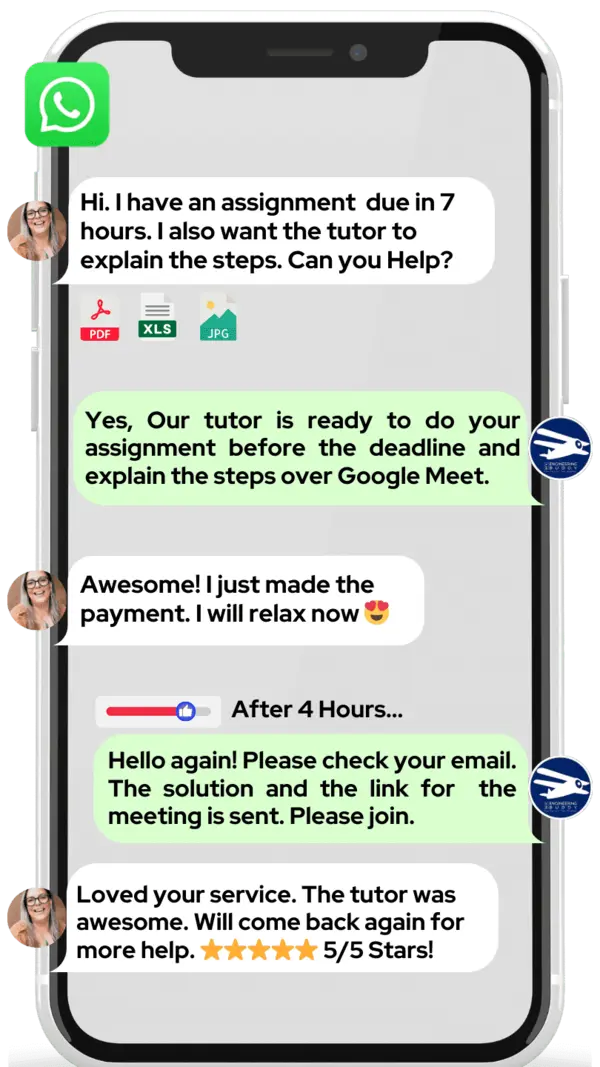
WhatsApp MEB for a quick quote — average response time under 1 minute.
Who This Business Valuation Corporate Restructuring & Insolvency Tutoring Is For
This subject attracts students from a wide range of programmes — MBA, MSc Finance, LLM, CFA candidates, and advanced undergraduates in finance or law. If your coursework demands you build a DCF model, analyse a Chapter 11 filing, or argue a restructuring strategy under time pressure, this is built for you.
- Students retaking after a failed first attempt on a valuation or restructuring module
- Students with a university conditional offer depending on this grade
- MBA or MSc students preparing for high-stakes case presentations or written exams
- CFA candidates working through Level II or Level III equity and credit valuation
- Students 4–6 weeks from finals with gaps in insolvency law or restructuring frameworks still to close
- Parents watching a child’s confidence drop alongside their finance grades
Students at programmes including Harvard Business School, London Business School, NYU Stern, Wharton, Said Business School, INSEAD, and Rotman School of Management have used MEB for exactly this kind of focused, exam-ready support.
1:1 Tutoring vs Self-Study vs AI vs YouTube vs Online Courses
Self-study works if you’re disciplined — but valuation models and insolvency frameworks have too many moving parts for gaps to stay hidden until exam day. AI tools give fast definitions; they can’t walk through your specific DCF error or explain why your priority-of-claims waterfall is wrong. YouTube covers the concept of enterprise value well enough; it stops when your numbers don’t reconcile. Online courses move at a fixed pace regardless of whether you’ve understood absolute priority rules yet. 1:1 tutoring with MEB is live, calibrated to your exact syllabus, and corrects your reasoning in the moment — which matters most in Business Valuation Corporate Restructuring & Insolvency, where one flawed assumption cascades through an entire analysis.
Outcomes: What You’ll Be Able To Do in Business Valuation Corporate Restructuring & Insolvency
After targeted sessions, students can model enterprise value using DCF, comparable company analysis, and precedent transactions with appropriate adjustments for distress. They can analyze a capital structure and apply the absolute priority rule to rank creditor claims correctly in a liquidation scenario. Students learn to explain the differences between Chapter 11 reorganisation, administration, and schemes of arrangement across US and UK frameworks. They can present a credible restructuring plan — identifying which liabilities to negotiate, which assets to divest, and how to sequence operational and financial changes. They also apply EBITDA normalization and working capital adjustments without prompting.
Based on feedback from 40,000+ sessions collected by MEB from 2022 to 2025, 58% of students improved by one full grade after approximately 20 hours of 1:1 tutoring in subjects like Business Valuation Corporate Restructuring & Insolvency. A further 23% achieved at least a half-grade improvement.
Source: MEB session feedback data, 2022–2025.
At MEB, we’ve found that students in valuation-heavy subjects often have the right formula but apply it to the wrong base figure. One session spent rebuilding the EBITDA bridge from scratch fixes more than three weeks of re-reading lecture notes.
What We Cover in Business Valuation Corporate Restructuring & Insolvency (Syllabus / Topics)

Track 1: Business Valuation Methods
- Discounted Cash Flow (DCF): WACC, terminal value, sensitivity tables
- Comparable company analysis and trading multiples (EV/EBITDA, P/E, EV/Sales)
- Precedent transaction analysis and control premiums
- Liquidation valuation and distressed asset pricing
- Sum-of-the-parts (SOTP) valuation for conglomerates
- EBITDA normalization, working capital adjustments, and pro-forma modelling
- LBO model basics and returns analysis
Core texts include Damodaran’s Investment Valuation, Rosenbaum & Pearl’s Investment Banking, and Koller, Goedhart & Wessels’ Valuation: Measuring and Managing the Value of Companies.
Track 2: Corporate Restructuring
- Financial distress indicators: Altman Z-score, interest coverage, liquidity ratios
- Operational restructuring: cost reduction, asset divestiture, business unit spin-offs
- Financial restructuring: debt-for-equity swaps, covenant renegotiation, refinancing
- Distressed M&A: stalking horse bids, 363 sales, credit bidding
- Leveraged buyout restructuring and sponsor exit strategies
- Management buyouts and recapitalisation scenarios
Supporting texts include Altman’s Corporate Financial Distress and Bankruptcy and Moyer’s Distressed Debt Analysis.
Track 3: Insolvency Law and Proceedings
- US Chapter 11 reorganisation vs Chapter 7 liquidation: filing, automatic stay, plan confirmation
- UK administration, CVA, and schemes of arrangement under the Insolvency Act 1986
- Absolute priority rule and creditor waterfall modelling
- Cross-border insolvency: UNCITRAL Model Law and recognition proceedings
- Fraudulent conveyance, preference payments, and clawback provisions
- Debtor-in-possession (DIP) financing terms and priority
- Liquidation analysis and recovery rate estimation for creditor classes
Key references include Warren & Westbrook’s The Law of Debtors and Creditors and Wood’s Principles of International Insolvency.
Students consistently tell us that the gap between understanding insolvency theory and applying it to a real case study is wider than they expected. Working through an actual Chapter 11 plan — even a simplified one — in a live session closes that gap faster than any reading list.
What a Typical Business Valuation Corporate Restructuring & Insolvency Session Looks Like
The tutor opens by checking where you left off — usually a DCF model, a creditor waterfall table, or a restructuring memo from the previous session. You share your screen or the tutor shares theirs, and you work through the problem directly: adjusting the discount rate for a distressed company, correcting the treatment of pension liabilities in an enterprise value calculation, or mapping creditor claims against a liquidation waterfall. The tutor uses a digital pen-pad to annotate figures and walk through logic step by step. You replicate the process or explain your reasoning out loud — both are deliberate. The session closes with a specific task: rebuild one section of the model independently, or draft the restructuring rationale for one scenario. The next topic is noted. You leave knowing exactly what to do before the following session.
How MEB Tutors Help You with Business Valuation Corporate Restructuring & Insolvency (The Learning Loop)
Diagnose: In the first session, the tutor identifies your specific gaps — whether that’s terminal value assumptions, capital structure mechanics, or your grasp of insolvency proceedings in a particular jurisdiction. Generic revision plans don’t work here. The plan is built on what you actually don’t know yet.
Explain: The tutor works through live examples using a digital pen-pad — building a valuation model from scratch, or walking through a creditor priority schedule line by line. No slides. No pre-recorded videos. Live, responsive explanation tied to your course material.
Practice: You attempt problems with the tutor present. This matters more in valuation than almost any subject — errors compound across a model, and catching them live is faster than finding them yourself at 11pm before a submission.
Feedback: The tutor traces exactly where your logic broke down — not just “this number is wrong” but why the assumption was flawed and what a marker or interviewer would flag. That precision is what shifts grades.
Plan: After each session, the next topic, the practice task, and the timeline are set. No ambiguity. No drifting. You know what’s coming next and why it’s sequenced that way.
Sessions run on Google Meet. The tutor uses a digital pen-pad or iPad with Apple Pencil to annotate models and legal frameworks in real time. Before your first session, share your course outline or exam syllabus, a recent assignment or past paper attempt you found difficult, and your submission or exam date. The first session is your diagnostic — every minute is used. Start with the $1 trial — 30 minutes of live tutoring that also serves as your first diagnostic.
Whether you need a quick catch-up before finals, structured revision over 4–8 weeks, or ongoing weekly support through a full semester, the tutor maps your session plan after that first diagnostic. For students targeting top finance roles or advanced certifications, tutors with professional restructuring advisory and investment banking backgrounds are available at higher rates — share your goal and MEB will match accordingly.
Get help with Mergers & Acquisitions tutoring, Investment Banking tutoring, and Private Equity help — all within MEB’s Finance network.
Source: My Engineering Buddy, 2008–2025.
Try your first session for $1 — 30 minutes of live 1:1 tutoring or one homework question explained in full. No registration. No commitment. WhatsApp MEB now and get matched within the hour.
Tutor Match Criteria (How We Pick Your Tutor)
Not every finance tutor can handle insolvency law alongside a DCF model. MEB matches on specifics.
Subject depth: Tutors are matched to your level — undergraduate corporate finance, MBA/MSc restructuring modules, CFA equity and credit valuation, or professional contexts involving actual insolvency work. The valuation tutoring and restructuring expertise are matched separately, then combined where the subject demands both.
Tools: Every tutor uses Google Meet and a digital pen-pad or iPad with Apple Pencil. No exceptions. Annotation-led teaching is how this subject gets explained properly.
Time zone: Matched to your region — US, UK, Gulf, Canada, or Australia. Sessions booked at hours that actually work for your schedule.
Goals: Whether you need exam-score improvement, conceptual depth for a case interview, assignment completion guidance, or research-level understanding of cross-border insolvency frameworks, the tutor is briefed before session one.
Unlike platforms where you fill out a form and wait, MEB responds in under a minute, 24/7. Tutor match takes under an hour. The $1 trial means you test before you commit. Everything runs over WhatsApp — no logins, no intake forms.
Pricing Guide
Most Business Valuation Corporate Restructuring & Insolvency tutoring runs $20–$40/hr at undergraduate level. Graduate, MBA, and CFA-aligned sessions typically fall in the $40–$70/hr range. Niche areas — cross-border insolvency, distressed M&A modelling, LBO-specific restructuring — go up to $100/hr.
Rate factors include your level, the complexity of the topic, how tight your timeline is, and tutor availability. Peak MBA exam periods and finance coursework deadlines reduce available slots quickly.
For students targeting roles at top restructuring advisory firms, bulge-bracket banks, or PE houses, tutors with direct industry experience are available at higher rates — share your specific goal and MEB will match the tier to your ambition.
Start with the $1 trial — 30 minutes, no registration, no commitment. WhatsApp MEB for a quick quote.
FAQ
Is Business Valuation Corporate Restructuring & Insolvency hard?
It’s demanding because it combines quantitative modelling with legal and strategic reasoning. Students who struggle usually have one weak foundation — either the valuation mechanics or the insolvency framework. Identifying which one in session one makes the rest manageable.
How many sessions are needed?
Most students need 8–15 sessions for meaningful improvement. A focused exam-prep block of 10 sessions over 5–6 weeks covers the core valuation methods, restructuring frameworks, and insolvency law essentials. The diagnostic shapes the exact sequence.
Can you help with homework and assignments?
Yes. MEB tutoring is guided learning — you understand the work, then submit it yourself. Tutors explain the logic behind valuation models, restructuring memos, and case analyses so you can complete and defend your own work. See our Academic Integrity policy and Why MEB page for full details on what we help with and what we don’t.
Will the tutor match my exact syllabus or exam board?
Yes. Before the first session, share your course outline, module guide, or exam specification. The tutor aligns to your specific programme — whether that’s an MBA elective, a CFA study plan, or an MSc Finance module with a particular set of prescribed cases.
What happens in the first session?
The tutor runs a diagnostic — asking you to work through a valuation or insolvency problem to identify where your reasoning breaks down. From there, the session plan is built. You leave the first session with a clear understanding of your gaps and the next steps.
Is online tutoring as effective as in-person?
For this subject, yes — and often better. Valuation models are screen-based work. Annotating a DCF or a creditor waterfall on a shared digital pen-pad in real time is exactly how the material needs to be taught. Location doesn’t limit quality here.
Can I get Business Valuation Corporate Restructuring & Insolvency help at midnight or on weekends?
Yes. MEB operates 24/7. Students in the US, Gulf, and Australia regularly book late-night or weekend sessions. WhatsApp response time is under a minute regardless of when you contact. Tutor match happens within the hour in most cases.
What if I don’t like my assigned tutor?
Request a replacement via WhatsApp. MEB will rematch you — usually within the same day. The $1 trial is designed so you evaluate fit before committing to full sessions. No pressure, no forms, no waiting period.
Do you cover both US and UK insolvency law?
Yes. Tutors cover Chapter 11 and Chapter 7 under the US Bankruptcy Code, UK administration and CVA under the Insolvency Act 1986, and cross-border frameworks including the UNCITRAL Model Law. Tell MEB your jurisdiction focus when booking.
How do I find a Business Valuation Corporate Restructuring & Insolvency tutor in my city?
All MEB sessions are online — which means tutor quality isn’t limited by your location. Students in New York, London, Dubai, Toronto, and Sydney all access the same tutor pool. City doesn’t determine who you get matched with. Expertise does.
What is the difference between a DCF and a comparable company analysis, and which do tutors focus on more?
DCF values a company based on its own projected cash flows; comparable company analysis benchmarks it against peers using market multiples. Tutors cover both in depth, but most students need more time on DCF mechanics — specifically WACC construction, terminal value sensitivity, and distress adjustments.
How do I get started?
Start with the $1 trial — 30 minutes of live tutoring or one assignment question explained in full. Three steps: WhatsApp MEB, get matched with a verified tutor, start your trial session. No registration required.
Trust & Quality at My Engineering Buddy
Every MEB tutor goes through a structured vetting process: subject-specific screening, a live demo session evaluated by MEB, and ongoing review based on student feedback. Tutors in Business Valuation Corporate Restructuring & Insolvency hold degrees in finance, accounting, law, or economics — many with professional experience in restructuring advisory, investment banking, or insolvency practice. Rated 4.8/5 across 40,000+ verified reviews on Google. MEB has been operating since 2008, serving 52,000+ students across the US, UK, Canada, Australia, and the Gulf.
MEB tutoring is guided learning — you understand the work, then submit it yourself. For full details on what we help with and what we don’t, read our Academic Integrity policy and Why MEB.
MEB covers 2,800+ subjects across Finance and related disciplines. Students working on capital budgeting tutoring, credit risk help, and securities analysis tutoring regularly move into Business Valuation Corporate Restructuring & Insolvency modules as their programmes advance. The same tutor network covers all of them. See the MEB tutoring methodology for how sessions are structured across every subject.
The American Economic Association publishes research on financial market structures and distress that MEB tutors draw on when aligning sessions to current academic and professional standards in valuation and restructuring.
Source: American Economic Association.
Explore Related Subjects
Students studying Business Valuation Corporate Restructuring & Insolvency often also need support in:
- Alternative Investments
- Derivatives Pricing
- Financial Economics
- Fixed Income Securities
- International Financial Management
- Quantitative Finance
- Portfolio Management
Next Steps
Getting started takes one WhatsApp message.
- Share your exam board or course outline, your hardest component, and your current timeline
- Share your availability and time zone
- MEB matches you with a verified Business Valuation Corporate Restructuring & Insolvency tutor — usually within 24 hours
- Your first session starts with a diagnostic so every minute counts
Before your first session, have ready: your course syllabus or module guide, a recent past paper attempt or assignment you struggled with, and your exam or submission deadline. The tutor handles the rest.
Visit www.myengineeringbuddy.com for more on how MEB works.
WhatsApp to get started or email meb@myengineeringbuddy.com.
A common pattern our tutors observe is that students who arrive with a full model they built themselves learn faster than those who haven’t tried yet. Attempt the valuation or restructuring problem before session one. Even if it’s wrong, it tells the tutor exactly where to begin.
Reviewed by Subject Expert
This page has been carefully reviewed and validated by our subject expert to ensure accuracy and relevance.

