Hire Verified & Experienced
Capital Asset Pricing Model (CAPM) Tutors
4.8/5 40K+ session ratings collected on the MEB platform
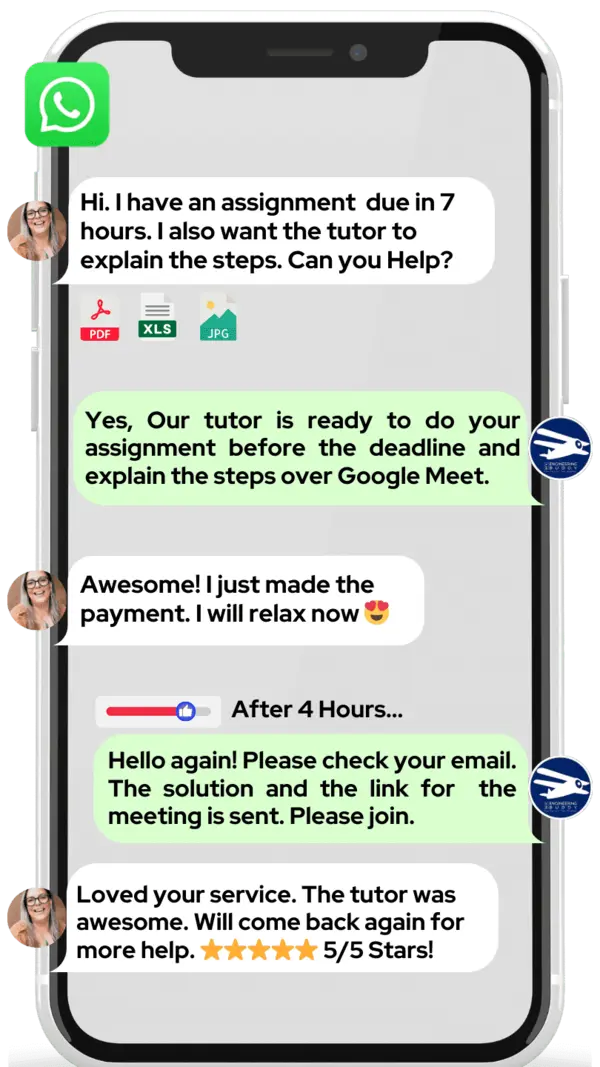



Hire The Best Capital Asset Pricing Model (CAPM) Tutor
Top Tutors, Top Grades. Without The Stress!
52,000+ Happy Students From Various Universities



How Much For Private 1:1 Tutoring & Hw Help?
Private 1:1 Tutoring and HW help Cost $20 – 35 per hour* on average.
CAPM derivations wrong on your exam sheet? Most students lose marks on the same two steps — beta calculation and the risk premium adjustment.
Capital Asset Pricing Model (CAPM) Tutor Online
The Capital Asset Pricing Model (CAPM) is a financial framework that describes the relationship between systematic risk and expected return for assets, used in portfolio theory and corporate finance to price risky securities and determine required rates of return.
MEB offers 1:1 online tutoring and homework help in Finance and advanced quantitative subjects, including CAPM. If you’ve searched for a CAPM tutor near me, MEB connects you with a verified specialist — often within the hour — whether you’re working through a graduate finance course, a CFA prep module, or an undergraduate asset pricing problem set. Sessions are built around your syllabus, your exam board, and the exact questions you’re stuck on.
- 1:1 online sessions tailored to your course or syllabus
- Expert-verified tutors with subject-specific knowledge in asset pricing and portfolio theory
- Flexible time zones — US, UK, Canada, Australia, Gulf
- Structured learning plan built after a diagnostic session
- Ethical homework and assignment guidance — you understand the work, then submit it yourself
52,000+ students across the US, UK, Canada, Australia, and the Gulf have used MEB since 2008 — including students in Finance subjects like CAPM, portfolio management tutoring, and investment analysis help.
Source: My Engineering Buddy, 2008–2025.
How Much Does a CAPM Tutor Cost?
Most CAPM tutoring sessions run $20–$40/hr depending on level and topic complexity. Graduate-level or CFA-track sessions with specialist tutors can reach $60–$100/hr. You can start with the $1 trial — 30 minutes of live 1:1 tutoring or one homework question explained in full.
| Level / Need | Typical Rate | What’s Included |
|---|---|---|
| Undergraduate (most levels) | $20–$35/hr | 1:1 sessions, homework guidance |
| Graduate / CFA / Advanced | $35–$100/hr | Expert tutor, quantitative depth |
| $1 Trial | $1 flat | 30 min live session or 1 homework question |
Tutor availability tightens during end-of-semester exam periods and CFA exam windows. Book early if you’re on a deadline.
WhatsApp MEB for a quick quote — average response time under 1 minute.
Who This CAPM Tutoring Is For
CAPM sits at the intersection of theory and calculation. Students who struggle with it usually aren’t weak at maths — they haven’t connected the model’s assumptions to the algebra. This tutoring is for anyone who needs that connection made explicit.
- Undergraduate finance and economics students covering asset pricing for the first time
- MBA students working through corporate finance or investments modules
- CFA Level 1 candidates building their equity and portfolio theory foundations
- Students retaking after a failed first attempt who need gaps diagnosed, not just re-explained
- Students with a coursework or assignment submission deadline approaching and specific derivations still unclear
- Parents watching a student’s confidence drop alongside their grades in a quantitative finance module
Students at universities including NYU Stern, LSE, University of Toronto, University of Melbourne, and HEC Paris have worked through CAPM modules with MEB tutors — as well as students in CFA prep programmes and Masters in Finance programmes across the Gulf and Europe.
At MEB, we’ve found that CAPM problems feel harder than they are when students skip the assumptions. Once a tutor walks through why beta is defined the way it is, the SML derivation stops being a formula to memorise and starts making sense as a logical consequence.
1:1 Tutoring vs Self-Study vs AI vs YouTube vs Online Courses
Self-study works if you’re disciplined, but CAPM has enough notation variation across textbooks that no-feedback reading often creates false confidence. AI tools give fast formula explanations but can’t catch where your reasoning goes wrong on a multi-step beta problem. YouTube covers CAPM overviews well — it stops when you’re stuck on your specific exam board’s case study format. Online courses are structured but fixed-pace, with no room to slow down on the parts that trip you specifically. 1:1 tutoring with MEB is live, calibrated to your exact course, and corrects errors at the step where they actually happen — which, in CAPM, is usually the risk premium or the market return assumption, not the final formula.
Outcomes: What You’ll Be Able To Do in CAPM
After working through CAPM with an MEB tutor, you’ll be able to apply the model’s assumptions correctly and explain why each one matters. You’ll solve for expected return using beta, the risk-free rate, and a stated market premium without formula-hunting. You’ll analyse the Security Market Line, identify mispriced assets relative to it, and explain why a stock plots above or below the line. You’ll model portfolio beta from component weights. You’ll present the CAPM derivation clearly in exam conditions — written or verbal — and explain its real-world limitations in corporate cost-of-capital problems.
Based on feedback from 40,000+ sessions collected by MEB from 2022 to 2025, 58% of students improved by one full grade after approximately 20 hours of 1:1 tutoring in subjects like Capital Asset Pricing Model (CAPM). A further 23% achieved at least a half-grade improvement.
Source: MEB session feedback data, 2022–2025.
Supporting a student through CAPM? MEB works directly with parents to set up sessions, track progress, and keep coursework on schedule. WhatsApp MEB — average response time is under a minute, 24/7.
What We Cover in Capital Asset Pricing Model (CAPM) (Syllabus / Topics)
< >
>
Track 1: Core CAPM Theory and Derivation
- Assumptions of the CAPM: homogeneous expectations, no taxes, mean-variance investors
- Systematic vs unsystematic risk — what beta captures and what it doesn’t
- The Security Market Line (SML): slope, intercept, and interpretation
- Deriving expected return: E(R) = Rf + β(Rm − Rf) step by step
- Market portfolio concept and the Capital Market Line (CML) distinction
- Identifying over- and under-valued assets relative to the SML
- Jensen’s alpha and its relationship to CAPM predictions
Core texts: Brealey, Myers & Allen — Principles of Corporate Finance; Bodie, Kane & Marcus — Investments; Sharpe, Alexander & Bailey — Investments.
Track 2: Beta Estimation and Empirical Application
- Calculating beta using regression of stock returns against market returns
- Interpreting raw vs adjusted beta (Blume adjustment)
- Choosing the right market index and risk-free rate for a given context
- Equity beta vs asset beta — relevering and unlevering for capital structure
- Estimating the equity risk premium: historical vs forward-looking approaches
- Applying CAPM in the WACC calculation for corporate valuation
- Limitations of beta: time horizon, illiquid securities, and non-stationarity
Core texts: Damodaran — Investment Valuation; Copeland, Koller & Murrin — Valuation; research from the National Bureau of Economic Research on empirical asset pricing.
Track 3: Extensions, Critiques, and Alternative Models
- Fama-French three-factor model: size (SMB) and value (HML) factors
- Arbitrage Pricing Theory (APT) as a multi-factor alternative to CAPM
- Roll’s critique: why the true market portfolio is unobservable
- Empirical anomalies: momentum, low-volatility, and the size effect
- Conditional CAPM: time-varying beta and market risk premium
- Practical application: cost of equity in real-world M&A and project appraisal
Core texts: Fama & French academic papers; Cochrane — Asset Pricing; CFA Institute curriculum materials for Level 1 and Level 2.
Students consistently tell us that the hardest part of CAPM isn’t the formula — it’s knowing which beta to use, which risk-free rate is appropriate, and how to argue for your market premium assumptions in an exam answer or a case study write-up. That’s where tutor time makes the biggest difference.
What a Typical CAPM Session Looks Like
The tutor opens by checking where you finished last time — usually a specific beta estimation problem or an SML interpretation question. From there, you work on screen together: the tutor pulls up a live problem, walks through the setup using a digital pen-pad, and asks you to take over at a key step — say, switching from equity beta to asset beta for an unlevered firm. You explain your reasoning out loud. The tutor catches the error (usually at the leverage adjustment, not the final calculation) and shows you the corrected logic in writing. By the end, you have a concrete practice task — typically two past exam questions on WACC derivation using CAPM — and the next topic is noted: usually the Fama-French model or Jensen’s alpha, depending on your syllabus.
How MEB Tutors Help You with CAPM (The Learning Loop)
Diagnose: In the first session, the tutor identifies exactly where your CAPM understanding breaks down — whether it’s the conceptual assumptions, the beta calculation, the SML vs CML distinction, or the write-up structure for exam answers. This isn’t a general quiz. It’s targeted.
Explain: The tutor works through live problems on screen using a digital pen-pad, showing each algebraic step with written annotations. No hand-waving. Every line of the derivation is visible and justified.
Practice: You attempt the next problem with the tutor present. Not watching — present. You work through it, and the tutor sees exactly which step you hesitate on or get wrong.
Feedback: Errors are corrected at the step they occur, not at the final answer. The tutor explains why marks would be lost on that specific step in an exam — which is different from just getting the number wrong.
Plan: Each session ends with a clear next topic, a short practice task, and a note of where you’ll pick up next time. Progress is tracked, not assumed.
Sessions run over Google Meet. The tutor uses a digital pen-pad or iPad with Apple Pencil to annotate in real time. Before your first session, share your course syllabus or exam board, any past paper you’ve attempted, and your exam or assignment date. The first session starts with a 10-minute diagnostic before moving into worked problems. Start with the $1 trial — 30 minutes of live tutoring that also serves as your first diagnostic.
Tutor Match Criteria (How We Pick Your Tutor)
Not every finance tutor knows CAPM at depth. MEB matches on specifics.
Subject depth: Tutors are matched to your exact level — undergraduate, MBA, CFA Level 1/2, or Masters in Finance — and your specific syllabus or exam board.
Tools: Every tutor uses Google Meet with a digital pen-pad or iPad and Apple Pencil. No static slide decks.
Time zone: Matched to your region — US, UK, Gulf, Canada, or Australia. Late-night sessions available.
Goals: Whether you need exam score improvement, conceptual depth for a research paper, or homework completion support on a specific problem set, the match reflects that goal.
Unlike platforms where you fill out a form and wait, MEB responds in under a minute, 24/7. Tutor match takes under an hour. The $1 trial means you test before you commit. Everything runs over WhatsApp — no logins, no intake forms.
Study Plans (Pick One That Matches Your Goal)
A CAPM tutor builds your session sequence after the first diagnostic, but here’s how most plans break down. Catch-up (1–3 weeks): students behind on beta estimation, SML interpretation, or WACC application — close the gap before the exam. Exam prep (4–8 weeks): structured revision covering all three tracks — core theory, empirical application, and extensions — timed to your exam date. Weekly support: ongoing sessions aligned to your semester schedule, covering new topics as they appear on your course. The tutor handles sequencing after your first session.
Pricing Guide
CAPM tutoring starts at $20/hr for standard undergraduate sessions. Graduate-level work — including CFA prep, MBA corporate finance, and quantitative asset pricing — runs $35–$100/hr depending on tutor expertise and session complexity. Rate factors include topic depth, your timeline, and tutor availability.
Availability is limited during peak CFA exam windows (typically June and November) and end-of-semester periods at US, UK, and Australian universities. If you have a fixed deadline, book early.
For students targeting positions at investment banks, asset management firms, or top-tier MBA programmes, tutors with professional finance backgrounds — including CFA charterholders and former buy-side analysts — are available at higher rates. Share your specific goal and MEB will match the tier to your ambition.
Start with the $1 trial — 30 minutes, no registration, no commitment. WhatsApp MEB for a quick quote.
FAQ
Is CAPM hard?
CAPM is mathematically straightforward once you understand what beta actually measures. The difficulty is in applying the assumptions correctly and knowing which inputs to use — risk-free rate, market premium, levered vs unlevered beta — in the specific context your exam or course requires.
How many sessions are needed?
Most students working on a specific CAPM module see clear improvement in 4–8 sessions. Students preparing across a full investments or corporate finance course — including extensions like Fama-French — typically need 10–20 hours, depending on starting level and how frequently they practice between sessions.
Can you help with homework and assignments?
Yes. MEB tutoring is guided learning — you understand the work, then submit it yourself. See our Academic Integrity policy and Why MEB page for full details on what we help with and what we don’t. Tutors will work through the reasoning with you, not produce answers for submission.
Will the tutor match my exact syllabus or exam board?
Yes. CAPM is taught differently across CFA, MBA programmes, undergraduate finance courses, and Masters in Financial Economics. When you contact MEB, share your course name, institution type, and exam board or curriculum — the tutor is matched to that specific context, not to a generic version of the subject.
What happens in the first session?
The first 10 minutes are diagnostic — the tutor asks you to attempt a short CAPM problem and talks through your reasoning. This identifies exactly where the breakdown is: assumptions, beta calculation, SML interpretation, or exam write-up structure. The rest of the session is live tutoring on the highest-priority gap.
Is online tutoring as effective as in-person?
For CAPM, yes — and often more so. The tutor’s digital pen-pad annotations on screen are clearer than whiteboard work in a room. You also get a session recording if needed, and you’re working from your own notes and past papers in your own environment, which reduces friction.
What is the difference between the SML and the CML — and why does it matter for exams?
The Security Market Line plots expected return against beta (systematic risk) and applies to individual assets. The Capital Market Line plots expected return against total risk (standard deviation) and applies to efficient portfolios only. Confusing these costs marks in almost every CAPM exam question that asks you to classify or interpret a graph.
Can a CAPM tutor help me with the CFA Level 1 equity and portfolio sections?
Yes. CAPM is tested directly in CFA Level 1 under Portfolio Management and Equity. MEB tutors familiar with the CFA curriculum cover beta estimation, the SML, Jensen’s alpha, and the transition to multi-factor models — all within the CFA exam’s specific question formats and learning outcome statements.
What if I’m struggling specifically with unlevering and relevering beta?
This is one of the most common sticking points in CAPM, particularly in corporate finance and valuation contexts. A tutor will work through the Hamada equation, the assumptions behind it, and apply it to your specific homework or exam problem. Most students resolve this in one focused session.
Do you offer group CAPM sessions?
MEB specialises in 1:1 sessions. Group sessions are not offered. The 1:1 format exists because CAPM errors are individual — one student’s gap is in beta interpretation, another’s is in the risk premium setup. A shared session would slow both students down.
Can I get CAPM help at midnight?
Yes. MEB tutors are available across multiple time zones, and WhatsApp contact is monitored 24/7. If you have a deadline the next morning and a specific CAPM derivation you can’t resolve, contact MEB on WhatsApp now — tutor matching typically takes under an hour regardless of the time.
How do I get started?
Three steps: WhatsApp MEB, get matched with a verified CAPM tutor — usually within the hour — then start your $1 trial: 30 minutes of live 1:1 tutoring or one homework question explained in full. No registration, no commitment required.
Trust & Quality at My Engineering Buddy
Every MEB tutor goes through subject-specific vetting — not a general knowledge check. For CAPM tutors, that means demonstrated competency in asset pricing theory, beta estimation, and empirical finance at the level they’re hired to teach. Tutors complete a live demo evaluation before their first session. Ongoing feedback from students is reviewed session by session. Rated 4.8/5 across 40,000+ verified reviews on Google.
MEB tutoring is guided learning — you understand the work, then submit it yourself. For full details on what we help with and what we don’t, read our Academic Integrity policy and Why MEB.
MEB has served 52,000+ students across the US, UK, Canada, Australia, the Gulf, and Europe in 2,800+ subjects since 2008. Within Finance, that includes students working through CAPM, derivatives pricing tutoring, and quantitative finance help. Our tutoring methodology — diagnostic first, structured sessions, progress tracking — applies across every subject.
A common pattern our tutors observe is that students who arrive with three weeks to an exam and think they “just need to review the formula” actually have a conceptual gap in what beta represents. Diagnosing that in the first session changes what the remaining sessions cover — and what happens on exam day.
Explore Related Subjects
Students studying CAPM often also need support in:
- Alternative Investments
- Asset Management
- Capital Budgeting
- Financial Economics
- Fixed Income Securities
- Securities Analysis
- Valuation
- Performance Measurement
Next Steps
When you contact MEB, share your exam board or course name, the specific CAPM topics giving you trouble, and your exam or assignment deadline. Include your time zone and availability. MEB matches you with a verified tutor — usually within 24 hours, often faster.
Before your first session, have ready:
- Your exam board and syllabus, or your course outline
- A recent past paper attempt or homework problem you struggled with
- Your exam or assignment deadline date
The tutor handles the rest — diagnostic, session plan, and topic sequence all follow from that first conversation.
Visit www.myengineeringbuddy.com for more on how MEB works.
WhatsApp to get started or email meb@myengineeringbuddy.com.
MEB has been matching students with expert finance tutors since 2008. CAPM is one of the most-requested topics in undergraduate and graduate finance — and one of the clearest examples of a subject where one focused session with the right tutor changes the trajectory.
Source: My Engineering Buddy, 2008–2025.
Try your first session for $1 — 30 minutes of live 1:1 tutoring or one homework question explained in full. No registration. No commitment. WhatsApp MEB now and get matched within the hour.
Reviewed by Subject Expert
This page has been carefully reviewed and validated by our subject expert to ensure accuracy and relevance.