~1 min
Average Reply Time
~1 hour
To Be Matched With A Tutor
1 Trial
75% Find Their Tutor On The 1st Trial
$1
Your First 30 Minutes
Hire The Best Computer-Aided Design Tutor
Top Tutors, Top Grades. Without The Stress!





Related Subjects
Most students don’t fail CAD because they lack talent. They fail because nobody ever walked them through constraint logic or assembly mating conditions in real time.
Computer-Aided Design Tutor Online
Computer-Aided Design (CAD) is a software-based discipline used to create precise 2D drawings and 3D models for engineering, architecture, and manufacturing. It equips students to produce technical drawings, assemblies, and simulations that meet professional standards.
If you’ve searched for a Computer-Aided Design tutor near me, you already know the problem: generic software tutorials don’t care that your SolidWorks assembly keeps failing or that your AutoCAD drawing won’t meet the tolerances your professor specified. MEB’s engineering tutoring connects you with a verified 1:1 online Computer-Aided Design tutor who works through your exact software, your exact course, and your exact bottleneck. One outcome you can reasonably expect: drawings that pass, assemblies that close, and a clearer grasp of why — not just what to click.
- 1:1 online sessions tailored to your CAD software and course syllabus
- Expert-verified tutors with subject-specific industry or academic backgrounds
- Flexible time zones — US, UK, Canada, Australia, Gulf
- Structured learning plan built after a diagnostic session
- Ethical homework and assignment guidance — you understand the work, then submit it yourself
52,000+ students across the US, UK, Canada, Australia, and the Gulf have used MEB since 2008 — including students in Engineering subjects like Computer-Aided Design, Mechanical Engineering, and Industrial Engineering.
Source: My Engineering Buddy, 2008–2025.
How Much Does a Computer-Aided Design Tutor Cost?
Most CAD tutoring sessions run $20–$40/hr, depending on the software platform, course level, and complexity of the project. Not sure if it’s worth it? Start with the $1 trial — 30 minutes live or one question explained in full — before committing to a regular schedule.
| Level / Need | Typical Rate | What’s Included |
|---|---|---|
| Standard (most undergraduate levels) | $20–$35/hr | 1:1 sessions, homework and drawing guidance |
| Advanced / Specialist (parametric, FEA, simulation) | $35–$70/hr | Expert tutor, niche software depth |
| $1 Trial | $1 flat | 30 min live session or 1 homework question explained |
Availability tightens significantly around semester project deadlines and final submissions. Book early if your CAD coursework deadline is within four weeks.
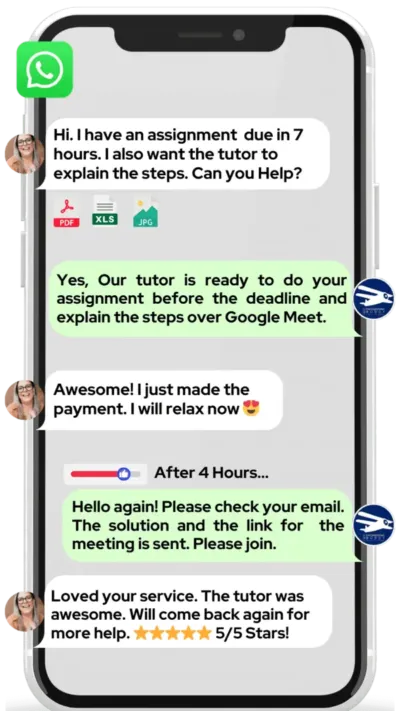
WhatsApp MEB for a quick quote — average response time under 1 minute.
Who This Computer-Aided Design Tutoring Is For
CAD is taught differently across programmes — some courses focus on 2D drafting in AutoCAD, others jump straight to parametric 3D modelling in SolidWorks, CATIA, or Fusion 360. The tutor is matched to your specific software and course structure, not a generic curriculum.
- Undergraduate engineering students stuck on constraint-based modelling or assembly mates
- Architecture students working with Revit or AutoCAD for technical drawings and BIM projects
- Students retaking after a failed first attempt at a CAD module or design project
- Students with a university conditional offer that depends on passing their engineering design unit
- Professionals upskilling in SolidWorks, CATIA, or Fusion 360 for career progression
- Parents watching a child fall behind on a design project with a firm submission deadline approaching
Students come from programmes at institutions across the US, UK, Canada, Australia, and the Gulf — including courses at MIT, Georgia Tech, Imperial College London, the University of Toronto, UNSW Sydney, and KAUST. MEB tutors are matched to the software and course content relevant to each programme.
At MEB, we’ve found that CAD students often know where to click but not why the command works — and that gap compounds fast. One session on sketch constraints can unblock three weeks of confusion about why a part won’t extrude correctly.
1:1 Tutoring vs Self-Study vs AI vs YouTube vs Online Courses
Self-study works if you’re disciplined, but CAD errors compound silently — you won’t know your sketch is over-constrained until the assembly fails. AI tools give fast answers but can’t watch you model in real time or catch where your workflow breaks down. YouTube is excellent for feature overviews, but it stops the moment your specific assembly throws an error. Online courses are structured but fixed-pace — they don’t slow down when you’re stuck on surface modelling. 1:1 tutoring with MEB is live, calibrated to your exact CAD software and course brief, and corrects errors the moment they appear on screen. For CAD specifically, where a single wrong constraint can invalidate an entire drawing, real-time feedback is the difference between a submission that passes and one that doesn’t.
Outcomes: What You’ll Be Able To Do in Computer-Aided Design
After working with an MEB Computer-Aided Design tutor, students consistently report sharper, more confident output. Apply geometric dimensioning and tolerancing (GD&T) correctly on engineering drawings. Model fully constrained parametric parts that update predictably when dimensions change. Solve assembly mating conflicts in SolidWorks or CATIA without breaking the design tree. Explain your design intent clearly in a viva or technical report — not just produce the geometry. Present a complete drawing package with orthographic views, sections, and bill of materials that meets course or industry standards.
Based on feedback from 40,000+ sessions collected by MEB from 2022 to 2025, 58% of students improved by one full grade after approximately 20 hours of 1:1 tutoring in subjects like Computer-Aided Design. A further 23% achieved at least a half-grade improvement.
Source: MEB session feedback data, 2022–2025.
Supporting a student through Computer-Aided Design? MEB works directly with parents to set up sessions, track progress, and keep coursework on schedule. WhatsApp MEB — average response time is under a minute, 24/7.
What We Cover in Computer-Aided Design (Syllabus / Topics)

2D Drafting and Technical Drawing
- Orthographic projection — first and third angle
- Section views, auxiliary views, and detail views
- Geometric dimensioning and tolerancing (GD&T)
- Drawing standards: ANSI, ISO, BS8888
- Title blocks, drawing sheets, and annotation conventions
- AutoCAD layers, blocks, and xref management
Core texts: Technical Drawing with Engineering Graphics (Giesecke et al.) and Engineering Drawing (Pickup & Parker). Tutors also work directly from your course handouts.
Parametric 3D Modelling
- Sketch constraints — fully defined vs under/over-constrained sketches
- Feature-based modelling: extrude, revolve, sweep, loft
- Assembly mates and motion simulation
- Part configurations and design tables
- Surface modelling basics (Loft, Boundary, Filled Surface)
- Drawing output from 3D models — views, sections, balloons, BOM
- SolidWorks, CATIA V5/V6, PTC Creo, Autodesk Inventor, Fusion 360
Key references: SolidWorks 2024 Bible (Lombard) and CATIA V5 Workbook (Cozzens). Tutors adapt to whichever platform your course uses.
Simulation and Advanced Applications
- Finite element analysis (FEA) setup and mesh control
- Static stress, thermal, and frequency simulation
- Design for manufacturability — draft angles, wall thickness, parting lines
- Sheet metal design and flat-pattern development
- Rendering and visualisation for design presentations
- BIM workflows in Revit for architectural CAD
Useful references: Finite Element Simulations with ANSYS Workbench (Lee) and Mastering Autodesk Revit (Vandezande et al.).
Platforms, Tools & Textbooks We Support
CAD is software-specific — the tutor matched to you will have hands-on experience with the exact platform your course or employer uses. MEB supports all major CAD environments currently used in academic and professional settings.
- AutoCAD (2D and 3D)
- SolidWorks (all versions — Student and Professional)
- CATIA V5 / V6 (Dassault Systèmes)
- PTC Creo Parametric
- Autodesk Inventor
- Autodesk Fusion 360
- Autodesk Revit (BIM / architectural CAD)
- Siemens NX
- ANSYS Workbench (for FEA linked to CAD geometry)
What a Typical Computer-Aided Design Session Looks Like
The tutor opens by checking the previous session’s task — usually a part model or drawing set the student was meant to complete independently. From there, the session moves into the live problem: the student shares their screen, the tutor identifies exactly where the sketch is failing or why the assembly mate is conflicting. The tutor uses a digital pen-pad to annotate directly over the model — circling the broken constraint, marking the missing dimension. The student corrects it with the tutor present, not after. If the session covers GD&T annotation or drawing output, the tutor works through a representative component from the student’s own assignment, not a generic example. The session closes with one specific task to attempt before next time — a named part or drawing — and the next topic is agreed.
How MEB Tutors Help You with Computer-Aided Design (The Learning Loop)
Diagnose: In the first session the tutor asks you to model a simple part or open your current drawing. Within 10 minutes they know whether the issue is conceptual (you don’t understand parametric constraints) or procedural (you understand but apply commands in the wrong order).
Explain: The tutor works a live example on screen — building the model from scratch, narrating every decision. The digital pen-pad annotates the sketch in real time. You see the logic, not just the result.
Practice: You replicate the model or modify a similar part while the tutor watches. Errors are caught before they propagate into the assembly.
Feedback: The tutor breaks down every mistake — wrong constraint type, incorrect reference geometry, tolerance notation that doesn’t match the standard. You understand why marks were lost, not just that they were.
Plan: Each session ends with a written note of what was covered, what to practise, and what the next session will address. No guessing what to revise.
Sessions run on Google Meet. The tutor uses a digital pen-pad or iPad with Apple Pencil for live annotation over your model. Before your first session, have your CAD files, course brief, and any drawing standards document ready to share. The first session always starts with a diagnostic — expect to spend the first 15 minutes modelling so the tutor can calibrate exactly where to begin.
Start with the $1 trial — 30 minutes of live tutoring that also serves as your first diagnostic.
Students consistently tell us that the biggest shift happens when they stop treating CAD as a click-sequence and start treating it as a language. Once you understand why a fully defined sketch behaves differently from an under-constrained one, the rest of parametric modelling clicks into place.
Tutor Match Criteria (How We Pick Your Tutor)
Not every engineer is a CAD tutor. Here’s what MEB verifies before matching you.
Subject depth: The tutor must have hands-on experience with your specific software — SolidWorks certification, CATIA project history, or professional AutoCAD use. Generalist “engineering” knowledge is not enough.
Tools: Every tutor uses Google Meet with screen sharing and a digital pen-pad or iPad with Apple Pencil. No whiteboards, no verbal-only explanations.
Time zone: Matched to your region — US, UK, Gulf, Canada, or Australia — so sessions don’t require you to be awake at 3am.
Goals: Whether you’re targeting a distinction on a SolidWorks project, clearing a failed CAD module, or upskilling for a job that requires Fusion 360, the match is built around your specific aim.
Unlike platforms where you fill out a form and wait, MEB responds in under a minute, 24/7. Tutor match takes under an hour. The $1 trial means you test before you commit. Everything runs over WhatsApp — no logins, no intake forms.
Study Plans (Pick One That Matches Your Goal)
Catch-up (1–3 weeks): for students behind on a module or with a project submission imminent — sessions focus on the specific deliverable, not a full course review. Exam prep or project prep (4–8 weeks): structured progression through the full syllabus or project workflow, with practice tasks between sessions. Weekly support: ongoing sessions aligned to semester deadlines and coursework stages. The tutor builds the specific session sequence after the first diagnostic — no two plans look identical.
Pricing Guide
CAD tutoring starts at $20/hr for standard undergraduate-level sessions. Graduate-level work, specialist simulation (FEA, CFD-linked CAD), or professional upskilling in CATIA or Siemens NX can reach $60–$100/hr depending on tutor background and timeline pressure.
Rate factors: software complexity, course level, urgency, and tutor availability. Rates for last-minute bookings within 48 hours of a deadline may be higher.
For students targeting roles at aerospace, automotive, or defence firms — or aiming for distinction-level project work at top engineering schools — tutors with professional CAD backgrounds in industry are available at higher rates. Share your specific goal and MEB will match the tier to your ambition.
Start with the $1 trial — 30 minutes, no registration, no commitment. WhatsApp MEB for a quick quote.
A common pattern our tutors observe is students spending hours fighting an assembly error that took 10 minutes to resolve in session. The $1 trial exists precisely for this — one focused session often unblocks days of frustration.
FAQ
Is Computer-Aided Design hard?
CAD has a steep initial curve — particularly around parametric constraints and assembly logic. Most students find that once the underlying model of how features relate to each other clicks, progress accelerates quickly. The difficulty is usually procedural, not conceptual, which is exactly where 1:1 guidance helps most.
How many sessions are needed?
Students with a specific drawing or assembly to fix often need just 2–4 sessions. Those working through a full CAD module from scratch typically use 10–15 hours over a semester. The tutor maps this out after the first diagnostic session based on your exact gaps and deadline.
Can you help with homework and assignments?
Yes. MEB tutoring is guided learning — you understand the work, then submit it yourself. The tutor explains the method, walks through similar examples, and checks your reasoning. See our Academic Integrity policy and Why MEB page for full details on what we help with and what we don’t.
Will the tutor match my exact syllabus or exam board?
Yes. Tell MEB your software (SolidWorks, AutoCAD, CATIA, Fusion 360, Revit, etc.) and your course brief or assessment criteria. The tutor matched to you has direct experience with that software and structures sessions around your specific deliverables — not a generic CAD curriculum.
What happens in the first session?
The tutor asks you to open your current file or model a simple part from scratch. This takes about 15 minutes and tells them everything — where your workflow breaks, which constraints you’re misapplying, and what the fastest route to fixing your current assignment is. The session builds from there.
Is online tutoring as effective as in-person for CAD?
For CAD specifically, online is arguably better. You’re already working on screen — the tutor joins via Google Meet, sees your model live, and annotates directly over your drawing with a digital pen-pad. There’s nothing an in-person session does that this setup doesn’t replicate, and often faster.
Can I get Computer-Aided Design help at midnight?
Yes. MEB operates 24/7 across time zones. WhatsApp MEB at any hour and a response typically arrives within a minute. Tutor availability for same-night sessions depends on the subject and time zone, but urgent bookings are accommodated far more often than not.
What if I don’t like my assigned tutor?
Request a replacement immediately — no forms, no explanation required. WhatsApp MEB and a new tutor is matched, usually within the hour. The $1 trial is designed so you never commit to a tutor before you’ve seen how they teach.
SolidWorks or CATIA — does it matter which software I’m using?
It matters significantly. SolidWorks and CATIA share parametric logic but have different feature trees, sketch environments, and assembly methodologies. MEB tutors are matched by software — a SolidWorks specialist is not automatically the right match for a CATIA user. Tell MEB your exact platform and version when you enquire.
How do I know if my CAD drawings meet professional or academic standards?
Your tutor checks drawings against the standard your course or employer specifies — ANSI Y14.5, ISO 1101, or BS8888 for GD&T, and your institution’s own drawing conventions. A common session type is a full drawing review where the tutor marks up every annotation error before submission.
How do I get started?
Three steps: WhatsApp MEB with your software platform and current challenge → get matched with a verified CAD tutor, usually within the hour → start the $1 trial. Thirty minutes live or one question explained in full. No registration, no commitment beyond that first session.
Do you offer group CAD sessions?
MEB focuses on 1:1 sessions. Group sessions are available on request for small cohorts (2–3 students working on the same project brief), but the standard offering is private, individual tutoring. Contact MEB via WhatsApp to discuss group options if needed.
Trust & Quality at My Engineering Buddy
Every MEB tutor goes through a screening process that includes a live demo session, subject-specific assessment, and ongoing review based on student feedback. Tutors are selected for depth in a specific CAD platform — not general engineering knowledge. Rated 4.8/5 across 40,000+ verified reviews on Google. For Mechanical Engineering tutoring, Aerospace Engineering help, and Systems Engineering tutoring — all of which regularly involve CAD components — MEB applies the same vetting standard.
MEB tutoring is guided learning — you understand the work, then submit it yourself. For full details on what we help with and what we don’t, read our Academic Integrity policy and Why MEB.
MEB has served 52,000+ students across the US, UK, Canada, Australia, the Gulf, and Europe since 2008 — across 2,800+ subjects. Engineering is one of MEB’s core categories, covering Computer-Aided Design alongside Materials Science and Engineering tutoring and Mechatronics tutoring. The same quality standard applies across every subject and every tutor on the platform, verified through the MEB tutoring methodology.
MEB has operated since 2008. 18 years of subject-specific tutoring across engineering disciplines — with the same matching process and the same quality review applied to every tutor, every session, every subject.
Source: My Engineering Buddy, 2008–2025.
Explore Related Subjects
Students studying Computer-Aided Design often also need support in:
- Civil Engineering
- Automotive Engineering
- Architectural Engineering
- Industrial Engineering
- Manufacturing Engineering
- Geomatics
- Nuclear Engineering
Next Steps
Getting started takes less than two minutes:
- Share your CAD software, course brief or assignment, and your deadline
- Share your availability and time zone
- MEB matches you with a verified tutor — usually within the hour
Before your first session, have ready: your CAD software version and course outline, a recent file or drawing you struggled with, and your submission or exam date. The tutor handles the rest.
Visit www.myengineeringbuddy.com for more on how MEB works.
WhatsApp to get started or email [email protected].
52,000+ Happy Students From Various Universities





Reviewed by Subject Expert
This page has been carefully reviewed and validated by our subject expert to ensure accuracy and relevance.