Hire Verified & Experienced
Credit Risk Tutors
4.8/5 40K+ session ratings collected on the MEB platform



Hire The Best Credit Risk Tutor
Top Tutors, Top Grades. Without The Stress!


52,000+ Happy Students From Various Universities



How Much For Private 1:1 Tutoring & Hw Help?
Private 1:1 Tutoring and HW help Cost $20 – 35 per hour* on average.
Most students don’t fail Credit Risk because it’s impossible. They fail because nobody explained why a BBB-rated bond trades wider than a AAA — and what that actually means for a loan portfolio.
Credit Risk Tutor Online
Credit Risk is the study of the probability that a borrower or counterparty will default on a financial obligation, encompassing credit scoring, default probability modelling, loss given default, and portfolio-level credit exposure measurement.
MEB offers 1:1 online tutoring and homework help in 2,800+ advanced subjects, including Credit Risk and the broader finance curriculum. Whether you’re searching for a Credit Risk tutor near me or need help with a specific model or assignment, MEB matches you with a verified expert — typically within the hour. Sessions are live, structured around your actual syllabus, and built to close gaps fast.
- 1:1 online sessions tailored to your exact course or syllabus
- Expert-verified tutors with credit markets and quantitative finance backgrounds
- Flexible time zones — US, UK, Canada, Australia, Gulf
- Structured learning plan built after a diagnostic session
- Ethical homework and assignment guidance — you understand the work before you submit
52,000+ students across the US, UK, Canada, Australia, and the Gulf have used MEB since 2008 — including students in Finance subjects like Credit Risk, Fixed Income Securities, and Derivatives Pricing.
Source: My Engineering Buddy, 2008–2025.
How Much Does a Credit Risk Tutor Cost?
Most Credit Risk tutoring sessions run $20–$40/hr. Graduate-level or highly specialised topics — structural credit models, Basel III internal ratings-based approaches — can reach up to $100/hr. You can also start with the $1 trial: 30 minutes of live tutoring or one full homework question explained.
| Level / Need | Typical Rate | What’s Included |
|---|---|---|
| Standard (undergraduate) | $20–$35/hr | 1:1 sessions, homework guidance |
| Advanced / Graduate / CFA | $35–$70/hr | Expert tutor, niche depth, model review |
| $1 Trial | $1 flat | 30 min live session or 1 homework question |
Tutor availability tightens sharply around semester finals and CFA exam windows. Book early if you’re within six weeks of a deadline.
WhatsApp MEB for a quick quote — average response time under 1 minute.
Who This Credit Risk Tutoring Is For
Credit Risk sits at the intersection of statistics, finance theory, and regulatory practice. It’s demanding at every level — from an undergraduate corporate finance module to a graduate-level credit derivatives course.
- Undergraduate finance and economics students covering default probability and credit spreads
- MBA and MSc students working through Basel frameworks, CDS pricing, or loan portfolio models
- CFA and FRM candidates preparing for fixed income and risk management sections
- Students retaking after a failed first attempt who need targeted gap-closing, not a full re-read
- Students with a university conditional offer depending on this grade — where the margin is tight
- Quantitative finance students applying Merton model or structural credit frameworks to coursework
Students at universities including NYU Stern, LSE, Imperial College London, Wharton, HEC Paris, Rotman, and UNSW Business School regularly work with MEB tutors on Credit Risk modules. Start with the $1 trial and use the first session as a diagnostic — you’ll know exactly where you stand within 30 minutes.
1:1 Tutoring vs Self-Study vs AI vs YouTube vs Online Courses
Self-study works if your fundamentals are solid — but Credit Risk problems compound fast once a gap opens. AI tools explain terms quickly but can’t catch why your PD estimation is off or walk you through the logic step by step in real time. YouTube handles conceptual overviews well and stops cold when you’re stuck on a specific problem. Online courses are structured but fixed-pace, with no one to tell you your credit VaR calculation is using the wrong correlation assumption. With MEB, a live Credit Risk tutor sees exactly where the error is, corrects it in the moment, and rebuilds the concept from the right foundation — in a session calibrated to your actual exam or coursework.
Outcomes: What You’ll Be Able To Do in Credit Risk
After working with an online Credit Risk tutor through MEB, students can model default probabilities using both structural and reduced-form approaches, apply the Altman Z-score and logistic regression to real borrower data, explain credit spread determinants and price a simple credit default swap, analyse the Basel III capital adequacy requirements and their implications for bank lending, and present a coherent credit risk assessment for a loan portfolio under stress scenarios. These are capabilities that show up directly in exams, dissertations, and entry-level credit analyst roles.
Based on feedback from 40,000+ sessions collected by MEB from 2022 to 2025, 58% of students improved by one full grade after approximately 20 hours of 1:1 tutoring in subjects like Credit Risk. A further 23% achieved at least a half-grade improvement.
Source: MEB session feedback data, 2022–2025.
At MEB, we’ve found that Credit Risk students often arrive knowing the vocabulary but not the mechanism. They can define probability of default — but they can’t build it. That gap is fixable in two or three focused sessions once you work through actual data and live examples rather than just definitions.
What We Cover in Credit Risk (Syllabus / Topics)

Track 1: Foundations of Credit Risk
- Credit risk vs market risk vs liquidity risk — distinctions and overlaps
- Expected loss, unexpected loss, and economic capital
- Probability of default (PD), loss given default (LGD), exposure at default (EAD)
- Credit ratings — agency methodologies (Moody’s, S&P, Fitch) and limitations
- Credit spreads — determinants, yield curves, and spread dynamics
- Altman Z-score and traditional credit scoring models
Key texts: Credit Risk: Pricing, Measurement, and Management by Duffie & Singleton; Credit Risk Measurement by Saunders & Allen.
Track 2: Quantitative and Structural Credit Models
- Merton model — equity as a call option on firm assets, default boundary
- KMV model and distance-to-default calculation
- Reduced-form (intensity-based) models — Jarrow-Turnbull framework
- Logistic regression and machine learning approaches to PD estimation
- Credit VaR — Monte Carlo simulation, historical simulation, and parametric methods
- Copula models and default correlation — Gaussian copula and its limitations post-2008
- Stress testing and scenario analysis for credit portfolios
Key texts: Modelling Default Risk by Lando; The Concepts and Practice of Mathematical Finance by Joshi (relevant chapters on credit).
Track 3: Credit Derivatives and Regulatory Frameworks
- Credit default swaps (CDS) — mechanics, pricing, and settlement
- Collateralised debt obligations (CDOs) — tranching, attachment points, correlation risk
- Total return swaps and credit-linked notes
- Basel II, Basel III, and Basel IV — IRB approach, standardised approach, capital floors
- IFRS 9 — expected credit loss model, staging, and provisioning
- Counterparty credit risk and CVA (credit valuation adjustment)
Key texts: The Basel Handbook by Ong; Credit Risk by Bluhm, Overbeck & Wagner. ICAEW publishes guidance on financial reporting standards relevant to IFRS 9 treatment in credit contexts.
Students consistently tell us that the Merton model clicks once they stop treating it as a formula to memorise and start building it from first principles — firm value, volatility, debt face value, maturity. When the tutor constructs it live on screen with real numbers, the option analogy becomes obvious.
What a Typical Credit Risk Session Looks Like
The tutor opens by checking the previous topic — say, the student’s attempt at estimating PD using logistic regression on a sample loan dataset. If there are errors in variable selection or coefficient interpretation, those get fixed first. Then the session moves to the new material: the tutor works through a structural credit model problem on the digital pen-pad, breaking the Merton framework into steps — asset value, volatility, risk-neutral default probability. The student replicates the calculation and explains the reasoning. The tutor corrects one common misapplication (confusing physical and risk-neutral probabilities) in real time. The session closes with a concrete task: price a CDS given a specified hazard rate and recovery assumption, ready for the next session.
How MEB Tutors Help You with Credit Risk (The Learning Loop)
Diagnose: In the first session, the tutor identifies which part of the credit risk framework has broken down — whether it’s the probabilistic foundations, the model mechanics, the regulatory layer, or the ability to apply theory to real data. This isn’t a quiz. It’s a conversation with worked problems.
Explain: The tutor works through problems live using a digital pen-pad — walking through a CDS pricing calculation or a Basel IRB capital requirement step by step. Nothing is assumed. Every term that trips the student up gets unpacked on the spot.
Practice: The student attempts the next problem with the tutor present. Not after the session — during it. This is where most gaps become visible and where the real learning happens.
Feedback: The tutor goes through the student’s working line by line — not just marking it right or wrong, but showing exactly which step introduced an error and why that error costs marks in an exam context.
Plan: The session ends with a clear next topic, a specific practice task, and a checkpoint for the following session. No vague “review chapter 4” instructions.
Sessions run on Google Meet. The tutor uses a digital pen-pad or iPad with Apple Pencil. Before the first session, share your course syllabus, a recent problem set or exam question you struggled with, and your deadline or exam date. The first session covers a diagnostic and the first topic fix — and doubles as your $1 trial if you start there. Whether you need a quick catch-up before an exam, structured revision over 4–8 weeks, or ongoing weekly support through the semester, the tutor maps the session plan after that first diagnostic.
Try your first session for $1 — 30 minutes of live 1:1 tutoring or one homework question explained in full. No registration. No commitment. WhatsApp MEB now and get matched within the hour.
Tutor Match Criteria (How We Pick Your Tutor)
Not every finance tutor covers credit risk — and not every credit risk tutor covers the quantitative side. Here’s what MEB matches on:
Subject depth: Tutor holds a postgraduate degree or professional credential (CFA, FRM) with demonstrated focus on credit markets, credit modelling, or fixed income — not just general finance.
Tools: Every session runs on Google Meet with a digital pen-pad or iPad and Apple Pencil — so complex model derivations can be worked through visually, not just described.
Time zone: Matched to your region — US, UK, Gulf, Canada, or Australia. No 3am sessions unless that’s what you want.
Goals: Whether you’re targeting a specific exam grade, trying to understand the Basel IRB approach for a dissertation, or closing a gap before a CFA exam window, the tutor match reflects that goal — not just the subject name.
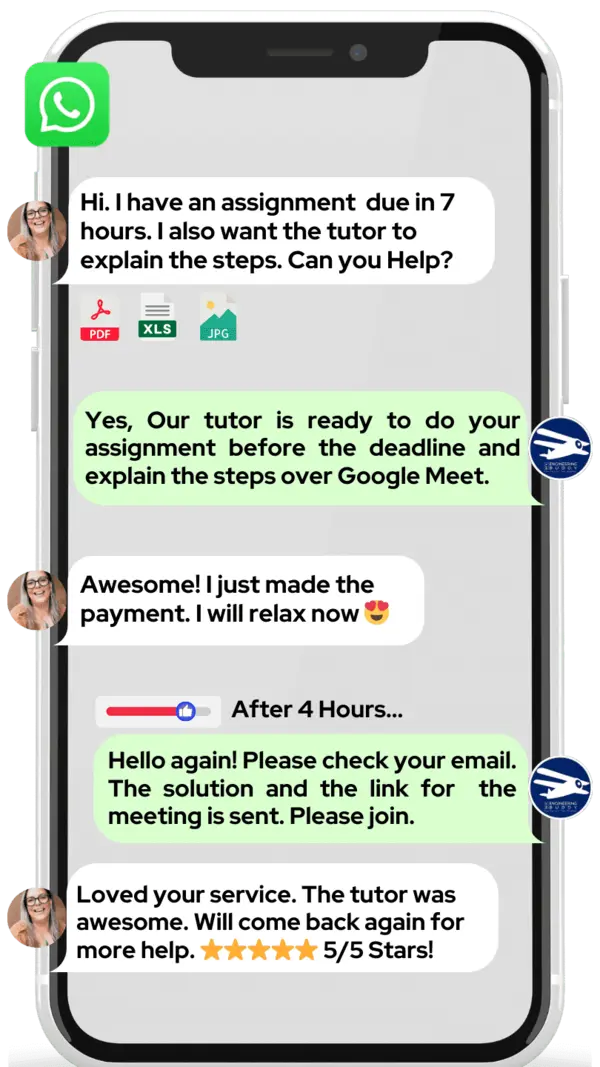
Unlike platforms where you fill out a form and wait, MEB responds in under a minute, 24/7. Tutor match takes under an hour. The $1 trial means you test before you commit. Everything runs over WhatsApp — no logins, no intake forms.
Pricing Guide
Credit Risk tutoring starts at $20/hr for standard undergraduate-level content. Graduate coursework, CFA Level II fixed income and credit, and FRM Part II credit risk modules typically run $35–$70/hr. Highly specialised work — CVA modelling, copula calibration, Basel IV internal model approval — can reach $100/hr. Rate depends on topic complexity, tutor background, and how quickly you need sessions scheduled.
For students targeting roles at credit rating agencies, investment banks, or risk management desks at major financial institutions, MEB has tutors with direct industry backgrounds in credit analysis and structured finance — available at higher rates. Share your specific goal and MEB will match the tier to your ambition.
Peak demand runs November–December and April–May (semester finals) and in the weeks before CFA and FRM exam windows. Book ahead if you’re in that window. Start with the $1 trial — 30 minutes, no registration, no commitment. WhatsApp MEB for a quick quote.
FAQ
Is Credit Risk a hard subject?
It’s genuinely demanding. Credit Risk blends probability theory, financial modelling, and regulatory knowledge. Students with strong statistics or fixed income backgrounds find the quantitative models manageable — but the regulatory layer (Basel, IFRS 9) adds significant breadth. Targeted tutoring cuts through that.
How many sessions will I need?
Most students close a specific gap in 4–8 sessions. Full-course support from week one to finals typically runs 15–25 sessions. The tutor gives a clearer estimate after the first diagnostic session, once the actual gap size is visible.
Can you help with Credit Risk homework and assignments?
Yes — MEB tutoring is guided learning. The tutor explains the concepts and works through the method with you; you complete and submit the work yourself. See our Academic Integrity policy and Why MEB page for full details on what we help with and what we don’t.
Will the tutor match my exact syllabus or exam board?
Yes. Share your course outline, reading list, or exam board before the first session. MEB matches tutors who know your specific syllabus — whether that’s a CFA Level II curriculum, an MSc risk management module, or a university-specific credit analysis course.
What happens in the first session?
The tutor runs a short diagnostic — usually one or two problems from your course — to identify exactly where understanding breaks down. That shapes the entire session plan. You leave the first session knowing what to fix and in what order.
Is online Credit Risk tutoring as effective as in-person?
For a quantitative subject like Credit Risk, yes — often more so. The digital pen-pad means model derivations and numerical examples are worked out visually in real time. Sessions are recorded on request. There’s no travel time, and scheduling is faster.
Can I get Credit Risk help at short notice — even late at night?
MEB operates 24/7 via WhatsApp. Tutors are available across US, UK, Gulf, and Australian time zones. Same-day sessions are frequently possible. Response to your initial message is typically under one minute.
What if I don’t connect with my assigned tutor?
Say so — via WhatsApp, immediately. MEB will rematch you at no extra cost. The $1 trial is designed exactly for this: test the fit before you commit to a full block of sessions.
Do you cover both the structural and reduced-form credit models?
Yes. MEB tutors cover the full quantitative spectrum — Merton model, KMV distance-to-default, Jarrow-Turnbull reduced-form framework, copula-based portfolio models, and the machine learning approaches now appearing in graduate curricula. Tell the tutor which models your course focuses on.
Can you help me understand Basel III and IFRS 9 for my credit risk exam?
Yes. Both are covered in depth. The tutor walks through IRB capital calculations, the three-stage IFRS 9 expected credit loss model, and the practical implications for bank balance sheets — with worked examples tied to your actual exam questions.
How do I get started?
Three steps: WhatsApp MEB, get matched to a verified Credit Risk tutor — usually within an hour — then start the $1 trial: 30 minutes of live tutoring or one full homework question explained. No registration, no upfront commitment.
MEB has served 52,000+ students since 2008 across 2,800+ subjects — with tutors vetted for subject depth, not just general teaching ability. For Credit Risk, that means tutors who have worked with credit models, not just read about them.
Source: My Engineering Buddy, 2008–2025.
Trust & Quality at My Engineering Buddy
Every MEB tutor goes through a structured screening process: subject-specific vetting, a live demo session evaluation, and ongoing review based on student feedback after each session. Tutors covering Credit Risk hold postgraduate qualifications or professional credentials in finance, risk, or a related quantitative field — and are tested on the content they’ll actually teach. Rated 4.8/5 across 40,000+ verified reviews on Google.
MEB tutoring is guided learning — you understand the work, then submit it yourself. For full details on what we help with and what we don’t, read our Academic Integrity policy and Why MEB.
MEB has been serving students in Finance and related subjects — including Quantitative Finance tutoring and Portfolio Management help — since 2008, across the US, UK, Canada, Australia, the Gulf, and Europe. The platform covers 2,800+ advanced subjects. See our tutoring methodology for how sessions are structured across all levels.
Explore Related Subjects
Students studying Credit Risk often also need support in:
- Financial Economics
- Capital Asset Pricing Model (CAPM)
- Investment Analysis
- Financial Derivatives
- Securities Analysis
- Money and Banking
- Valuation
Next Steps
When you message MEB, have these ready:
- Your exam board, course code, or syllabus (or a photo of your reading list)
- A recent past paper question or homework problem you struggled with
- Your exam date or assignment deadline, and your available time zones
MEB matches you with a verified Credit Risk tutor — usually within 24 hours, often much faster. The first session starts with a diagnostic so every minute counts from the start.
Visit www.myengineeringbuddy.com for more on how MEB works.
WhatsApp to get started or email meb@myengineeringbuddy.com.
Our experience across thousands of sessions shows that students who share a specific exam question or assignment problem in the first WhatsApp message get matched and started faster — because the tutor already knows what to prepare. One message is all it takes.
Reviewed by Subject Expert
This page has been carefully reviewed and validated by our subject expert to ensure accuracy and relevance.