

Hire Verified & Experienced
Distributed Control Systems DCS Tutors
4.8/5 40K+ session ratings collected on the MEB platform



Hire The Best Distributed Control Systems DCS Tutor
Top Tutors, Top Grades. Without The Stress!

52,000+ Happy Students From Various Universities






How Much For Private 1:1 Tutoring & Hw Help?
Private 1:1 Tutoring and HW help Cost $20 – 35 per hour* on average.
DCS loops failing at 2 a.m. before your process control assignment is due — and your textbook has no worked examples for cascaded PID.
Distributed Control Systems DCS Tutor Online
A Distributed Control Systems (DCS) is a process control architecture that distributes control functions across multiple field-level controllers networked to a central supervisory system, used extensively in oil & gas, chemical, and power generation industries.
If you’ve searched for a Distributed Control Systems DCS tutor near me, MEB connects you with verified engineers and academics who know DCS at the level your course actually tests — from ladder logic and function block programming to PID tuning, SCADA integration, and Fieldbus protocols. This is 1:1 online tutoring and homework help in Electrical Engineering and its applied specialisms, matched to your exact module and institution. One well-targeted session can close the gap between knowing the theory and applying it under exam conditions.
- 1:1 online sessions tailored to your university module or industry certification syllabus
- Expert verified tutors with hands-on DCS and process control experience
- Flexible time zones — US, UK, Canada, Australia, Gulf
- Structured learning plan built after a diagnostic session
- Ethical homework and assignment guidance — you understand the work, then submit it yourself
52,000+ students across the US, UK, Canada, Australia, and the Gulf have used MEB since 2008 — including students in Electrical Engineering subjects like Distributed Control Systems DCS, Control Systems, and Instrumentation and Control Engineering.
Source: My Engineering Buddy, 2008–2025.
How Much Does a Distributed Control Systems DCS Tutor Cost?
Most DCS tutoring sessions run $20–$40/hr depending on level and topic complexity. Graduate-level modules and niche platforms such as Honeywell Experion or ABB 800xA attract rates up to $100/hr. The $1 trial gives you 30 minutes of live tutoring or one homework question explained in full — no registration needed.
| Level / Need | Typical Rate | What’s Included |
|---|---|---|
| Undergraduate / Standard | $20–$35/hr | 1:1 sessions, homework guidance |
| Advanced / Specialist DCS | $35–$70/hr | Expert tutor, platform-specific depth |
| $1 Trial | $1 flat | 30 min live session or 1 homework question |
Tutor availability tightens significantly in the weeks before semester finals and industrial certification exam windows. Book early.
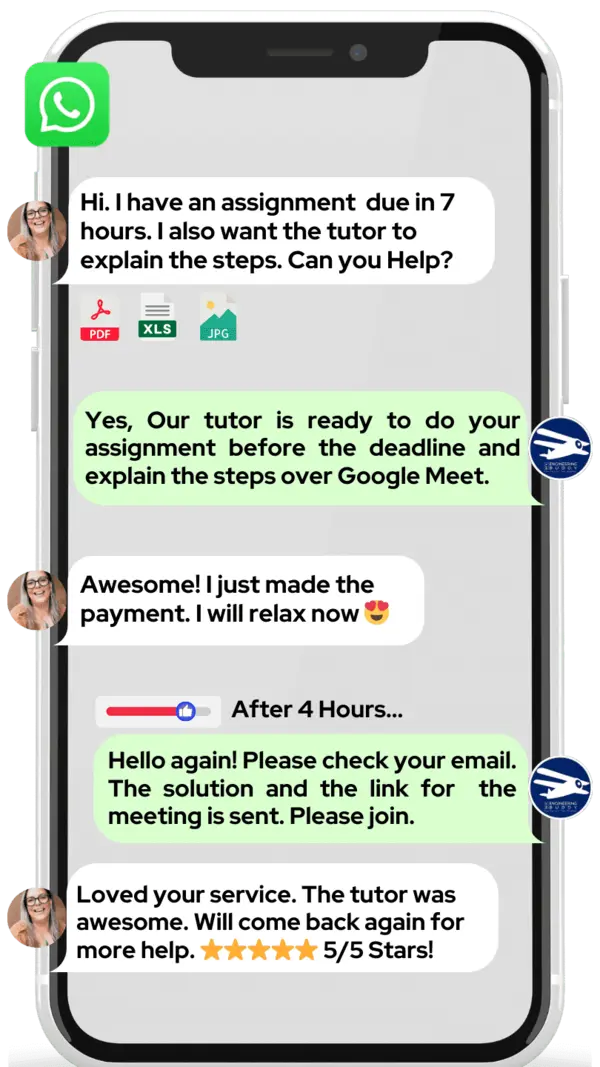
WhatsApp MEB for a quick quote — average response time under 1 minute.
Who This Distributed Control Systems DCS Tutoring Is For
DCS is a subject where the gap between lecture slides and real application is wide. Most students hit a wall when they move from block diagrams to actual controller configuration and process response analysis. MEB tutors close that gap fast.
- Undergraduate and graduate students in chemical, electrical, or process engineering taking a control systems or automation module
- Students retaking after a failed first attempt in a process control unit
- Students with a university conditional offer depending on their final-year engineering grade
- Engineers in the Gulf, Australia, or Canada pursuing ISA or IEC 61511 certification with a self-study gap
- Parents watching a child’s confidence drop alongside their control engineering grades
- Students 4–6 weeks from their final exam with PID tuning, function block programming, or SCADA integration still to master
Students at universities including MIT, Imperial College London, University of Toronto, TU Delft, University of Melbourne, ETH Zurich, and Texas A&M have used MEB support for process control modules at this level.
1:1 Tutoring vs Self-Study vs AI vs YouTube vs Online Courses
Self-study works if you’re disciplined, but DCS has no feedback loop for tuning errors. AI tools explain concepts instantly but can’t watch you configure a PID block and catch a derivative kick in real time. YouTube covers SCADA overviews well but stops when you’re stuck on a specific cascade loop problem. Online courses are structured but move at a fixed pace with no personalisation for your exact exam board or plant scenario. 1:1 tutoring with MEB is live, matched to your actual module, and corrects your reasoning at the moment the error forms — not three assignments later.
Outcomes: What You’ll Be Able To Do in Distributed Control Systems DCS
After working with an MEB DCS tutor, you’ll be able to analyse process dynamics and select appropriate controller modes for first-order and second-order systems. You’ll solve PID tuning problems using Ziegler-Nichols and Cohen-Coon methods, and explain why a poorly tuned derivative term destabilises a temperature loop. You’ll model cascade and feedforward control configurations, apply ISA-5.1 instrumentation symbols correctly in P&ID interpretation, and write or debug function block programs in IEC 61131-3 environments. Present your DCS architecture design to a panel with confidence in the reasoning behind every control node.
Based on feedback from 40,000+ sessions collected by MEB from 2022 to 2025, 58% of students improved by one full grade after approximately 20 hours of 1:1 tutoring in subjects like Distributed Control Systems DCS. A further 23% achieved at least a half-grade improvement.
Source: MEB session feedback data, 2022–2025.
Try your first session for $1 — 30 minutes of live 1:1 tutoring or one homework question explained in full. No registration. No commitment. WhatsApp MEB now and get matched within the hour.
What We Cover in Distributed Control Systems DCS (Syllabus / Topics)

Process Control Fundamentals and PID
- Open-loop vs closed-loop control — block diagram analysis
- Proportional, integral, and derivative action — individual and combined effects
- Ziegler-Nichols, Cohen-Coon, and IMC tuning methods
- Process reaction curve analysis and dead-time compensation
- Cascade control: primary and secondary loop design
- Feedforward and ratio control strategies
- Anti-windup schemes and bumpless transfer
Core textbooks for this track include Seborg, Edgar & Mellichamp’s Process Dynamics and Control and Coughanowr & LeBlanc’s Process Systems Analysis and Control.
DCS Architecture, Networks, and Programming
- DCS hardware: controllers, I/O modules, operator stations, historian
- IEC 61131-3 programming languages: Function Block Diagram, Structured Text, Ladder Diagram
- Fieldbus standards: HART, FOUNDATION Fieldbus, PROFIBUS, Modbus
- OPC-UA and SCADA integration with DCS supervisory layer
- Redundancy architectures — controller failover and network fault tolerance
- Alarm management and HMI design principles (ISA-18.2)
- Platform-specific configuration: Honeywell Experion PKS, Emerson DeltaV, ABB 800xA
Key references include Lipták’s Instrument Engineers’ Handbook — Process Control and vendor documentation from Emerson and Honeywell.
Safety Systems, Industrial Automation, and Integration
- Safety Instrumented Systems (SIS) and IEC 61511 / IEC 61508 standards
- Safety Integrity Level (SIL) determination and verification
- DCS vs PLC vs Safety PLC — architectural comparison and selection criteria
- Integration of DCS with industrial automation layers
- Cybersecurity considerations for process control networks
- Batch control and ISA-88 standard application
Recommended reading includes Gruhn & Cheddie’s Safety Instrumented Systems Verification and the ISA-5.1 standard for instrumentation symbols.
At MEB, we’ve found that students who struggle most with DCS are usually fine with the theory — they fall down when they have to configure a real controller block or interpret a P&ID under time pressure. That’s exactly where 1:1 practice on screen makes the difference.
What a Typical Distributed Control Systems DCS Session Looks Like
The tutor opens by checking where you landed on the previous session’s task — usually a PID tuning exercise or a function block diagram you were asked to complete. From there, you and the tutor work through the current problem on screen: this might be sizing a cascade loop for a heat exchanger, debugging a structured text program in an IEC 61131-3 environment, or interpreting a SCADA alarm log from a simulated process upset. The tutor uses a digital pen-pad to annotate control diagrams and P&IDs directly on screen. You replicate the configuration step-by-step or explain the reasoning behind each control action. The session closes with a concrete task — a specific tuning scenario or architecture diagram — and the next topic is noted so the following session picks up without wasted time.
How MEB Tutors Help You with Distributed Control Systems DCS (The Learning Loop)
Diagnose: In the first session, the tutor identifies exactly where your understanding breaks down — whether that’s PID interaction terms, fieldbus addressing, SIL calculations, or reading vendor-specific function block libraries. There’s no guessing; they ask you to walk through a problem live.
Explain: The tutor works through a fully solved example on the digital pen-pad — annotating a P&ID, stepping through a derivative kick scenario, or mapping a DCS network topology node by node. You see the reasoning, not just the answer.
Practice: You attempt the next problem with the tutor present. For DCS this often means configuring a control loop from a process description, or writing a function block sequence and testing its logic against a process scenario.
Feedback: The tutor corrects errors at the step where they occur — not at the end. If your integral time constant is wrong, you understand why before moving on. Marks aren’t lost to the same mistake twice.
Plan: Each session ends with a topic map: what’s solid, what needs one more pass, and what comes next. For DCS this typically sequences from single-loop PID to cascade, then to safety systems and platform-specific programming.
Sessions run over Google Meet with a digital pen-pad or iPad and Apple Pencil for live annotation. Before your first session, share your course outline or module guide, any past paper or assignment you’ve already attempted, and your exam or submission date. Start with the $1 trial — 30 minutes of live tutoring that also serves as your first diagnostic. Whether you need a two-week catch-up before a process control exam, eight weeks of structured revision, or ongoing weekly support through a semester, the tutor maps the plan after that first session.
Students tell us that the moment things click in DCS is usually when they stop trying to memorise the equations and start tracing the signal path through the loop — from sensor to controller to final element. MEB tutors make that walkthrough happen.
Source: My Engineering Buddy, student feedback compilation, 2022–2025.
Tutor Match Criteria (How We Pick Your Tutor)
Not every control engineer is a DCS specialist. MEB matches you on four criteria.
Subject depth: The tutor holds a degree or professional background in chemical, electrical, or process engineering and has worked with DCS at your module’s level — undergraduate fundamentals through to graduate-level SIS and IEC 61511.
Tools: Every tutor delivers via Google Meet with a digital pen-pad or iPad and Apple Pencil. They can annotate your P&ID, walk a function block program line by line, or sketch a cascade loop configuration in real time.
Time zone: Matched to your region — US, UK, Gulf, Canada, Australia — so sessions don’t land at an inconvenient hour during exam season.
Goals: Whether you need exam score improvement, conceptual depth for a viva, help with control engineering assignments, or research support for a DCS-focused thesis, the tutor is matched to that specific objective.
Unlike platforms where you fill out a form and wait, MEB responds in under a minute, 24/7. Tutor match takes under an hour. The $1 trial means you test before you commit. Everything runs over WhatsApp — no logins, no intake forms.
Pricing Guide
Standard DCS tutoring runs $20–$40/hr. Graduate-level modules, SIL verification coursework, and platform-specific help with Honeywell Experion or Emerson DeltaV can reach $100/hr depending on tutor expertise and timeline pressure. Rate factors include topic complexity, your exam or deadline date, and tutor availability in your time zone.
Availability tightens in the two weeks before semester finals and certification exam windows. Earlier booking means more tutor options and more flexibility on session timing.
For students targeting roles at major oil and gas operators, chemical engineering firms, or industrial automation companies, tutors with real plant-floor DCS experience are available at higher rates — share your specific goal and MEB will match the tier to your ambition.
Start with the $1 trial — 30 minutes, no registration, no commitment. WhatsApp MEB for a quick quote.
A common pattern our tutors observe is that students spend the last week before a process control exam re-reading notes instead of working through unseen tuning problems. The students who improve most are the ones who practise under time pressure with someone who can tell them exactly where their reasoning went wrong.
FAQ
Is Distributed Control Systems DCS hard?
DCS is challenging because it combines control theory, network architecture, platform-specific programming, and industrial safety standards in one subject. Most students find PID interaction effects and IEC 61131-3 function block programming the steepest sections. Focused 1:1 work on those specific gaps makes the rest manageable.
How many sessions are needed?
Students with one or two clear gaps — a tuning method or a cascade configuration — often need three to five sessions. Students covering the full DCS module from process dynamics through to SIS typically work through twelve to twenty hours over four to eight weeks.
Can you help with homework and assignments?
Yes. MEB tutoring is guided learning — you understand the work, then submit it yourself. The tutor explains the method and works through similar examples with you. See our Academic Integrity policy and Why MEB page for full details on what we help with and what we don’t.
Will the tutor match my exact syllabus or exam board?
Yes. Before matching, MEB asks for your module code, course outline, or certification target. Tutors are selected based on familiarity with your specific content — not just the general subject area. University modules, IChemE-aligned content, and ISA certification tracks are all covered.
What happens in the first session?
The tutor runs a short diagnostic — asking you to walk through a PID problem or explain a block diagram. This takes ten to fifteen minutes and tells the tutor exactly where to focus. The rest of the session covers your most urgent gap. You leave with a clear topic plan.
Is online tutoring as effective as in-person?
For DCS, yes. The tutor shares annotated diagrams, P&IDs, and function block programs directly on screen. Google Meet with a digital pen-pad replicates whiteboard work closely. Most students find the recorded session summary useful for revision in a way in-person sessions rarely provide.
What’s the difference between a DCS and a PLC, and do your tutors cover both?
A DCS is designed for continuous process control with distributed field controllers and centralised supervision; a PLC handles discrete logic and sequential operations. Many university modules and certification courses cover both in comparison. MEB tutors cover embedded systems and PLC-side logic alongside DCS architecture when your syllabus requires it.
Which DCS platforms do your tutors support?
MEB tutors cover the major vendor platforms assessed in university projects and industry certifications — including Honeywell Experion PKS, Emerson DeltaV, ABB 800xA, and Siemens SIMATIC PCS 7. If your assignment or capstone involves a specific platform, share that when you message MEB and the match will reflect it.
Can I get DCS help at midnight or over the weekend?
Yes. MEB operates across US, UK, Gulf, Canadian, and Australian time zones. WhatsApp response time is typically under a minute regardless of when you message. Session scheduling is based on mutual availability — midnight slots exist and fill quickly before exam periods.
Do you offer group DCS sessions?
No. MEB sessions are strictly 1:1. Group sessions dilute the diagnostic precision that makes DCS tutoring effective — your specific tuning error or loop configuration mistake gets addressed immediately, not averaged across a group’s questions.
How do I get started?
Message MEB on WhatsApp, share your module or certification target, and MEB matches you with a verified DCS tutor. Your first session is the $1 trial — 30 minutes of live tutoring or one assignment question worked through in full. Three steps: WhatsApp → matched → start trial.
Trust & Quality at My Engineering Buddy
Every MEB tutor goes through subject-specific screening before their first session. For DCS, that means a verified engineering background, demonstrated familiarity with process control platforms, and a live demo evaluation assessed by MEB’s team. Ongoing feedback from students is reviewed after every session — tutors who fall below threshold are removed. Rated 4.8/5 across 40,000+ verified reviews on Google. MEB has been running since 2008, and the selection process has tightened every year since then.
MEB tutoring is guided learning — you understand the work, then submit it yourself. For full details on what we help with and what we don’t, read our Academic Integrity policy and Why MEB.
MEB serves students across the US, UK, Canada, Australia, the Gulf, and Europe in 2,800+ subjects — including Electrical Engineering, industrial automation tutoring, and Signals and Systems help. The platform was built specifically for advanced technical subjects that general tutoring marketplaces handle poorly. DCS is exactly that kind of subject. You can also find Power System Operation and Control tutoring and LabVIEW tutoring on MEB for adjacent coursework. See the MEB tutoring methodology for how sessions are structured across technical subjects.
Since 2008, MEB has been the platform engineers and scientists turn to when a subject is too technical for a generalist tutor and too urgent to wait. DCS is one of those subjects.
Source: My Engineering Buddy, 2008–2025.
Students consistently tell us that DCS feels like three subjects in one — control theory, industrial IT, and safety engineering all at once. Our tutors don’t try to cover everything in one session. They find the one concept that unlocks the rest, and they start there.
Explore Related Subjects
Students studying Distributed Control Systems DCS often also need support in:
- Sensors and Actuators
- Smart Grid
- Digital Signal Processing
- Power Systems
- FPGA Design
- Microcontrollers
- Network Theory
Next Steps
Before your first session, have ready:
- Your module guide, course outline, or certification target (ISA, IEC 61511, or university-specific)
- A past paper attempt, assignment, or problem set you struggled with
- Your exam date or submission deadline
Share your availability and time zone. MEB matches you with a verified DCS tutor — usually within 24 hours. The first session opens with a diagnostic so every minute is used well.
Visit www.myengineeringbuddy.com for more on how MEB works.
WhatsApp to get started or email meb@myengineeringbuddy.com.
Reviewed by Subject Expert
This page has been carefully reviewed and validated by our subject expert to ensure accuracy and relevance.

