Hire Verified & Experienced
Forex trading Tutors
4.8/5 40K+ session ratings collected on the MEB platform
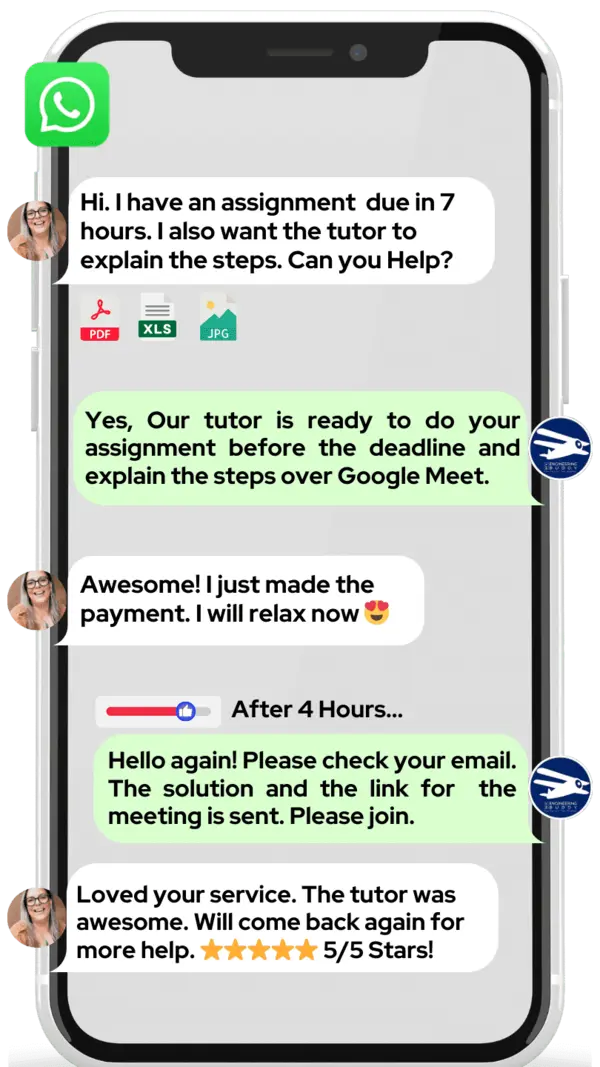



Hire The Best Forex trading Tutor
Top Tutors, Top Grades. Without The Stress!

52,000+ Happy Students From Various Universities





How Much For Private 1:1 Tutoring & Hw Help?
Private 1:1 Tutoring and HW help Cost $20 – 35 per hour* on average.
Most students who struggle with Forex trading don’t lack effort — they lack a tutor who can explain why their position sizing just blew 3% of a demo account in one trade.
Forex trading Tutor Online
Forex trading is the exchange of currency pairs on global decentralised markets, involving technical analysis, fundamental macroeconomic drivers, risk management, and order execution — equipping participants to trade major, minor, and exotic pairs with disciplined strategy.
Finding a Forex trading tutor near me who understands pip calculations, leverage ratios, and the specific frameworks taught in your finance course or professional programme is harder than it sounds. MEB’s 1:1 online tutoring and homework help covers the full breadth of Finance — and Forex trading in particular, from currency pair mechanics to advanced position management. Tutors are matched to your syllabus, your exam board, and your timeline. One diagnostic session identifies exactly where the gaps are.
- 1:1 online sessions tailored to your specific course or syllabus
- Expert-verified tutors with subject-specific Forex trading knowledge
- Flexible time zones — US, UK, Canada, Australia, Gulf
- Structured learning plan built after a diagnostic session
- Ethical homework and assignment guidance — you understand before you submit
52,000+ students across the US, UK, Canada, Australia, and the Gulf have used MEB since 2008 — including students in Finance subjects like Forex trading, Futures and Options, and International Financial Management.
Source: My Engineering Buddy, 2008–2025.
How Much Does a Forex trading Tutor Cost?
Rates run $20–$40/hr for most undergraduate and graduate Forex trading modules. Specialist tutors covering professional trading certifications or quantitative FX strategy go up to $100/hr. The $1 trial gives you 30 minutes of live tutoring or a full explanation of one homework question — no registration needed.
| Level / Need | Typical Rate | What’s Included |
|---|---|---|
| Standard (undergraduate / most levels) | $20–$35/hr | 1:1 sessions, homework guidance |
| Advanced / Specialist (grad-level, certifications) | $35–$100/hr | Expert tutor, niche depth, quantitative FX |
| $1 Trial | $1 flat | 30 min live session or 1 homework question explained |
Tutor availability tightens around semester end dates and CFA/CFP exam windows. Book early if your deadline is within four weeks.
WhatsApp MEB for a quick quote — average response time under 1 minute.
Who This Forex trading Tutoring Is For
This is for finance students and professionals who need to understand Forex markets well enough to explain their reasoning — not just follow signals. Whether your course covers spot markets or you’re writing a dissertation on exchange-rate volatility, the gap between reading about Forex and actually applying it is where tutoring makes the difference.
- Undergraduate finance students with Forex modules they’re behind on
- Graduate and MBA students tackling international finance coursework
- Students retaking after a failed first attempt at a finance exam
- Students with a university conditional offer depending on this grade
- CFA, CFP, or financial certification candidates covering FX content
- Students writing dissertations or research papers on currency markets
Students have come to MEB from programmes at universities including NYU Stern, London School of Economics, University of Toronto, University of Melbourne, IE Business School, and HEC Paris. The $1 trial is the fastest way to check if the tutor fit is right.
At MEB, we’ve found that Forex trading students often arrive having memorised candlestick patterns without understanding what drives the underlying currency move. That gap — between pattern recognition and macroeconomic cause — is where most exam answers fall short, and it’s exactly what a first diagnostic session is designed to surface.
1:1 Tutoring vs Self-Study vs AI vs YouTube vs Online Courses
Self-study works if you’re disciplined, but Forex trading has no feedback loop for bad habits in position sizing or risk management. AI tools explain concepts fast but can’t diagnose why your specific trade analysis keeps missing the interbank flow logic. YouTube covers chart setups well and stops completely when your textbook problem uses a cross-rate you haven’t seen. Online courses are structured but move at a fixed pace — they won’t pause because you’re stuck on the carry trade mechanism. 1:1 tutoring with MEB is live, calibrated to your exact Forex trading course or certification module, and corrects errors in the moment — before they cost you on an exam or assignment.
Outcomes: What You’ll Be Able To Do in Forex trading
After targeted 1:1 sessions, students solve currency pair pricing problems with confidence, applying bid-ask spread calculations and pip value formulas correctly. They analyze macroeconomic indicators — interest rate differentials, inflation data, central bank policy — and explain how each one moves a major pair. Students model carry trade scenarios, present coherent technical analysis using support, resistance, and trend confirmation, and apply position sizing rules within a defined risk-reward framework. Every outcome is tied to a real task in your course — not a vague capability.
Based on feedback from 40,000+ sessions collected by MEB from 2022 to 2025, 58% of students improved by one full grade after approximately 20 hours of 1:1 tutoring in subjects like Forex trading. A further 23% achieved at least a half-grade improvement.
Source: MEB session feedback data, 2022–2025.
Try your first session for $1 — 30 minutes of live 1:1 tutoring or one homework question explained in full. No registration. No commitment. WhatsApp MEB now and get matched within the hour.
What We Cover in Forex trading (Syllabus / Topics)

Track 1: Forex Market Structure and Currency Mechanics
- Major, minor, and exotic currency pairs — conventions and quoting
- Spot, forward, and swap markets — how each operates and differs
- Bid-ask spreads, pip values, and lot size calculations
- Market participants: central banks, commercial banks, hedge funds, retail traders
- Market sessions (London, New York, Tokyo, Sydney) and liquidity windows
- Order types: market, limit, stop-loss, trailing stop
- Leverage and margin — mechanics, risks, and regulatory variation by region
Core texts: Currency Trading for Dummies (Brian Dolan), The Forex Trading Course (Abe Cofnas). Tutor references your course reading list where available.
Track 2: Technical and Fundamental Analysis
- Candlestick patterns — reading, confirmation signals, false breakouts
- Support, resistance, and trend line construction
- Moving averages (SMA, EMA), RSI, MACD — application and limitations
- Fibonacci retracement levels in FX price action
- Economic indicators: NFP, CPI, GDP, PMI — impact on major pairs
- Central bank policy divergence and interest rate differentials
- Carry trade mechanics — logic, risk, and historical examples
Core texts: Technical Analysis of the Financial Markets (John Murphy), Trading in the Zone (Mark Douglas). Supplemented by live chart work in sessions. For an overview of core finance and capital markets concepts, Khan Academy Finance and Capital Markets provides solid free foundational coverage.
Track 3: Risk Management, Trading Psychology, and Course Assignments
- Position sizing — percentage risk models, Kelly criterion basics
- Risk-reward ratios and how to structure trade plans for assignments
- Drawdown management — maximum drawdown, recovery factors
- Common exam question formats: case-based FX analysis, quantitative problems
- Assignment writing for Forex topics: structuring arguments, citing data sources
- Dissertation support — exchange rate modelling, empirical research design
Core texts: Market Wizards (Jack Schwager), International Financial Management (Madura). Tutors with quantitative finance backgrounds available for advanced modelling work.
What a Typical Forex trading Session Looks Like
The tutor opens by checking the previous session’s topic — say, you were working through interest rate parity and uncovered interest rate parity distinctions. They pull up the exact problem type you struggled with and walk through it on a digital pen-pad, showing each step visibly. You then attempt a similar problem — maybe a covered interest arbitrage calculation — while the tutor watches and corrects reasoning in real time. By the halfway point, you’re not just following; you’re explaining back. The session closes with a specific practice set: two to three problems on forward exchange rates, a note on which exam-style question format to focus on next, and a clear topic for the following session.
How MEB Tutors Help You with Forex trading (The Learning Loop)
Diagnose: In the first session, the tutor identifies whether your gaps are conceptual (you don’t understand what drives a currency move) or mechanical (you can’t execute the pip-value formula under exam conditions). These are different problems and need different fixes.
Explain: The tutor works through live problems using a digital pen-pad — showing the carry trade calculation, drawing the forward rate diagram, annotating the candlestick chart. You see every step, not just the answer.
Practice: You attempt the next problem yourself, with the tutor present. This is where most tutoring fails — students watch but don’t do. MEB sessions are structured so you’re working, not observing.
Feedback: Every error gets a specific correction. Not “that’s wrong” — but “you applied the bid rate where the ask rate applies here, and on an exam that costs you the full mark.” That precision is what moves grades.
Plan: The session ends with a clear next-topic sequence. If your exam is six weeks out, the tutor maps which Forex topics need the most sessions and which ones you can consolidate with solo practice.
Sessions run on Google Meet. The tutor uses a digital pen-pad or iPad with Apple Pencil. Before your first session, share your course outline or exam syllabus, any past paper attempts you’ve struggled with, and your exam or submission date. The tutor handles the rest. Start with the $1 trial — 30 minutes of live tutoring that also serves as your first diagnostic.
Students consistently tell us that the moment things click in Forex trading isn’t when they finally read the right chapter — it’s when a tutor catches the specific reasoning error they’ve been repeating for weeks and explains exactly why it’s wrong. That correction rarely happens in a lecture hall or a study group.
Tutor Match Criteria (How We Pick Your Tutor)
Not every finance tutor can teach Forex trading at the level your course demands. Here’s what MEB checks before making a match.
Subject depth: The tutor must have covered Forex trading specifically — not just general finance. For undergraduate modules, that means familiarity with your institution’s syllabus structure. For certifications, it means the relevant exam content.
Tools: Every tutor works on Google Meet with a digital pen-pad or iPad and Apple Pencil — so the session is visual and interactive, not a phone call with slides.
Time zone: Matched to your region — US, UK, Gulf, Canada, or Australia. No 3am sessions.
Goals: The match accounts for whether you need exam score improvement, conceptual depth, homework completion, or research support for a dissertation on FX markets.
Unlike platforms where you fill out a form and wait, MEB responds in under a minute, 24/7. Tutor match takes under an hour. The $1 trial means you test before you commit. Everything runs over WhatsApp — no logins, no intake forms.
Study Plans (Pick One That Matches Your Goal)
Catch-up (1–3 weeks): for students behind on Forex content before a submission or exam — the tutor prioritises the highest-yield topics first. Exam prep (4–8 weeks): structured revision across all Forex trading tracks, past paper practice built in from week two. Weekly support: ongoing sessions aligned to your semester schedule and assignment deadlines, with the tutor tracking your progress across topics. The tutor builds the specific sequence after the first diagnostic session — no generic plan applied before your gaps are known.
Pricing Guide
Most Forex trading tutoring runs $20–$40/hr. Graduate-level FX modelling, quantitative research support, or professional certification prep can reach $100/hr depending on tutor background and topic complexity.
Rate factors: your course level, the complexity of the Forex topic (spot markets vs. quantitative FX derivatives), your timeline, and tutor availability. For students targeting roles at trading desks, hedge funds, or professional certification in financial markets, tutors with active industry or research backgrounds are available at higher rates — share your specific goal and MEB will match the right tier.
Availability tightens sharply in the four weeks before major finance exam periods. Start early.
Start with the $1 trial — 30 minutes, no registration, no commitment. WhatsApp MEB for a quick quote.
MEB has covered Finance and related subjects — including derivatives pricing, portfolio management, and Forex trading — for students across 40+ countries since 2008, with 52,000+ students served and a 4.8/5 rating.
Source: My Engineering Buddy, 2008–2025.
FAQ
Is Forex trading hard?
Forex trading is genuinely challenging. The mechanics — pip values, leverage, forward rates — are learnable with structured help. The harder part is applying macroeconomic reasoning under exam conditions. Most students find the conceptual layer harder than the calculations.
How many sessions are needed?
Students with specific exam topics to close typically need 6–12 sessions. Those building from a weak foundation across all Forex content benefit from 15–20 sessions spread over a semester. The tutor assesses this after the first diagnostic.
Can you help with homework and assignments?
MEB tutoring is guided learning — you understand the work, then submit it yourself. The tutor explains the Forex concept or method behind the question so you can complete and submit the work. See our Academic Integrity policy and Why MEB page for full details on what we help with and what we don’t.
Will the tutor match my exact syllabus or exam board?
Yes. Share your course outline, institution, and exam format when you message MEB. Tutors are matched based on those specifics — not assigned generically from a finance pool.
What happens in the first session?
The tutor runs a short diagnostic — usually 10 minutes of targeted questions — to locate your exact gaps in Forex trading. The remaining time covers the highest-priority topic. You leave with a clear plan for subsequent sessions.
Is online tutoring as effective as in-person?
For Forex trading, yes. Chart analysis, worked calculations, and case-based problems all transfer well to a shared screen with a digital pen-pad. Students in the US, UK, and Gulf report equivalent outcomes to in-person sessions in MEB feedback data.
Can I get Forex trading help late at night?
MEB operates 24/7 across time zones. Students in the Gulf, Australia, and North America regularly book late-night or early-morning Forex sessions. WhatsApp response time averages under a minute regardless of when you message.
What if I don’t like my assigned Forex tutor?
Say so via WhatsApp and MEB will rematch you — usually within the hour. The $1 trial exists specifically so you can test the fit before committing to a full session schedule.
Do you cover both technical and fundamental analysis for Forex?
Yes. Most university Forex modules and professional finance programmes require both. Tutors cover candlestick patterns, trend analysis, and indicator use alongside macroeconomic drivers like interest rate policy, CPI releases, and central bank divergence.
What is the difference between a Forex trading course and what MEB offers?
Pre-recorded Forex courses move at a fixed pace and can’t adapt to your specific errors. MEB tutoring is live, responsive to your exact confusion in the moment, and tied to your actual course or certification syllabus — not a generic curriculum.
How do Forex pip and lot calculations appear in finance exams?
Exam questions typically give a currency pair, a position size in standard or mini lots, and a pip movement — then ask for profit or loss in the account currency. Tutors walk through the exact formula structure and common error patterns that cost marks.
How do I get started?
Message MEB on WhatsApp with your subject, exam board or course name, and your timeline. MEB matches you with a verified Forex trading tutor. Your first session is the $1 trial — 30 minutes live or one question fully explained.
Trust & Quality at My Engineering Buddy
Every MEB tutor goes through a structured screening process: subject-specific vetting, a live demo evaluation, and ongoing review based on student feedback after sessions. Tutors covering Forex trading hold degrees in finance, economics, or financial mathematics — and many have professional trading, asset management, or financial research experience. Rated 4.8/5 across 40,000+ verified reviews on Google.
MEB tutoring is guided learning — you understand the work, then submit it yourself. For full details on what we help with and what we don’t, read our Academic Integrity policy and Why MEB.
MEB has served 52,000+ students across the US, UK, Canada, Australia, Gulf, and Europe since 2008 — in 2,800+ subjects. Finance is one of the platform’s strongest subject areas, with tutors covering Forex trading alongside investment analysis tutoring, financial economics help, and options strategy trading tutoring. Read more about how sessions are structured at MEB’s tutoring methodology page.
Explore Related Subjects
Students studying Forex trading often also need support in:
- Alternative Investments
- Capital Asset Pricing Model (CAPM)
- Credit Risk
- Cryptocurrency
- Fixed Income Securities
- Money and Banking
- Securities Analysis
- Valuation
Next Steps
When you message MEB, share your exam board or course name, the Forex trading topics you’re finding hardest, and your exam or submission date. Include your time zone and availability. MEB matches you with a verified Forex trading tutor — usually within 24 hours, often faster.
Before your first session, have ready:
- Your syllabus or course outline (or the name of your institution and module)
- A recent past paper attempt or homework question you struggled with
- Your exam date or assignment deadline
The tutor handles everything from there. Visit www.myengineeringbuddy.com for more on how MEB works.
WhatsApp to get started or email meb@myengineeringbuddy.com.
Reviewed by Subject Expert
This page has been carefully reviewed and validated by our subject expert to ensure accuracy and relevance.