Hire Verified & Experienced
Futures and Options Tutors
4.8/5 40K+ session ratings collected on the MEB platform
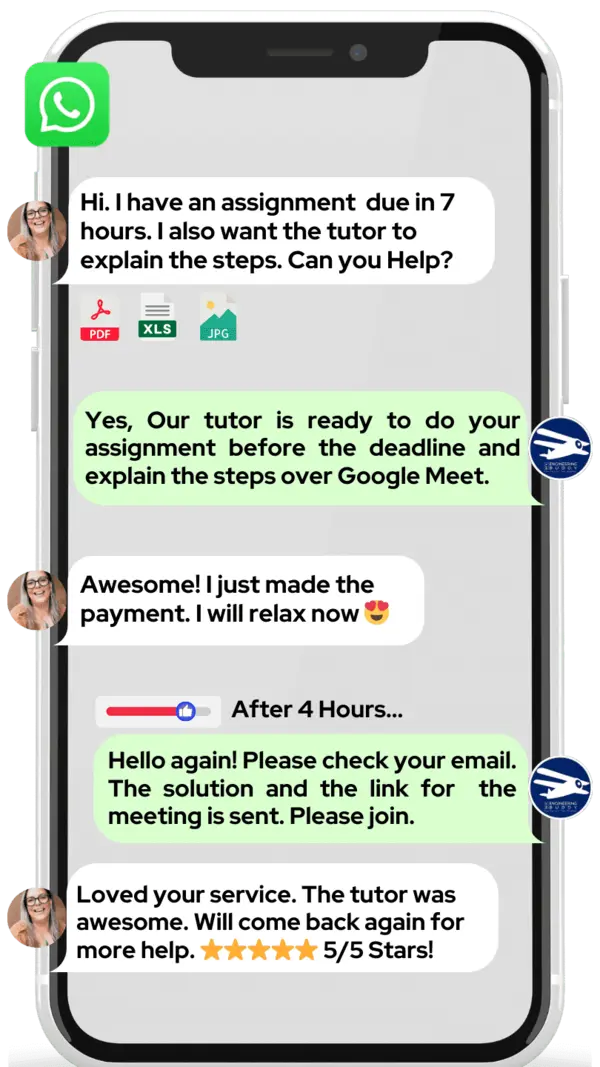



Hire The Best Futures and Options Tutor
Top Tutors, Top Grades. Without The Stress!

52,000+ Happy Students From Various Universities



How Much For Private 1:1 Tutoring & Hw Help?
Private 1:1 Tutoring and HW help Cost $20 – 35 per hour* on average.
Most students who struggle with Futures and Options aren’t bad at finance — they’ve never had someone walk them through delta, gamma, or payoff diagrams in real time.
Futures and Options Tutor Online
Futures and Options is a branch of derivatives finance covering standardised contracts to buy or sell assets at predetermined prices. It equips students to price, hedge, and trade instruments across equity, commodity, and interest rate markets.
MEB offers finance tutoring across 2,800+ advanced subjects, including 1:1 online Futures and Options tutoring matched to your exact course, exam board, or CFA/FRM module. Whether you’re searching for a Futures and Options tutor near me or need someone who can work through Black-Scholes derivations live on screen, MEB connects you with a verified expert — usually within the hour. Sessions start at $20/hr, and your first one costs $1.
- 1:1 online sessions aligned to your exact syllabus or professional certification module
- Expert-verified tutors with subject-specific knowledge in derivatives pricing and risk management
- Flexible time zones — US, UK, Canada, Australia, Gulf covered
- Structured learning plan built after a diagnostic session
- Ethical homework and assignment guidance — you understand the work before you submit it
52,000+ students across the US, UK, Canada, Australia, and the Gulf have used MEB since 2008 — including students in Finance subjects like Futures and Options, Financial Derivatives, and Options Strategy & Trading.
Source: My Engineering Buddy, 2008–2025.
How Much Does a Futures and Options Tutor Cost?
Most Futures and Options tutoring sessions run $20–$40/hr depending on level and complexity. Graduate-level and professional certification modules (CFA Level 2, FRM Part 2) can run up to $100/hr. Your first session costs just $1 — 30 minutes live or one full homework question explained.
| Level / Need | Typical Rate | What’s Included |
|---|---|---|
| Standard (undergrad / MBA) | $20–$40/hr | 1:1 sessions, homework guidance |
| Advanced / CFA / FRM | $40–$100/hr | Expert tutor, exam-board-specific depth |
| $1 Trial | $1 flat | 30 min live session or 1 homework question |
Availability tightens significantly around CFA exam windows and end-of-semester deadlines. Book early to secure your preferred tutor.
WhatsApp MEB for a quick quote — average response time under 1 minute.
Who This Futures and Options Tutoring Is For
This is for students who know the theory exists but can’t apply it under exam conditions. If you can define a call option but freeze when asked to construct a synthetic long or interpret an options payoff diagram, this is exactly the gap MEB tutors close.
- Undergraduate finance and economics students covering derivatives modules
- MBA students working through options pricing in financial markets courses
- CFA Level 1 and Level 2 candidates tackling derivatives and risk management readings
- FRM Part 1 candidates struggling with quantitative valuation questions
- Students retaking after a failed first attempt at a derivatives-heavy exam
- Parents watching a student’s confidence drop alongside their assignment grades in a markets course
Students at universities including NYU Stern, London School of Economics, University of Toronto, University of Melbourne, INSEAD, and IE Business School regularly cover Futures and Options as a core module. MEB tutors are familiar with how these programmes frame the material.
Start with the $1 trial — 30 minutes of live 1:1 tutoring that also doubles as your first diagnostic.
1:1 Tutoring vs Self-Study vs AI vs YouTube vs Online Courses
Self-study works if you’re disciplined — but most students hit a wall on Greeks calculations and have no one to tell them where they went wrong. AI tools give fast explanations; they can’t watch you work through a binomial tree and catch the step where you misapplied risk-neutral probabilities. YouTube covers futures contract mechanics well; it stops when you’re stuck on a specific exam question. Online courses move at a fixed pace with no room for your actual confusion. With MEB, a 1:1 derivatives pricing tutor is live with you, calibrating every session to your course materials and your specific errors in real time.
Outcomes: What You’ll Be Able To Do in Futures and Options
After consistent 1:1 sessions, students can solve futures pricing problems using cost-of-carry models with and without dividends, analyze options payoff diagrams for complex multi-leg strategies, model option sensitivities using delta and gamma in exam scenarios, explain the mechanics of hedging with futures contracts in commodity and equity markets, and apply put-call parity to identify arbitrage opportunities under exam conditions. These aren’t abstract capabilities — they map directly to the question types that appear in undergraduate finals, MBA exams, and CFA derivatives readings.
Based on feedback from 40,000+ sessions collected by MEB from 2022 to 2025, 58% of students improved by one full grade after approximately 20 hours of 1:1 tutoring in subjects like Futures and Options. A further 23% achieved at least a half-grade improvement.
Source: MEB session feedback data, 2022–2025.
At MEB, we’ve found that students who struggle with options pricing almost always have the same root problem: they’ve memorised the formula but never built intuition for what delta actually means in a live market context. One session on that single concept tends to unlock the rest.
What We Cover in Futures and Options (Syllabus / Topics)

Futures Contracts: Pricing, Mechanics, and Hedging
- Futures contract structure: margin, marking to market, settlement
- Cost-of-carry model: pricing futures on equities, indices, and commodities
- Convenience yield and its role in commodity futures pricing
- Basis risk and cross-hedging strategies
- Rolling futures positions and calendar spreads
- Interest rate futures: Eurodollar contracts and Treasury bond futures
- Hedging with futures: minimum variance hedge ratio calculations
Core texts: Hull’s Options, Futures, and Other Derivatives (10th ed.), McDonald’s Derivatives Markets, and Chance & Brooks An Introduction to Derivatives and Risk Management.
Options: Valuation, Greeks, and Strategies
- Call and put payoffs: profit diagrams for long and short positions
- Put-call parity and synthetic positions
- Binomial tree model: one-period and multi-period pricing
- Black-Scholes-Merton model: derivation, assumptions, and application
- The Greeks: delta, gamma, theta, vega, rho — interpretation and exam application
- Implied volatility and the volatility smile
- Multi-leg strategies: spreads, straddles, strangles, collars, and butterflies
- American vs European options: early exercise, dividends, and optimal stopping
Core texts: Hull’s Options, Futures, and Other Derivatives, Natenberg’s Option Volatility and Pricing, and Wilmott’s Paul Wilmott Introduces Quantitative Finance.
Risk Management and Professional Exam Applications
- Delta hedging and dynamic replication strategies
- Portfolio insurance using options and futures
- CFA derivatives readings: Level 1 (basic mechanics) through Level 2 (valuation models)
- FRM Part 1: quantitative valuation and risk measurement with derivatives
- Swaps as a bridge between fixed-income and derivatives modules
- Regulatory and margin frameworks: initial vs variation margin
Core texts: CFA Institute curriculum (Derivatives readings), Jorion’s Financial Risk Manager Handbook, and Hull’s Risk Management and Financial Institutions.
What a Typical Futures and Options Session Looks Like
The tutor opens by checking the previous session’s topic — usually a specific calculation type like minimum variance hedge ratios or binomial tree pricing — and running a quick question to confirm retention. Then the student and tutor work through the current problem set on screen: options payoff diagrams, Greeks calculations, or a multi-leg strategy construction. The tutor uses a digital pen-pad to annotate diagrams and walk through each step visually. The student replicates the method or explains the reasoning aloud before moving on. Sessions close with a concrete practice task — usually two or three exam-style questions — and a note of which topic opens next time. Nothing is left open-ended.
How MEB Tutors Help You with Futures and Options (The Learning Loop)
Diagnose: In the first session, the tutor identifies whether the gap is conceptual (the student doesn’t understand what a futures contract actually does economically) or technical (they understand the concept but can’t execute the Black-Scholes formula under exam pressure). These require different session plans.
Explain: The tutor works through live problems using a digital pen-pad — drawing payoff diagrams, annotating binomial trees, stepping through cost-of-carry derivations. Not a lecture. A worked example you follow and then replicate.
Practice: The student attempts the next problem while the tutor watches. This is the step most students skip when studying alone — and it’s the step that matters most for exam performance.
Feedback: The tutor identifies exactly where the error occurred — wrong sign on the hedge ratio, misapplied risk-neutral probability, incorrect treatment of dividends in the futures price formula. Marks are lost at specific steps; the feedback targets those steps.
Plan: Each session ends with a topic sequence for the next two or three sessions, aligned to your exam date or coursework deadline. Accountability built in.
Sessions run on Google Meet with a digital pen-pad or iPad and Apple Pencil for live annotation. Before your first session, share your course syllabus or exam reading list, one recent assignment or past paper attempt you found difficult, and your exam or deadline date. The tutor takes it from there. Start with the $1 trial — 30 minutes of live tutoring that also serves as your first diagnostic.
Students consistently tell us that the moment things click in Futures and Options is when they stop thinking about delta as a formula output and start thinking about it as the probability-weighted exposure of their position. That shift takes one focused session — not a semester.
Tutor Match Criteria (How We Pick Your Tutor)
MEB doesn’t assign the next available tutor. Match is based on four criteria.
Subject depth: The tutor must have covered your specific level — undergraduate elective, MBA core, CFA derivatives reading, or FRM quantitative module. A tutor strong in equity valuation is not automatically the right fit for options Greeks.
Tools: Every tutor works on Google Meet with a digital pen-pad or iPad and Apple Pencil. Futures and Options tutoring without live annotation is significantly less effective.
Time zone: Matched to your region — US, UK, Gulf, Canada, or Australia. No scheduling across unreasonable hour gaps.
Goals: Exam score improvement, conceptual depth, homework completion, or research-level support for a dissertation involving derivatives — the tutor match reflects the actual goal.
Unlike platforms where you fill out a form and wait, MEB responds in under a minute, 24/7. Tutor match takes under an hour. The $1 trial means you test before you commit. Everything runs over WhatsApp — no logins, no intake forms.
Study Plans (Pick One That Matches Your Goal)
Catch-up (1–3 weeks): for students behind on a derivatives module with an exam or assignment deadline approaching fast. The tutor prioritises the highest-yield topics first — usually options payoff mechanics, the binomial model, and the core Black-Scholes application. Exam prep (4–8 weeks): structured revision across the full Futures and Options syllabus, with past paper practice and timed problem sets built in. Weekly support: ongoing sessions aligned to your semester schedule, covering each topic as it appears on your course. The tutor maps the specific sequence after the diagnostic in session one.
Pricing Guide
Futures and Options tutoring starts at $20/hr for standard undergraduate and MBA-level content. Niche areas — CFA Level 2 derivatives, FRM quantitative valuation, graduate-level stochastic calculus applied to options — run up to $100/hr depending on tutor depth and session frequency.
Rate factors: level, topic complexity (Black-Scholes derivation vs basic futures mechanics), how close you are to your exam date, and tutor availability during peak CFA and semester-end windows.
For students targeting roles at investment banks, asset managers, or hedge funds — or aiming for top CFA/FRM scores — tutors with professional trading desk or quantitative research backgrounds are available at higher rates. Share your specific goal and MEB will match the tier to your ambition.
Start with the $1 trial — 30 minutes, no registration, no commitment. WhatsApp MEB for a quick quote.
Our experience across thousands of sessions shows that students who book a $1 trial and commit to a four-week plan consistently outperform those who cram alone in the final week. The gap isn’t talent — it’s feedback frequency.
FAQ
Is Futures and Options hard?
It’s genuinely difficult. The maths — Black-Scholes, binomial trees, Greeks — is precise and unforgiving under exam pressure. Most students find the conceptual layer manageable but struggle to execute calculations correctly and quickly. That’s exactly what 1:1 tutoring targets.
How many sessions do I need?
Students with a specific gap — one topic like options pricing or delta hedging — often need three to five sessions. Students preparing for a full derivatives module or CFA derivatives reading typically benefit from eight to fifteen sessions spread over four to six weeks.
Can you help with homework and assignments?
Yes. MEB tutoring is guided learning — you understand the work, then submit it yourself. See our Academic Integrity policy and Why MEB page for full details on what we help with and what we don’t.
Will the tutor match my exact syllabus or exam board?
Yes. Before matching, MEB asks for your course outline, exam reading list, or certification level. Tutors are matched to your specific material — not assigned generically. A CFA candidate gets a different tutor profile than an MBA student covering the same topics.
What happens in the first session?
The tutor runs a short diagnostic — usually two or three targeted questions covering the topics you’ve flagged as difficult. This identifies whether the gap is conceptual or computational, and the tutor builds the session plan from there. You won’t spend the first hour on material you already know.
Is online tutoring as effective as in-person for Futures and Options?
For a quantitative subject like this, yes — provided the tutor uses live annotation. Working through a payoff diagram or binomial tree on a shared screen with a digital pen-pad replicates the whiteboard experience. Most MEB students report no meaningful difference from in-person once they’ve had one session.
What’s the difference between CFA Level 1 and Level 2 derivatives tutoring?
Level 1 covers mechanics — how futures and options work, basic payoff structures, put-call parity. Level 2 goes into valuation models, Greeks, and hedging strategies in much more depth. MEB tutors are matched by level, so you get the right depth for your specific exam sitting.
Can I get Futures and Options help at midnight?
Yes. MEB operates 24/7 across all major time zones. WhatsApp MEB at any hour — average response time is under a minute. Sessions can be booked for early morning, late night, or weekends depending on tutor and student availability.
What if I don’t understand volatility and the Greeks — can a tutor start from scratch?
Absolutely. Many students arrive having covered the Black-Scholes formula without genuinely understanding what vega or gamma mean in practice. The tutor will establish your baseline in the first session and build from there — no assumed knowledge beyond what you’ve confirmed you have.
Do you offer help with futures and options for commodities specifically?
Yes. Commodity futures — oil, agricultural products, metals — have specific pricing features like convenience yield and storage costs that differ from equity futures. MEB has tutors with commodity markets experience for students covering this in energy finance, agricultural economics, or commodity trading programmes.
How do I get started?
WhatsApp MEB, get matched to a verified tutor usually within the hour, and start your $1 trial — 30 minutes of live 1:1 tutoring or one full homework question explained. Three steps: message, match, start.
Can you help with a dissertation or research project on derivatives pricing models?
Yes. MEB supports graduate and PhD students working on quantitative finance research — including stochastic calculus, Monte Carlo simulation for options pricing, and empirical work on volatility surfaces. Share your research question and the tutor match will reflect the specific technical depth needed.
Trust & Quality at My Engineering Buddy
Every MEB tutor goes through subject-specific screening before taking a session. That means a live demo evaluation on the actual subject — not a generic maths test — plus verification of academic qualifications and professional experience in derivatives, risk management, or quantitative finance. Tutor profiles are reviewed against student session feedback on an ongoing basis. Rated 4.8/5 across 40,000+ verified reviews on Google.
MEB tutoring is guided learning — you understand the work, then submit it yourself. For full details on what we help with and what we don’t, read our Academic Integrity policy and Why MEB.
MEB has been serving students in the US, UK, Canada, Australia, Gulf, and Europe since 2008 — across 2,800+ subjects including Finance and related areas like quantitative finance tutoring, investment analysis tutoring, and portfolio management help. The platform has served 52,000+ students since launch and maintains a consistent 4.8/5 rating across review platforms. See the MEB tutoring methodology for how sessions are structured from diagnostic to exam readiness.
A common pattern our tutors observe is that students who are close to passing — scoring 58–62% when they need 65 — are often making the same two or three errors repeatedly. Finding those errors and correcting them directly is faster than reviewing the whole syllabus again.
Explore Related Subjects
Students studying Futures and Options often also need support in:
- Alternative Investments
- Capital Asset Pricing Model (CAPM)
- Credit Risk
- Fixed Income Securities
- Forex Trading
- Securities Analysis
- Quantitative Analysis
- Valuation
Next Steps
Before your first session, have ready: your exam board and syllabus or course outline, a recent past paper attempt or homework question you struggled with, and your exam or deadline date. The tutor handles the rest.
- Share your exam board or course module, your hardest topic, and your current timeline
- Share your availability and time zone
- MEB matches you with a verified Futures and Options tutor — usually within 24 hours, often within the hour
First session starts with a diagnostic so every minute is used well. Visit www.myengineeringbuddy.com for more on how MEB works.
WhatsApp to get started or email meb@myengineeringbuddy.com.
Reviewed by Subject Expert
This page has been carefully reviewed and validated by our subject expert to ensure accuracy and relevance.