Hire Verified & Experienced
Islamic Banking & Finance Tutors
4.8/5 40K+ session ratings collected on the MEB platform



Hire The Best Islamic Banking & Finance Tutor
Top Tutors, Top Grades. Without The Stress!
52,000+ Happy Students From Various Universities



How Much For Private 1:1 Tutoring & Hw Help?
Private 1:1 Tutoring and HW help Cost $20 – 35 per hour* on average.
Most students hit a wall on Sharia compliance frameworks — not because the concepts are impossible, but because no one walked them through murabaha versus ijara with a real example.
Islamic Banking & Finance Tutor Online
Islamic Banking & Finance is a discipline governing financial systems under Sharia law, prohibiting interest (riba) and speculative contracts (gharar), and using instruments like murabaha, sukuk, and ijara. It equips students to analyse and structure Sharia-compliant financial products and institutions.
If you have searched for an Islamic Banking & Finance tutor near me, MEB offers 1:1 online tutoring and homework help across the full Finance discipline — including Islamic Banking & Finance at undergraduate, postgraduate, and professional certification level. Tutors are matched to your exact module, institution, and assessment format. No generic overviews. No shared sessions.
- 1:1 online sessions tailored to your specific course or syllabus
- Expert-verified tutors with subject-specific knowledge of Sharia-compliant finance
- Flexible time zones — US, UK, Canada, Australia, Gulf
- Structured learning plan built after a diagnostic session
- Ethical homework and assignment guidance — you understand before you submit
52,000+ students across the US, UK, Canada, Australia, and the Gulf have used MEB since 2008 — including students in Finance subjects like Islamic Banking & Finance, Investment Banking tutoring, and Fixed Income Securities help.
Source: My Engineering Buddy, 2008–2025.
How Much Does an Islamic Banking & Finance Tutor Cost?
Rates run $20–$40/hr for most undergraduate and postgraduate modules. Graduate-level or professional certification work can reach $70–$100/hr depending on tutor background. You can test the service for $1 — 30 minutes of live tutoring or a full explanation of one homework question.
| Level / Need | Typical Rate | What’s Included |
|---|---|---|
| Standard (undergraduate) | $20–$35/hr | 1:1 sessions, homework guidance |
| Advanced / Postgraduate | $35–$70/hr | Expert tutor, niche depth, thesis support |
| $1 Trial | $1 flat | 30 min live session or 1 homework question |
Tutor availability tightens in April–May and October–November during peak exam periods. WhatsApp MEB for a quick quote — average response time under 1 minute.
Who This Islamic Banking & Finance Tutoring Is For
Islamic Banking & Finance sits at an unusual intersection of legal scholarship, economics, and financial practice. Students come to MEB when their lecture notes stop making sense and the exam is getting closer.
- Undergraduate students in Finance, Economics, or Business programs with an Islamic finance module
- Postgraduate and MBA students at institutions including Durham University, IE Business School, INCEIF, and Henley Business School
- Students working toward AAOIFI or CIMA Islamic finance certifications
- Students who failed a first attempt and need to clear the resit
- Students with a conditional postgraduate offer that depends on passing this module
- Parents watching a child’s confidence drop as sukuk structures and profit-sharing ratios pile up
- Working professionals in Gulf banking who need to bridge their conventional finance background with Sharia principles
1:1 Tutoring vs Self-Study vs AI vs YouTube vs Online Courses
Self-study works if you’re disciplined — but Islamic Banking & Finance involves interpretive legal frameworks where misreading one principle cascades into wrong answers everywhere. AI tools explain riba fast, but they can’t diagnose why your specific mudarabah question keeps going wrong. YouTube covers the basics of sukuk structures but stops when you need to model one. Online courses move at a fixed pace regardless of where you are. 1:1 tutoring with MEB is live, calibrated to your exact module syllabus, and corrects your reasoning errors in real time — which matters when the difference between a pass and a fail is understanding the legal basis of a contract.
Outcomes: What You’ll Be Able To Do in Islamic Banking & Finance
After structured sessions with an MEB tutor, you’ll be able to explain the Sharia prohibition on riba and apply it to real banking products; analyse the contractual structure of murabaha, ijara, and diminishing musharakah; model sukuk cash flows and compare them against conventional bond structures; evaluate the role of the Sharia Supervisory Board in product approval; and write exam answers that correctly cite AAOIFI standards and fiqh principles without conflating schools of thought.
At MEB, we’ve found that the students who struggle most in Islamic Banking & Finance are not weak at finance — they’ve simply never had someone connect the fiqh reasoning to the financial structure in one sitting. Once that link is made, the whole subject clicks into place much faster than expected.
Based on feedback from 40,000+ sessions collected by MEB from 2022 to 2025, 58% of students improved by one full grade after approximately 20 hours of 1:1 tutoring in subjects like Islamic Banking & Finance. A further 23% achieved at least a half-grade improvement.
Source: MEB session feedback data, 2022–2025.
What We Cover in Islamic Banking & Finance (Syllabus / Topics)

Foundations of Islamic Finance
- Sources of Islamic law: Quran, Sunnah, ijma, and qiyas
- Prohibition of riba (interest) and its financial implications
- Prohibition of gharar (excessive uncertainty) and maysir (speculation)
- Halal and haram asset classes — screening criteria
- Role and structure of the Sharia Supervisory Board
- AAOIFI and IFSB regulatory standards
Core texts include Vogel & Hayes Islamic Law and Finance, Usmani An Introduction to Islamic Finance, and El-Gamal Islamic Finance: Law, Economics, and Practice.
Islamic Financial Instruments and Contracts
- Murabaha (cost-plus financing) — structure, documentation, and use cases
- Ijara (leasing) and diminishing musharakah (declining partnership)
- Mudarabah (profit-sharing) and musharakah (equity partnership)
- Salam and istisna contracts for deferred delivery financing
- Sukuk — types, cash flow modelling, and comparison with conventional bonds
- Takaful — cooperative insurance structure and fund management
- Waqf and zakat as Islamic social finance instruments
Texts include Ayub Understanding Islamic Finance and Iqbal & Mirakhor An Introduction to Islamic Finance: Theory and Practice.
Islamic Banking Operations and Contemporary Issues
- Structure of Islamic banks: two-tier mudarabah model
- Asset and liability management in Sharia-compliant institutions
- Liquidity management tools — commodity murabaha and Islamic repos
- Fintech and digital banking under Islamic finance frameworks
- ESG and ethical finance: convergence with Islamic principles
- Cross-border Islamic finance — Gulf, Malaysia, and UK regulatory comparison
Reference texts include Hassan & Lewis Handbook of Islamic Banking and course-specific readings from AAOIFI standards publications.
Students consistently tell us that Islamic Banking & Finance feels like two subjects at once — religious law and financial analysis. Our tutors treat it as exactly that and run separate diagnostic checks on both before mapping a session plan. It saves significant time.
What a Typical Islamic Banking & Finance Session Looks Like
The tutor opens by checking what happened with the previous topic — usually murabaha documentation or sukuk cash flow modelling. From there, you work through a live problem on screen: the tutor might walk through the structure of a diminishing musharakah home financing arrangement, asking you at each step to confirm the contractual logic before the numbers appear. The tutor uses a digital pen-pad to annotate the contract flow and mark where your reasoning deviated from the Sharia requirement. You then replicate the structure for a parallel ijara case. The session closes with a specific practice task — often a past exam question on Sharia board governance or takaful fund structure — and the next topic is logged before you disconnect.
How MEB Tutors Help You with Islamic Banking & Finance (The Learning Loop)
Diagnose: In the first session, the tutor identifies whether the gap is in fiqh principles, financial instrument mechanics, or exam technique. These require different fixes. Knowing which one is wrong first saves sessions.
Explain: The tutor works through live problems using a digital pen-pad — drawing contract flow diagrams, annotating sukuk term sheets, and showing how AAOIFI standards map to real product structures. No slides. No pre-recorded explanations.
Practice: You attempt the next problem with the tutor present. This is where most tutoring platforms stop. MEB tutors stay on screen while you work through it.
Feedback: Step-by-step error correction — not just the right answer, but why the answer is right and which Sharia principle you misapplied. That’s what exam markers look for.
Plan: Each session ends with a clear next topic, a specific reading or practice task, and a check-in point. Progress is tracked session to session.
Sessions run on Google Meet. The tutor uses a digital pen-pad or iPad with Apple Pencil for annotation. Before the first session, share your module outline or past paper — even a question you got wrong works. The first session serves as both a diagnostic and a working session. Start with the $1 trial — 30 minutes of live tutoring that also functions as your first diagnostic.
MEB tutors for Islamic Banking & Finance include professionals with backgrounds in Gulf banking, Sharia advisory roles, and academic finance departments — not generalist tutors reassigned to a finance module.
Source: My Engineering Buddy, 2008–2025.
Tutor Match Criteria (How We Pick Your Tutor)
Not every finance tutor understands Sharia-compliant instruments. MEB matches on specific criteria.
Subject depth: The tutor must have experience at your level — undergraduate module, postgraduate programme, or professional certification — and familiarity with your specific syllabus, whether that’s an AAOIFI-aligned course or a university module at Durham, INCEIF, or a Gulf institution.
Tools: Every tutor works on Google Meet with a digital pen-pad or iPad and Apple Pencil. No exceptions — annotation is essential for contract structure diagrams.
Time zone: Matched to your region — US, UK, Gulf, Canada, Australia. Gulf-based students are a significant part of the MEB base for this subject, and tutor availability reflects that.
Goals: Whether you’re after a pass grade, a distinction, a better grasp of sukuk for a role in Islamic finance, or research-level support — the tutor brief is set to match.
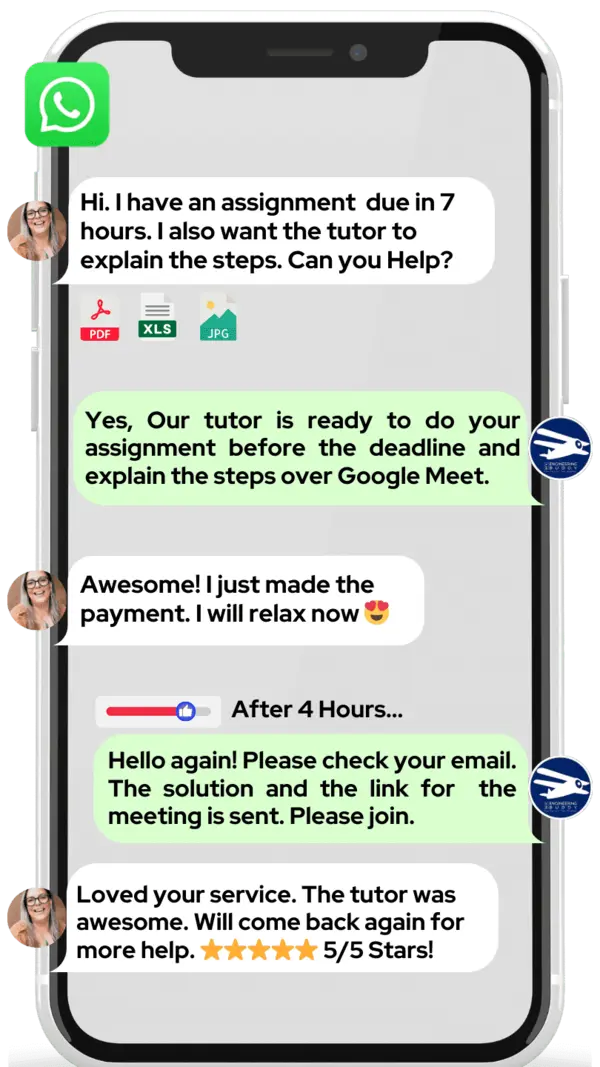
Unlike platforms where you fill out a form and wait, MEB responds in under a minute, 24/7. Tutor match takes under an hour. The $1 trial means you test before you commit. Everything runs over WhatsApp — no logins, no intake forms.
Study Plans (Pick One That Matches Your Goal)
For students with an exam or assignment deadline, the tutor builds a specific session sequence after the first diagnostic. A catch-up plan covers the highest-weighted topics fast — typically two to three weeks of intensive work on instruments and Sharia principles. An exam prep plan runs four to eight weeks, structured around past papers and mark schemes. Ongoing weekly support tracks your semester deadlines and coursework submissions. The tutor decides the sequence after seeing where you actually are, not where the syllabus says you should be.
Pricing Guide
Most Islamic Banking & Finance tutoring runs $20–$40/hr. Postgraduate and professional certification work, or tutors with Sharia advisory or Gulf banking backgrounds, sits in the $60–$100/hr range. Rate factors include your level, the complexity of the topic, your timeline, and tutor availability.
Availability is limited in April–May and the weeks before Gulf semester exams. Book early if you have a fixed deadline.
For students targeting roles in Gulf financial institutions, Sharia advisory firms, or AAOIFI certification, tutors with professional industry backgrounds are available at higher rates — share your specific goal and MEB will match the tier to your ambition.
Start with the $1 trial — 30 minutes, no registration, no commitment. WhatsApp MEB for a quick quote.
FAQ
Is Islamic Banking & Finance hard?
It is genuinely demanding because it requires fluency in both Sharia legal reasoning and financial analysis — two frameworks most students have not studied together before. The difficulty is real but manageable with structured support that addresses both sides simultaneously.
How many sessions are needed?
Most students need 8–15 sessions to cover core instruments and exam technique. Students targeting distinction level or with significant prior gaps typically benefit from 20 or more hours spread across a semester. The tutor maps this after the first diagnostic.
Can you help with homework and assignments?
MEB tutoring is guided learning — you understand the work, then submit it yourself. If your assignment involves structuring a murabaha contract or analysing a sukuk prospectus, the tutor explains the method and you produce the answer. See our Academic Integrity policy and Why MEB page for full details on what we help with and what we don’t.
Will the tutor match my exact syllabus or exam board?
Yes. Before the first session, share your module outline, institution, and any past papers or assignment briefs. The tutor reviews these and structures sessions accordingly — whether your course follows AAOIFI standards, a university-specific curriculum, or a professional certification framework.
What happens in the first session?
The tutor runs a short diagnostic — usually a mix of concept questions and one applied problem. This identifies whether your gap is in fiqh principles, instrument mechanics, or exam writing. The rest of the session addresses the most urgent gap directly.
Is online tutoring as effective as in-person?
For Islamic Banking & Finance, online works well because the core tools are annotation and diagram-based explanation — both of which a digital pen-pad on Google Meet handles cleanly. Most MEB students in the Gulf and UK attend entirely online throughout their course.
What is the difference between mudarabah and musharakah, and why does it matter for exams?
Mudarabah is a profit-sharing contract where one party provides capital and the other manages it — losses fall on the capital provider. Musharakah is a joint equity partnership where all parties share both profit and loss. Examiners test this distinction directly. Confusing the two in a case study answer typically costs significant marks.
Can MEB help with AAOIFI certification preparation?
Yes. MEB tutors familiar with AAOIFI standards — including the Certified Islamic Finance Executive (CIFE) and Certified Sharia Adviser and Auditor (CSAA) syllabi — are available. Share your exam date and target paper and MEB will match a tutor accordingly.
Do you offer help specifically for Gulf-based students or Gulf-institution syllabi?
Yes. A significant portion of MEB’s Islamic Banking & Finance students are based in the UAE, Saudi Arabia, Qatar, Kuwait, Bahrain, and Oman. Tutors are available across Gulf time zones and familiar with regional institution syllabi and the regulatory landscape of Gulf Islamic banking sectors.
Can I get help at midnight or over the weekend?
MEB operates 24/7 across time zones. WhatsApp response time is typically under a minute. If your deadline is Sunday night or your exam is Monday morning, that is exactly when MEB is designed to be available.
How do I get started?
WhatsApp MEB with your subject, institution, and exam date. You’ll be matched with a tutor — usually within an hour. The first session starts with a diagnostic. Three steps: WhatsApp, get matched, start the $1 trial. No registration required.
Trust & Quality at My Engineering Buddy
Every MEB tutor for Islamic Banking & Finance goes through a screening process that includes a live demo evaluation, subject-specific vetting on both Sharia principles and financial instrument knowledge, and ongoing feedback review after each session. Tutors hold relevant degrees — typically in Finance, Economics, Islamic Studies, or Law — and a significant portion have professional backgrounds in Gulf banking, Sharia advisory, or academic finance departments. Rated 4.8/5 across 40,000+ verified reviews on Google.
MEB tutoring is guided learning — you understand the work, then submit it yourself. For full details on what we help with and what we don’t, read our Academic Integrity policy and Why MEB.
MEB has served 52,000+ students across the US, UK, Canada, Australia, Gulf, and Europe in 2,800+ subjects since 2008. Within Finance, this includes Islamic Banking & Finance alongside subjects like credit risk tutoring, portfolio management help, and international financial management tutoring. The platform is built for advanced and niche subjects — not introductory content you can find on YouTube.
Try your first session for $1 — 30 minutes of live 1:1 tutoring or one homework question explained in full. No registration. No commitment. WhatsApp MEB now and get matched within the hour.
Explore Related Subjects
Students studying Islamic Banking & Finance often also need support in:
- Alternative Investments
- Asset Management
- Capital Budgeting
- Money and Banking
- Securities Analysis
- Financial Technology (FinTech)
- Investment Management
Islamic Banking & Finance draws students from across the Gulf, UK, and Southeast Asia — regions where demand for Sharia-compliant financial expertise in professional and academic settings has grown consistently. The ACCA recognises Islamic finance competency as increasingly relevant to professional accountancy qualifications globally.
Source: ACCA, accaglobal.com.
Next Steps
Before your first session, have ready: your exam board or module outline, a recent past paper attempt or assignment you struggled with, and your exam or deadline date.
- Share your syllabus, hardest topic, and current timeline
- Share your availability and time zone
- MEB matches you with a verified Islamic Banking & Finance tutor — usually within 24 hours
- First session starts with a diagnostic so every minute is used well
Visit www.myengineeringbuddy.com for more on how MEB works.
WhatsApp to get started or email meb@myengineeringbuddy.com.
Reviewed by Subject Expert
This page has been carefully reviewed and validated by our subject expert to ensure accuracy and relevance.