

Hire Verified & Experienced
Morphology (linguistics) Tutors
4.8/5 40K+ session ratings collected on the MEB platform
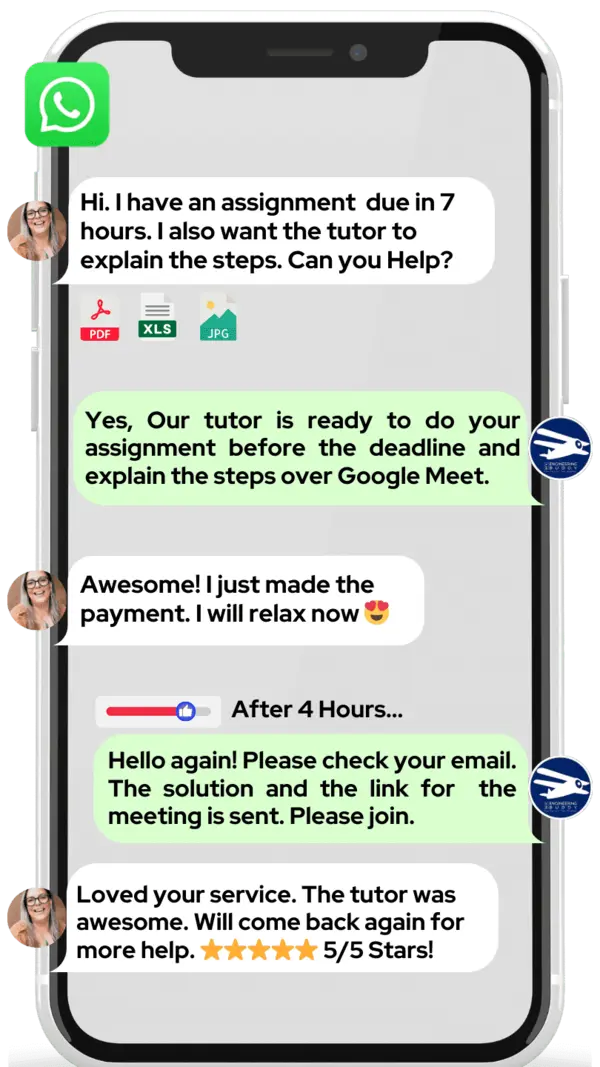



Hire The Best Morphology (linguistics) Tutor
Top Tutors, Top Grades. Without The Stress!
52,000+ Happy Students From Various Universities



How Much For Private 1:1 Tutoring & Hw Help?
Private 1:1 Tutoring and HW help Cost $20 – 35 per hour* on average.
Most students don’t fail morphology because the concepts are impossible. They fail because nobody walked them through allomorphy or derivational paradigms at the right speed, with examples from their actual course materials.
Morphology (Linguistics) Tutor Online
Morphology is the branch of linguistics that studies the internal structure of words — how morphemes combine to form complex words through inflection, derivation, and compounding — equipping students to analyse word formation patterns across languages.
MEB offers 1:1 online tutoring and homework help in 2800+ advanced subjects, including morphology (linguistics). If you’ve typed “morphology linguistics tutor near me” into a search bar at 11 p.m. before a linguistics exam, you’re in the right place. Our tutors work with your exact course readings, your specific problem sets, and your exam board’s expectations. No generic explanations — just targeted help that moves the needle.
- 1:1 online sessions tailored to your course syllabus and reading list
- Expert-verified tutors with subject-specific knowledge in morphological theory and analysis
- Flexible time zones — US, UK, Canada, Australia, Gulf
- Structured learning plan built after a diagnostic session
- Ethical homework and assignment guidance — you understand the work, then submit it yourself
52,000+ students across the US, UK, Canada, Australia, and the Gulf have used MEB since 2008 — including students in linguistics subjects like morphology, syntax, and phonology.
Source: My Engineering Buddy, 2008–2025.
How Much Does a Morphology (Linguistics) Tutor Cost?
Rates start at $20–$40/hr for most undergraduate and graduate morphology courses. Specialist or advanced theory sessions — covering frameworks like Distributed Morphology or Optimality Theory — can reach $100/hr depending on tutor expertise. The $1 trial gets you 30 minutes of live tutoring or one homework question explained in full before you spend anything more.
| Level / Need | Typical Rate | What’s Included |
|---|---|---|
| Standard (most undergrad levels) | $20–$35/hr | 1:1 sessions, homework guidance |
| Advanced / Graduate / Specialist | $35–$100/hr | Expert tutor, theory depth, research support |
| $1 Trial | $1 flat | 30 min live session or 1 homework question |
Tutor availability drops sharply in the last two weeks before final exams. Book early if you’re working to a fixed deadline.
WhatsApp MEB for a quick quote — average response time under 1 minute.
Who This Morphology (Linguistics) Tutoring Is For
Morphology sits at an awkward point in most linguistics programmes — abstract enough to confuse students who breezed through introductory courses, but foundational enough that gaps here compound into bigger problems in syntax, phonology, and second language acquisition. MEB works with students at every stage.
- Undergraduate linguistics students struggling with morpheme analysis, allomorphy, or word-formation rules
- Graduate students whose morphology coursework feeds into thesis research on specific languages or typology
- Students retaking after a failed first attempt at a morphology module — rebuilding from the right point, not the beginning
- Students with a university conditional offer depending on their linguistics grade this semester
- Parents of first-year students who picked linguistics expecting grammar and got formal morphological theory instead
- Students needing homework and assignment guidance they can actually understand before they submit
Students come from programmes at institutions including UC Berkeley, University of Edinburgh, University of Toronto, University of Amsterdam, Australian National University, and Yale — all with different course structures and reading lists. Tutors adapt to the specific framework in use, whether that’s Halle & Marantz or Aronoff.
1:1 Tutoring vs Self-Study vs AI vs YouTube vs Online Courses
Self-study works if you’re disciplined, but morphology problems — especially allomorph distribution or paradigm gaps — need live correction, not a re-read. AI tools explain rules quickly but can’t tell why your analysis failed. YouTube covers the basics and stops exactly where your problem set starts. Online courses move at a fixed pace and won’t slow down for the one rule blocking you. 1:1 tutoring with MEB is calibrated to your exact morphology course — the tutor sees your work, corrects errors as they happen, and builds the session around what you don’t yet know.
Outcomes: What You’ll Be Able To Do in Morphology (Linguistics)
After working with an online morphology (linguistics) tutor through MEB, students consistently move from passive recognition to active analysis. You’ll be able to segment complex words into their constituent morphemes accurately, applying both item-and-arrangement and item-and-process models. You’ll analyse allomorphic variation and explain the phonological and morphological conditioning behind alternations. You’ll apply derivational and inflectional frameworks to novel data sets, including data from unfamiliar languages. You’ll write and defend morphological analyses in the format your specific course requires — tree diagrams, feature matrices, or prose argumentation.
Try your first session for $1 — 30 minutes of live 1:1 tutoring or one homework question explained in full. No registration. No commitment. WhatsApp MEB now and get matched within the hour.
Based on feedback from 40,000+ sessions collected by MEB from 2022 to 2025, 58% of students improved by one full grade after approximately 20 hours of 1:1 tutoring in subjects like morphology (linguistics). A further 23% achieved at least a half-grade improvement.
Source: MEB session feedback data, 2022–2025.
What We Cover in Morphology (Linguistics) (Syllabus / Topics)

Track 1: Foundational Morphology
- Morphemes, allomorphs, and morphs — definitions and identification
- Free vs bound morphemes; roots, stems, affixes, clitics
- Inflection vs derivation — criteria and cross-linguistic patterns
- Compounding types — endocentric, exocentric, copulative
- Productivity and the lexicon — what counts as a word
- Morphological typology — isolating, agglutinative, fusional, polysynthetic
Core texts for this track include Katamba & Stonham’s Morphology (2nd ed.) and Bauer’s Introducing Linguistic Morphology.
Track 2: Formal Morphological Theory
- Item-and-Arrangement (IA) vs Item-and-Process (IP) models
- Distributed Morphology — late insertion, vocabulary items, spell-out
- Lexical Morphology and Phonology — level ordering, stratum constraints
- Paradigm-based approaches — Word and Paradigm, Network Morphology
- Morphological conditioning of allomorphy — suppletive and phonologically conditioned
- Zero morphemes, portmanteau morphs, and cumulative exponence
- Interface between morphology and syntax — agreement, case, incorporation
Recommended readings include Halle & Marantz’s foundational papers on Distributed Morphology, Spencer’s Morphological Theory, and Aronoff’s Word Formation in Generative Grammar.
Track 3: Applied and Comparative Morphology
- Morphological analysis of data sets from typologically diverse languages
- Morphological parsing and annotation — preparing linguistic data
- Acquisition of morphology — first and second language developmental patterns
- Computational approaches to morphology — finite-state morphology, stemming
- Historical morphology — morphological change, analogy, reanalysis
- Morphology in clinical linguistics — agrammatism, specific language impairment
Relevant texts include Booij’s The Grammar of Words, Lieber’s Morphology and Lexical Semantics, and Stump’s Inflectional Morphology.
What a Typical Morphology (Linguistics) Session Looks Like
The tutor opens by checking the previous session’s topic — usually the conditioning environments for a specific allomorph set or a derivational rule the student was practising. The student shares their current problem set or essay draft on screen. Together they work through morpheme segmentation or paradigm construction in real time, with the tutor using a digital pen-pad to annotate structures and mark boundaries. When the student misapplies a rule — say, treating a suppletive allomorph as phonologically conditioned — the tutor catches it immediately, explains the distinction, and has the student replicate the correct analysis on a fresh example. The session closes with a specific practice task: analyse five new words using the same framework, or draft the argumentation section for a morphological analysis problem, ready to review next time.
How MEB Tutors Help You with Morphology (Linguistics) (The Learning Loop)
Diagnose: In the first session, the tutor identifies exactly where the student’s analysis breaks down — whether it’s misidentifying morpheme boundaries, confusing inflection with derivation, or misapplying a formal model like Distributed Morphology to unfamiliar data.
Explain: The tutor works through live examples using a digital pen-pad, annotating tree structures or paradigm tables directly on screen. Abstract rules become concrete through data the student has actually seen in their course readings.
Practice: The student attempts new examples with the tutor present — not after the session ends. This catches errors at the point of formation, not hours later when the reasoning has faded.
At MEB, we’ve found that morphology students who bring in their own data sets — from their fieldwork, their textbooks, or their assignment sheets — make faster progress than students working from generic examples. The closer the practice material is to the actual exam, the faster the transfer.
Feedback: Step-by-step error correction is built into every session. The tutor explains not just what went wrong but why — and specifically which part of the marking criteria that error would cost points on.
Plan: After each session, the tutor sets the next topic, notes what needs consolidation, and maps the sequence through to the exam or submission date.
Sessions run on Google Meet. Tutors use a digital pen-pad or iPad with Apple Pencil to annotate structures live. Before your first session, share your course syllabus or reading list, a recent assignment or problem set you struggled with, and your exam or deadline date. The first session functions as a diagnostic — nothing is assumed. Start with the $1 trial — 30 minutes of live tutoring that also serves as your first diagnostic.
Students consistently tell us that the moment morphology clicked was when a tutor showed them a paradigm from a language they’d never seen before and asked them to find the pattern — not explain a rule, but find it themselves first.
Source: My Engineering Buddy tutor feedback reports, 2022–2025.
Tutor Match Criteria (How We Pick Your Tutor)
Not every linguistics tutor understands formal morphological theory at the level graduate coursework demands. MEB matches on specifics.
Subject depth: Tutors are matched by the exact theoretical framework in use — foundational morphology for first-year courses, Distributed Morphology or paradigm-based models for advanced seminars.
Tools: Every tutor uses Google Meet with a digital pen-pad or iPad and Apple Pencil — essential for annotating morphological structures live rather than describing them in text chat.
Time zone: Matched to the student’s region — US, UK, Gulf, Canada, or Australia — so sessions happen at a time that works, not at 4 a.m.
Goals: Whether the aim is exam score improvement, conceptual depth in morphological theory, homework completion, or research support for a thesis on morphological typology, the match reflects that specific goal.
Unlike platforms where you fill out a form and wait, MEB responds in under a minute, 24/7. Tutor match takes under an hour. The $1 trial means you test before you commit. Everything runs over WhatsApp — no logins, no intake forms.
Study Plans (Pick One That Matches Your Goal)
A catch-up plan (1–3 weeks) works for students who have fallen behind on a specific topic — allomorphy, paradigm analysis, or formal notation — and need to close that gap before a submission. An exam prep plan (4–8 weeks) builds through the full morphology syllabus in structured order, with past paper practice and timed analysis exercises. Weekly ongoing support aligns sessions to lecture content and problem set deadlines through the semester. The tutor builds the specific session sequence after the first diagnostic — not before it.
Pricing Guide
Most morphology tutoring sessions fall between $20 and $40/hr. Graduate seminars in formal theory — Distributed Morphology, Optimality Theory interactions, morphological typology at the research level — can reach $100/hr depending on the tutor’s background.
Rate factors include course level, theoretical complexity, how close the exam or deadline is, and tutor availability. Availability shrinks fast in the last two weeks before finals.
For students targeting top-ranked linguistics programmes, PhD applications, or research positions requiring morphological analysis expertise, tutors with academic research backgrounds are available at higher rates — share your specific goal and MEB will match the tier to your ambition.
Start with the $1 trial — 30 minutes, no registration, no commitment. WhatsApp MEB for a quick quote.
FAQ
Is morphology (linguistics) hard?
Morphology is conceptually manageable but technically demanding. The difficulty isn’t the concepts themselves — it’s applying formal models to new data consistently under exam conditions. Most students hit a wall with allomorphy or paradigm-based frameworks. A tutor gets you past that wall faster than re-reading alone.
How many sessions are needed?
Most students working toward a specific exam or assignment need 6–12 sessions. Students covering the full morphology syllabus from scratch typically need 15–20 hours. The diagnostic after session one gives a clearer estimate for your specific situation and timeline.
Can you help with homework and assignments?
Yes. MEB tutoring is guided learning — you understand the work, then submit it yourself. Tutors explain the analysis method, work through the logic with you, and let you apply it. See our Academic Integrity policy and Why MEB page for full details on what we help with and what we don’t.
Will the tutor match my exact syllabus or exam board?
Yes. Before matching, you share your course outline, reading list, and any specific frameworks your course uses — Distributed Morphology, Lexical Phonology, Network Morphology, or foundational approaches. The tutor works from your actual course materials, not a generic linguistics curriculum.
What happens in the first session?
The first session is diagnostic. The tutor works through a few morphological analysis problems with you to identify exactly where your reasoning breaks down — morpheme segmentation, allomorphy conditioning, or formal notation. From that, they build the session sequence going forward.
Is online tutoring as effective as in-person?
For morphology, yes — and in some ways better. The digital pen-pad lets tutors annotate paradigm tables and tree structures in real time on screen. Students can share assignment PDFs and course readings directly. The annotation quality is often clearer than a physical whiteboard from across a desk.
Can I get morphology help at short notice — including late at night?
MEB operates across time zones and responds via WhatsApp in under a minute on average, 24/7. If you have a submission due in 48 hours and a morphological analysis you don’t understand, message now. Tutor matching typically takes under an hour.
What if I don’t get on with my assigned tutor?
Tell MEB via WhatsApp and a different tutor is matched — usually within the hour. There’s no process to go through. The $1 trial is specifically designed to let you test the match before committing to a longer plan.
What is the difference between inflectional and derivational morphology, and why does it matter for my course?
Inflectional morphology changes a word’s grammatical properties without changing its category — number, tense, case. Derivational morphology creates new words, often changing category. Most morphology courses test both, and confusing them in analysis problems is one of the most common ways students lose marks.
Do I need to know a second language to study morphology well?
No, but most morphology courses use data from multiple languages to illustrate cross-linguistic patterns. Tutors walk you through data sets from unfamiliar languages — the goal is to read the data, not speak the language. Students who get stuck on unfamiliar scripts or structures benefit most from this kind of guided exposure.
How do I get started?
Start with the $1 trial — 30 minutes of live 1:1 morphology tutoring or one homework question explained in full. Three steps: WhatsApp MEB with your course details, get matched with a verified tutor (usually within the hour), then start your trial session. No registration required.
Can a morphology tutor help with my linguistics dissertation or thesis chapter?
Yes. Tutors support graduate students at the research stage — reviewing morphological frameworks for a thesis chapter, helping with data annotation methodology, or working through the theoretical literature on word formation. Share your research question and current draft when you message, and MEB will match a tutor with relevant research experience.
Trust & Quality at My Engineering Buddy
Every MEB tutor goes through subject-specific vetting — a live demo evaluation, degree and credential check, and ongoing session feedback review. For morphology (linguistics), tutors must demonstrate they can work with formal models, not just foundational concepts. Rated 4.8/5 across 40,000+ verified reviews on Google. MEB has been running since 2008 and has served 52,000+ students across the US, UK, Canada, Australia, Gulf, and Europe.
MEB tutoring is guided learning — you understand the work, then submit it yourself. For full details on what we help with and what we don’t, read our Academic Integrity policy and Why MEB.
MEB covers 2,800+ subjects across linguistics and adjacent fields. Students working on phonetics tutoring, semantics help, and pragmatics tutoring often move across these areas as their programme develops. The same tutor network covers the full linguistics curriculum — morphology doesn’t sit in isolation from the courses around it. See our tutoring methodology for how sessions are structured across subjects.
Students consistently tell us that morphology clicked when the tutor stopped explaining rules and started asking the student to derive the rule from data. That shift — from receiving to producing — is where the real work happens. It’s the difference between recognising an answer and being able to generate one under exam conditions.
Explore Related Subjects
Students studying morphology (linguistics) often also need support in:
- Applied Linguistics
- Bilingualism
- Computational Linguistics
- Discourse Analysis
- Historical Linguistics
- Psycholinguistics
- Sociolinguistics
- Orthography
Next Steps
Getting started takes under five minutes.
- Share your exam board or course outline, the topic giving you the most trouble right now, and your exam or submission date
- Share your availability and time zone
- MEB matches you with a verified morphology tutor — usually within 24 hours, often within the hour
- The first session starts with a diagnostic so every minute is used on what actually needs work
Before your first session, have ready: your course syllabus or reading list, a recent problem set or assignment you struggled with, and your exam or deadline date. The tutor handles the rest.
Visit www.myengineeringbuddy.com for more on how MEB works.
WhatsApp to get started or email meb@myengineeringbuddy.com.
A common pattern our tutors observe is that morphology students who wait until a week before the exam tend to focus entirely on memorising examples rather than practising analysis. Memorising examples doesn’t transfer. Working through new data sets does — and that’s what every MEB session is built around.
Reviewed by Subject Expert
This page has been carefully reviewed and validated by our subject expert to ensure accuracy and relevance.

