Hire Verified & Experienced
Optical Communications Tutors
4.8/5 40K+ session ratings collected on the MEB platform
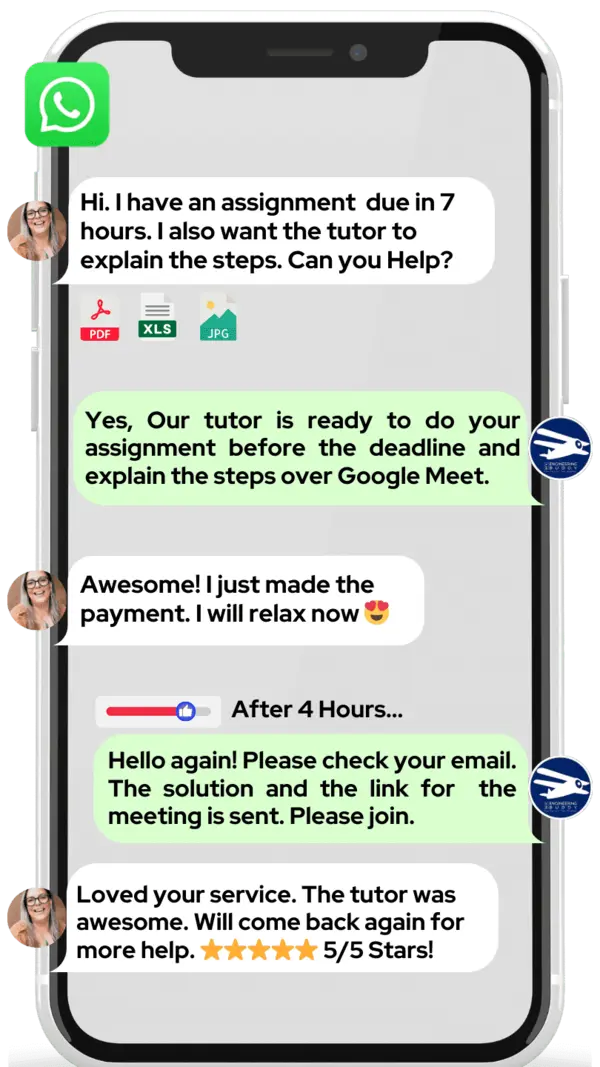



Hire The Best Optical Communications Tutor
Top Tutors, Top Grades. Without The Stress!
52,000+ Happy Students From Various Universities



How Much For Private 1:1 Tutoring & Hw Help?
Private 1:1 Tutoring and HW help Cost $20 – 35 per hour* on average.
Fiber optic deadlines don’t move. Neither do examiners. If link budgets, dispersion penalties, or coherent detection are the parts of your course where you go quiet, that’s exactly where an Optical Communications tutor makes the difference.
Optical Communications Tutor Online
Optical Communications is the engineering discipline covering transmission of data via light through fiber optic cables and free-space links, equipping students to design, analyze, and troubleshoot photonic networks, modulation schemes, and wavelength-division multiplexed systems.
MEB connects you with a verified Optical Communications tutor online who knows your exact syllabus — whether that’s an undergraduate photonics module, a graduate fiber systems course, or a telecom engineering unit. If you’ve searched for an Optical Communications tutor near me, the 1:1 online format means location is never the constraint. In electrical engineering and its neighboring disciplines, optical systems content is where students lose marks fast — precise, live guidance closes those gaps before the exam does. Start with the $1 trial and see the difference in one session.
- 1:1 online sessions tailored to your exact course or syllabus module
- Expert-verified tutors with subject-specific photonics and fiber systems knowledge
- Flexible time zones — US, UK, Canada, Australia, Gulf covered
- Structured learning plan built after a diagnostic session
- Ethical homework and assignment guidance — you understand the work, then submit it yourself
52,000+ students across the US, UK, Canada, Australia, and the Gulf have used MEB since 2008 — including students in Electrical Engineering subjects like Optical Communications, Digital Communications, and Microwave Engineering.
Source: My Engineering Buddy, 2008–2025.
How Much Does an Optical Communications Tutor Cost?
Most Optical Communications tutoring sessions run $20–$40/hr depending on level and topic complexity. The $1 trial gets you 30 minutes of live 1:1 tutoring or one homework question explained in full — no registration required.
| Level / Need | Typical Rate | What’s Included |
|---|---|---|
| Undergraduate (standard modules) | $20–$35/hr | 1:1 sessions, homework guidance |
| Graduate / Advanced / Niche | $35–$100/hr | Expert tutor, coherent systems depth |
| $1 Trial | $1 flat | 30 min live session or 1 homework question |
Tutor slots fill fast during end-of-semester submission periods — especially for fiber systems and photonics modules. Book early.
WhatsApp MEB for a quick quote — average response time under 1 minute.
Who This Optical Communications Tutoring Is For
Optical Communications covers a lot of ground fast. Most students hit a wall at one of three places: power budget calculations, coherent detection theory, or wavelength-division multiplexing design. This tutoring is built for when the lecture slides stop being enough.
- Undergraduate students in photonics, fiber optics, or telecom engineering modules
- Graduate students working through coherent optical systems, DWDM, or advanced modulation formats
- Students who failed or narrowly passed a previous attempt and need to close specific gaps
- Students whose university conditional offer depends on passing this module — this is where a tutor makes the most immediate difference
- Students 4–6 weeks from an exam with dispersion analysis or optical SNR calculations still unresolved
- Students needing structured homework and assignment guidance through link budget design problems
Students come to MEB from universities including MIT, Georgia Tech, Imperial College London, the University of Toronto, TU Delft, UNSW Sydney, and King Abdullah University of Science and Technology. The syllabus content varies — the tutor adapts to yours.
1:1 Tutoring vs Self-Study vs AI vs YouTube vs Online Courses
Self-study works if you’re disciplined, but optical systems problems — especially link budget derivations and dispersion calculations — demand feedback you can’t give yourself. AI tools explain concepts quickly but can’t diagnose why your power penalty calculation keeps coming out wrong. YouTube handles waveguide overviews well; it stops cold when you’re stuck on a specific coherent receiver problem. Online courses move at a fixed pace with no room for your exam board’s specific format. With 1:1 optical engineering tutoring at MEB, the session is calibrated to your exact module — errors caught and corrected live, not after you’ve submitted.
Outcomes: What You’ll Be Able To Do in Optical Communications
After targeted 1:1 sessions, you’ll be able to solve end-to-end optical link power budget problems with confidence, including noise figure, dispersion penalties, and receiver sensitivity. You’ll analyze modulation formats — OOK, BPSK, QPSK, QAM — and explain the BER trade-offs each involves. Model the behavior of single-mode and multimode fiber under chromatic and polarization-mode dispersion. Apply WDM channel planning principles to realistic network scenarios. Present coherent detection architectures — including IQ demodulation and DSP-based compensation — clearly and correctly in written assessments.
Based on feedback from 40,000+ sessions collected by MEB from 2022 to 2025, 58% of students improved by one full grade after approximately 20 hours of 1:1 tutoring in subjects like Optical Communications. A further 23% achieved at least a half-grade improvement.
Source: MEB session feedback data, 2022–2025.
At MEB, we’ve found that students who struggle with optical link budgets almost always have the same root problem: they can follow the formula but don’t know which penalties to include or why. One session on that specific gap — with worked examples — changes everything for the rest of the module.
What We Cover in Optical Communications (Syllabus / Topics)

Track 1: Fiber Optics and Wave Propagation
- Ray optics and total internal reflection in optical fiber
- Single-mode vs multimode fiber: core diameter, V-number, cutoff conditions
- Chromatic dispersion: material and waveguide components, dispersion parameter D
- Polarization-mode dispersion (PMD) and its impact on high-speed links
- Fiber attenuation: absorption, scattering, and bend losses
- Nonlinear effects: self-phase modulation, cross-phase modulation, four-wave mixing
- Dispersion-shifted and dispersion-compensating fiber types
Core texts: Saleh & Teich Fundamentals of Photonics; Agrawal Fiber-Optic Communication Systems.
Track 2: Optical System Design and Link Budgets
- Optical power budget: transmitter power, connector/splice losses, receiver sensitivity
- Rise-time budget analysis for bandwidth-limited systems
- Optical amplifiers: EDFA gain, noise figure, ASE noise accumulation
- WDM and DWDM: channel spacing, multiplexer/demultiplexer insertion loss, crosstalk
- Optical SNR (OSNR) calculation in multi-span amplified links
- Dispersion penalty and power penalty derivation in system design
- Optical network topologies: point-to-point, ring, mesh
Core texts: Agrawal Fiber-Optic Communication Systems; Keiser Optical Fiber Communications.
Track 3: Modulation, Detection, and Coherent Systems
- Direct detection vs coherent detection: architecture and trade-offs
- Intensity modulation formats: OOK, NRZ, RZ, duobinary
- Coherent modulation: BPSK, QPSK, 16-QAM — constellation diagrams and BER
- IQ modulator and coherent receiver design
- Digital signal processing in coherent receivers: chromatic dispersion compensation, carrier phase recovery
- Optical line coding and forward error correction (FEC) in high-capacity systems
- Free-space optical (FSO) communication: link geometry, atmospheric effects, pointing loss
Core texts: Ip & Kahn papers on coherent DSP; Proakis & Salehi Digital Communications (optical chapters); Agrawal Lightwave Technology.
What a Typical Optical Communications Session Looks Like
The tutor opens by checking the previous topic — usually wherever a link budget problem or a dispersion calculation was left unresolved. From there, the session moves into the specific problem the student flagged: it might be an OSNR derivation for a multi-span EDFA chain, or a BER vs. Eb/N0 curve for a QPSK coherent system. The tutor works through it on a digital pen-pad, step by step, narrating the reasoning at each stage. Then the student attempts a parallel problem while the tutor watches — errors corrected immediately, not after the attempt is complete. The session closes with a concrete practice task: two or three problems on the same topic, a past-paper question to attempt before the next session, and the next topic noted so prep can happen in advance.
How MEB Tutors Help You with Optical Communications (The Learning Loop)
Diagnose: In the first session, the tutor identifies exactly where understanding breaks down — whether that’s the physics of single-mode propagation, the math behind dispersion penalties, or the architecture of a coherent receiver. Not a general impression. Specific gaps, mapped to your syllabus.
Explain: Live worked problems on a digital pen-pad. The tutor derives link budgets, draws fiber dispersion curves, and builds coherent receiver block diagrams in real time — not from a pre-made slide. You see the reasoning, not just the answer.
Practice: You attempt the next problem with the tutor present. This is the step most self-study skips. It’s where understanding either holds or doesn’t — and where the tutor catches the specific error before it becomes a habit.
Feedback: Step-by-step correction. Not “that’s wrong” — but why the EDFA noise figure was applied incorrectly, or why the BER expression missed the factor of two. That specificity is what closes the mark gap.
Plan: Each session ends with a clear next step: which topic comes next, what to attempt independently, and how that fits your exam or submission timeline.
Sessions run on Google Meet with a digital pen-pad or iPad and Apple Pencil. Before your first session, share your course outline or syllabus, a recent problem you couldn’t complete, and your exam or deadline date. The tutor handles the rest. Start with the $1 trial — 30 minutes of live tutoring that also serves as your first diagnostic.
Students consistently tell us that the moment things click in Optical Communications is when they stop memorizing the link budget formula and start understanding what each term physically represents — that shift happens fastest in a live session.
Source: My Engineering Buddy tutor feedback summary, 2024.
Try your first session for $1 — 30 minutes of live 1:1 tutoring or one homework question explained in full. No registration. No commitment.
WhatsApp MEB now
and get matched within the hour.
Tutor Match Criteria (How We Pick Your Tutor)
Every Optical Communications tutor at MEB is matched to the specific requirements of your session — not assigned at random from a general pool.
Subject depth: Tutors hold degrees in photonics, electrical engineering, or telecommunications — many with graduate-level research or industry backgrounds in fiber systems or optical networking. The match is made on syllabus fit, not just subject name.
Tools: All tutors work on Google Meet with a digital pen-pad or iPad and Apple Pencil. Visual derivations — especially link budget diagrams and constellation diagrams — are a core part of every session.
Time zone: Matched to your region. US, UK, Gulf, Canada, and Australia slots are available. Late-evening and early-morning sessions are possible — ask when you contact MEB.
Goals: Whether you need exam-score improvement, deeper conceptual understanding of coherent systems, homework guidance on WDM design problems, or support on a research-adjacent module — the tutor is briefed on your specific goal before the first session.
Unlike platforms where you fill out a form and wait, MEB responds in under a minute, 24/7. Tutor match takes under an hour. The $1 trial means you test before you commit. Everything runs over WhatsApp — no logins, no intake forms.
Study Plans (Pick One That Matches Your Goal)
After the diagnostic session, your tutor builds the specific sequence. Three patterns cover most students: a catch-up plan for students 1–3 weeks out with clear gaps in link budget or dispersion theory; an exam prep plan running 4–8 weeks through full syllabus coverage, past papers, and timed problem sets; or ongoing weekly support aligned to your semester schedule and assignment deadlines. The tutor adjusts pace and depth based on what each session reveals.
Pricing Guide
Optical Communications tutoring runs $20–$40/hr for most undergraduate modules. Graduate-level work — coherent systems, advanced DSP compensation, optical networking research — typically falls in the $50–$100/hr range depending on tutor expertise and topic complexity.
Rate factors include your level, the complexity of the topic area, how quickly you need sessions, and tutor availability at your preferred time zone. Availability tightens significantly in the 3–4 weeks before end-of-semester exams.
For students targeting positions in photonics R&D, optical networking at major carriers, or graduate research programs at research-intensive universities, tutors with professional industry or research backgrounds in fiber systems are available at higher rates — share your specific goal and MEB will match the tier to your ambition.
Start with the $1 trial — 30 minutes, no registration, no commitment. WhatsApp MEB for a quick quote.
FAQ
Is Optical Communications hard?
Most students find it harder than expected. The combination of electromagnetic theory, statistical noise analysis, and system-level design — each with its own math — creates a steep curve. Link budgets and coherent detection are where most marks are lost. Targeted 1:1 sessions on those specific areas close the gap faster than re-reading lecture notes.
How many sessions are needed?
Students with one or two specific gaps — a link budget derivation, or OSNR calculation — often need 3–5 sessions. Students building a complete foundation for an end-of-semester exam typically work over 10–20 hours across 6–8 weeks. The diagnostic session in the first hour clarifies this.
Can you help with homework and assignments?
MEB tutoring is guided learning — you understand the work, then submit it yourself. The tutor walks through the approach, explains why each step is correct, and lets you apply it. See our Academic Integrity policy and Why MEB page for full details on what we help with and what we don’t.
Will the tutor match my exact syllabus or exam board?
Yes. Optical Communications content varies by institution — some courses emphasize free-space optical links, others focus on fiber and DWDM, and some include coherent DSP. Share your course outline or module description when you contact MEB, and the tutor is briefed before the first session.
What happens in the first session?
The tutor reviews your syllabus and a recent problem you struggled with, identifies where understanding breaks down, and works through at least one problem from scratch using a digital pen-pad. You leave with a clear picture of your gaps and a plan for the next 2–4 sessions.
Is online tutoring as effective as in-person?
For engineering subjects like Optical Communications, yes. The digital pen-pad replicates a whiteboard more clearly than most physical boards. Every step is visible, re-drawable, and can be saved. Many students find the shared-screen format easier for following complex derivations than sitting next to someone at a desk.
Can you help at midnight or on weekends?
Yes. MEB operates 24/7 across time zones. Students in the Gulf, Australia, and North America routinely book late-evening or early-morning slots. WhatsApp MEB at any hour — average response time is under a minute regardless of when you message.
What’s the difference between WDM and DWDM, and do tutors cover both?
WDM uses wider channel spacing (typically 20 nm+); DWDM packs channels at 0.8 nm or 0.4 nm spacing for high-capacity long-haul links. Both are common exam and assignment topics. MEB tutors cover channel planning, crosstalk management, and OSNR calculation for both formats — matched to your module’s depth.
My course covers free-space optical links, not fiber. Can MEB help?
Yes. FSO communication — including geometric beam loss, atmospheric turbulence, pointing error analysis, and link margin calculation — is within scope. Share your syllabus when contacting MEB so the tutor matched to you has relevant FSO background.
Do you offer group Optical Communications sessions?
MEB’s format is 1:1 only. Group sessions would mean one student’s specific gap slows the others. Every session is built around your exact problem set, exam date, and learning pace — that’s not replicable in a group format.
How do I get started?
Three steps: WhatsApp MEB with your course name, exam date, and the topic you’re stuck on. MEB matches you to a verified tutor — usually within the hour. First session starts with a 30-minute diagnostic for $1. No forms, no waiting, no commitment beyond that first session.
Trust & Quality at My Engineering Buddy
Every MEB tutor is screened before their first session — subject knowledge verified, live demo session evaluated, and ongoing session feedback reviewed. Tutors covering Optical Communications hold degrees in photonics, electrical engineering, or telecommunications. Many have graduate-level research or industry backgrounds in fiber optic systems, optical networking, or photonic device design. Rated 4.8/5 across 40,000+ verified reviews on Google. That rating is maintained through continuous feedback review — not just at onboarding.
MEB tutoring is guided learning — you understand the work, then submit it yourself. For full details on what we help with and what we don’t, read our Academic Integrity policy and Why MEB.
MEB has served 52,000+ students across the US, UK, Canada, Australia, the Gulf, and Europe since 2008 — across 2,800+ subjects. Within Electrical Engineering, that includes communication systems tutoring, signals and systems help, and optoelectronics tutoring alongside Optical Communications. See how MEB’s tutoring methodology works for the full approach.
A common pattern our tutors observe is that students who struggled with Optical Communications for weeks often needed one well-targeted session on OSNR or coherent detection — not a general review of the whole module. Specific beats broad, every time.
Source: My Engineering Buddy tutor feedback summary, 2024.
Our experience across thousands of sessions shows that Optical Communications students who come in having already attempted problems — even wrong ones — make faster progress than students who wait until they feel ready. The attempt gives the tutor exactly what they need to diagnose and fix.
Explore Related Subjects
Students studying Optical Communications often also need support in:
- Analog Communication
- Digital Signal Processing
- Electromagnetic Field Theory
- Satellite Communications
- Wireless Communication
- Transmission Lines and Waveguides
- Semiconductor Devices
Next Steps
Ready to move forward? Here’s what to do:
- Share your course name, module or exam board, and the specific topic that’s costing you marks
- Share your availability and time zone — sessions are available 24/7
- MEB matches you with a verified Optical Communications tutor, usually within the hour
- First session starts with a diagnostic — every minute is used on what actually matters
Before your first session, have ready: your syllabus or course outline, a recent problem you couldn’t complete or an assignment you struggled with, and your exam or deadline date. The tutor handles everything from there.
Visit www.myengineeringbuddy.com for more on how MEB works.
WhatsApp to get started or email meb@myengineeringbuddy.com.
Reviewed by Subject Expert
This page has been carefully reviewed and validated by our subject expert to ensure accuracy and relevance.