Hire Verified & Experienced
Options Strategy Trading Tutors
4.8/5 40K+ session ratings collected on the MEB platform



Hire The Best Options Strategy Trading Tutor
Top Tutors, Top Grades. Without The Stress!
52,000+ Happy Students From Various Universities



How Much For Private 1:1 Tutoring & Hw Help?
Private 1:1 Tutoring and HW help Cost $20 – 35 per hour* on average.
Most students don’t lose money on options because they took too much risk. They lose because they misread the payoff structure before they entered the trade. A 1:1 online Options Strategy Trading tutor fixes that gap — fast.
Options Strategy Trading Tutor Online
Options strategy trading applies structured combinations of call and put contracts — spreads, straddles, condors, and collars — to manage risk and generate returns across defined market scenarios.
If you’ve searched for an Options Strategy Trading tutor near me, you probably already know that options aren’t just “buy a call, hope for upside.” The real skill is in knowing which structure fits which market view — and why the Greeks behave the way they do when volatility spikes. MEB connects you with a 1:1 finance specialist who has traded, modelled, or taught options at an advanced level. The session plan is built around your exact course or exam — not a generic syllabus. One well-run session on iron condors or covered calls is worth more than ten hours of passive video watching.
- 1:1 online sessions tailored to your course, exam board, or programme
- Expert-verified tutors with options markets and derivatives backgrounds
- Flexible scheduling across US, UK, Canada, Australia, and Gulf time zones
- Structured learning plan built after a diagnostic of your current gaps
- Ethical homework and assignment guidance — you understand the work, then submit it yourself
52,000+ students across the US, UK, Canada, Australia, and the Gulf have used MEB since 2008 — including students in Finance subjects like Options Strategy Trading, Financial Derivatives, and Futures and Options.
Source: My Engineering Buddy, 2008–2025.
How Much Does an Options Strategy Trading Tutor Cost?
Most Options Strategy Trading tutoring sessions run $20–$40/hr depending on level and topic complexity. Graduate-level content — think volatility surface modelling or exotic structures — can reach $70–$100/hr. The $1 trial gets you 30 minutes of live 1:1 tutoring or a full explanation of one homework question before you commit to anything.
| Level / Need | Typical Rate | What’s Included |
|---|---|---|
| Undergraduate / CFA prep | $20–$40/hr | 1:1 sessions, homework guidance |
| Graduate / Practitioner level | $40–$70/hr | Expert tutor, complex strategy depth |
| Niche / Exotic structures | $70–$100/hr | Specialist, volatility modelling, pricing |
| $1 Trial | $1 flat | 30 min live session or 1 homework question |
Tutor availability tightens significantly around CFA exam windows and semester finals. Book early if your deadline is within six weeks.
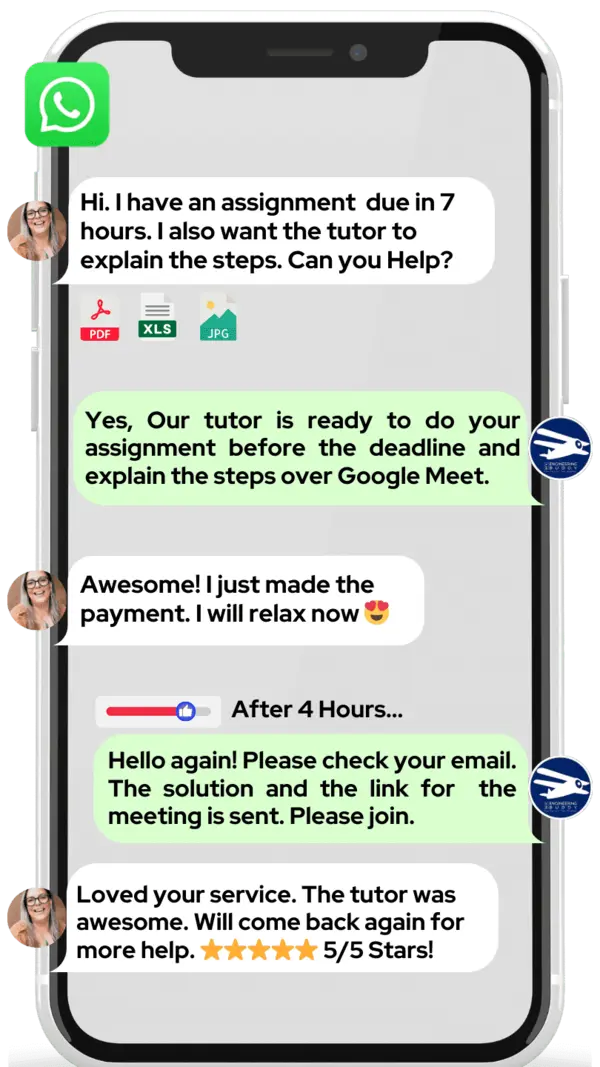
WhatsApp MEB for a quick quote — average response time under 1 minute.
Who This Options Strategy Trading Tutoring Is For
This isn’t for students who are still learning what a derivative is. Options strategy tutoring at MEB is for people who have some foundation and are hitting a wall — the Greeks stop making sense under exam pressure, or the P&L diagrams for multi-leg strategies aren’t clicking in time.
- Undergraduate finance students with options content in a derivatives or investments module
- CFA Level 1 and Level 2 candidates working through the derivatives curriculum at investment analysis depth
- Graduate students in financial engineering or quantitative finance programmes at institutions like MIT Sloan, Imperial College London, or the University of Toronto
- Students retaking after a failed first attempt who need to fix specific conceptual gaps, not repeat everything
- Students with a university conditional offer depending on their final grade in a finance elective
- Professionals moving into trading desks or risk roles who need structured options knowledge fast
At MEB, we’ve found that students who struggle most with options strategies aren’t missing maths — they’re missing the intuition for when a strategy makes sense. That’s what a good tutor builds in the first two sessions: a decision framework before a formula sheet.
1:1 Tutoring vs Self-Study vs AI vs YouTube vs Online Courses
Self-study works if you’re disciplined and have a clean textbook — but options Greeks under time pressure expose every gap you didn’t know you had. AI tools explain delta and theta clearly, but they can’t watch you misread a payoff diagram and correct it in real time. YouTube is fine for covered call overviews and stops immediately when you’re stuck on why your iron condor breakeven is off. Online courses are structured but move at one pace — not yours. With a 1:1 derivatives pricing specialist at MEB, the session is live, calibrated to your exact course or exam, and fixes errors the moment they appear — which matters enormously when options strategy questions are worth 15–20% of a CFA paper.
Outcomes: What You’ll Be Able To Do in Options Strategy Trading
After a structured set of sessions, you’ll be able to construct and interpret payoff diagrams for multi-leg strategies including bull spreads, bear spreads, straddles, and iron condors without referring to a reference sheet. You’ll analyze how delta, gamma, theta, and vega interact when market conditions shift — not just define them. You’ll apply Black-Scholes intuition to price a vanilla option and explain where the model breaks down. You’ll solve exam-style scenario questions that ask you to select the appropriate strategy given a specific market view and risk tolerance. You’ll present the risk-return profile of a complex position clearly — the kind of question that separates top-scoring finance students from the rest.
Supporting a student through Options Strategy Trading? MEB works directly with parents to set up sessions, track progress, and keep coursework on schedule. WhatsApp MEB — average response time is under a minute, 24/7.
Based on feedback from 40,000+ sessions collected by MEB from 2022 to 2025, 58% of students improved by one full grade after approximately 20 hours of 1:1 tutoring in subjects like Options Strategy Trading. A further 23% achieved at least a half-grade improvement.
Source: MEB session feedback data, 2022–2025.

What We Cover in Options Strategy Trading (Syllabus / Topics)
Track 1: Foundations of Options and Payoff Structures
- Call and put mechanics — rights, obligations, exercise, and expiry
- Moneyness: in-the-money, at-the-money, out-of-the-money positions
- Payoff and profit diagrams for long and short positions
- Covered calls and protective puts as entry-level hedging strategies
- Synthetic positions and put-call parity derivation
- Intrinsic value vs time value decomposition
Core texts: Hull, Options, Futures, and Other Derivatives (any recent edition); McDonald, Derivatives Markets.
Track 2: Multi-Leg Strategies and Greeks
- Vertical spreads: bull call, bear put, bull put, bear call construction
- Volatility strategies: long straddle, long strangle, short straddle setups
- Condors and butterflies: max profit, max loss, and breakeven calculations
- Delta, gamma, theta, vega, and rho — intuition and exam application
- Delta hedging mechanics and gamma scalping concepts
- Choosing a strategy given a directional view and volatility expectation
- Exam-style scenario questions: select and justify the right strategy
Core texts: Natenberg, Option Volatility and Pricing; CFA Institute curriculum derivatives readings (Level 1 and 2).
Track 3: Pricing Models and Risk Management Applications
- Black-Scholes model: assumptions, formula, and intuitive interpretation
- Implied volatility: what it tells you and how it differs from historical vol
- Volatility skew and term structure — why they exist and what they signal
- Binomial tree pricing for American and European options
- Using options for portfolio hedging: collars, protective strategies, overlays
- Introduction to exotic options: barrier, Asian, and digital structures
Core texts: Wilmott, Paul Wilmott on Quantitative Finance; Rebonato, Volatility and Correlation. Reference: CFA Institute Research Foundation publishes practitioner-level derivatives material used across graduate curricula.
What a Typical Options Strategy Trading Session Looks Like
The tutor opens by checking the previous session’s topic — usually delta-neutral hedging or a specific multi-leg strategy that gave the student trouble. They pull up the problem set or past exam question on Google Meet. The student walks through their attempt while the tutor watches. When the payoff diagram for the iron condor is drawn incorrectly — wrong breakeven, wrong max-loss zone — the tutor marks it up with the digital pen-pad in real time, rebuilds the diagram step by step, and then asks the student to reconstruct it from scratch while explaining each leg out loud. The session closes with two unseen problems set as independent practice and a note on what’s coming next: implied volatility interpretation and the volatility skew.
How MEB Tutors Help You with Options Strategy Trading (The Learning Loop)
Diagnose: In the first session, the tutor identifies exactly where the breakdown is. Is it the Greeks under exam conditions? Is it reading a payoff diagram for a complex spread? Is it applying Black-Scholes intuition without a calculator? The diagnostic takes 15–20 minutes and shapes everything that follows.
Explain: The tutor works through a live problem using the digital pen-pad — not a slide deck. You see the logic built from scratch: why the straddle breaks even at strike ± premium, why theta kills long options positions near expiry, why a bull call spread caps your upside. The explanation is tied to your specific module or exam paper, not a generic textbook page.
Practice: You attempt the next problem while the tutor watches. No looking away, no moving on until the reasoning is right. This is where most passive learners make the most gains — doing it under observation forces the gaps to surface.
Feedback: Step-by-step correction. The tutor shows exactly which step broke down, why that step costs marks in an exam, and what the correct chain of reasoning looks like. No vague “check your signs” — specific, actionable correction tied to the mark scheme.
Plan: Before the session ends, the tutor sets out the next topic in the sequence — usually two or three problems to attempt independently — and flags the highest-priority area for the following session. Progress is tracked across sessions, not reinvented each time.
Sessions run on Google Meet. Tutors use a digital pen-pad or iPad with Apple Pencil for working through payoff diagrams and Greek calculations live on screen. Before your first session, share your course outline or exam syllabus, a recent assignment or past paper you found difficult, and your exam or submission date. The first session is both diagnostic and productive — you leave having covered real content.
Start with the $1 trial — 30 minutes of live tutoring that also serves as your first diagnostic session.
Try your first session for $1 — 30 minutes of live 1:1 tutoring or one homework question explained in full. No registration. No commitment. WhatsApp MEB now and get matched within the hour.
Tutor Match Criteria (How We Pick Your Tutor)
Not every finance tutor can teach options well. MEB matches on four criteria.
Subject depth: The tutor must have demonstrable experience with options specifically — not just general finance. That means derivatives coursework at graduate level, trading desk experience, CFA charterholder status, or equivalent professional background in options markets or quantitative finance.
Tools: Every tutor uses Google Meet with a digital pen-pad or iPad and Apple Pencil. Options strategy tutoring without live diagram work is just talking — MEB tutors draw, annotate, and correct visually in real time.
Time zone: Matched to the student’s region. US East Coast, UK, UAE, Singapore, Australian Eastern — the tutor’s availability is confirmed before the match is made.
Goals: Exam score target, conceptual clarity for a module, homework completion, or research-level depth for a thesis component — the brief is taken before the match, not after. Unlike platforms where you fill out a form and wait three days, MEB responds in under a minute, 24/7. Tutor match takes under an hour. The $1 trial means you test before you commit. Everything runs over WhatsApp — no logins, no intake forms.
Study Plans (Pick One That Matches Your Goal)
Three plans cover most Options Strategy Trading students. Catch-up (1–3 weeks): for students with one or two weeks before a deadline who need to close specific gaps fast — Greeks, strategy selection, or pricing models. Exam prep (4–8 weeks): structured revision through the full options curriculum tied to a specific exam date, including timed past-paper practice. Weekly support: ongoing alignment with your semester schedule, covering each module topic as it arrives. The tutor builds the specific session sequence after the diagnostic.
Pricing Guide
Options Strategy Trading tutoring starts at $20/hr for undergraduate-level content. Graduate and practitioner-level sessions — volatility modelling, exotic structures, risk management applications — run $40–$100/hr depending on tutor expertise and topic depth.
Rate factors include course level, how specialised the topic is, how close the deadline is, and tutor availability. Rates at the higher end reflect genuine subject-matter expertise, not premium packaging.
For students targeting roles at top-tier trading firms or hedge funds, or preparing for CFA Level 2 and 3 derivatives questions, tutors with professional trading and portfolio management backgrounds are available at higher rates — share your specific goal and MEB will match the tier to your ambition.
Availability during CFA exam season and semester finals is limited. Early booking is not a cliché here — it’s the difference between getting the right tutor and getting whoever is free.
Start with the $1 trial — 30 minutes, no registration, no commitment. WhatsApp MEB for a quick quote.
Options strategy is one of the few finance topics where a small conceptual error — misreading vega or drawing the breakeven wrong — cascades into every downstream calculation. One corrected session changes the pattern entirely.
Source: My Engineering Buddy, tutor observation data, 2022–2025.
FAQ
Is Options Strategy Trading hard?
Harder than most introductory finance. The maths isn’t extreme, but the conceptual layer — understanding why a strategy works given a specific market view — trips students who are used to plugging numbers into formulas. Greeks and multi-leg payoffs need practice under exam conditions, not just reading.
How many sessions are needed?
Students with isolated gaps — one strategy type or one Greek misunderstood — typically need 4–6 sessions. Students covering the full options curriculum from spreads through volatility modelling generally need 10–15 hours to reach exam-ready confidence. The diagnostic clarifies this in session one.
Can you help with homework and assignments?
Yes. MEB tutoring is guided learning — you understand the work, then submit it yourself. The tutor explains the method, works through a similar example, and checks your reasoning. See our Academic Integrity policy and Why MEB page for full details on what we help with and what we don’t.
Will the tutor match my exact syllabus or exam board?
Yes. Whether you’re on a CFA curriculum, a university derivatives module at LSE or NYU, or a quantitative finance programme, the tutor works from your actual course material. Share your syllabus or past papers before the first session and the tutor prepares accordingly.
What happens in the first session?
The tutor runs a 15–20 minute diagnostic: which strategies you can construct correctly, where the Greeks break down, and what your exam or assignment requires. The remaining time is live tutoring on the highest-priority gap. You leave having covered real content, not just an intake form.
Is online tutoring as effective as in-person?
For options strategy specifically, online tutoring with a digital pen-pad is often better than in-person — the tutor can annotate payoff diagrams, highlight Greek sensitivities, and share exam papers simultaneously on screen. Session recordings (where enabled) mean you can review the worked examples immediately after.
What’s the difference between a straddle and a strangle, and which one should I study first?
Both profit from large moves in either direction. A straddle uses same-strike calls and puts; a strangle uses out-of-the-money options and costs less but needs a bigger move to profit. Study straddles first — the intuition transfers directly. Most tutors cover both in the same session.
Do I need to know Black-Scholes to do well in an options strategy course?
For most undergraduate and CFA Level 1 courses: no. You need intuition — what inputs drive price up or down — not the derivation. At CFA Level 2 and in graduate finance programmes, Black-Scholes assumptions and limitations are examinable. Your tutor calibrates the depth to your specific course.
Can you help me prepare for CFA Level 2 derivatives questions on options?
Yes. CFA Level 2 derivatives questions are scenario-based and require you to select, justify, and price strategies under realistic market conditions. MEB tutors who are CFA charterholders or have equivalent derivatives experience can work directly from the CFA curriculum and past item-set formats.
Do you offer group Options Strategy Trading sessions?
No. MEB is 1:1 only. Group sessions split tutor attention and eliminate the diagnostic feedback that makes the learning loop work. Every session is private — one student, one tutor, one focused hour on your specific gaps.
Can I get Options Strategy Trading help at midnight or on weekends?
Yes. MEB operates 24/7 and covers all major time zones. US, UK, Gulf, Australia — tutor availability exists across the clock. WhatsApp MEB with your time zone and availability and a match is confirmed, usually within the hour.
How do I get started?
Three steps: WhatsApp MEB with your subject and exam date. MEB matches you with a verified options tutor — usually within an hour. Your first session starts with the $1 trial — 30 minutes of live tutoring or one full homework explanation, no commitment required.
Trust & Quality at My Engineering Buddy
Every MEB tutor goes through a subject-specific screening process — not a general interview. For options strategy, that means verifying derivatives knowledge at the level they’ll be teaching: exam-board-specific curriculum for undergraduate tutors, practitioner or CFA-level depth for graduate and professional prep. Tutors complete a live demo evaluation before their first session. Ongoing session feedback is reviewed and tutors with declining ratings are removed, not reassigned. Rated 4.8/5 across 40,000+ verified reviews on Google. MEB has been running since 2008 — 18 years of subject-specific tutor vetting is not something a newer platform can replicate quickly.
MEB tutoring is guided learning — you understand the work, then submit it yourself. For full details on what we help with and what we don’t, read our Academic Integrity policy and Why MEB.
MEB serves students across the US, UK, Canada, Australia, the Gulf, and Europe in 2,800+ subjects. Finance is one of the platform’s strongest areas — particularly CAPM tutoring, fixed income securities help, and securities analysis tutoring. The tutor pool for options and derivatives subjects spans academics and practitioners across all major financial centres, matched to the student’s programme and timeline. See our tutoring methodology for how the session structure and learning loop work in practice.
MEB matches tutors on subject depth, not just availability. For options strategy, that means a tutor who has actually modelled volatility or sat a derivatives exam — not someone who covered it briefly in a corporate finance module.
Source: My Engineering Buddy tutor vetting records, 2008–2025.
Students consistently tell us that the first thing a good options tutor fixes isn’t a formula — it’s the habit of reading a payoff diagram before touching a calculation. That one change, in our experience, reduces careless errors in multi-leg strategy questions by more than any additional practice volume alone.
A common pattern our tutors observe is this: students can define delta correctly but can’t explain what happens to a delta-hedged portfolio when the underlying moves sharply. The gap between definition and application is exactly where exam marks are lost — and where a 1:1 session pays off fastest.
Explore Related Subjects
Students studying Options Strategy Trading often also need support in:
- Alternative Investments
- Asset Management
- Credit Risk
- Forex Trading
- Investment Management
- Quantitative Analysis
- Stock Market
Next Steps
Before your first session, have ready: your exam board and syllabus or course outline, a recent past paper attempt or assignment you found difficult, and your exam or submission date. The tutor handles the rest.
- Share your exam board or module, your hardest topic (Greeks, strategy selection, pricing), and your timeline
- Share your availability and time zone — US, UK, Gulf, Canada, or Australia
- MEB matches you with a verified options tutor, usually within 24 hours
The first session opens with a diagnostic so every minute of your time is used on content that actually moves your grade.
Visit www.myengineeringbuddy.com for more on how MEB works.
WhatsApp to get started or email meb@myengineeringbuddy.com.
Reviewed by Subject Expert
This page has been carefully reviewed and validated by our subject expert to ensure accuracy and relevance.