

Hire Verified & Experienced
Personal Finance Tutors
4.8/5 40K+ session ratings collected on the MEB platform



Hire The Best Personal Finance Tutor
Top Tutors, Top Grades. Without The Stress!
52,000+ Happy Students From Various Universities



How Much For Private 1:1 Tutoring & Hw Help?
Private 1:1 Tutoring and HW help Cost $20 – 35 per hour* on average.
Most students don’t fail Personal Finance because the concepts are hard — they fail because nobody explained compounding, tax brackets, or portfolio allocation clearly the first time.
Personal Finance Tutor Online
Personal Finance covers budgeting, saving, investing, insurance, taxation, and retirement planning — equipping students to make sound money decisions across undergraduate, MBA, and CFP certification programmes.
MEB connects you with a 1:1 online Personal Finance tutor who knows your exact syllabus — whether that’s an undergraduate course at NYU, LSE, or McGill, an MBA module, or a CFP certification track. If you’ve searched for a Personal Finance tutor near me and found only generic platforms, MEB is different. Tutors are matched to your level and course within hours. One focused session with the right tutor can close gaps that weeks of lecture slides left open. MEB is part of a broader Finance tutoring network covering 2,800+ subjects since 2008.
- 1:1 online sessions tailored to your exact course and syllabus
- Expert-verified tutors with subject-specific knowledge in personal finance, investments, and tax
- Flexible time zones — US, UK, Canada, Australia, Gulf
- Structured learning plan built after a diagnostic session
- Ethical homework and assignment guidance — you understand before you submit
52,000+ students across the US, UK, Canada, Australia, and the Gulf have used MEB since 2008 — including students in Finance subjects like Personal Finance, investment management tutoring, and portfolio management help.
Source: My Engineering Buddy, 2008–2025.
How Much Does a Personal Finance Tutor Cost?
Rates run $20–$40/hr for most undergraduate and early graduate levels. Specialist tutors covering CFP exam prep, advanced tax planning, or estate strategy go up to $100/hr. The $1 trial gets you 30 minutes of live 1:1 tutoring or a full explanation of one homework question — no registration required.
| Level / Need | Typical Rate | What’s Included |
|---|---|---|
| Standard (undergrad / intro MBA) | $20–$35/hr | 1:1 sessions, homework guidance |
| Advanced / CFP / Specialist | $35–$100/hr | Expert tutor, certification depth |
| $1 Trial | $1 flat | 30 min live session or 1 homework question |
Tutor availability tightens during exam periods — particularly April through May and late November. Book early to secure your preferred time slot.
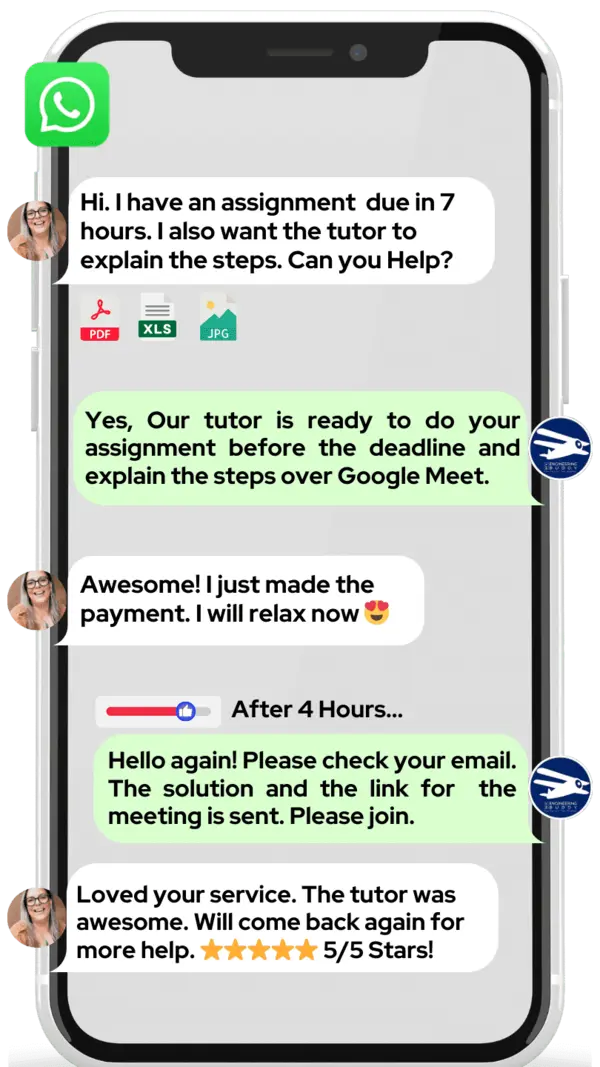
WhatsApp MEB for a quick quote — average response time under 1 minute.
Who This Personal Finance Tutoring Is For
Personal Finance catches students off guard. It looks approachable until the tax calculations, time-value-of-money problems, and retirement projection assignments stack up in the same week.
- Undergraduate students in business, economics, or finance degree programmes at universities like University of Michigan, University of Edinburgh, University of Toronto, or UNSW Sydney
- MBA students who need to solidify fundamentals before quantitative finance modules
- Students retaking a failed first attempt with a grade threshold to hit before progression
- Students 4–6 weeks from finals with significant gaps in budgeting, investment theory, or tax mechanics
- Parents watching a child’s confidence drop alongside their grades — and looking for structured, accountable support
- Students pursuing the CFP or working through financial planning coursework
Start with the $1 trial — it’s also your first diagnostic, so nothing is wasted.
1:1 Tutoring vs Self-Study vs AI vs YouTube vs Online Courses
Self-study works if you’re disciplined — but Personal Finance problems require feedback on your actual calculations, not just passive reading. AI tools give fast definitions but can’t catch where your time-value formula broke down or why your budget variance answer lost marks. YouTube covers compound interest clearly enough; it stops when you need to apply it to a specific case study. Online courses are structured but move at a fixed pace regardless of where you’re stuck. 1:1 tutoring with MEB is live, calibrated to your exact Personal Finance course, and corrects errors in the moment — before they become exam habits.
Outcomes: What You’ll Be Able To Do in Personal Finance
After working with an MEB Personal Finance tutor, you’ll be able to solve time-value-of-money problems cleanly under exam conditions, analyze a household budget using variance analysis, model a retirement savings projection using realistic rate assumptions, explain the tax implications of different investment vehicles in written assignments, and apply portfolio diversification theory to case-study questions without second-guessing the underlying logic. These aren’t abstract skills — they’re the exact competencies examiners and MBA faculty assess.
Based on feedback from 40,000+ sessions collected by MEB from 2022 to 2025, 58% of students improved by one full grade after approximately 20 hours of 1:1 tutoring in subjects like Personal Finance. A further 23% achieved at least a half-grade improvement.
Source: MEB session feedback data, 2022–2025.
What We Cover in Personal Finance (Syllabus / Topics)

Foundations: Budgeting, Banking, and Time Value of Money
- Income, expenses, and cash flow statements
- Emergency funds, savings rates, and liquidity planning
- Simple and compound interest — calculations and applications
- Present value, future value, and annuity problems
- Loan amortisation and repayment schedules
- Credit scores, debt management, and consumer banking products
Core texts include Garman & Forgue’s Personal Finance and Kapoor, Dlabay & Hughes’s Focus on Personal Finance — both widely assigned across US and Canadian universities.
Investing and Wealth Building
- Stocks, bonds, and mutual fund basics
- Risk and return — standard deviation, beta, and diversification
- Retirement accounts: 401(k), IRA, Roth IRA, ISA (UK), RRSP (Canada)
- Asset allocation by age and risk tolerance
- Real estate as an investment vehicle
- CAPM tutoring concepts applied to portfolio construction
- ESG investing and socially responsible portfolios
Referenced texts: Bodie, Kane & Marcus Investments and Malkiel’s A Random Walk Down Wall Street.
Tax, Insurance, and Estate Planning
- Federal income tax structure — brackets, deductions, credits
- Capital gains tax — short-term vs long-term treatment
- Insurance fundamentals: life, health, disability, property
- Estate planning: wills, trusts, beneficiary designations
- Social Security and pension planning
- Tax-advantaged accounts and contribution limits
Students working through federal income taxation help alongside Personal Finance frequently cover overlapping material — MEB tutors bridge both efficiently.
What a Typical Personal Finance Session Looks Like
The tutor opens by checking the previous session’s topic — say, annuity calculations or tax bracket application — and asks you to walk through one problem yourself. From there, you and the tutor work through the current week’s material on screen: maybe it’s building a retirement projection model, working out the after-tax return on a Roth IRA versus a traditional 401(k), or untangling a case study on debt repayment strategy. The tutor uses a digital pen-pad to annotate calculations in real time. You replicate the method or explain the reasoning aloud. The session closes with a specific practice problem set and a note of what the next session will cover — so you arrive prepared, not scrambling.
At MEB, we’ve found that Personal Finance students make the fastest progress when the tutor focuses on worked examples first — not definitions. A student who sees a time-value calculation solved step by step, then replicates it immediately, retains the method far better than one who reads the formula and moves on.
How MEB Tutors Help You with Personal Finance (The Learning Loop)
Diagnose: In the first session, your tutor identifies exactly where your understanding breaks down — whether that’s the mechanics of compound interest, interpreting a tax form, or constructing an investment portfolio for a case study. Nothing is assumed.
Explain: The tutor works through live examples on a digital pen-pad — annotating calculations, flagging where exam markers look for specific wording, and connecting theory to the assignment or exam question you’re actually facing.
Practice: You attempt problems with the tutor present. Not later, alone. The immediate attempt is where gaps show up — and where they get fixed before they calcify into exam habits.
Feedback: Step-by-step error correction. The tutor doesn’t just mark something wrong — they explain which assumption failed, which formula step was skipped, and why that costs marks.
Plan: Each session ends with a clear next topic, a short task, and a realistic timeline to your exam or assignment deadline. Progress is tracked session to session.
Sessions run on Google Meet with a digital pen-pad or iPad and Apple Pencil. Before your first session, have your syllabus or course outline ready, plus one recent homework question or past paper problem you struggled with. The tutor handles the structure from there. Start with the $1 trial — 30 minutes of live tutoring that also serves as your first diagnostic.
Students consistently tell us that the shift happens when someone finally explains why the formula works — not just what to plug in. That’s what 1:1 Personal Finance tutoring does that a lecture hall or a YouTube video simply can’t replicate.
Source: My Engineering Buddy tutor feedback summary, 2024.
Try your first session for $1 — 30 minutes of live 1:1 tutoring or one homework question explained in full. No registration. No commitment. WhatsApp MEB now and get matched within the hour.
Tutor Match Criteria (How We Pick Your Tutor)
Not every Finance tutor is the right fit for Personal Finance. MEB matches on four criteria.
Subject depth: The tutor must have worked with the specific level and content area — undergraduate personal finance, CFP exam prep, or MBA-level wealth management — not just general finance. A tutor who knows investment analysis deeply but hasn’t taught budgeting and tax mechanics at your level isn’t the right match.
Tools: Every tutor works on Google Meet with a digital pen-pad or iPad and Apple Pencil. Calculations are shown, not described.
Time zone: Matched to your region — US, UK, Gulf, Canada, or Australia. No scheduling gymnastics.
Goals: Exam score, assignment completion, conceptual depth for a follow-on course, or CFP exam readiness. The tutor’s approach adjusts to what you’re actually trying to achieve.
Unlike platforms where you fill out a form and wait, MEB responds in under a minute, 24/7. Tutor match takes under an hour. The $1 trial means you test before you commit. Everything runs over WhatsApp — no logins, no intake forms.
Study Plans (Pick One That Matches Your Goal)
After the first diagnostic session, your tutor builds a plan specific to your gaps and timeline. Three common structures: a catch-up plan covering one or two priority topics in 1–3 weeks before an upcoming deadline; a structured exam prep block of 4–8 weeks aligned to your final exam date, covering each syllabus area in sequence; or ongoing weekly support running alongside your semester, timed to coursework submissions and lecture topics. The tutor maps the sequence — you show up and do the work.
Pricing Guide
Most Personal Finance tutoring runs $20–$40/hr. Rate factors include your level (introductory undergraduate vs. advanced CFP prep), topic complexity (tax planning and estate law cost more than basic budgeting), and tutor availability relative to your timeline.
For students targeting top business schools or working toward the CFP designation, tutors with professional financial planning or wealth management backgrounds are available at higher rates — share your specific goal and MEB will match the tier to your ambition.
Availability tightens in April–May and November–December. Start with the $1 trial — 30 minutes, no registration, no commitment. WhatsApp MEB for a quick quote.
FAQ
Is Personal Finance hard?
It’s more calculation-heavy than students expect. Time-value-of-money problems, tax bracket mechanics, and investment return calculations require practice — not just reading. Most students who struggle haven’t had someone walk through the numbers with them step by step.
How many sessions are needed?
Most students see a clear grade improvement after 8–12 sessions of focused 1:1 work. Students with a single assignment or exam component to fix sometimes need just 3–4. The tutor maps a realistic session count after the diagnostic.
Can you help with homework and assignments?
Yes. MEB tutoring is guided learning — you understand the work, then submit it yourself. See our Academic Integrity policy and Why MEB page for full details on what we help with and what we don’t.
Will the tutor match my exact syllabus or exam board?
Yes. Share your course outline, university, and any specific modules before the first session. Tutors are matched to your exact content — not assigned from a generic personal finance pool.
What happens in the first session?
The tutor runs a short diagnostic — asking you to work through a problem or explain a concept — to identify exactly where the gaps are. From there, the session plan and topic sequence are built around what you actually need.
Is online tutoring as effective as in-person?
For calculation-heavy subjects like Personal Finance, the digital pen-pad approach on Google Meet replicates the whiteboard experience closely. Most students report no meaningful difference after the first session.
Can I get Personal Finance help at midnight or on weekends?
Yes. MEB operates across time zones 24/7. WhatsApp response averages under a minute regardless of when you message. Tutors in your time zone are available for early mornings, late evenings, and weekend sessions.
What if I don’t click with my assigned tutor?
Say so over WhatsApp and MEB will rematch you — usually within the same day. The $1 trial exists partly for this reason: you test the fit before committing to a block of sessions.
Do you cover Personal Finance for the CFP exam specifically?
Yes. MEB has tutors with CFP-specific exam knowledge covering all major topic areas: financial planning process, tax planning, retirement, estate planning, investment management, and insurance. Share your exam date and which domains need work.
What’s the difference between Personal Finance and Financial Economics at university?
Personal Finance focuses on individual and household decision-making — budgeting, saving, investing, and insurance. Financial economics tutoring operates at a more theoretical level, covering market pricing, risk models, and macro-level financial structures. Different courses, different exam expectations, different tutors.
How do I get started?
WhatsApp MEB, get matched to a verified Personal Finance tutor within the hour, and start your $1 trial — 30 minutes of live tutoring or one homework question explained in full. Three steps: message, match, start.
Do you offer group Personal Finance sessions?
No. Every MEB session is 1:1. Group sessions dilute the feedback loop that makes tutoring effective — your tutor’s full attention stays on your specific gaps, not a shared syllabus summary.
A common pattern our tutors observe is that Personal Finance students arrive thinking they have a motivation problem. After one session, it’s clear they have an explanation problem. The content isn’t the issue — the delivery was.
Source: My Engineering Buddy tutor observation notes, 2023–2024.
Trust & Quality at My Engineering Buddy
Every MEB tutor goes through subject-specific screening, a live demo evaluation, and ongoing feedback review before being matched to students. Tutors hold relevant degrees or professional credentials in finance, economics, or financial planning — and are assessed specifically on Personal Finance content, not just general finance knowledge. Rated 4.8/5 across 40,000+ verified reviews on Google.
MEB tutoring is guided learning — you understand the work, then submit it yourself. For full details on what we help with and what we don’t, read our Academic Integrity policy and Why MEB.
MEB has served 52,000+ students across the US, UK, Canada, Australia, the Gulf, and Europe since 2008 — across Finance subjects including Personal Finance, capital budgeting help, securities analysis tutoring, and money and banking tutor support. The platform covers 2,800+ subjects. See how MEB’s tutoring methodology works for more on the diagnostic-to-plan structure that underpins every subject.
Our experience across thousands of sessions shows that students who share a past paper attempt or a specific homework question before the first session make faster progress. It gives the tutor something concrete to calibrate against — and it means the first session starts working immediately, not ten minutes in.
Explore Related Subjects
Students studying Personal Finance often also need support in:
- Alternative Investments
- Asset Management
- Credit Risk
- Insurance
- Real Estate
- Stock Market
- Quantitative Finance
Next Steps
When you message MEB, share your exam board or course outline, the topic or assignment you’re stuck on, and your exam or deadline date. Include your time zone and typical availability.
MEB matches you with a verified Personal Finance tutor — usually within a few hours, sometimes faster. The first session starts with a diagnostic so every minute is used well.
Before your first session, have ready:
- Your course outline or syllabus (or the specific module you’re working on)
- A recent homework question or past paper problem you struggled with
- Your exam or assignment deadline date
The tutor handles the rest. Visit www.myengineeringbuddy.com for more on how MEB works.
WhatsApp to get started or email meb@myengineeringbuddy.com.
Reviewed by Subject Expert
This page has been carefully reviewed and validated by our subject expert to ensure accuracy and relevance.

