Hire Verified & Experienced
Animal and Veterinary Histology Tutors
4.8/5 40K+ session ratings collected on the MEB platform
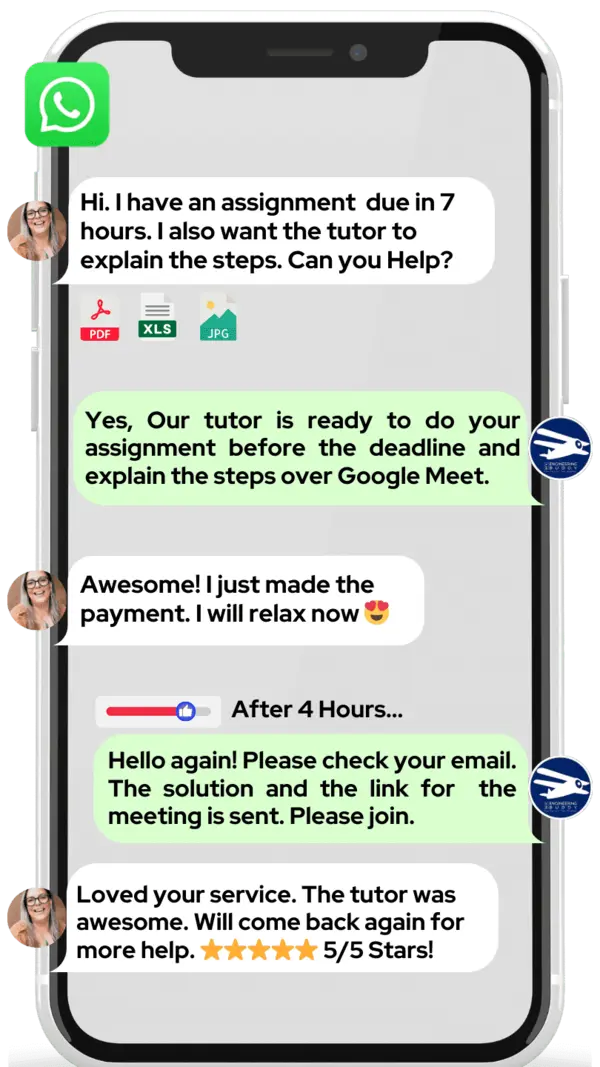



Hire The Best Animal and Veterinary Histology Tutor
Top Tutors, Top Grades. Without The Stress!
52,000+ Happy Students From Various Universities





How Much For Private 1:1 Tutoring & Hw Help?
Private 1:1 Tutoring and HW help Cost $20 – 35 per hour* on average.
Most students who fail their histology practical can identify a tissue — they just can’t explain why it is that tissue and not the one next to it.
Animal and Veterinary Histology Tutor Online
Animal and Veterinary Histology is the microscopic study of animal tissues — epithelium, connective tissue, muscle, and nerve — as taught in veterinary and biomedical science programmes. An Animal and Veterinary Histology tutor helps students identify tissue types, interpret slides, and link microstructure to organ function.
If you have been searching for an Animal and Veterinary Histology tutor near me, MEB offers 1:1 online Animal and Veterinary Histology tutoring that fits your exact course — whether you are working through slide identification at undergraduate level, tackling organ-system histology in a veterinary programme, or closing gaps before a practical exam. Expert tutors work with you live, on your slides, at your pace.
- 1:1 online sessions mapped to your course syllabus and practicals
- Verified tutors with degrees and teaching experience in veterinary or biomedical histology
- Flexible time zones — US, UK, Canada, Australia, Gulf, Europe
- Structured learning plan built after a first diagnostic session
- Ethical homework and assignment guidance — you understand the work before you submit it
52,000+ students across the US, UK, Canada, Australia, and the Gulf have used MEB since 2008 — across 2,800+ subjects, from AP Calculus to A Level Music Technology to Data Science.
Source: My Engineering Buddy, 2008–2025.
How Much Does an Animal and Veterinary Histology Tutor Cost?
Most sessions run $20–$40/hr. Graduate-level or niche specialist work can reach $70–$100/hr. The $1 trial gives you 30 minutes of live tutoring or a full explanation of one assignment question — no registration needed.
| Level / Need | Typical Rate | What’s Included |
|---|---|---|
| Undergraduate / Pre-vet | $20–$35/hr | 1:1 sessions, slide interpretation, homework guidance |
| Veterinary / Graduate | $35–$70/hr | Expert tutor, organ-system depth, exam prep |
| $1 Trial | $1 flat | 30 min live session or one assignment question explained in full |
Tutor availability tightens significantly in the four weeks before veterinary board practical exams and end-of-semester assessments. Book early.
WhatsApp MEB for a quick quote — average response time under 1 minute.
Who This Animal and Veterinary Histology Tutoring Is For
This tutoring is built for students who need to move from recognising a tissue to explaining its structure, function, and clinical relevance — under exam conditions. It also works for students who need to close specific gaps fast.
- Undergraduate biology or biomedical science students covering basic animal tissue types
- Pre-veterinary and first-year veterinary students working through organ-system histology
- Students retaking a histology practical or written component after a failed first attempt
- Graduate students in veterinary pathology or comparative anatomy needing deeper histological grounding
- Students at institutions such as Cornell, UC Davis, Edinburgh, Melbourne, Utrecht, or the Royal Veterinary College preparing for end-of-year assessments
- Parents supporting an early undergraduate student whose slide interpretation grades are falling behind
Need anatomy tutoring or cell biology help alongside histology? MEB covers both.
1:1 Tutoring vs Self-Study vs AI Tools
Self-study from a histology atlas works for recognition — but it gives no feedback when you misidentify a hepatocyte as a pancreatic acinar cell for the third time. AI tools can describe tissue layers in text, but they cannot look at your actual slide image, point to the specific feature you are misreading, and correct your reasoning in real time. In Animal and Veterinary Histology, the diagnostic skill — not just the label — is what examiners assess, and that requires a tutor who can see what you see and tell you exactly where your logic breaks down. MEB’s online format gives you that live feedback loop without the scheduling constraints of a campus office hour.
Outcomes: What You’ll Be Able To Do in Animal and Veterinary Histology
After working with an MEB Animal and Veterinary Histology tutor, you will be able to identify epithelial subtypes — simple squamous to pseudostratified columnar — on an unmarked slide and justify your answer using specific cellular features. You will apply your knowledge of connective tissue ground substance and fibre types to distinguish dense regular from dense irregular tissue in tendon versus dermis sections. You will analyse smooth, cardiac, and skeletal muscle architecture at the light microscope level and explain each type’s functional significance in veterinary organ systems. You will present the histological organisation of the liver lobule, the renal corpuscle, or the intestinal villus clearly enough to score full marks on a written or practical component. You will solve slide identification questions under timed conditions, not just in open-book review.
Supporting a student through Animal and Veterinary Histology? MEB works directly with parents to set up sessions, track progress, and keep coursework on schedule. WhatsApp MEB — average response time is under a minute, 24/7.
Based on feedback from 40,000+ sessions collected by MEB from 2022 to 2025, 58% of students improved by one full grade after approximately 20 hours of 1:1 tutoring in a single subject. A further 23% achieved at least a half-grade improvement.
Source: MEB session feedback data, 2022–2025.
Try your first session for $1 — 30 minutes of live 1:1 tutoring or one homework question explained in full. No registration. No commitment. WhatsApp MEB now and get matched within the hour.
What We Cover in Animal and Veterinary Histology (Syllabus / Topics)

Track 1: Fundamental Animal Tissue Types
- Epithelial tissue classification — cell shape, layering, specialised surfaces
- Connective tissue proper — loose, dense regular, dense irregular, reticular
- Cartilage types — hyaline, elastic, fibrocartilage — and their matrix composition
- Bone tissue — compact versus spongy, osteon structure, osteocyte lacunae
- Muscle tissue — skeletal, cardiac, smooth — light microscope features and striations
- Nervous tissue — neuron types, glial cells, myelination at the structural level
- Slide staining principles — H&E, PAS, Masson’s trichrome — what each reveals
Core texts: Dellmann’s Textbook of Veterinary Histology (Eurell & Frappier) and Color Atlas of Veterinary Histology (Bacha & Bacha).
Track 2: Organ-System Histology
- Digestive system — oesophagus to colon, layer-by-layer identification, species differences
- Respiratory system — trachea, bronchi, alveoli, species-specific features in horses and cattle
- Urinary system — renal cortex, medulla, corpuscle, tubule types, collecting duct
- Reproductive system — ovarian follicle stages, seminiferous tubules, uterine layers
- Endocrine glands — adrenal cortex zones, thyroid follicles, pituitary cell types
- Integument — skin layers, hair follicle structure, glands, species coat variation
- Lymphoid organs — spleen, lymph node, thymus cortex and medulla
Core texts: Textbook of Veterinary Histology (Samuelson) and Veterinary Histology (Young, Heath & Stevens, adapted veterinary edition).
Track 3: Comparative and Applied Histology
- Species differences in gastrointestinal tract histology — ruminants, equine, canine
- Avian histology — unique features of crop, gizzard, cloaca, air sac
- Comparative skin histology — sweat gland distribution, hoof, claw, and hoof wall laminae
- Histopathological change recognition — inflammation, necrosis, hypertrophy in tissue sections
- Digital slide scanning platforms — MIT OpenCourseWare Biology resources for supplementary slide review
- Practical exam strategies — unknown slide approach, structured written answer format
Core texts: Atlas of Veterinary Clinical Pathology (Wamsley & Alleman) and Comparative Veterinary Histology with Clinical Correlates (Samuelson).
What a Typical Animal and Veterinary Histology Session Looks Like
The tutor opens by checking your previous topic — say, the renal corpuscle from the session before — asking you to walk through the glomerulus and Bowman’s capsule before moving on. From there, you and the tutor work through three or four unknown slide images on screen: the tutor writes directly on the image with a digital pen-pad, circling the feature you missed — the brush border of proximal convoluted tubule cells, the binucleate cells in cardiac muscle — and asking you to explain why that feature rules out the alternative. You replicate the reasoning on the next slide without prompting. The session ends with two practice slides set as independent work, a specific staining question to prepare for next time, and a note on which organ system you cover in the following session.
How MEB Tutors Help You with Animal and Veterinary Histology (The Learning Loop)
Diagnose: In the first session, the tutor runs a short slide identification task — usually five to eight tissue images — and listens to how you reason through each one. The gaps show up fast: wrong layer names, missed staining cues, species confusion.
Explain: The tutor works through the correct identification live, annotating the slide on screen with a digital pen-pad. They name every feature you need to cite, not just the label.
Practice: You attempt the next slide while the tutor watches. You narrate your reasoning out loud. This is where most students realise they knew the answer but could not sequence the argument.
Feedback: The tutor interrupts only when you go wrong, tells you exactly which step broke down, and shows you why that step costs marks in a written or practical answer.
Plan: At the end of each session, the tutor names the next two or three tissue systems to cover, sets a specific revision task, and flags anything that needs re-checking before the next session.
Sessions run over Google Meet with a digital pen-pad or iPad and Apple Pencil for live slide annotation. Before your first session, send the tutor your course outline or practical list, any slides you found difficult in class, and your exam or assessment date. The first session doubles as your diagnostic. Start with the $1 trial — 30 minutes of live tutoring that also serves as your first diagnostic.
At MEB, we’ve found that students who can explain a tissue identification out loud — not just circle the right answer — pass practicals at a significantly higher rate. Narrating your reasoning is a skill. We build it deliberately, from session one.
Tutor Match Criteria (How We Pick Your Tutor)
Every Animal and Veterinary Histology tutor is matched to your specific course before your first session.
Subject depth: Tutors hold degrees in veterinary science, biomedical science, or comparative anatomy, with direct experience teaching or examining histology at the relevant level — undergraduate survey course, veterinary professional year, or graduate research programme.
Tools: All sessions use Google Meet plus a digital pen-pad or iPad with Apple Pencil for live slide annotation. Screen sharing of your own slide images is standard.
Time zone: MEB covers New York, Los Angeles, Chicago, London, Dubai, Toronto, Sydney, Melbourne, and all US, UK, Gulf, Canadian, Australian, and European time zones — including evenings and weekends.
Learning style: The tutor calibrates the pace and the level of prompting from the first session. Some students need more structured narration; others respond better to being pushed to reason independently.
Communication: Clear English, adapted to whether you are an early undergraduate working through basic tissue types or a veterinary student dealing with species-specific organ histology.
Goals: Exam slide identification, written answer structure, homework and assignment completion, or research-level histopathological reasoning — the tutor is matched to your stated goal.
Unlike platforms where you fill out a form and wait, MEB responds in under a minute, 24/7. Tutor match takes under an hour. The $1 trial means you test before you commit. Everything runs over WhatsApp — no logins, no intake forms.
Study Plans (Pick One That Matches Your Goal)
Catch-up (1–3 weeks): for students with a practical or written component approaching and specific tissue systems still unresolved. Exam prep (4–8 weeks): structured session sequence working through all tissue tracks, timed slide practice, and written answer drilling. Weekly support: ongoing sessions aligned to your semester schedule and lab timetable, keeping pace with whatever your course introduces each week. The tutor maps the exact session sequence after the diagnostic.
Pricing Guide
Most Animal and Veterinary Histology sessions run $20–$40/hr. Graduate-level or specialist comparative histology work, including histopathology preparation, can reach $70–$100/hr. Rate factors include your course level, topic complexity, timeline, and tutor availability.
For students targeting veterinary professional programmes or graduate research positions, tutors with research and clinical histopathology backgrounds are available at higher rates — share your specific goal and MEB will match the tier to your ambition.
Tutor availability at the $20–$40 tier drops sharply in the six weeks before veterinary school practical exams. Book your sessions before the slot fills.
Start with the $1 trial — 30 minutes, no registration, no commitment. WhatsApp MEB for a quick quote.
MEB tutors work across every major veterinary and biomedical science curriculum — from first-year tissue identification to comparative species histology and applied histopathology, all in 1:1 online sessions you can book today.
Source: My Engineering Buddy, 2025.
FAQ
Is Animal and Veterinary Histology hard?
Yes, for most students. The challenge is not memorisation — it is recognising the same tissue under different stains, magnifications, and species. A tutor who can annotate slides live and correct your reasoning in real time cuts through that confusion much faster than an atlas alone.
How many sessions are needed?
Most students see clear improvement within four to six sessions. Closing a significant gap before a practical exam typically takes eight to twelve hours. The tutor sets a realistic session plan after the first diagnostic, so you know what to expect from session two onward.
Can you help with histology homework and assignments?
Yes. MEB tutors explain the concepts, walk through the slide identification steps, and help you structure written answers — so you understand the work and submit it yourself. MEB tutoring is guided learning — you understand the work, then submit it yourself. For full details on what we help with and what we don’t, read our Academic Integrity policy and Why MEB.
Will the tutor match my exact syllabus or exam board?
Yes. You share your course outline or practical list before the first session. The tutor maps every session to your specific tissue tracks, species scope, and assessment format — whether that is a North American veterinary curriculum, a European DVM programme, or an Australian biomedical science unit.
What happens in the first session?
The tutor runs a short slide identification task to locate your gaps, then spends the remainder of the session on the highest-priority tissue system for your timeline. You leave with a clear session plan and two to three practice tasks to attempt before the next session.
Is online tutoring as effective as in-person for histology?
For slide-based subjects, online tutoring with live screen annotation is often more effective than in-person, because the tutor can mark up your exact slide image in real time. You are not looking at a separate projected image — you are both working on the same file simultaneously.
Can I get Animal and Veterinary Histology help at midnight?
Yes. MEB operates 24/7 across all major time zones. WhatsApp MEB at any hour — a tutor or coordinator responds in under a minute on average. Sessions can be booked for the same day, including late-evening slots for US, Gulf, and Australian students.
What if I don’t like my assigned tutor?
Request a different tutor via WhatsApp at any point. MEB re-matches you without charge or delay. The $1 trial exists precisely so you can test the match before committing to a full session block.
How do I find an Animal and Veterinary Histology tutor in my city?
All MEB tutoring is online, so your city does not limit your options. Students in London, Toronto, Dubai, Sydney, and across the US access the same pool of verified tutors. Location only matters for scheduling your preferred time zone — and MEB covers them all.
How do I get started?
Three steps: WhatsApp MEB, get matched with a verified Animal and Veterinary Histology tutor within the hour, then start your $1 trial — 30 minutes of live tutoring or one assignment question explained in full. No forms, no registration, no upfront commitment beyond one dollar.
Trust & Quality at My Engineering Buddy
Every MEB tutor is screened for subject-specific knowledge, assessed in a live demo session before being accepted, and reviewed continuously through student session feedback. Tutors teaching Animal and Veterinary Histology hold relevant degrees in veterinary science, biomedical science, or comparative anatomy — and are matched only to the course levels and species scopes they have direct experience with. Rated 4.8/5 across 40,000+ verified reviews on Google.
MEB tutoring is guided learning — you understand the work, then submit it yourself. For full details on what we help with and what we don’t, read our Academic Integrity policy. We guide — you submit your own work.
MEB has served 52,000+ students across the US, UK, Canada, Australia, the Gulf, and Europe in 2,800+ subjects since 2008. Students working through related life science courses also use MEB for physiology tutoring, 1:1 cell biology tutoring, and veterinary science and medicine help. See MEB’s tutoring methodology for how sessions are structured.
Students consistently tell us that the hardest part of histology is not learning what a tissue looks like — it is learning to explain why it cannot be anything else. That is the skill we focus on from session one, and it is what separates students who pass practicals from those who freeze on unknown slides.
Explore Related Subjects
Students studying Animal and Veterinary Histology often also need support in:
- Anatomy
- Biochemistry
- Immunology
- Microbiology
- Parasitology
- Endocrinology
- Developmental Biology
- Functional Anatomy
Next Steps
Getting started takes under three minutes.
- Share your exam board or course name, the tissue systems or slides you find hardest, and your exam or assessment date
- Share your availability and time zone — MEB covers every major region, including evenings and weekends
- MEB matches you with a verified Animal and Veterinary Histology tutor — usually within an hour
Before your first session, have ready: your course outline or practical list, a recent slide identification attempt or assignment you found difficult, and your exam or deadline date. The tutor handles everything else.
Visit www.myengineeringbuddy.com for more on how MEB sessions are structured and what to expect.
WhatsApp to get started or email meb@myengineeringbuddy.com.
Our experience across thousands of sessions shows that students who come to the first session with a specific slide or question they could not answer — not just a vague sense of being behind — make faster progress. Come with your hardest slide. We will start there.
Reviewed by Subject Expert
This page has been carefully reviewed and validated by our subject expert to ensure accuracy and relevance.