Hire Verified & Experienced
Arduino Programming Tutors
4.8/5 40K+ session ratings collected on the MEB platform



Hire The Best Arduino Programming Tutor
Top Tutors, Top Grades. Without The Stress!
52,000+ Happy Students From Various Universities





How Much For Private 1:1 Tutoring & Hw Help?
Private 1:1 Tutoring and HW help Cost $20 – 35 per hour* on average.
Your Arduino sketch compiles. Nothing happens on the board. You’ve read the same forum post four times.
Arduino Programming Tutor Online
Arduino Programming is the C/C++-based practice of writing sketches for Arduino microcontroller boards — covering GPIO control, sensor interfacing, serial communication, and interrupt handling — equipping students to build functional embedded hardware projects.
If you’re searching for an Arduino Programming tutor near me, MEB connects you with a 1:1 online tutor who knows the Arduino IDE, your exact course structure, and the specific hardware you’re working with. Part of MEB’s broader Electrical Engineering tutoring catalogue, Arduino support covers everything from blinking your first LED to building interrupt-driven sensor networks. One tutor, your board, your deadline.
- 1:1 online sessions tailored to your course or project brief
- Expert-verified tutors with hands-on embedded systems experience
- Flexible time zones — US, UK, Canada, Australia, Gulf
- Structured learning plan built after a diagnostic session
- Ethical homework and assignment guidance — you understand before you submit
52,000+ students across the US, UK, Canada, Australia, and the Gulf have used MEB since 2008 — including students in Electrical Engineering subjects like Arduino Programming, embedded systems, and microcontrollers.
Source: My Engineering Buddy, 2008–2025.
How Much Does an Arduino Programming Tutor Cost?
Most Arduino Programming tutoring sessions run $20–$40/hr. Graduate-level or specialist embedded project support can reach up to $100/hr. Not sure where you fall? Start with the $1 trial — 30 minutes of live tutoring or one full homework question explained — before committing to anything.
| Level / Need | Typical Rate | What’s Included |
|---|---|---|
| Standard (most levels) | $20–$35/hr | 1:1 sessions, homework guidance |
| Advanced / Specialist | $35–$100/hr | Expert tutor, niche depth, project support |
| $1 Trial | $1 flat | 30 min live session or 1 homework question |
Tutor availability tightens around end-of-semester project deadlines. Book early if you have a fixed submission date.
WhatsApp MEB for a quick quote — average response time under 1 minute.
Who This Arduino Programming Tutoring Is For
Arduino projects look simple until you’re three hours in and the sensor still reads zero. This tutoring is for students who need someone to work through the problem with them live — not just point to documentation.
- Undergraduate EE, ECE, or mechatronics students with a project submission deadline approaching
- Students retaking a lab module after a failed first attempt
- Students with a conditional university offer that depends on passing an embedded systems course
- Self-taught makers who need to fill in the gaps around interrupts, timers, or I2C/SPI protocols
- Students needing guided assignment help — you understand the work, you submit it yourself
- Parents supporting a student whose confidence has dropped alongside their circuit grades
Students come from programs at institutions including MIT, Georgia Tech, Imperial College London, University of Toronto, UNSW, TU Delft, and ETH Zurich — as well as community colleges and online degree programs across the Gulf.
1:1 Tutoring vs Self-Study vs AI vs YouTube vs Online Courses
Self-study works if you’re disciplined — but Arduino debugging without feedback turns small mistakes into hour-long spirals. AI tools explain concepts fast but can’t see your actual wiring or catch the logic error in your ISR. YouTube is excellent for setup walkthroughs and stops cold when you’re stuck on a specific I2C timing issue. Online courses give you structured content at a fixed pace — no one checks whether your millis() usage is actually correct. 1:1 tutoring with MEB is live, calibrated to your exact board and assignment, and corrects errors the moment they appear — not after a forum post gets answered three days later.
Outcomes: What You’ll Be Able To Do in Arduino Programming
After working with an MEB Arduino Programming tutor, you’ll be able to write clean, functional sketches from scratch — not just copy-paste and hope. You’ll solve GPIO pin conflicts and understand why your pull-up resistor matters. You’ll analyze serial monitor output to debug sensor readings from DHT22, ultrasonic, or IR modules. You’ll apply interrupt-driven programming correctly instead of relying on delay(). You’ll explain your project code line by line — which is exactly what your assessor or viva panel will expect.
Based on feedback from 40,000+ sessions collected by MEB from 2022 to 2025, 58% of students improved by one full grade after approximately 20 hours of 1:1 tutoring in subjects like Arduino Programming. A further 23% achieved at least a half-grade improvement.
Source: MEB session feedback data, 2022–2025.
At MEB, we’ve found that most Arduino students aren’t stuck on the concept — they’re stuck on the gap between what the code says and what the hardware does. A live tutor who can read your sketch and your circuit diagram at the same time closes that gap in minutes, not days.
What We Cover in Arduino Programming (Syllabus / Topics)

Core Programming and Board Fundamentals
- Arduino IDE setup, board selection, and COM port configuration
- Sketch structure:
setup(),loop(), and function definitions - Digital and analog I/O:
pinMode(),digitalWrite(),analogRead(),analogWrite() - Serial communication basics:
Serial.begin(),Serial.print(), monitoring output - Variable types, operators, conditionals, and loops in C/C++ for Arduino
- Timing without
delay():millis()and non-blocking code patterns - Memory management: SRAM vs Flash vs EEPROM on AVR and ARM-based boards
Key references: Programming Arduino: Getting Started with Sketches (Monk), Arduino Cookbook (Margolis), Exploring Arduino (Blum).
Sensors, Actuators, and Interfacing
- Reading digital sensors: PIR, reed switch, push button debouncing
- Analog sensors: LDR, thermistor, potentiometer, and ADC resolution
- DHT11/DHT22 temperature-humidity interfacing and library use
- Ultrasonic distance sensing (HC-SR04) and timing calculations
- Servo and DC motor control via PWM and L298N motor driver
- I2C protocol: connecting multiple sensors with SDA/SCL, addressing conflicts
- SPI protocol: SD card modules, high-speed peripheral communication
Key references: Arduino Workshop (Boxall), Make: Electronics (Platt), NIST standards are relevant background for students building IoT-connected Arduino projects where security matters.
Advanced Topics and Project Work
- Hardware interrupts:
attachInterrupt(), ISR best practices, volatile variables - Timer registers and custom PWM frequency generation
- Bluetooth and Wi-Fi modules: HC-05, ESP8266, ESP32 integration
- IoT tutoring — sending data to ThingSpeak, Blynk, or MQTT brokers via Arduino
- State machine design for multi-mode embedded systems
- PCB prototyping workflow from breadboard to PCB design help
- Project documentation: circuit diagrams, flowcharts, and technical write-ups
Key references: Programming Arduino Next Steps (Monk), Mastering Arduino (Purdum), manufacturer datasheets for ATmega328P and ESP32.
Platforms, Tools & Textbooks We Support
Arduino Programming uses specific tools that tutors work with directly — not just explain in theory. MEB tutors support: Arduino IDE 1.x and 2.x, PlatformIO (VS Code extension), Tinkercad Circuits (browser-based simulation), Fritzing (circuit diagrams), the Serial Monitor and Serial Plotter, LTSpice for basic circuit verification, and library management via the Arduino Library Manager. Tutors also work with platform-specific documentation for Uno, Mega, Nano, Leonardo, MKR, and ESP32/ESP8266 boards.
What a Typical Arduino Programming Session Looks Like
The tutor opens by checking whether the previous topic — say, I2C sensor chaining — made sense in practice, or whether the student hit a wall when they tried it alone. From there, the student shares their screen: the Arduino IDE, the serial monitor output, and often a photo of the physical breadboard. The tutor uses a digital pen-pad to annotate the circuit diagram or sketch in real time, stepping through the logic line by line. If the code has a timing issue or an incorrect ISR, the tutor doesn’t just fix it — they walk through why it breaks and what the correct pattern looks like. The student rewrites the relevant section themselves. The session closes with a specific task: finish the motor control subroutine, test the SPI SD card write, or document the interrupt-driven sensor loop. Next topic is noted before the call ends.
How MEB Tutors Help You with Arduino Programming (The Learning Loop)
Diagnose: In the first session, the tutor identifies exactly where understanding breaks down — whether that’s C pointer logic, incorrect use of millis(), or confusion between hardware PWM and software PWM on specific Arduino pins.
Explain: The tutor works through a live example using a digital pen-pad — not a pre-recorded video. If you’re building a temperature logger, the tutor writes and runs the sketch with you, explaining each function call as it appears.
Practice: You attempt the next problem while the tutor watches. This is where most tutoring services skip a step. You write the code; the tutor doesn’t write it for you.
Feedback: Errors get corrected with full explanation — not just “that’s wrong.” The tutor explains why the interrupt flag wasn’t cleared, why your servo jitters at certain duty cycles, and what the fix actually does.
Plan: After each session, the tutor sets a concrete next step — a specific sketch to complete, a sensor to interface, or a concept to revisit. Progress is tracked session by session.
Sessions run over Google Meet. Tutors use a digital pen-pad or iPad with Apple Pencil to annotate code and schematics live. Before your first session, have your Arduino IDE open, your current sketch ready, and any error messages or serial monitor output saved. The first session starts with a diagnostic — share your project brief or assignment spec and the tutor builds the session plan from there. Start with the $1 trial — 30 minutes of live tutoring that also serves as your first diagnostic.
Students consistently tell us that the moment things click in Arduino isn’t when they read the explanation — it’s when they write the corrected code themselves and the serial monitor finally shows the right output. We build every session toward that moment.
Tutor Match Criteria (How We Pick Your Tutor)
Not every engineer who knows Arduino is the right tutor for your specific project or course level. Here’s what MEB checks.
Subject depth: Tutors are matched by board type (AVR vs ARM), course level (intro lab vs capstone project), and specific communication protocols you’re working with — I2C, SPI, UART, or Bluetooth.
Tools: Every tutor uses Google Meet with screen share and a digital pen-pad or iPad + Apple Pencil. No exceptions — annotation is part of how Arduino debugging gets done live.
Time zone: Matched to your region — US Eastern/Pacific, UK/Europe, Gulf, Canada, or Australia. Late-night sessions are available for students in most zones.
Goals: Whether you need to pass a lab assessment, complete a capstone project, understand embedded C properly, or just get your sensor reading correctly — the tutor is matched to that specific goal.
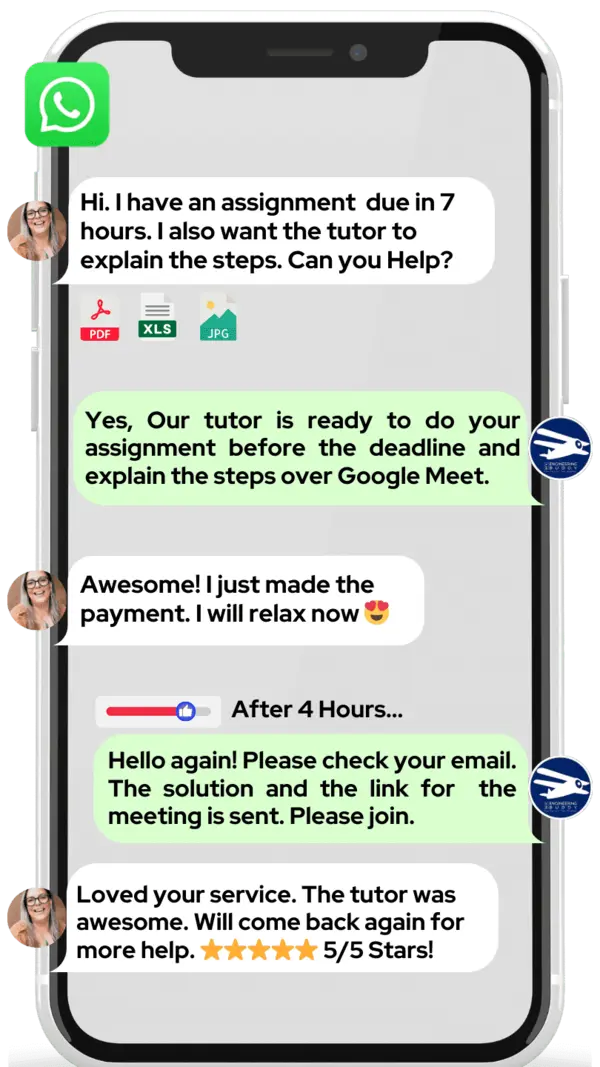
Unlike platforms where you fill out a form and wait, MEB responds in under a minute, 24/7. Tutor match takes under an hour. The $1 trial means you test before you commit. Everything runs over WhatsApp — no logins, no intake forms.
A common pattern our tutors observe is that Arduino students who struggle with interrupts or serial communication almost always have the same root issue — they haven’t fully internalized C variable scope and memory. Fixing that one concept unblocks three others.
Source: MEB tutor observations, 2022–2025.
Study Plans (Pick One That Matches Your Goal)
Catch-up (1–3 weeks): for students behind on a lab module or facing an imminent project submission — the tutor identifies the two or three blocking concepts and drills those first. Exam prep (4–8 weeks): structured revision across the full Arduino syllabus, including mock project walkthroughs and documentation practice. Weekly support: ongoing sessions aligned to your semester schedule, coursework deadlines, and progressive project complexity. After the first diagnostic, the tutor builds the specific session sequence — you don’t have to plan it yourself.
Pricing Guide
Arduino Programming tutoring runs $20–$40/hr for most undergraduate and introductory levels. Graduate-level embedded systems projects, capstone support, or highly specialised protocol work (CAN bus, RTOS on ESP32, custom bootloaders) can reach up to $100/hr.
Rate depends on: course level, specific hardware or protocol complexity, how tight the timeline is, and tutor availability at your preferred hours.
Availability tightens around end-of-semester project deadlines — particularly in April/May and November/December. If you have a fixed submission date, don’t wait.
For students targeting competitive graduate programs or industry roles requiring embedded systems depth, tutors with professional firmware or hardware development backgrounds are available at higher rates — share your specific goal and MEB will match the tier to your ambition.
Start with the $1 trial — 30 minutes, no registration, no commitment. WhatsApp MEB for a quick quote.
Try your first session for $1 — 30 minutes of live 1:1 tutoring or one homework question explained in full. No registration. No commitment.
WhatsApp MEB now
and get matched within the hour.
FAQ
Is Arduino Programming hard?
It depends on your C/C++ background. Students with no prior coding experience find the first few weeks steep — especially pointers, scope, and timing logic. Students who already code pick it up faster but still struggle with hardware-software interaction. A tutor shortens both curves.
How many sessions are needed?
Most students working on a single lab project need 3–6 sessions. Students covering a full semester of embedded systems typically work with a tutor weekly across 8–12 weeks. The first diagnostic session sets the exact plan based on your current level and deadline.
Can you help with homework and assignments?
Yes — MEB tutoring is guided learning. The tutor explains the concept, walks through the logic, and helps you understand the problem. You write the code and submit your own work. See our Academic Integrity policy and Why MEB page for full details on what we help with and what we don’t.
Will the tutor match my exact syllabus or exam board?
Yes. Before matching, MEB checks your course outline, institution, and specific hardware (Uno, Mega, ESP32, etc.). If your lab uses a specific library or peripheral, share that detail over WhatsApp and it goes into the match criteria.
What happens in the first session?
The tutor asks you to share your current sketch, any error messages, and your project brief. From that, they map exactly where understanding breaks down. The first session is part diagnostic, part tutoring — every minute is productive.
Is online tutoring as effective as in-person?
For Arduino specifically, online works well — screen sharing lets the tutor read your code and serial monitor output directly, and digital pen annotation covers what a whiteboard would. Most students report no practical difference after the first session.
Do I need the physical Arduino board during sessions?
Ideally yes — live hardware debugging is faster when the tutor can see your serial monitor output in real time. For students without hardware access, Tinkercad Circuits simulation covers most concepts and the tutor can work within that environment instead.
Can you help if I’m using an ESP32 or ESP8266 instead of a standard Arduino board?
Yes. MEB tutors cover the full Arduino ecosystem including ESP32, ESP8266, Arduino MKR, Nano 33 BLE, and Mega boards. Specify your board when you WhatsApp — the tutor matched to you will have direct experience with that hardware.
What if my project involves both Arduino and another subject area?
Common crossovers include control systems tutoring, signals and systems help, and Embedded C programming tutoring. MEB covers all three — and if your project spans two disciplines, the tutor match accounts for both.
Can I get Arduino Programming help at midnight?
Yes. MEB operates 24/7. Tutors are available across time zones, and WhatsApp response time averages under a minute regardless of hour. Late-night debugging sessions before a morning submission are a common use case.
What’s the difference between Arduino Uno and Arduino Mega for a beginner?
The Uno has 14 digital I/O pins and 32KB Flash — enough for most beginner projects. The Mega offers 54 digital pins and 256KB Flash, suited for projects with many peripherals. A tutor can advise which board fits your specific project scope before you invest in hardware.
How do I get started?
Start with the $1 trial — 30 minutes of live tutoring or one full question explained. Three steps: WhatsApp MEB, get matched to a verified Arduino tutor, start your trial session. No forms, no waiting.
Trust & Quality at My Engineering Buddy
Every MEB tutor goes through subject-specific screening — not a generic aptitude test. For Arduino Programming, that means demonstrating practical knowledge of embedded C, live debugging on real hardware, and library-level understanding across at least two board families. Tutors complete a live demo evaluation and are reviewed after every session through student feedback. Rated 4.8/5 across 40,000+ verified reviews on Google.
MEB tutoring is guided learning — you understand the work, then submit it yourself. For full details on what we help with and what we don’t, read our Academic Integrity policy and Why MEB.
MEB has served 52,000+ students across the US, UK, Canada, Australia, the Gulf, and Europe in 2,800+ subjects since 2008. Within Electrical Engineering, the platform covers everything from basic electronics tutoring and circuit analysis help to advanced FPGA design tutoring and digital electronics tutoring. Arduino sits within that same verified tutor network. See our tutoring methodology for how sessions are structured across all subjects.
Explore Related Subjects
Students studying Arduino Programming often also need support in:
- Analog Circuits
- Digital Signal Processing
- Microprocessors
- Sensors and Actuators
- Wireless Communication
- Industrial Automation
- Verilog
Next Steps
Getting started takes about two minutes over WhatsApp.
- Share your board type, course or project brief, and your deadline
- Share your time zone and preferred session hours
- MEB matches you with a verified Arduino tutor — usually within the hour
- First session starts with a diagnostic so every minute counts
Before your first session, have ready: your Arduino IDE open with your current sketch, any error messages or serial monitor output, your assignment spec or project brief, and your submission deadline. The tutor handles the rest.
Visit www.myengineeringbuddy.com for more on how MEB works.
WhatsApp to get started or email meb@myengineeringbuddy.com.
Reviewed by Subject Expert
This page has been carefully reviewed and validated by our subject expert to ensure accuracy and relevance.