Hire Verified & Experienced
Basic Electronics Tutors
4.8/5 40K+ session ratings collected on the MEB platform



Hire The Best Basic Electronics Tutor
Top Tutors, Top Grades. Without The Stress!
52,000+ Happy Students From Various Universities






How Much For Private 1:1 Tutoring & Hw Help?
Private 1:1 Tutoring and HW help Cost $20 – 35 per hour* on average.
Kirchhoff’s laws made sense in the lecture. Then the problem set landed and nothing worked. That’s where most Basic Electronics students lose a week — or a grade.
Basic Electronics Tutor Online
Basic Electronics is the foundational study of electronic components, circuits, and signals — covering resistors, capacitors, diodes, transistors, and op-amps — equipping students to analyse, design, and troubleshoot DC and AC circuits.
MEB offers 1:1 online Electrical and Electronics tutoring — and if you’ve searched for a Basic Electronics tutor near me, our online format gives you access to verified subject specialists regardless of where you are. Sessions are calibrated to your exact course, whether you’re at early undergraduate level in the US, UK, Canada, Australia, or the Gulf. One tutor, your syllabus, your pace.
- 1:1 online sessions tailored to your course syllabus and institution
- Expert-verified tutors with Electronics and Electrical Engineering degrees
- Flexible time zones — US, UK, Canada, Australia, Gulf covered
- Structured learning plan built after a diagnostic session
- Ethical homework and assignment guidance — you understand before you submit
52,000+ students across the US, UK, Canada, Australia, and the Gulf have used MEB since 2008 — including students in Electrical Engineering subjects like Basic Electronics, Analog Electronics, and Circuit Analysis.
Source: My Engineering Buddy, 2008–2025.
How Much Does a Basic Electronics Tutor Cost?
Most Basic Electronics sessions run at $20–$40/hr, depending on the level and topic depth — semiconductor device theory and op-amp analysis sit at the higher end. Not sure if it’s worth the spend? Start with the $1 trial: 30 minutes of live tutoring or one full homework question explained, no registration needed.
| Level / Need | Typical Rate | What’s Included |
|---|---|---|
| Standard (most undergrad levels) | $20–$35/hr | 1:1 sessions, homework guidance |
| Advanced / Specialist (VLSI, RF, device physics) | $35–$70/hr | Expert tutor, niche depth |
| $1 Trial | $1 flat | 30 min live session or 1 homework question |
Tutor availability tightens during end-of-semester exam periods. Book early if your finals are within four weeks.
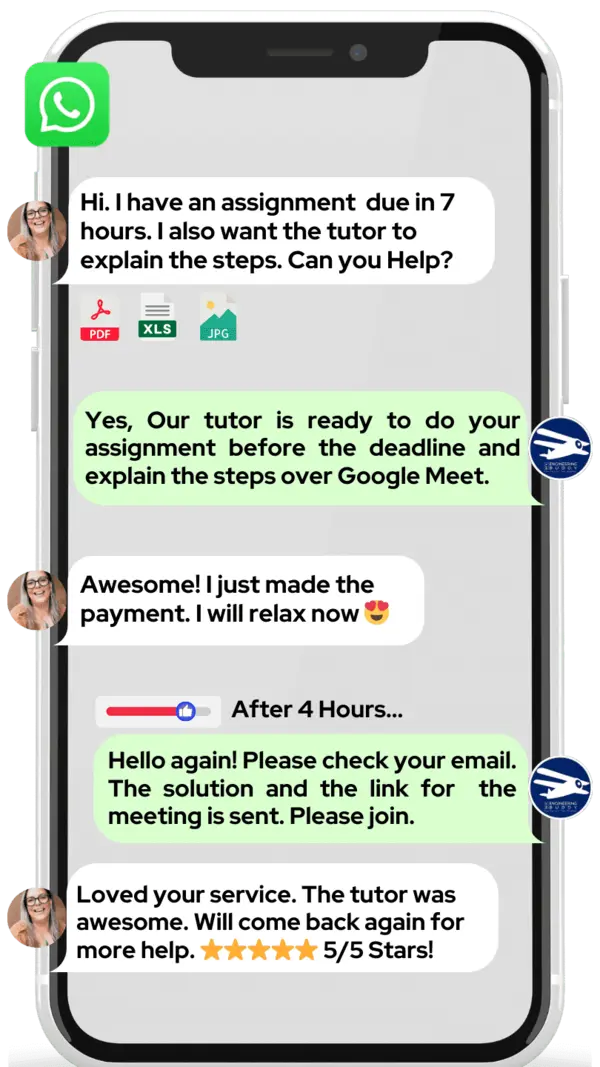
WhatsApp MEB for a quick quote — average response time under 1 minute.
Who This Basic Electronics Tutoring Is For
Basic Electronics trips up students at a specific point: when the theory from lectures doesn’t transfer to solving actual circuit problems under time pressure. This is for students at that point — or just past it.
- First and second-year undergraduate students in Electrical, Electronics, or Computer Engineering programmes
- Students retaking after a failed first attempt — particularly those who passed theory but lost marks on circuit analysis problems
- Students with a university conditional offer depending on this grade
- Students 4–6 weeks from an exam with significant gaps in transistor biasing, AC analysis, or filter design
- Students struggling with specific lab reports and pre-lab homework questions
- Parents watching a child’s confidence drop alongside their grades in their first engineering semester
Students coming to MEB are typically enrolled at institutions like MIT, Georgia Tech, Imperial College London, University of Toronto, UNSW Sydney, TU Delft, or equivalent engineering programmes at universities across the Gulf. The subject matter is the same. The pressure is the same.
At MEB, we’ve found that most students failing Basic Electronics aren’t failing because the subject is beyond them — they’re failing because nobody stopped to show them why the transistor Q-point calculation went wrong at step two. One session on that single point changes the trajectory of the whole module.
1:1 Tutoring vs Self-Study vs AI vs YouTube vs Online Courses
Self-study works if you’re disciplined, but there’s no one to catch a sign error before it becomes a failed exam. AI tools explain concepts fast — they can’t watch you attempt a nodal analysis and tell you exactly where your method breaks. YouTube covers diode operation well; it stops when you’re stuck on a specific BJT biasing problem from your actual problem set. Online courses are structured but fixed-pace with no personalisation. 1:1 tutoring with MEB is live, calibrated to your exact Basic Electronics syllabus, and corrects errors in the moment — the kind of errors that cost marks in ways a video rewind can’t fix.
Outcomes: What You’ll Be Able To Do in Basic Electronics
After working 1:1 with an MEB tutor, you’ll be able to solve DC and AC circuit problems using Kirchhoff’s laws without losing marks on sign conventions. You’ll analyse BJT and MOSFET biasing circuits and explain why a Q-point shifts under load. Apply superposition and Thevenin’s theorem to multi-source networks with confidence. Present frequency response plots for RC and RL filters and interpret what they mean physically. Model op-amp circuits — inverting, non-inverting, summing — and troubleshoot gain errors before they reach your lab submission.
Based on feedback from 40,000+ sessions collected by MEB from 2022 to 2025, 58% of students improved by one full grade after approximately 20 hours of 1:1 tutoring in subjects like Basic Electronics. A further 23% achieved at least a half-grade improvement.
Source: MEB session feedback data, 2022–2025.
Supporting a student through Basic Electronics? MEB works directly with parents to set up sessions, track progress, and keep coursework on schedule. WhatsApp MEB — average response time is under a minute, 24/7.
Try your first session for $1 — 30 minutes of live 1:1 tutoring or one homework question explained in full. No registration. No commitment. WhatsApp MEB now and get matched within the hour.
What We Cover in Basic Electronics (Syllabus / Topics)

Track 1: DC Circuits and Network Theorems
- Ohm’s Law, KVL, and KCL — systematic application to multi-loop circuits
- Mesh and nodal analysis of resistive networks
- Thevenin’s and Norton’s equivalent circuits
- Superposition theorem and source transformation
- Maximum power transfer and practical applications
- RC and RL transient response — charging, discharging, time constants
Core texts: Hayt & Kemmerly Engineering Circuit Analysis; Nilsson & Riedel Electric Circuits; Boylestad & Nashelsky Electronic Devices and Circuit Theory.
Track 2: Semiconductor Devices — Diodes and Transistors
- P-N junction theory, diode I-V characteristics, and ideal diode model
- Rectifier circuits — half-wave, full-wave, bridge — with filter design
- Zener diode voltage regulation
- BJT operation: common-emitter, common-base, common-collector configurations
- DC biasing and Q-point stability — voltage divider and emitter-feedback bias
- MOSFET tutoring — enhancement and depletion mode, gate characteristics, switching behaviour
- Small-signal models for BJT and FET amplifier analysis
Core texts: Sedra & Smith Microelectronic Circuits; Neamen Semiconductor Physics and Devices.
Track 3: AC Circuits, Amplifiers, and Operational Amplifiers
- Phasors, impedance, and AC steady-state analysis
- Frequency response — Bode plots, cutoff frequency, bandwidth
- RC low-pass, high-pass, and bandpass filter design
- Single-stage BJT amplifier — gain, input/output impedance
- Operational amplifiers help — inverting, non-inverting, summing, difference, and integrator configurations
- Feedback concepts — negative feedback, gain stability, virtual ground
- Oscillators and waveform generators — Colpitts, Wien bridge basics
Core texts: Razavi Fundamentals of Microelectronics; Coughlin & Driscoll Operational Amplifiers and Linear Integrated Circuits.
What a Typical Basic Electronics Session Looks Like
The tutor opens by checking where you left off — usually the BJT biasing problem or Thevenin equivalent from the previous session. You pull up your problem set or lab pre-work on screen. The tutor works through one representative problem live using a digital pen-pad, annotating each step: where the node voltage equations come from, how the small-signal model is drawn, why a particular assumption simplifies the calculation. Then it’s your turn. You attempt the next problem while the tutor watches and prompts — not solves. When you get the Q-point wrong, they don’t just give you the answer; they show you exactly which assumption broke. The session ends with two or three practice problems set for before next time, and the next topic noted: AC frequency response, or filter cutoff derivation, depending on where your exam is heading.
How MEB Tutors Help You with Basic Electronics (The Learning Loop)
Diagnose: In the first session, the tutor identifies exactly where your understanding breaks — whether that’s KVL sign convention errors, confusion between BJT and FET biasing, or inability to move from DC to AC analysis. This isn’t a generic quiz; it’s a targeted probe of the specific gaps your exam will expose.
Explain: Live worked problems on Google Meet, pen-pad annotations on circuit diagrams, step-by-step derivations. The tutor doesn’t just show the answer — they show why each step follows, and where shortcuts are legitimate versus where they cost marks.
Practice: You attempt problems with the tutor present. Not after. During. This is where the real transfer happens — the moment you realise you can actually do a nodal analysis without being told what to do next.
Feedback: Step-by-step error correction. The tutor identifies not just that the answer is wrong but at which step the method deviated and why. That specificity is what prevents the same error appearing in your exam.
Plan: Each session ends with a concrete task and the next topic mapped out. Progress is tracked against your exam date or coursework deadline — not just covered for coverage’s sake.
Sessions run over Google Meet. The tutor uses a digital pen-pad or iPad with Apple Pencil for circuit sketching and derivation annotation. Before your first session, share your course syllabus or module outline, a recent homework or past paper attempt, and your exam date. The first session is your diagnostic — and it also counts as your $1 trial if that’s how you start.
Students consistently tell us that the moment a tutor draws the small-signal equivalent circuit live and walks through it step by step is the moment Basic Electronics stops being intimidating. One good explanation at the right time changes everything.
Source: My Engineering Buddy session feedback, 2022–2025.
Students consistently tell us that the biggest mistake in Basic Electronics preparation is treating all topics equally. A common pattern our tutors observe is students spending equal time on Ohm’s Law and on op-amp feedback — when the exam weighting and difficulty gap between the two is enormous. Targeted practice on high-yield topics closes gaps faster.
Tutor Match Criteria (How We Pick Your Tutor)
Not every Electronics tutor can handle every level or exam board. Here’s what MEB checks before assigning yours.
Subject depth: The tutor must have demonstrable knowledge at your specific level — first-year undergraduate circuit analysis is different from final-year microelectronics tutoring. MEB verifies the tutor’s academic background and practical experience in the relevant sub-area.
Tools: Every tutor uses Google Meet with a digital pen-pad or iPad and Apple Pencil. Circuit diagrams, Bode plots, and device characteristic curves are drawn live — not screen-shared from a pre-made slide.
Time zone: Matched to your region — US, UK, Gulf, Canada, or Australia. No scheduling across 12-hour gaps.
Goals: Whether your aim is exam score improvement, understanding device physics conceptually, completing lab reports, or building a foundation for Analog Circuits next semester, the tutor match reflects that.
Unlike platforms where you fill out a form and wait, MEB responds in under a minute, 24/7. Tutor match takes under an hour. The $1 trial means you test before you commit. Everything runs over WhatsApp — no logins, no intake forms.
Study Plans (Pick One That Matches Your Goal)
Your tutor builds the specific session sequence after the diagnostic. Broadly, three patterns work for Basic Electronics: a catch-up sprint of 1–3 weeks targeting the two or three topics that are actually on your upcoming exam; a structured exam prep block of 4–8 weeks covering the full module syllabus with past paper practice built in; or ongoing weekly support aligned to your semester schedule, keeping pace with lectures and staying ahead of problem sets and lab deadlines.
Pricing Guide
Basic Electronics tutoring starts at $20/hr for standard undergraduate coverage. Advanced topics — semiconductor device physics, RF amplifier design, mixed-signal analysis — and graduate-level work run up to $100/hr depending on tutor specialisation.
Rate factors include your level, how complex the specific topics are, your timeline, and tutor availability at your preferred hours.
Exam season tightens supply. If your finals or coursework deadline is inside four weeks, reach out now rather than later.
For students targeting graduate programmes at schools like Stanford, ETH Zurich, or Imperial — or roles in semiconductor or RF design — tutors with professional industry and research backgrounds are available at higher rates. Share your specific goal and MEB will match the tier to what you need.
Start with the $1 trial — 30 minutes, no registration, no commitment. WhatsApp MEB for a quick quote.
MEB has been running since 2008. That’s 18 years of tutor vetting, session feedback, and curriculum tracking across 2,800+ subjects — including the full spectrum of Electrical Engineering from first-year fundamentals to graduate-level specialisations.
Source: My Engineering Buddy, 2008–2025.
FAQ
Is Basic Electronics hard?
It’s hard at one specific transition: moving from understanding individual components to analysing complete circuits under exam conditions. Most students can explain what a transistor does. Far fewer can set up and solve a BJT bias network correctly in 10 minutes. That gap is exactly what tutoring closes.
How many sessions are needed?
Students with a specific gap — one failed topic or one exam section — typically need 4–8 sessions. Full-module coverage from a weak foundation takes 15–25 hours over a semester. Your tutor gives a clearer estimate after the first diagnostic session.
Can you help with homework and assignments?
Yes. MEB tutoring is guided learning — you understand the work, then submit it yourself. The tutor explains the method, you apply it. See our Academic Integrity policy and Why MEB page for full details on what we help with and what we don’t.
Will the tutor match my exact syllabus or exam board?
Yes. Share your module outline, course code, or university name when you message MEB. Tutors are matched based on your specific syllabus — not a generic Electronics curriculum. Institutions and exam boards vary; the tutor is selected to fit yours.
What happens in the first session?
The tutor runs a diagnostic: they ask you to work through one or two problems live, then identify exactly where your method breaks. The rest of the session addresses the most pressing gap. You leave with a clear picture of what to fix and in what order.
Is online tutoring as effective as in-person?
For circuit analysis and electronics, yes — because the core tool is the pen-pad, not proximity. Live circuit sketching on screen, real-time annotation, and immediate feedback replicate everything in-person delivers. Many students find the recorded session link useful for review before exams.
Can I get Basic Electronics help at midnight or early morning?
MEB operates 24/7. Tutors are spread across time zones to cover late-night US students, early-morning UK sessions, and Gulf evening slots. Message on WhatsApp at any hour — average response is under a minute.
What if I don’t like my assigned Basic Electronics tutor?
Request a different tutor. No explanation needed, no fee for the switch. MEB reassigns based on your feedback. The $1 trial exists precisely so you test the fit before committing to a full block of sessions.
Do you cover LTspice and circuit simulation alongside the theory?
Yes. If your course uses LTspice tutoring or Multisim for simulation labs, MEB tutors can work through both the software and the underlying circuit theory in the same session. Simulation and theory are covered together, not as separate silos.
What’s the difference between Basic Electronics and Analog Electronics — should I be taking both?
Basic Electronics covers the foundational layer: components, DC circuits, diodes, introductory transistor theory. Analog Electronics builds on that — amplifier design, feedback systems, frequency response in depth. Most students take Basic Electronics first; some curricula overlap the content. Your tutor can clarify where your specific module sits and what’s actually on your exam.
How do I get started?
Message MEB on WhatsApp with your subject, university, and exam date. You’ll be matched with a tutor within the hour. Start with the $1 trial — 30 minutes of live tutoring or one homework question explained in full, no registration, no commitment.
Trust & Quality at My Engineering Buddy
Every MEB tutor goes through subject-specific vetting before their first session: degree verification, a live demo evaluation, and ongoing review based on student session feedback. Tutors covering Basic Electronics hold degrees in Electrical Engineering, Electronics Engineering, or Physics — with demonstrable experience in circuit analysis, semiconductor devices, and amplifier design. Rated 4.8/5 across 40,000+ verified reviews on Google.
MEB tutoring is guided learning — you understand the work, then submit it yourself. For full details on what we help with and what we don’t, read our Academic Integrity policy and Why MEB.
MEB has served 52,000+ students across the US, UK, Canada, Australia, the Gulf, and Europe in 2,800+ subjects since 2008. In Electrical Engineering specifically, that includes support across Digital Electronics tutoring, Circuit Design help, and Signals and Systems tutoring — as well as Basic Electronics at every undergraduate level. The MEB tutoring methodology is built around the diagnostic-explain-practice-feedback loop applied consistently across all subjects.
A common pattern our tutors observe is that students who arrive after failing a Basic Electronics mid-term have often been studying — just studying the wrong things, or studying passively. Reading notes and watching solutions is not the same as attempting problems with immediate feedback. MEB’s experience across thousands of sessions shows that active problem-solving with a tutor present is what actually moves the grade.
Explore Related Subjects
Students studying Basic Electronics often also need support in:
- Semiconductor Devices
- Digital Circuit
- Network Theory
- Electronic Circuit Design
- Embedded Systems
- Microprocessors
- Integrated Circuits (IC)
Next Steps
Here’s what to have ready before you message:
- Your exam board, course code, or module name — and the hardest topic you’re currently stuck on
- Your availability and time zone
- Your exam or coursework deadline date
Before your first session, have ready: your exam board and syllabus (or course outline), a recent past paper attempt or homework you struggled with, and your exam or deadline date. The tutor handles the rest.
MEB matches you with a verified tutor — usually within an hour. The first session starts with a diagnostic so every minute is used well. Visit www.myengineeringbuddy.com for more on how MEB works.
WhatsApp to get started or email meb@myengineeringbuddy.com.
Reviewed by Subject Expert
This page has been carefully reviewed and validated by our subject expert to ensure accuracy and relevance.