Hire Verified & Experienced
Business Calculus Tutors
4.8/5 40K+ session ratings collected on the MEB platform



Hire The Best Business Calculus Tutor
Top Tutors, Top Grades. Without The Stress!
52,000+ Happy Students From Various Universities



How Much For Private 1:1 Tutoring & Hw Help?
Private 1:1 Tutoring and HW help Cost $20 – 35 per hour* on average.
Derivatives in week three. Optimization in week five. Most students hit a wall somewhere between the two — and a missed concept at that point costs points on every exam that follows.
Business Calculus Tutor Online
Business Calculus is a one-semester applied mathematics course covering limits, derivatives, integrals, and optimization — designed for business, economics, and management majors to model and solve real-world financial and operational problems.
If you’ve searched for a Business Calculus tutor near me, you already know the problem: most tutors either teach pure math with no business context, or they skip the reasoning and hand you shortcuts that fall apart under exam conditions. MEB connects you with a 1:1 calculus tutor online who knows exactly where Business Calculus diverges from standard Calculus 1 — and teaches it that way. Expect to understand the work before you submit it. No guarantees on grade, but students who put in the sessions see the difference.
- 1:1 online sessions matched to your exact course and textbook
- Expert-verified tutors with subject-specific Business Calculus knowledge
- Flexible time zones — US, UK, Canada, Australia, Gulf
- Structured learning plan built after a diagnostic session
- Ethical homework and assignment guidance — you understand before you submit
52,000+ students across the US, UK, Canada, Australia, and the Gulf have used MEB since 2008 — including students in Calculus subjects like Business Calculus, Calculus 1, and Differential Calculus.
Source: My Engineering Buddy, 2008–2025.
How Much Does a Business Calculus Tutor Cost?
Most Business Calculus tutoring sessions at MEB run $20–$40 per hour. New students can test the service with a $1 trial — 30 minutes of live tutoring or one homework question explained in full.
| Level / Need | Typical Rate | What’s Included |
|---|---|---|
| Standard (most undergrad levels) | $20–$35/hr | 1:1 sessions, homework guidance |
| Advanced / Specialist | $35–$70/hr | Expert tutor, niche depth |
| $1 Trial | $1 flat | 30 min live session or 1 homework question |
Tutor availability tightens significantly during midterms and finals — book early if you’re within six weeks of an exam.
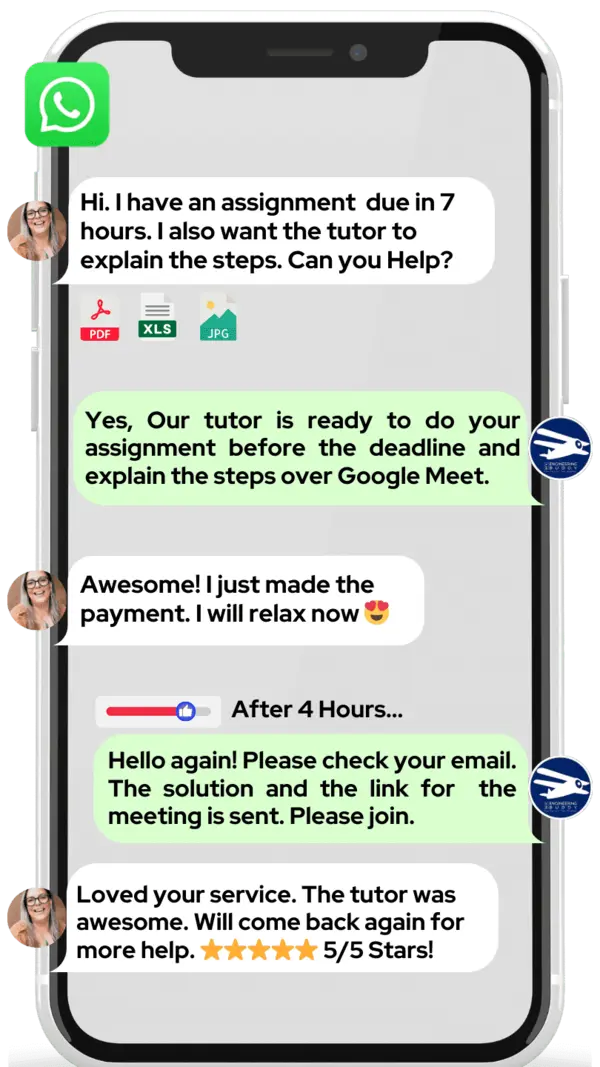
WhatsApp MEB for a quick quote — average response time under 1 minute.
Who This Business Calculus Tutoring Is For
Business Calculus sits at the intersection of math anxiety and real academic stakes. It’s required for most business, economics, and management degrees — and it trips up students who were fine in precalculus because the applications move fast.
- First and second-year undergraduates at universities including NYU, University of Toronto, University of Melbourne, University of Amsterdam, and Texas A&M who need to pass Business Calculus as a prerequisite for finance, economics, or MBA-track courses
- Students retaking after a failed first attempt who need to close specific gaps, not repeat the whole course
- Students 4–6 weeks from a final exam with significant gaps still to close — particularly in optimization and related rates
- Students with a conditional offer or GPA threshold that depends on passing this course
- Parents watching a child’s confidence drop alongside their grades in a course that felt manageable until week four
- Students who completed precalculus tutoring and need a smooth bridge into calculus concepts applied to business problems
1:1 Tutoring vs Self-Study vs AI vs YouTube vs Online Courses
Self-study works if you’re disciplined and the material is linear — Business Calculus is neither forgiving nor linear once you hit optimization. AI tools give fast explanations but can’t watch you set up a cost function wrong and correct you in the moment. YouTube is useful for overviews of the chain rule, but it stops when your specific problem doesn’t match the video. Online courses move at a fixed pace with no adjustment for where you’re actually stuck. With a 1:1 online Business Calculus tutor at MEB, the session adapts to your exact course, your specific errors, and your exam date — not a general curriculum someone else designed.
Outcomes: What You’ll Be Able To Do in Business Calculus
After working through Business Calculus with an MEB tutor, you’ll be able to apply derivatives to find marginal cost, marginal revenue, and profit-maximizing output levels in real business scenarios. You’ll solve optimization problems involving cost and revenue functions with and without constraints, using both first and second derivative tests correctly. You’ll analyze the behavior of demand curves using elasticity of demand. You’ll model and interpret exponential growth and decay in contexts like compound interest and depreciation. You’ll set up and evaluate definite integrals to calculate total revenue, consumer surplus, and accumulated change over time.
Supporting a student through Business Calculus? MEB works directly with parents to set up sessions, track progress, and keep coursework on schedule. WhatsApp MEB — average response time is under a minute, 24/7.
Based on feedback from 40,000+ sessions collected by MEB from 2022 to 2025, 58% of students improved by one full grade after approximately 20 hours of 1:1 tutoring in subjects like Business Calculus. A further 23% achieved at least a half-grade improvement.
Source: MEB session feedback data, 2022–2025.
Students consistently tell us that the moment Business Calculus clicks is when they stop treating derivatives as formulas to memorize and start seeing them as rates of change that answer a business question. That shift usually happens in one session — not a semester. At MEB, we build every session around getting to that moment faster.
What We Cover in Business Calculus (Syllabus / Topics)

Track 1: Limits, Derivatives, and Differentiation Rules
- Intuitive and formal definition of limits; one-sided limits and continuity
- The derivative as a rate of change — slope of a tangent line
- Power rule, product rule, quotient rule, and chain rule
- Derivatives of exponential and logarithmic functions (base e and base 10)
- Implicit differentiation for demand and supply equations
- Higher-order derivatives and concavity
- Implicit differentiation help for students who need that topic isolated
Core texts: Applied Calculus by Hughes-Hallett et al.; Calculus for Business, Economics, Life Sciences, and Social Sciences by Barnett, Ziegler, and Byleen. Also available free via OpenStax Calculus Volume 1 for students who need an accessible reference.
Track 2: Applications of Derivatives in Business Contexts
- Marginal cost, marginal revenue, and marginal profit
- Profit maximization and loss minimization using critical points
- First and second derivative tests for relative extrema
- Absolute extrema on closed intervals — applied to production and pricing
- Elasticity of demand and its relationship to total revenue
- Related rates in business settings (e.g. rate of change of profit with respect to time)
- Curve sketching using derivatives to interpret business function behavior
Core texts: Brief Calculus: An Applied Approach by Larson; Mathematics for Economics by Hoy, Livernois, McKenna, and Rees.
Track 3: Integration and Its Business Applications
- Antiderivatives and indefinite integrals — rules and substitution method
- Definite integrals and the Fundamental Theorem of Calculus
- Area between curves — consumer surplus and producer surplus
- Total cost from marginal cost; total revenue from marginal revenue
- Exponential growth and decay — compound interest, depreciation, population models
- Improper integrals in continuous income stream problems
Core texts: same Barnett/Larson texts above; integral calculus tutoring for students who need deeper work on integration technique.
What a Typical Business Calculus Session Looks Like
The tutor opens by checking the previous topic — often the chain rule or a profit-maximization problem from the last session — to see whether the method stuck or whether an error crept back in. From there, the student and tutor work through new material on a shared screen: setting up cost and revenue functions, applying the product rule to a pricing model, or interpreting what a negative second derivative means for a business decision. The tutor uses a digital pen-pad to show the working step by step. The student then attempts a parallel problem and explains their reasoning out loud. If the setup is wrong — say, confusing total cost with marginal cost — the tutor catches it before it becomes a habit. The session closes with two or three targeted practice problems and a note on what’s next: elasticity of demand or integration by substitution.
How MEB Tutors Help You with Business Calculus (The Learning Loop)
Diagnose: In the first session, the tutor runs a short diagnostic — usually a few worked problems covering limits, a differentiation rule, and one applied optimization problem. This identifies whether the gap is algebraic (factoring errors, fraction rules), conceptual (not understanding what a derivative measures), or procedural (setting up the objective function incorrectly).
Explain: Live worked examples on a digital pen-pad, showing the full solution process — not just the answer. For Business Calculus, this means explaining why you differentiate a revenue function and what the sign of the result tells a manager, not just how to apply the quotient rule.
Practice: The student attempts a similar problem with the tutor present. No moving on until the method is solid. This is where most of the learning happens — not in watching, but in doing under light supervision.
Feedback: Step-by-step error correction focused on why the approach was off. In Business Calculus, common errors include using the wrong derivative test, forgetting to check the second-order condition, or confusing marginal with average quantities. The tutor names the error type so it doesn’t reappear.
Plan: Before the session ends, the tutor sets the next two or three practice problems and notes the upcoming topic. If exams are approaching, the plan shifts to past paper or mock problem sets, timed.
Sessions run over Google Meet with a digital pen-pad or iPad and Apple Pencil. Before your first session, have your course syllabus, a recent homework set you struggled with, and your exam date ready. The first session covers the diagnostic and at least one full topic — you won’t spend 30 minutes on setup.
Start with the $1 trial — 30 minutes of live tutoring that also serves as your first diagnostic.
A common pattern our tutors observe is that students who struggle with Business Calculus optimization aren’t weak at calculus — they’re weak at translating the word problem into a function. Once that translation step becomes reliable, the derivative work usually follows without much trouble. That’s the skill we build first.
MEB tutors cover the full range of calculus subjects — from Calculus 2 tutoring and multivariable calculus help to applied and business-focused courses — so students moving through a calculus sequence have consistent support at every stage.
Source: My Engineering Buddy, 2008–2025.
Tutor Match Criteria (How We Pick Your Tutor)
Not every calculus tutor is the right fit for Business Calculus. Here’s what MEB checks before making a match.
Subject depth: The tutor must have direct experience with applied calculus at the undergraduate business or economics level — not just pure mathematics. Business Calculus has a specific vocabulary and application set that a pure math tutor may misread.
Tools: Google Meet plus a digital pen-pad or iPad and Apple Pencil. Every tutor MEB assigns is comfortable working through problems visually in real time.
Time zone: Matched to your region — US, UK, Gulf, Canada, or Australia. No scheduling across a 12-hour gap.
Goals: Whether you need to pass a final, close a specific gap in optimization, complete a problem set, or build conceptual depth for an economics sequence, the match takes your stated goal into account.
Unlike platforms where you fill out a form and wait, MEB responds in under a minute, 24/7. Tutor match takes under an hour. The $1 trial means you test before you commit. Everything runs over WhatsApp — no logins, no intake forms.
Study Plans (Pick One That Matches Your Goal)
After the first diagnostic session, your tutor builds a specific sequence. The three most common patterns for Business Calculus students: Catch-up (1–3 weeks) — for students behind on derivatives or integration who need to close the gap before a midterm or final; Exam prep (4–8 weeks) — structured work through every exam topic with past problems and timed practice in the final two weeks; Weekly support — ongoing sessions aligned to your semester schedule, covering each topic as your course introduces it so nothing accumulates into a crisis.
Pricing Guide
Business Calculus tutoring at MEB starts at $20/hr for standard undergraduate-level support. Graduate-level or highly specialized applied mathematics tutoring can reach $100/hr. The rate you pay depends on the level of the material, how complex your specific topics are, your timeline, and tutor availability.
For students targeting top-tier business programs, MBA prerequisites, or economics PhD sequences, tutors with quantitative research or professional finance backgrounds are available at higher rates — share your specific goal and MEB will match the tier to what you need.
Availability drops sharply in the two weeks before finals. If you’re within that window, book now rather than waiting.
Start with the $1 trial — 30 minutes, no registration, no commitment. WhatsApp MEB for a quick quote.
MEB has supported students through Calculus 3 tutoring, vector calculus help, and advanced applied mathematics — and the same tutor quality standard applies whether the course is introductory or graduate level.
Source: My Engineering Buddy, 2008–2025.
At MEB, we’ve found that students who book a session within 48 hours of a specific exam panic point — a graded problem set returned with low marks, or a practice exam they couldn’t finish — make faster progress than those who wait. Early intervention beats cramming. Every time.
FAQ
Is Business Calculus hard?
Harder than students expect if they haven’t done calculus before, easier than Calculus 1 if they have. The difficulty isn’t the math itself — it’s translating business word problems into functions. Most students find that once they can set up the problem correctly, the calculus steps follow.
How many sessions are needed?
Most students see clear improvement within 6–10 sessions for a specific topic gap. Students preparing from scratch for a final typically need 15–20 sessions over 4–6 weeks. The first session diagnostic gives a more accurate estimate for your situation.
Can you help with homework and assignments?
Yes. MEB tutoring is guided learning — you understand the work, then submit it yourself. See our Academic Integrity policy and Why MEB page for full details on what we help with and what we don’t. Tutors will not complete work on your behalf.
Will the tutor match my exact syllabus or exam board?
Yes. Before matching, MEB asks for your course outline, university, and textbook. Business Calculus varies in scope across institutions — some stop before integration, others include multivariable topics. Your tutor works from what your course actually requires.
What happens in the first session?
The tutor runs a short diagnostic using 3–4 problems — limits, differentiation, and one applied problem. This takes about 15 minutes. The rest of the session covers the most urgent topic based on what the diagnostic reveals and your exam timeline.
Is online tutoring as effective as in-person?
For mathematics and applied calculus, yes — the digital pen-pad replicates whiteboard working in real time. Students report that the ability to record and review sessions after the fact makes online tutoring more useful than in-person for complex problem sets.
What’s the difference between Business Calculus and Calculus 1?
Business Calculus covers similar core topics — derivatives and integrals — but uses business and economics applications throughout and typically omits trigonometric functions. Calculus 1 is more rigorous, covers epsilon-delta proofs, and feeds into a full calculus sequence. They are not interchangeable for mathematics or engineering majors.
Can I get Business Calculus help at midnight or on weekends?
Yes. MEB operates 24/7. WhatsApp response time averages under one minute regardless of when you message. Tutors span multiple time zones, so late-night sessions in the US, UK, Gulf, or Australia are all routinely available.
Do I need to have taken precalculus before starting Business Calculus?
Most universities require it or assume it. If your algebra and function fluency are weak, your tutor will identify that in the first session and address it directly. Students who struggled with advanced calculus tutoring often benefit from a brief review of prerequisite material before the main course content.
What if I don’t understand the tutor’s teaching style?
Request a different tutor. MEB will rematch you — usually within the hour. The $1 trial exists precisely so you can test the match before committing to a full session block. If it’s not right, say so immediately and MEB will fix it.
How do I get started?
Start with the $1 trial — 30 minutes of live 1:1 tutoring or one homework question explained in full. Three steps: WhatsApp MEB, get matched with a Business Calculus tutor, start your trial session. No registration. No forms. Done.
How do Business Calculus grades affect my GPA for business school applications?
Business Calculus is typically a core required course, and a low grade cannot usually be replaced. Business school admissions offices and MBA programs review quantitative course performance closely — a repeated or low Business Calculus grade is a visible signal. Getting the grade right the first time matters more than most students realize.
Trust & Quality at My Engineering Buddy
Every MEB tutor goes through a multi-stage vetting process: subject knowledge screening, live demo session evaluation, and review of academic or professional qualifications. Tutors covering Business Calculus hold degrees in mathematics, economics, finance, or closely related quantitative fields — and many have professional backgrounds in the areas they teach. Ongoing session feedback is reviewed to catch quality issues early. Rated 4.8/5 across 40,000+ verified reviews on Google.
MEB tutoring is guided learning — you understand the work, then submit it yourself. For full details on what we help with and what we don’t, read our Academic Integrity policy and Why MEB.
MEB has served 52,000+ students across the US, UK, Canada, Australia, the Gulf, and Europe since 2008 — in 2,800+ subjects. In Calculus specifically, MEB covers everything from Business Calculus and calculus of variations tutoring through to stochastic calculus help for graduate-level students. The same quality standard — verified tutors, session feedback, and a $1 trial before commitment — applies across all levels. See how MEB tutoring works for a full breakdown of the methodology.
Explore Related Subjects
Students studying Business Calculus often also need support in:
- Differential Calculus
- Calculus 2
- Multivariable Calculus
- Calculus 3
- Quantum Stochastic Calculus
- Malliavin Calculus
Next Steps
When you contact MEB, share your exam board or course outline, the topics you’re finding hardest, and how many weeks you have until your exam or submission deadline. Include your availability and time zone. MEB matches you with a verified Business Calculus tutor — usually within 24 hours, often within the hour.
Before your first session, have ready:
- Your syllabus or course outline (or the chapter list from your textbook)
- A recent homework set or past exam you struggled with
- Your exam or deadline date
The tutor handles the rest. First session starts with the diagnostic — every minute is used.
Visit www.myengineeringbuddy.com for more on how MEB works.
WhatsApp to get started or email meb@myengineeringbuddy.com.
Reviewed by Subject Expert
This page has been carefully reviewed and validated by our subject expert to ensure accuracy and relevance.