Hire Verified & Experienced
Deep Learning Tutors
4.8/5 40K+ session ratings collected on the MEB platform
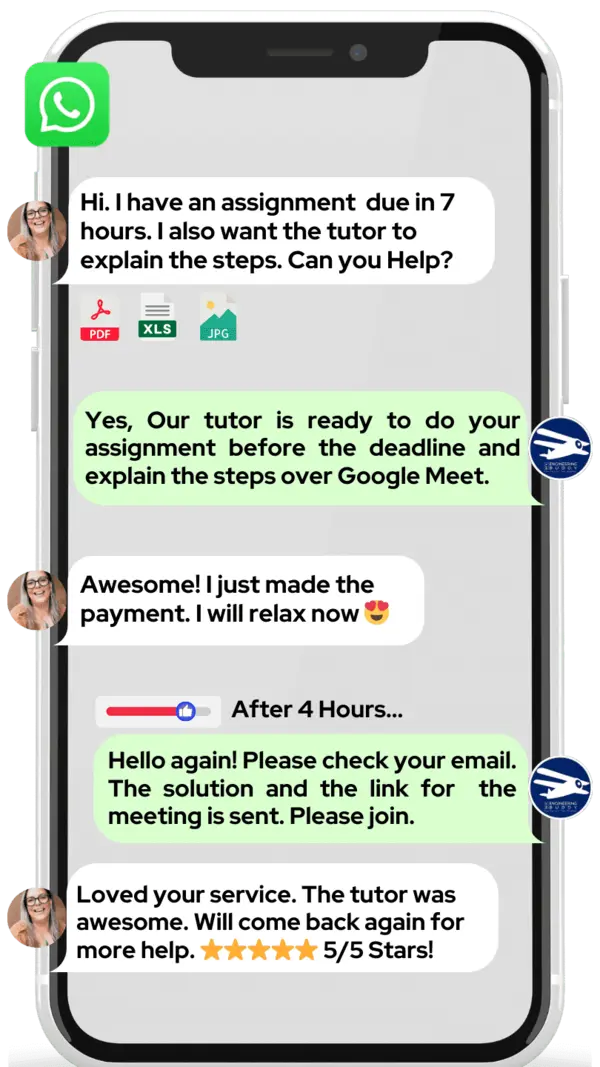



Hire The Best Deep Learning Tutor
Top Tutors, Top Grades. Without The Stress!





52,000+ Happy Students From Various Universities






How Much For Private 1:1 Tutoring & Hw Help?
Private 1:1 Tutoring and HW help Cost $20 – 35 per hour* on average.
Your CNN trained for 12 hours, hit 54% accuracy, and your supervisor wants results by Friday.
Deep Learning Tutor Online
Deep Learning is a branch of machine learning that uses multi-layer neural networks — including CNNs, RNNs, and transformers — to learn patterns from large datasets, equipping students and researchers to build models for image recognition, NLP, and sequential prediction tasks. A Deep Learning tutor online helps you move from theory to working implementation.
MEB offers 1:1 online tutoring and homework help across 2,800+ advanced subjects, and Deep Learning is one of our most requested graduate-level topics. Whether you’re debugging a PyTorch model at 11 pm or working through backpropagation by hand before a viva, a Deep Learning tutor near me — available online, in your time zone — makes the difference between spinning your wheels and making real progress.
- 1:1 online sessions tailored to your course, supervisor requirements, or syllabus
- Expert verified tutors with hands-on experience in TensorFlow, PyTorch, and Keras
- Flexible time zones — US, UK, Canada, Australia, Gulf, and Europe covered
- Structured learning plan built after a diagnostic session
- Ethical homework and assignment guidance — you understand the work, then submit it yourself
52,000+ students across the US, UK, Canada, Australia, and the Gulf have used MEB since 2008 — across 2,800+ subjects, from AP Calculus to A Level Music Technology to Data Science.
Source: My Engineering Buddy, 2008–2025.
How Much Does a Deep Learning Tutor Cost?
Most Deep Learning tutoring sessions run $20–$40/hr. Graduate-level and research-focused support — covering topics like variational autoencoders, attention mechanisms, or custom CUDA implementations — sits in the $40–$100/hr range. You can start with a $1 trial before committing to anything.
| Level / Need | Typical Rate | What’s Included |
|---|---|---|
| Undergraduate / Introductory | $20–$35/hr | 1:1 sessions, homework guidance, concept walkthroughs |
| Graduate / Research-Level | $35–$70/hr | Expert tutor, model debugging, paper-level depth |
| Specialist / Niche (custom CUDA, RL, etc.) | $70–$100/hr | PhD-experienced tutor, architecture design, research support |
| $1 Trial | $1 flat | 30 min live session or one homework question explained in full |
Tutor availability tightens around semester end dates and project submission deadlines — particularly in January, April, and August. Book early if those dates apply to you.
WhatsApp MEB for a quick quote — average response time under 1 minute.
Who This Deep Learning Tutoring Is For
Deep Learning is taught at undergraduate, masters, and PhD level across computer science, data science, and electrical engineering programmes. The content is technically demanding, and most students hit the same walls: vanishing gradients, overfitting, and the gap between theory in lectures and code that actually trains.
- Undergraduate CS or data science students covering neural networks for the first time
- Masters students at programmes like Georgia Tech OMSCS, ETH Zurich, or UCL whose coursework involves implementing CNNs or transformer models from scratch
- PhD students needing a second expert perspective on architecture choices or loss functions before a supervision meeting
- Students who failed or narrowly passed a Deep Learning module and are retaking — with a conditional offer or programme progression depending on this result
- Professionals upskilling in AI who need structured guidance beyond what online courses provide
- Students with a project or assignment submission deadline approaching and significant gaps still to close
1:1 Tutoring vs Self-Study vs AI Tools
Self-study through courses like fast.ai or reading Goodfellow, Bengio, and Courville gets you far — but there’s no one to tell you why your loss curve is oscillating or whether your architecture decision is the right one for your dataset. AI tools like ChatGPT can explain backpropagation clearly, but they cannot watch you implement a convolutional layer live, catch the indexing error causing your NaN loss, or adapt the explanation when your mental model is still wrong. Real-time human instruction matters in Deep Learning because the mistakes are often subtle — a wrong activation function, a misconfigured optimizer, a data leakage issue that only shows up at evaluation. MEB combines the flexibility of online tutoring with a structured diagnostic and feedback loop, calibrated to your exact course, framework, and deadline.
Outcomes: What You’ll Be Able To Do in Deep Learning
After working with a Deep Learning tutor online, you’ll be able to implement and train feedforward and convolutional networks in PyTorch or TensorFlow without referring to a template. You’ll be able to explain the mathematics of backpropagation — chain rule, gradient flow, weight updates — clearly enough to answer a viva question or write it up in a report. You’ll be able to analyze why a model is underfitting or overfitting and apply regularization techniques like dropout or batch normalization to address it. You’ll be able to build and present a working sequence model for NLP tasks using attention or LSTM layers. You’ll be able to apply transfer learning from a pretrained model — ResNet, BERT, or similar — to a domain-specific problem and justify that architectural choice.
Based on feedback from 40,000+ sessions collected by MEB from 2022 to 2025, 58% of students improved by one full grade after approximately 20 hours of 1:1 tutoring in a single subject. A further 23% achieved at least a half-grade improvement.
Source: MEB session feedback data, 2022–2025.
At MEB, we’ve found that Deep Learning students make the fastest progress when they stop treating model training as a black box. The tutors who get the best results are the ones who make students explain — out loud — what they think is happening at each layer before touching the code.
What We Cover in Deep Learning (Syllabus / Topics)

Foundations: Neural Networks and Optimization
- Perceptrons, activation functions (ReLU, sigmoid, tanh, softmax)
- Forward pass, loss functions (cross-entropy, MSE, Huber loss)
- Backpropagation and the chain rule — derivation and implementation
- Gradient descent variants: SGD, Adam, RMSProp, learning rate schedules
- Regularization: L1/L2, dropout, early stopping, batch normalization
- Initialization strategies: Xavier, He, and why they matter
Core texts: Deep Learning by Goodfellow, Bengio & Courville; Neural Networks and Deep Learning by Nielsen (online). Supplemented by the World Economic Forum’s AI readiness reports for industry context.
Convolutional and Recurrent Architectures
- CNN architecture: convolution, pooling, stride, padding, receptive fields
- Classic networks: LeNet, AlexNet, VGG, ResNet, Inception
- Transfer learning: fine-tuning pretrained models for custom datasets
- RNNs, LSTMs, and GRUs: sequence modelling, vanishing gradient problem
- Object detection tutoring — YOLO, Faster R-CNN, anchor boxes, IoU
- Image processing help — preprocessing pipelines, augmentation, normalization
Key references: Hands-On Machine Learning with Scikit-Learn, Keras and TensorFlow by Aurélien Géron; Programming PyTorch for Deep Learning by Ian Pointer.
Transformers, NLP, and Advanced Topics
- Attention mechanisms: scaled dot-product, multi-head attention
- Transformer architecture: encoder-decoder, positional encoding, BERT, GPT
- NLP tutoring — tokenization, embeddings, fine-tuning language models
- Generative models: VAEs, GANs, diffusion models (conceptual and implemented)
- Reinforcement learning help — policy gradients, Q-learning, actor-critic methods
- Model evaluation: confusion matrix, ROC-AUC, precision-recall, F1, calibration
- Deployment basics: ONNX, model quantization, serving with FastAPI or Flask
Key references: Speech and Language Processing by Jurafsky & Martin; The Hundred-Page Machine Learning Book by Andriy Burkov.
Platforms, Tools & Textbooks We Support
Deep Learning coursework is almost always code-first. MEB tutors work directly in the tools you’re already using, so there’s no friction in the session itself.
- PyTorch (including torchvision, torchaudio, torch.nn)
- TensorFlow and Keras (2.x and legacy 1.x codebases)
- Google Colab and Jupyter Notebooks
- Hugging Face Transformers library
- Weights & Biases (W&B) for experiment tracking
- CUDA / GPU training concepts and debugging
- Scikit-learn for preprocessing and baseline comparisons
What a Typical Deep Learning Session Looks Like
The tutor opens by checking where you got stuck since the last session — often it’s the loss not converging or a shape mismatch in a tensor operation. From there, you’ll work through the specific problem on screen together: the tutor annotates the architecture diagram or the code using a digital pen-pad, and walks through exactly what’s happening at each layer. You replicate the fix or explain the logic back in your own words. If you’re working on a CNN assignment or a transformer implementation, the tutor adjusts the depth in real time based on where your understanding breaks down. The session closes with a specific task — retrain with a modified optimizer, implement attention from scratch, or answer two written questions on regularization — and the next topic is set before you disconnect.
How MEB Tutors Help You with Deep Learning (The Learning Loop)
Diagnose: In the first session, the tutor identifies exactly where understanding breaks down — is it the maths of backpropagation, the framework syntax, the architecture reasoning, or all three? That gap drives every session that follows.
Explain: The tutor works through live problems on screen using a digital pen-pad — annotating network diagrams, tracing gradient flow, or stepping through code line by line. No slides. No pre-recorded walkthroughs.
Practice: You attempt the problem with the tutor present. Not after. During. That’s when the real gaps show up — and when they get fixed.
Feedback: Every error gets a specific explanation: why the shape was wrong, why the model diverged, why that regularization choice was off. You leave knowing the reason, not just the fix.
Plan: The tutor maps the next session based on what’s due, what’s weak, and how much time you have. Nothing is left to chance between sessions.
Sessions run over Google Meet with screen sharing. The tutor uses a digital pen-pad or iPad with Apple Pencil for annotation. Before your first session, share your course syllabus or assignment brief, one piece of code or a homework question you’ve struggled with, and your submission or exam date. The first session is your diagnostic — every minute of it counts. Start with the $1 trial — 30 minutes of live tutoring that also serves as your first diagnostic.
Students consistently tell us that the moment things clicked in Deep Learning wasn’t when they read the paper — it was when a tutor made them explain the forward pass out loud without looking at the code. Saying it forces a precision that reading never does.
Tutor Match Criteria (How We Pick Your Tutor)
Not every tutor who knows Deep Learning is the right tutor for your session. Here’s what MEB checks before making a match.
Subject depth: The tutor must have hands-on experience with the specific frameworks and topics on your syllabus — not just general ML knowledge. A PhD student working on diffusion models needs a different tutor than an undergraduate learning CNNs for the first time.
Tools: All sessions use Google Meet with screen sharing. Tutors use a digital pen-pad or iPad with Apple Pencil for annotation; for code-heavy sessions, live coding in your notebook is standard.
Time zone: MEB covers New York, Los Angeles, Chicago, London, Dubai, Toronto, Sydney, Melbourne, and all major European time zones — evenings and weekends included.
Learning style: Calibrated from the first session. Some students need the maths first; others need to see working code before the theory makes sense. The tutor adjusts within the first 20 minutes.
Communication: Clear English, adapted to your level. No jargon without explanation.
Goals: Whether you need to pass a module, complete a project, or reach research-level depth — the tutor is matched to that target, not a generic one.
Unlike platforms where you fill out a form and wait, MEB responds in under a minute, 24/7. Tutor match takes under an hour. The $1 trial means you test before you commit. Everything runs over WhatsApp — no logins, no intake forms.
Study Plans (Pick One That Matches Your Goal)
After the diagnostic, the tutor builds a session plan specific to your timeline. A catch-up plan (1–3 weeks) tackles the highest-priority gaps before an exam or submission. An exam prep plan (4–8 weeks) moves through each topic in sequence with past paper or project practice built in. Weekly ongoing support aligns to your semester schedule and coursework deadlines. The tutor decides the sequence — you just need to show up with your questions.
Pricing Guide
Deep Learning tutoring starts at $20/hr for undergraduate-level content. Graduate and research-level sessions — covering transformers, custom architectures, or paper-level implementation — run $35–$100/hr depending on the tutor’s background and topic complexity. Rate factors include your level, the specific framework, how tight your deadline is, and tutor availability.
For students targeting top-ranked MS or PhD programmes, or building portfolio projects for roles at research labs and AI-focused companies, tutors with active research or industry backgrounds are available at higher rates — share your specific goal and MEB will match the tier to your ambition.
Availability tightens significantly at semester end. If your deadline is in the next two to three weeks, book now.
Start with the $1 trial — 30 minutes, no registration, no commitment. WhatsApp MEB for a quick quote.
MEB has matched students with tutors across 2,800+ subjects since 2008. In Deep Learning alone, sessions have covered everything from basic perceptron maths to custom attention mechanisms for multilingual NLP research.
Source: My Engineering Buddy, 2008–2025.
FAQ
Is Deep Learning hard?
Yes — it combines linear algebra, calculus, probability, and software engineering simultaneously. Most students find the mathematical foundations harder than the code. A tutor who can move fluidly between the maths and the implementation makes a measurable difference to how fast it clicks.
How many sessions are needed?
It depends on where you’re starting and what you need to reach. Students filling one or two concept gaps before an exam often need 3–5 sessions. Those building understanding from scratch across a full module typically need 15–25 hours spread over 6–8 weeks.
Can you help with homework and assignments?
Yes. MEB tutors guide you through the reasoning so you understand the work and submit it yourself. We explain the concepts, walk through the approach, and help you catch errors — the submission is always yours.
MEB tutoring is guided learning — you understand the work, then submit it yourself. For full details on what we help with and what we don’t, read our Academic Integrity policy and Why MEB.
Will the tutor match my exact syllabus or exam board?
Yes. Before matching, MEB checks your course outline, university, framework requirements, and specific topics. A student on Stanford CS231n needs different depth than one on a UK MSc module using Keras. The match is made on that basis, not generically.
What happens in the first session?
The tutor runs a diagnostic — asking you to explain a concept, walk through a piece of code, or attempt a problem live. This reveals exactly where understanding breaks down. Everything after that is built around what the diagnostic shows, not a generic curriculum.
Is online tutoring as effective as in-person?
For Deep Learning, yes — and in some ways better. Screen sharing means the tutor sees your actual code, your actual error messages, and your actual notebook. There’s no translating a problem from paper. The digital pen-pad handles all annotation that a whiteboard would.
Can I get Deep Learning help at midnight?
Yes. MEB operates across all major time zones — US, UK, Gulf, Australia, and Europe — with tutors available evenings and weekends. WhatsApp response time is under a minute at most hours. If your model is failing at 1 am before a deadline, that’s exactly when to message.
What if I don’t like my assigned tutor?
Tell MEB via WhatsApp and you’ll be rematched — typically within the hour. The $1 trial exists precisely so you can test the match before spending anything significant. No awkward conversations. No forms to fill out.
Do you cover reinforcement learning and generative models, not just CNNs?
Yes. MEB tutors cover the full Deep Learning stack — from foundational feedforward networks to GANs, VAEs, diffusion models, policy gradient methods, and transformer fine-tuning. If it’s on your syllabus or in your project, MEB has someone who has worked with it.
How do I get started?
Message MEB on WhatsApp with your subject, course level, and what you’re stuck on. You’ll be matched with a verified Deep Learning tutor — usually within the hour. The first session is a $1 trial: 30 minutes of live tutoring or one full question explained. No registration. No commitment.
Trust & Quality at My Engineering Buddy
Every MEB tutor goes through subject-specific vetting — not a generic screening. For Deep Learning, that means demonstrating working knowledge of the frameworks, architectures, and mathematical foundations students actually encounter in coursework. Tutors complete a live demo evaluation before being matched with students, and ongoing session feedback is reviewed to catch any drop in quality. Rated 4.8/5 across 40,000+ verified reviews on Google. Degrees and professional or research experience are checked, not assumed.
MEB tutoring is guided learning — you understand the work, then submit it yourself. For full details on what we help with and what we don’t, read our Academic Integrity policy. We guide — you submit your own work.
MEB has served 52,000+ students across the US, UK, Canada, Australia, the Gulf, and Europe in 2,800+ subjects since 2008. Students working through adjacent AI topics often also need machine learning tutoring, neural networks help, or computer vision tutoring. See our tutoring methodology for how sessions are structured across all subjects.
A common pattern our tutors observe is that students who share their actual error output — not just a description of it — cut their debugging time in half. Specificity in the session translates directly to faster progress outside it.
Source: My Engineering Buddy tutor observations, 2022–2025.
Try your first session for $1 — 30 minutes of live 1:1 tutoring or one homework question explained in full. No registration. No commitment. WhatsApp MEB now and get matched within the hour.
Explore Related Subjects
Students studying Deep Learning often also need support in:
- Pattern Recognition
- Probabilistic Graphical Models
- Decision Trees
- Random Forests
- Recommender Systems
- Expert Systems
- Chatbot Development
Next Steps
Getting started takes less than two minutes. Here’s what to have ready before your first session:
- Your course syllabus or assignment brief (or the name of your university module)
- A recent piece of code, a homework question, or an error you’ve been stuck on
- Your exam date, project submission deadline, or next supervision meeting
Share your availability and time zone, and MEB will match you with a verified Deep Learning tutor — usually within 24 hours, often within the hour. The first session opens with a diagnostic so every minute is used on what actually needs fixing.
Visit www.myengineeringbuddy.com to read more about how MEB structures sessions and matches tutors across 2,800+ subjects.
WhatsApp to get started or email meb@myengineeringbuddy.com.
Reviewed by Subject Expert
This page has been carefully reviewed and validated by our subject expert to ensure accuracy and relevance.