

Hire Verified & Experienced
Expert Systems Tutors
Email: [email protected]
4.8/5 40K+ session ratings collected on the MEB platform



Hire The Best Expert Systems Tutor
Top Tutors, Top Grades. Without The Stress!


Your knowledge base is returning null — and the exam is in five weeks.
Expert Systems Tutor Online
Expert Systems is a branch of artificial intelligence focused on encoding human expertise into rule-based or probabilistic systems — covering inference engines, knowledge representation, and decision logic — equipping students to design, implement, and evaluate intelligent reasoning systems.
Finding a reliable Expert Systems tutor near me used to mean geography and luck. MEB gives you a 1:1 online Expert Systems tutor matched to your course, your exam board, and your timeline — from $20/hr. Sessions run live over Google Meet. One diagnostic session, then structured progress from there.
- 1:1 online sessions tailored to your course syllabus and exam requirements
- Expert verified tutors with subject-specific knowledge in AI and knowledge engineering
- Flexible time zones — US, UK, Canada, Australia, Gulf
- Structured learning plan built after a diagnostic session
- Ethical homework and assignment guidance — you understand the work before you submit it
52,000+ students across the US, UK, Canada, Australia, and the Gulf have used MEB since 2008 — across 2,800+ subjects, from AP Calculus to A Level Music Technology to Data Science.
Source: My Engineering Buddy, 2008–2025.
How Much Does an Expert Systems Tutor Cost?
Most Expert Systems tutoring sessions run $20–$40/hr. Graduate-level topics — such as probabilistic graphical models, Bayesian networks, or advanced knowledge engineering — can reach $70–$100/hr. A $1 trial gets you 30 minutes of live 1:1 tutoring or a full explanation of one homework question.
| Level / Need | Typical Rate | What’s Included |
|---|---|---|
| Undergraduate / Standard | $20–$35/hr | 1:1 sessions, homework guidance |
| Advanced / Graduate-Level | $35–$70/hr | Expert tutor, niche depth, research support |
| $1 Trial | $1 flat | 30 min live session or 1 homework question explained |
Tutor availability tightens during semester finals and assignment submission weeks. Book early if you have a hard deadline.
WhatsApp MEB for a quick quote — average response time under 1 minute.
Who This Expert Systems Tutoring Is For
Expert Systems sits in a difficult middle ground — too abstract for pure coders, too technical for students without a programming background. Most students arrive knowing they are stuck, but not exactly where the gap is.
- Undergraduate CS or AI students working through inference engines, CLIPS, or Prolog for the first time
- Graduate students whose research touches knowledge representation, ontologies, or decision support systems
- Students with a university conditional offer depending on their AI or CS grade this semester
- Students who struggled with a previous Expert Systems assignment and need to recover before finals
- Students building a capstone or thesis project around rule-based or hybrid AI systems
- Faculty auditing their course materials and looking for vetted tutoring support for enrolled students
MEB has worked with students from MIT, Carnegie Mellon, Georgia Tech, Imperial College London, the University of Toronto, ETH Zurich, and UNSW Sydney — among many others.
1:1 Tutoring vs Self-Study vs AI Tools
Self-study works for motivated students, but Expert Systems has a specific problem: the logic chains in forward and backward chaining are easy to follow in a textbook and genuinely hard to reproduce under exam conditions without having had someone watch you get them wrong first. AI tools like ChatGPT can explain what an inference engine does — they cannot watch you write a CLIPS rule set, spot the moment your conflict resolution strategy breaks down, and correct it in real time. That live diagnostic loop is exactly what makes the difference between a student who understands Expert Systems conceptually and one who can actually implement and justify a working system. MEB combines online flexibility with a structured feedback loop calibrated to your exact course and assignment type.
Outcomes: What You’ll Be Able To Do in Expert Systems
After working with an MEB Expert Systems tutor, you will be able to model a real-world domain using a well-structured knowledge base and explain your design choices clearly. You will solve forward-chaining and backward-chaining problems on paper and in code without losing track of the inference sequence. You will analyze the trade-offs between rule-based, frame-based, and probabilistic approaches and apply the right method to a given scenario. You will write and debug production rules in CLIPS or a comparable shell, and present the reasoning behind your conflict resolution strategy to a marker or a panel.
Based on feedback from 40,000+ sessions collected by MEB from 2022 to 2025, 58% of students improved by one full grade after approximately 20 hours of 1:1 tutoring in a single subject. A further 23% achieved at least a half-grade improvement.
Source: MEB session feedback data, 2022–2025.
What We Cover in Expert Systems (Syllabus / Topics)

Knowledge Representation and Reasoning
- Propositional and predicate logic for knowledge encoding
- Semantic networks and frame-based representations
- Ontology design and taxonomic hierarchies
- Forward chaining and backward chaining inference
- Conflict resolution strategies in production systems
- Explanation facilities and justification of conclusions
- Uncertainty handling — certainty factors and Dempster-Shafer theory
Core texts: Russell & Norvig Artificial Intelligence: A Modern Approach; Giarratano & Riley Expert Systems: Principles and Programming.
Implementation and Development Tools
- CLIPS shell — rule syntax, salience, and agenda management
- Prolog — unification, backtracking, and list processing
- Drools and Java-based rule engines
- Knowledge acquisition methods and expert interviews
- Validation and verification of expert system outputs
- Integration with databases and external data sources
Core texts: Bratko Prolog Programming for Artificial Intelligence; Durkin Expert Systems: Design and Development.
Probabilistic and Hybrid Expert Systems
- Bayesian networks and conditional probability tables
- Fuzzy logic systems and membership functions
- Hybrid architectures combining rules with machine learning tutoring
- Case-based reasoning and similarity metrics
- Model-based versus heuristic approaches
- Evaluation metrics — precision, recall, and user acceptance testing
Core texts: Neapolitan Learning Bayesian Networks; Kosko Neural Networks and Fuzzy Systems.
At MEB, we’ve found that students who struggle with backward chaining almost always have the same underlying issue: they’re tracing the logic forward in their head even when the problem asks them to work backwards. One session spent doing it the right way out loud — not reading about it — fixes that faster than any textbook chapter.
What a Typical Expert Systems Session Looks Like
The tutor opens by checking the previous topic — usually a CLIPS rule set the student attempted or a knowledge representation diagram from the last session. From there, the student and tutor work through a live problem on screen: building a production rule system for a medical diagnosis scenario, for example, or tracing a backward-chaining query through a Prolog knowledge base step by step. The tutor uses a digital pen-pad to annotate the inference tree as it unfolds, and the student then replicates the reasoning — either in code or on a shared whiteboard — while explaining each decision aloud. The session closes with a specific practice task: rewrite the conflict resolution strategy, add three new rules to the existing knowledge base, or map a given domain using frames rather than rules. The next topic is noted before the call ends.
How MEB Tutors Help You with Expert Systems (The Learning Loop)
Diagnose: In the first session, the tutor identifies exactly where reasoning breaks down — whether that’s logic notation, inference tracing, CLIPS syntax, or the conceptual jump between knowing what a knowledge base is and actually building one.
Explain: The tutor works through problems live using a digital pen-pad, showing each step in forward chaining or Bayesian update rather than describing it. You see the logic built from scratch, not presented as a finished result.
Practice: You attempt the next problem with the tutor present. Not after the session. Not as homework first. Right there, so errors surface immediately.
Feedback: The tutor goes through every step where marks were lost or logic broke, explaining why — not just what. This is where most improvement happens.
Plan: Each session ends with a clear next topic and a specific task. No vague “review chapter 4.” The tutor tracks progress across sessions and adjusts based on what the diagnostic showed.
Sessions run over Google Meet with a digital pen-pad or iPad and Apple Pencil for annotation. Before your first session, share your course syllabus or assignment brief and any work you’ve already attempted. The first session covers both diagnosis and at least one full topic. Start with the $1 trial — 30 minutes of live tutoring that also serves as your first diagnostic. Whether you need a quick catch-up before an exam, structured revision over 4–8 weeks, or ongoing weekly support through the semester, the tutor maps the session plan after the first diagnostic.
Expert Systems tutoring at MEB is not about re-reading slides. It’s about a tutor watching you trace an inference chain, catching the exact moment reasoning goes wrong, and correcting it before that mistake compounds across every subsequent topic.
Source: My Engineering Buddy, tutoring methodology overview. See MEB Tutoring Methodology.
Students consistently tell us that the hardest part of Expert Systems isn’t understanding the concepts — it’s keeping track of the full inference sequence under time pressure. That’s a skill. It has to be practised under conditions that resemble the real thing, not just understood in theory.
Tutor Match Criteria (How We Pick Your Tutor)
Not every AI tutor knows Expert Systems at implementation depth. MEB matches on specifics.
Subject depth: The tutor must have worked at the level you’re studying — undergraduate CLIPS and Prolog, graduate Bayesian networks, or research-level hybrid architectures. A general AI background is not sufficient.
Tools: All sessions use Google Meet plus a digital pen-pad or iPad with Apple Pencil for live annotation. For CLIPS or Prolog work, screen sharing and live coding are standard.
Time zone: MEB covers New York, Los Angeles, Chicago, London, Dubai, Toronto, Sydney, Melbourne, and all US, UK, Gulf, Canadian, Australian, and European time zones, including evenings and weekends.
Learning style: Calibrated from the first session — some students need the full formal logic treatment first; others need to see working code before the theory makes sense.
Communication: Clear English, adapted to whether you’re a first-year undergrad or a PhD candidate writing about knowledge engineering in a thesis chapter.
Goals: Exam performance, assignment completion, conceptual depth for a research project, or preparation for a viva — the tutor is matched to your actual goal, not a generic course description.
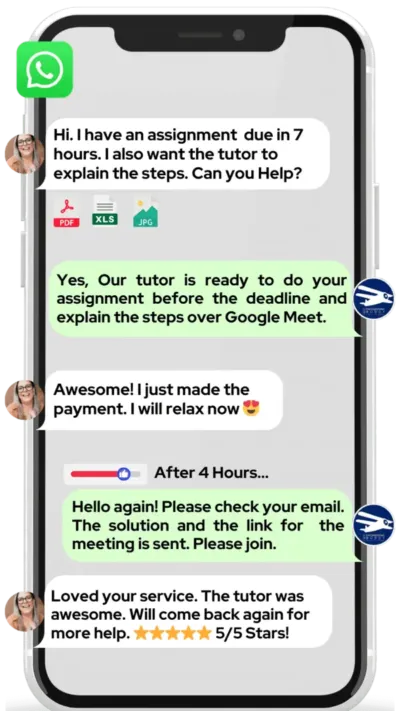
Unlike platforms where you fill out a form and wait, MEB responds in under a minute, 24/7. Tutor match takes under an hour. The $1 trial means you test before you commit. Everything runs over WhatsApp — no logins, no intake forms.
Study Plans (Pick One That Matches Your Goal)
After the diagnostic, your tutor builds a session sequence around one of three patterns: a catch-up plan covering 1–3 weeks for students with specific gaps before an assignment or exam; an exam-prep plan running 4–8 weeks with structured topic progression and past-paper practice; or ongoing weekly support aligned to your semester schedule and coursework deadlines. The plan is adjusted after every second or third session based on what’s working.
Pricing Guide
Expert Systems tutoring starts at $20/hr for standard undergraduate coverage. Graduate-level topics — Bayesian networks, fuzzy inference systems, hybrid AI architectures — typically run $50–$100/hr depending on depth and tutor background. Rate factors include your course level, the complexity of the topic, your timeline, and tutor availability.
Availability tightens in the four weeks before semester finals. If your exam or submission date is firm, book now rather than the week before.
For students targeting research positions, competitive graduate programmes, or roles in AI systems design at firms like those tracked in Deloitte Insights, tutors with professional AI development backgrounds are available at higher rates — share your specific goal and MEB will match the tier to your ambition.
Start with the $1 trial — 30 minutes, no registration, no commitment. WhatsApp MEB for a quick quote.
Try your first session for $1 — 30 minutes of live 1:1 tutoring or one homework question explained in full. No registration. No commitment. WhatsApp MEB now and get matched within the hour.
FAQ
Is Expert Systems hard?
It’s not the hardest AI subject, but it has a specific difficulty: the logic is formal enough to trip up students who learn by intuition, and practical enough to expose students who only read theory. Most gaps close within three to five focused sessions once the inference mechanics are clear.
How many sessions are needed?
Students with a specific assignment gap usually need three to six sessions. Those building toward an exam from a weak foundation typically need ten to fifteen. Your tutor gives a clearer estimate after the first diagnostic session, once the actual gaps are visible.
Can you help with homework and assignments?
Yes — the tutor explains the concept and method, works through a similar example, and guides you through your own reasoning. You produce and submit the work yourself.
MEB tutoring is guided learning — you understand the work, then submit it yourself. For full details on what we help with and what we don’t, read our Academic Integrity policy and Why MEB.
Will the tutor match my exact syllabus or exam board?
Yes. When you contact MEB, share your course name, university, and the specific topics or assignment brief you’re working on. Tutors are matched to your exact syllabus — not just the general subject area. Most matches happen within an hour of your first message.
What happens in the first session?
The tutor reviews what you’ve already covered, identifies where reasoning breaks down, and works through at least one full topic live. By the end, you have a session plan, a clear next task, and a concrete sense of where your time is best spent before the next session.
Is online Expert Systems tutoring as effective as in-person?
For a subject built around logical notation and code, the screen is a natural workspace. Google Meet with a digital pen-pad and screen sharing replicates — and in some respects outperforms — a physical whiteboard. Students consistently report the same level of engagement as face-to-face sessions.
Can I get Expert Systems help at midnight or on weekends?
Yes. MEB operates 24/7 across all time zones. Students in the US, UK, Australia, and the Gulf regularly book late-night and weekend sessions around their schedules. WhatsApp MEB at any hour — average first response is under a minute.
What if I don’t get on with my assigned tutor?
Tell MEB. A new tutor is assigned — usually within the same day. The $1 trial exists precisely to test the match before any significant commitment. You are not locked into the first tutor you are paired with.
Do you offer help with CLIPS specifically, or only general Expert Systems concepts?
Both. MEB tutors cover CLIPS rule syntax, agenda management, salience, and debugging — as well as Prolog, Drools, and general knowledge engineering. Specify your implementation environment when you first message, and MEB matches accordingly.
How do I get started?
Three steps: WhatsApp MEB with your course name, topic, and deadline. You’re matched with a verified Expert Systems tutor — usually within an hour. The first session is the $1 trial: 30 minutes live or one homework question explained in full, no registration required.
Trust & Quality at My Engineering Buddy
Every MEB tutor goes through subject-specific screening — not a general AI knowledge check, but a review of their background in knowledge engineering, inference systems, and the specific tools used in the courses MEB supports. New tutors complete a live demo evaluation. Ongoing feedback from sessions feeds back into tutor assignments. Rated 4.8/5 across 40,000+ verified reviews on Google.
MEB tutoring is guided learning — you understand the work, then submit it yourself. For full details on what we help with and what we don’t, read our Academic Integrity policy and Why MEB.
MEB has been running since 2008 and has served 52,000+ students across the US, UK, Canada, Australia, the Gulf, and Europe — in 2,800+ subjects. Students studying AI and related fields have used MEB for neural networks tutoring, deep learning help, and probabilistic graphical models tutoring alongside their Expert Systems coursework.
MEB’s approach to Expert Systems starts with one question: where exactly does your reasoning break down? Everything else — session structure, tutor match, topic sequencing — follows from the answer to that question.
Source: My Engineering Buddy. See Why MEB.
Explore Related Subjects
Students studying Expert Systems often also need support in:
- Machine Learning
- Decision Trees
- Natural Language Processing (NLP)
- Reinforcement Learning
- Chatbot Development
- Random Forests
- Recommender Systems
Next Steps
Before your first session, have ready: your exam board and syllabus (or course outline), a recent past paper attempt or homework you struggled with, and your exam or deadline date. The tutor handles the rest.
- Share your course name, the specific topics giving you trouble, and your current timeline
- Share your availability and time zone — evening and weekend slots are available in all regions
- MEB matches you with a verified Expert Systems tutor — usually within 24 hours
Visit www.myengineeringbuddy.com to read more about the MEB process, tutor screening, and how sessions are structured.
WhatsApp to get started or email [email protected].
52,000+ Happy Students From Various Universities






How Much For Private 1:1 Tutoring & Hw Help?
Private 1:1 Tutoring and HW help Cost $20 – 35 per hour* on average.
Reviewed by Subject Expert
This page has been carefully reviewed and validated by our subject expert to ensure accuracy and relevance.

