Hire Verified & Experienced
Electronics Engineering Tutors
4.8/5 40K+ session ratings collected on the MEB platform
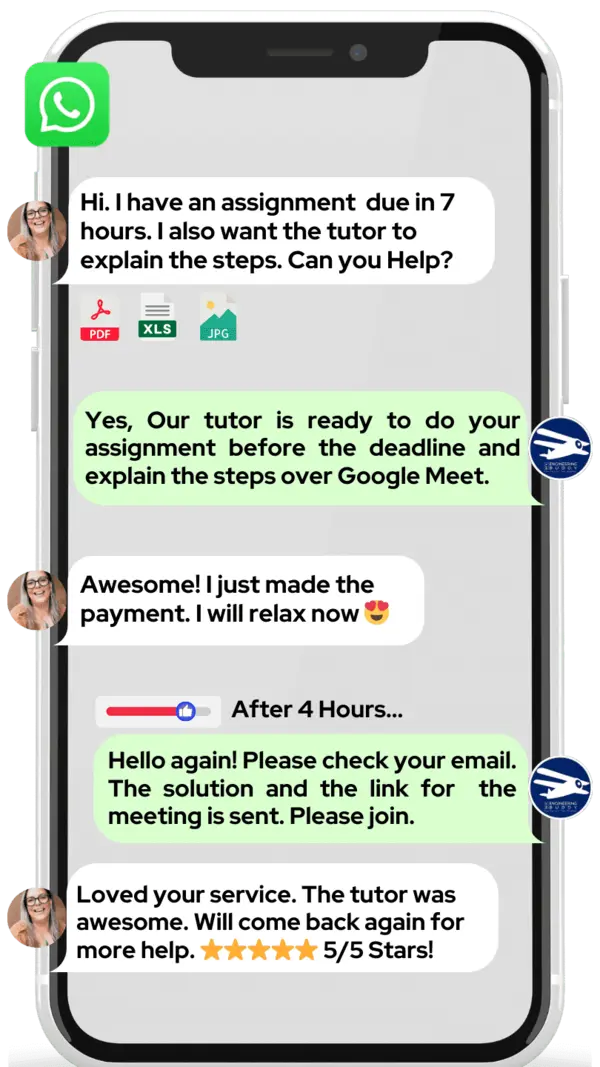



Hire The Best Electronics Engineering Tutor
Top Tutors, Top Grades. Without The Stress!





52,000+ Happy Students From Various Universities






How Much For Private 1:1 Tutoring & Hw Help?
Private 1:1 Tutoring and HW help Cost $20 – 35 per hour* on average.
Most students who fail Electronics Engineering don’t lack ability — they lose 8–12 marks per exam on op-amp analysis and semiconductor device problems they could have solved with one good session.
Electronics Engineering Tutor Online
Electronics Engineering is an academic and professional discipline covering semiconductor devices, analog and digital circuits, signal processing, communication systems, and embedded systems — equipping students to design, analyze, and troubleshoot electronic components and systems.
Finding a reliable Electronics Engineering tutor near me is easier than most students expect. MEB connects you with 1:1 online Electrical Engineering tutoring specialists who know your exact module structure — whether you’re working through op-amp circuits at undergraduate level, digital signal processing at postgraduate level, or VLSI design in a specialist elective. Sessions are live, targeted, and corrective from minute one. One outcome you can expect: gaps that have been open for weeks close fast when a tutor works through them with you problem by problem.
- 1:1 online sessions tailored to your course outline and exam board
- Expert-verified tutors with degrees and industry backgrounds in electronics
- Flexible time zones — US, UK, Canada, Australia, Gulf covered
- Structured learning plan built after a first diagnostic session
- Ethical homework and assignment guidance — you understand the work before you submit
52,000+ students across the US, UK, Canada, Australia, and the Gulf have used MEB since 2008 — including students in Electrical Engineering subjects like Electronics Engineering, Analog Electronics, and Digital Electronics.
Source: My Engineering Buddy, 2008–2025.
How Much Does an Electronics Engineering Tutor Cost?
Most Electronics Engineering sessions run $20–$40/hr depending on level and topic complexity. Graduate-level or niche specialisms like microwave engineering or VLSI go higher — up to $100/hr for expert practitioners. Not sure if it’s worth it yet? Start with the $1 trial — 30 minutes of live tutoring or one homework question explained in full.
| Level / Need | Typical Rate | What’s Included |
|---|---|---|
| Undergraduate (most modules) | $20–$35/hr | 1:1 sessions, homework guidance |
| Advanced / Postgraduate / Niche | $35–$100/hr | Expert tutor, specialist depth |
| $1 Trial | $1 flat | 30 min live session or 1 homework question |
Tutor availability tightens during end-of-semester exam periods — particularly November–December and April–May. Book early if you have a fixed deadline.
WhatsApp MEB for a quick quote — average response time under 1 minute.
Who This Electronics Engineering Tutoring Is For
Electronics Engineering covers a wide range of difficulty levels and learning contexts. Whether you’re a first-year undergraduate struggling with basic circuit analysis or a final-year student stuck on FPGA implementation, the right tutor changes the trajectory fast.
- Undergraduate students losing marks on circuit analysis and Kirchhoff’s laws
- Students with a conditional university offer that depends on passing this module
- Graduate students working through advanced topics like digital signal processing or semiconductor physics
- Students 4–6 weeks from an exam with significant syllabus gaps still to close
- Parents watching a child’s confidence drop alongside their electronics grades
- Engineers returning to study for professional certifications needing structured review
Students come from programs at MIT, Georgia Tech, Imperial College London, ETH Zurich, University of Toronto, University of New South Wales, and TU Delft — among many others. MEB tutors have worked across all of these program structures.
At MEB, we’ve found that Electronics Engineering students often arrive thinking they have a broad knowledge gap — but in most cases, two or three core concepts (usually op-amp behavior, Thevenin equivalents, or Fourier analysis) are blocking everything else. Fix those first, and the rest of the module starts making sense.
1:1 Tutoring vs Self-Study vs AI vs YouTube vs Online Courses
Self-study works if you’re disciplined — but Electronics Engineering problems require feedback the moment your circuit analysis goes wrong, not after you’ve submitted. AI tools explain concepts quickly but can’t watch you set up a nodal analysis incorrectly and stop you mid-step. YouTube covers op-amp theory well up to a point, then leaves you alone when the specific exam question doesn’t match the video format. Online courses are structured but fixed-pace — they don’t know you missed the lecture on Bode plots. 1:1 tutoring with MEB is live, calibrated to your exact module, and corrects errors in real time. For Electronics Engineering in particular, where one wrong assumption in a circuit propagates through every subsequent calculation, that correction speed matters.
Outcomes: What You’ll Be Able To Do in Electronics Engineering
After working with an MEB Electronics Engineering tutor, students are typically able to solve multi-loop circuit problems using mesh and nodal analysis without prompting, analyze frequency response using Bode plots and identify stability margins, model transistor behavior in amplifier configurations from first principles, explain signal flow in communication systems including modulation and demodulation, and apply Fourier and Laplace transforms to real system problems — not just textbook exercises. Confidence in labs and written exams tends to follow.
Based on feedback from 40,000+ sessions collected by MEB from 2022 to 2025, 58% of students improved by one full grade after approximately 20 hours of 1:1 tutoring in subjects like Electronics Engineering. A further 23% achieved at least a half-grade improvement.
Source: MEB session feedback data, 2022–2025.
Supporting a student through Electronics Engineering? MEB works directly with parents to set up sessions, track progress, and keep coursework on schedule. WhatsApp MEB — average response time is under a minute, 24/7.
Try your first session for $1 — 30 minutes of live 1:1 tutoring or one homework question explained in full. No registration. No commitment. WhatsApp MEB now and get matched within the hour.
What We Cover in Electronics Engineering (Syllabus / Topics)

Track 1: Analog Circuits and Devices
- Semiconductor physics — diodes, BJTs, MOSFETs, characteristic curves
- Amplifier configurations: common-emitter, common-source, differential
- Operational amplifier circuits — inverting, non-inverting, integrators, differentiators
- Feedback theory and stability analysis
- Frequency response, Bode plots, bandwidth estimation
- Oscillator design and waveform generation
- Power supply circuits — rectifiers, regulators, filtering
Core texts include Sedra & Smith’s Microelectronic Circuits, Boylestad & Nashelsky’s Electronic Devices and Circuit Theory, and Razavi’s Design of Analog CMOS Integrated Circuits.
Track 2: Digital Electronics and Embedded Systems
- Boolean algebra, logic gates, Karnaugh maps, combinational logic
- Sequential logic — flip-flops, registers, counters, state machines
- Microcontroller architecture and programming (AVR, ARM Cortex-M)
- Memory systems — RAM, ROM, cache hierarchy
- FPGA design flow — HDL coding, synthesis, simulation
- Interfacing — ADC/DAC, SPI, I2C, UART protocols
- Embedded C and hardware abstraction layers
Key references: Morris Mano’s Digital Design, Patterson & Hennessy’s Computer Organization and Design, and White’s Making Embedded Systems.
Track 3: Signals, Systems, and Communications
- Continuous and discrete-time signals — Fourier series, Fourier transform, Z-transform
- Laplace transform and transfer function analysis
- Sampling theorem, aliasing, reconstruction
- Analog modulation — AM, FM, PM
- Digital modulation — ASK, FSK, PSK, QAM
- Signals and systems filtering — FIR, IIR filter design
- Channel capacity, noise, and Shannon’s theorem
Standard references: Oppenheim & Willsky’s Signals and Systems, Haykin & Moher’s Communication Systems, and Proakis & Manolakis’s Digital Signal Processing.
Track 4: Power Electronics and Electromagnetic Fields
- AC and DC circuit analysis — mesh, nodal, superposition, Thevenin/Norton
- Power semiconductor devices — thyristors, IGBTs, power MOSFETs
- DC-DC converters — buck, boost, buck-boost topologies
- Inverter and rectifier design
- Electromagnetic field theory — Gauss’s law, Faraday’s law, Maxwell’s equations
- Transmission line theory and impedance matching
- Transformers and coupled circuits
Core texts: Mohan’s Power Electronics, Hayt & Kemmerly’s Engineering Circuit Analysis, and Cheng’s Field and Wave Electromagnetics.
What a Typical Electronics Engineering Session Looks Like
The tutor opens by checking what happened in the last session — say, op-amp integrator circuits — and asks you to attempt one problem cold before anything else. That attempt reveals exactly where the understanding broke down: wrong sign on the feedback term, or the frequency domain conversion skipped a step. From there, the tutor works through a parallel example on a shared digital canvas using a pen-pad, narrating every step. You replicate the method on a second problem while the tutor watches. If you stall on the MOSFET biasing step or misapply the virtual ground assumption, the correction happens immediately — not after you’ve written out four wrong lines. The session closes with two practice problems set for before the next meeting, and the tutor notes the next topic: Bode plots or state machine design, depending on where the syllabus sits.
How MEB Tutors Help You with Electronics Engineering (The Learning Loop)
Diagnose: In the first session, the tutor identifies which specific topics are causing mark loss — not just “circuits” but whether it’s Thevenin reduction, transistor small-signal models, or Laplace inverse transforms. That precision shapes every session that follows.
Explain: The tutor works through live problems on a shared digital whiteboard using a pen-pad or iPad with Apple Pencil. You see the method built step by step — not a finished solution handed to you.
Practice: You attempt a similar problem while the tutor is present. This is where most progress actually happens. Errors surface in real time, before they become habits.
Feedback: The tutor goes through every wrong step and explains which rule was misapplied — whether it was KVL sign convention, an incorrect Laplace pair, or a logic state table error. You understand why, not just what.
Plan: At the end of each session, the tutor sets a short practice task and marks the next topic. Progress is tracked across sessions — no repeating ground already covered.
Sessions run on Google Meet. The tutor uses a digital pen-pad or iPad with Apple Pencil to write out circuit diagrams and equations live. Before your first session, have ready: your module outline or exam syllabus, a recent lab report or assignment you struggled with, and your exam date or coursework deadline. The first session covers diagnosis and one full topic from scratch. Start with the $1 trial — 30 minutes of live tutoring that doubles as your first diagnostic.
Students consistently tell us that the moment everything clicks in Electronics Engineering isn’t when the tutor explains — it’s the second time the student solves a similar problem alone, mid-session, and gets it right. That’s the moment worth engineering for.
Tutor Match Criteria (How We Pick Your Tutor)
Not every tutor who knows electronics is the right fit for your specific module. Here’s how MEB narrows it down.
Subject depth: Tutors are matched by the specific track — analog circuits, embedded systems, DSP, power electronics — not just “electronics” as a general field. A tutor covering your VLSI elective has CMOS design experience, not just general semiconductor knowledge.
Tools: Every tutor uses Google Meet with a digital pen-pad or iPad and Apple Pencil. Circuit diagrams, signal flow graphs, and timing diagrams are drawn live — not pasted from slides.
Time zone: Matched to your region. US East Coast, UK, Gulf, Australia — sessions happen at hours that don’t require you to be awake at 3am.
Goals: Whether you need exam preparation, conceptual depth for a research project, or help keeping up with weekly homework, the tutor’s approach is calibrated to that specific goal from the first session.
Unlike platforms where you fill out a form and wait days for a callback, MEB responds in under a minute, 24/7. Tutor match takes under an hour. The $1 trial means you test the fit before committing to a package. Everything runs over WhatsApp — no logins, no intake portals.
Study Plans (Pick One That Matches Your Goal)
After the diagnostic, your tutor builds the session sequence around one of three structures. Catch-up (1–3 weeks): rapid coverage of the highest-priority gaps — ideal for students 2–3 weeks from an exam with a clear shortlist of weak topics. Exam prep (4–8 weeks): full syllabus coverage in priority order, past paper practice, and timed problem sets — structured around your specific exam date. Weekly support: ongoing sessions aligned to your lecture schedule and coursework deadlines, keeping you current throughout the semester rather than scrambling at the end. The tutor maps the exact sequence after the first diagnostic.
Pricing Guide
Electronics Engineering tutoring starts at $20/hr for standard undergraduate modules and rises to $100/hr for advanced graduate-level or specialist topics — VLSI design, microwave engineering, power electronics at postgraduate level, or research-adjacent work. Rate factors include module level, topic complexity, how quickly you need to start, and tutor availability in your time zone.
Availability is limited during end-of-semester crunch periods — November–December and April–May fill fastest. Don’t leave the booking until week before finals.
For students targeting top graduate programs or working toward professional engineering certifications, tutors with active industry or research backgrounds in electronics are available at higher rates — share your specific goal and MEB will match the tier to your timeline.
Start with the $1 trial — 30 minutes, no registration, no commitment. WhatsApp MEB for a quick quote.
Electronics Engineering tutoring from MEB covers the full subject scope — from basic electronics for first-year undergraduates through to graduate-level VLSI design and embedded systems — with tutors matched to the exact level and topic you’re working on.
Source: My Engineering Buddy, 2008–2025.
FAQ
Is Electronics Engineering hard?
It’s one of the more demanding engineering disciplines — abstract theory, heavy mathematics, and practical design all in the same module. Most students find analog circuits and Fourier analysis the steepest early hurdles. Neither is unmanageable with a structured tutor.
How many sessions are needed to see improvement?
Most students notice a meaningful difference within 3–5 sessions when topics are targeted correctly from the start. A full grade improvement typically takes 15–20 hours of focused 1:1 work — less if the gaps are concentrated in two or three topics.
Can you help with homework and assignments?
MEB tutoring is guided learning — you understand the work, then submit it yourself. The tutor explains the method and works through similar problems with you. See our Academic Integrity policy and Why MEB page for full details on what we help with and what we don’t.
Will the tutor match my exact syllabus or exam board?
Yes. Electronics Engineering varies significantly by university and program — what MIT covers in Year 2 differs from Imperial College or Georgia Tech. Share your module outline and exam board before the first session and the tutor aligns to your specific content.
What happens in the first session?
The tutor runs a short diagnostic — usually two or three problems covering different topic areas — to locate exactly where understanding breaks down. From that point the session becomes targeted. No time is spent on topics you already have solid.
Is online tutoring as effective as in-person for Electronics Engineering?
For theory and problem-solving — yes. The digital pen-pad replicates a whiteboard session accurately, and screen-sharing lets the tutor annotate your circuit diagrams directly. Hardware lab work is the one area online tutoring can support conceptually but not physically replicate.
Can you help with Electronics Engineering at midnight or on weekends?
Yes. MEB operates 24/7 across all major time zones. WhatsApp the team any time — average response is under one minute. Late-night sessions before a morning submission are common, especially in the US and Gulf.
What if I don’t get along with my assigned tutor?
Tell MEB via WhatsApp and you’ll be rematched, usually within the hour. No explanation needed. The $1 trial exists precisely so you test the fit before any significant commitment.
Do you cover both analog and digital Electronics Engineering in the same sessions?
Yes — many undergraduate modules combine both. The tutor works across analog circuit analysis, digital logic, and mixed-signal topics within the same session sequence, following your module structure rather than treating them as separate subjects.
What is the difference between Electronics Engineering and Electrical Engineering tutoring at MEB?
Electronics Engineering focuses on devices, circuits, signals, and systems at component and chip level. Electrical Engineering encompasses broader power systems, machines, and grid-level topics. Many students need both — MEB covers the full spectrum and will match the tutor to whichever module you’re working on.
How do I get started?
WhatsApp MEB, share your module name and exam date, and you’ll be matched with a verified Electronics Engineering tutor — usually within an hour. The first session starts with a diagnostic. Cost: $1 for the first 30 minutes or one full homework question explained.
Can MEB help with FPGA and HDL coursework specifically?
Yes. MEB has tutors with hands-on FPGA design experience using VHDL and Verilog across Xilinx and Intel platforms. Whether it’s a university design project or a graduate-level implementation assignment, share the brief and the tutor works through the logic and synthesis steps with you.
Trust & Quality at My Engineering Buddy
Every MEB tutor is screened through a multi-step process — degree verification, a live demo session reviewed by the MEB team, and ongoing feedback scoring from students after every session. Tutors covering Electronics Engineering hold degrees in Electrical Engineering, Electronics, or closely related fields, and most have either research or industry experience in the sub-discipline they teach. Rated 4.8/5 across 40,000+ verified reviews on Google.
MEB tutoring is guided learning — you understand the work, then submit it yourself. For full details on what we help with and what we don’t, read our Academic Integrity policy and Why MEB.
MEB has served 52,000+ students across the US, UK, Canada, Australia, the Gulf, and Europe in 2,800+ subjects since 2008. In Electrical Engineering and Electronics specifically, that includes students working on control systems, electromagnetic field theory, and communication systems — across undergraduate, postgraduate, and professional levels. The MEB tutoring methodology is built around diagnostic-first sessions and measurable progress tracking.
A common pattern our tutors observe is that Electronics Engineering students who struggle in exams often perform well in labs — the problem isn’t ability, it’s the translation from practical intuition to formal mathematical analysis. That’s exactly the gap 1:1 sessions are built to close.
Explore Related Subjects
Students studying Electronics Engineering often also need support in:
- Analog Circuits
- Circuit Design
- FPGA Design
- Semiconductor Devices
- Microprocessors
- Operational Amplifiers
- Wireless Communication
- Network Theory
MEB tutors cover the full Electronics Engineering stack — from analog signal processing and digital circuits through to microelectronics and advanced communications — matched to your exact module and university program.
Source: My Engineering Buddy, 2008–2025.
Next Steps
Getting started takes less than two minutes.
- Share your exam board or university module name, the topics giving you the most trouble, and your exam or submission date
- Share your time zone and weekly availability
- MEB matches you with a verified Electronics Engineering tutor — usually within an hour, always within 24 hours
Before your first session, have ready:
- Your module syllabus or course outline
- A recent assignment, past paper attempt, or lab report you struggled with
- Your exam date or coursework deadline
The tutor handles everything from there — diagnostic first, then a session plan built around your specific gaps and timeline.
Visit www.myengineeringbuddy.com for more on how MEB works.
WhatsApp to get started or email meb@myengineeringbuddy.com.
Reviewed by Subject Expert
This page has been carefully reviewed and validated by our subject expert to ensure accuracy and relevance.