Hire Verified & Experienced
Embedded C programming Tutors
4.8/5 40K+ session ratings collected on the MEB platform



Hire The Best Embedded C programming Tutor
Top Tutors, Top Grades. Without The Stress!
52,000+ Happy Students From Various Universities






How Much For Private 1:1 Tutoring & Hw Help?
Private 1:1 Tutoring and HW help Cost $20 – 35 per hour* on average.
Your microcontroller code compiles — but the interrupt handler freezes every 12 hours and you have no idea why.
Embedded C Programming Tutor Online
Embedded C programming is the practice of writing C-language code for microcontrollers and resource-constrained hardware, covering memory management, peripheral interfacing, interrupt handling, and real-time execution — equipping engineers to build reliable firmware for embedded systems.
Finding a qualified Embedded C programming tutor near me is harder than it looks — most general coders have never debugged a race condition inside an ISR or wrestled with a bare-metal RTOS port. MEB connects you with tutors who have done exactly that. Whether you need help with a university Electrical Engineering module, a capstone firmware project, or a specific peripheral driver you cannot get to work, a 1:1 online Embedded C programming tutor adapts to your exact problem. One session can move you from stuck to shipping.
- 1:1 online sessions tailored to your course, microcontroller, and syllabus
- Expert-verified tutors with hands-on embedded systems and firmware experience
- Flexible time zones — US, UK, Canada, Australia, Gulf
- Structured learning plan built after an initial diagnostic session
- Ethical homework and assignment guidance — you understand the code before you submit it
52,000+ students across the US, UK, Canada, Australia, and the Gulf have used MEB since 2008 — including students in Electrical Engineering subjects like Embedded C programming, embedded systems, and microcontrollers.
Source: My Engineering Buddy, 2008–2025.
How Much Does an Embedded C Programming Tutor Cost?
Most Embedded C programming tutoring sessions run $20–$40/hr. Graduate-level or highly specialised topics — real-time OS porting, safety-critical firmware, automotive embedded — can reach $100/hr. New students start with the $1 trial: 30 minutes of live 1:1 tutoring or one homework question explained in full.
| Level / Need | Typical Rate | What’s Included |
|---|---|---|
| Standard (undergrad modules) | $20–$35/hr | 1:1 sessions, homework guidance |
| Advanced / Specialist (RTOS, safety-critical) | $35–$100/hr | Expert tutor, niche firmware depth |
| $1 Trial | $1 flat | 30 min live session or 1 homework question |
Tutor availability tightens sharply during end-of-semester project deadlines and exam periods. Book early if you have a submission date in the next three weeks.
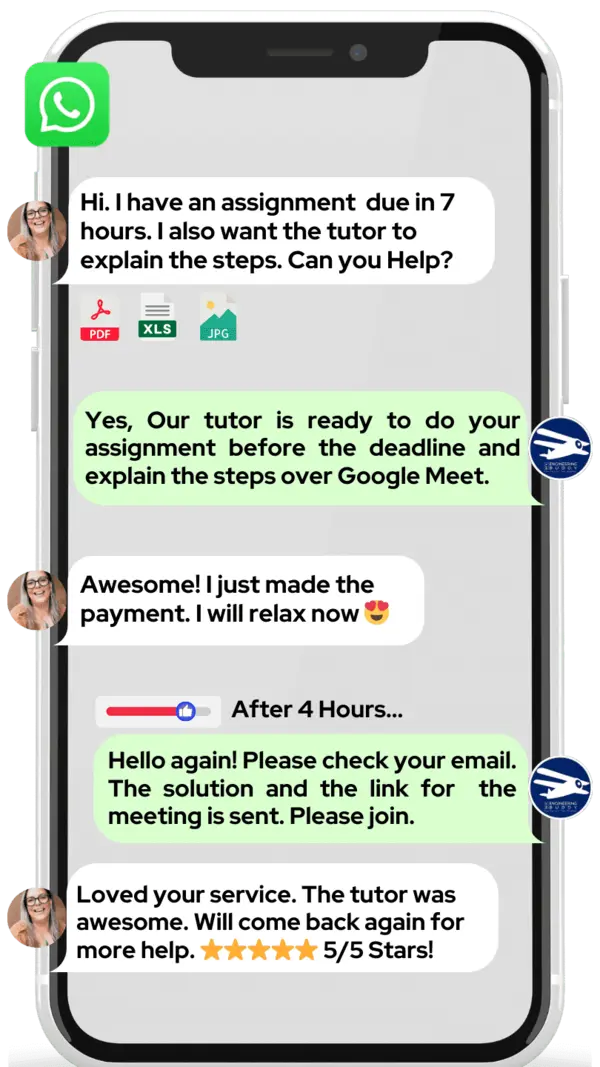
WhatsApp MEB for a quick quote — average response time under 1 minute.
Who This Embedded C Programming Tutoring Is For
This tutoring covers the full range — from students writing their first GPIO toggle to engineers debugging multi-threaded firmware in a production RTOS. If your code mostly works but you can’t explain why, that’s the gap we fix.
- Undergraduate and graduate students in computer engineering or electronics with a firmware module they’re losing marks on
- Students whose capstone project involves a microcontroller and who have never written interrupt-driven code before
- Students retaking after a failed first attempt in an embedded systems programming unit
- Students with a university conditional offer who need a strong grade in this subject to secure their place
- Engineers moving into embedded roles who need to close C-language gaps before starting
- Parents supporting a student through a hardware-software engineering course at institutions like MIT, Georgia Tech, University of Michigan, Imperial College London, TU Delft, or the University of Toronto
Need help right now? The $1 trial gets you in front of a verified tutor within the hour.
At MEB, we’ve found that the students who struggle most with Embedded C aren’t weak programmers — they’re students who learned C in a desktop context and have never had to think about stack size, volatile keywords, or what happens when an interrupt fires mid-assignment. One session reframing the hardware model changes everything.
1:1 Tutoring vs Self-Study vs AI vs YouTube vs Online Courses
Self-study works if you’re disciplined, but Embedded C has too many hardware-dependent failure modes to debug without feedback. AI tools explain concepts quickly — they can’t watch your oscilloscope trace or tell you why your DMA transfer stalls on that specific STM32 peripheral. YouTube covers GPIO and UART well; it stops cold when your specific board behaves differently from the tutorial. Online courses give you a structured syllabus but run at a fixed pace with no one catching your specific misunderstanding of memory-mapped registers. With a 1:1 Embedded C programming tutor from MEB, sessions are calibrated to your exact microcontroller, your course requirements, and the specific bug or concept blocking you right now.
Outcomes: What You’ll Be Able To Do in Embedded C Programming
After targeted 1:1 Embedded C programming tutoring, students consistently report being able to write and debug interrupt service routines without causing stack corruption, configure peripheral registers directly from a datasheet without relying on abstraction layers, apply volatile and const correctly in shared-memory and hardware-mapped contexts, analyze timing constraints in bare-metal and RTOS-based designs, and explain their firmware architecture clearly in a viva or technical review. These are not generic coding skills — they are the specific competencies examiners and engineering employers check for.
Based on feedback from 40,000+ sessions collected by MEB from 2022 to 2025, 58% of students improved by one full grade after approximately 20 hours of 1:1 tutoring in subjects like Embedded C programming. A further 23% achieved at least a half-grade improvement.
Source: MEB session feedback data, 2022–2025.
Try your first session for $1 — 30 minutes of live 1:1 tutoring or one homework question explained in full. No registration. No commitment. WhatsApp MEB now and get matched within the hour.
What We Cover in Embedded C Programming (Syllabus / Topics)

Track 1: C Language Fundamentals for Embedded Systems
- Pointers, pointer arithmetic, and function pointers in hardware contexts
- Bitwise operations — masking, setting, clearing, and toggling hardware registers
- Data types, type qualifiers: volatile, const, static, and their embedded-specific roles
- Memory layout: stack, heap, BSS, data, and text segments on a microcontroller
- Structs and unions for register-level data modelling
- Preprocessor macros and conditional compilation for hardware abstraction
Core references: Programming Embedded Systems by Michael Barr & Anthony Massa; C Programming: A Modern Approach by K.N. King; Embedded C by Michael J. Pont.
Track 2: Microcontroller Peripherals and Interfacing
- GPIO configuration: input, output, pull-up/pull-down, alternate function modes
- Timer and counter peripherals: PWM generation, input capture, output compare
- UART, SPI, and I2C protocol implementation from scratch in C
- ADC and DAC interfacing — sampling rates, resolution, and noise considerations
- Interrupt configuration: NVIC priority, ISR writing, interrupt latency
- DMA controller setup and common failure modes
- Watchdog timers and low-power modes
Core references: The Definitive Guide to ARM Cortex-M3 and Cortex-M4 Processors by Joseph Yiu; STM32 Reference Manuals (ST Microelectronics); Make: AVR Programming by Elliot Williams.
Track 3: Real-Time Systems and Firmware Architecture
- Bare-metal scheduling: super-loop, state machines, and cooperative multitasking
- RTOS fundamentals: tasks, queues, semaphores, and mutexes in FreeRTOS
- Priority inversion, deadlock, and race conditions — identification and fixes
- Memory management in constrained systems: static allocation, memory pools
- Bootloader basics and firmware update strategies
- Unit testing embedded C: mocking hardware with CMock and Unity
Core references: Using the FreeRTOS Real Time Kernel by Richard Barry; Test-Driven Development for Embedded C by James W. Grenning; Real-Time C++ by Christopher Kormanyos.
Platforms, Tools & Textbooks We Support
Embedded C programming is inseparable from the toolchain and hardware it runs on. MEB tutors work directly in the environment you’re using — not a generic demo setup. Supported tools and platforms include:
- IDEs: Keil MDK, STM32CubeIDE, MPLAB X, IAR Embedded Workbench, VS Code with PlatformIO
- Microcontroller families: STM32 (ARM Cortex-M), AVR (Arduino-based), PIC, ESP32, NXP Kinetis
- Debuggers: J-Link, ST-Link, GDB via OpenOCD
- RTOS: FreeRTOS, Zephyr, ChibiOS
- Version control: Git workflows for embedded firmware projects
- Build systems: Make, CMake, SCons
- Simulation: Arduino programming environments for rapid prototyping before bare-metal deployment
What a Typical Embedded C Programming Session Looks Like
The tutor opens by reviewing the previous session’s task — usually a peripheral driver or ISR you were meant to finish. You share your screen, show your code in the IDE, and walk through what you tried. If there’s a bug, the tutor doesn’t just spot it — they ask you to explain your reasoning first, which is where the real gap usually surfaces. You work through the problem together: the tutor uses a digital pen-pad to annotate the register map or timing diagram while you modify the code. By the end, you can reproduce the fix independently. The session closes with a concrete task: write the UART receive ISR for your next target peripheral, or add a FreeRTOS queue between two tasks you built today.
How MEB Tutors Help You with Embedded C Programming (The Learning Loop)
Diagnose: In the first session, the tutor asks you to walk through a piece of your own code. Within ten minutes, they’ve identified whether your confusion is at the C-language level, the peripheral register level, or the system architecture level. Those three gaps need different fixes.
Explain: The tutor works through a live problem on screen — annotating a datasheet register map with a digital pen-pad, writing the configuration sequence step by step, and narrating the reasoning. No copied Stack Overflow answers. No magic numbers without explanation.
Practice: You attempt the next problem yourself while the tutor watches. That’s the part most self-study skips. Watching someone code teaches you nothing about what your fingers will do under exam pressure.
Feedback: The tutor steps through your attempt, flags each error, and explains why it fails — not just syntactically but in terms of what the hardware will actually do. Marks are lost in embedded courses for incorrect peripheral configuration, not just compilation errors.
Plan: At the end of each session, the tutor sets the next topic and a specific task to complete before you meet again. Progress is tracked. Nothing is left vague.
Sessions run over Google Meet. The tutor uses a digital pen-pad or iPad with Apple Pencil to annotate datasheets, draw timing diagrams, and mark up your code in real time. Before your first session, share your course outline or lab brief, your current code if you have one, and your exam or submission date. The first session covers diagnostics and your most urgent gap — nothing is wasted. Start with the $1 trial — 30 minutes of live tutoring that also serves as your first diagnostic.
Students consistently tell us that the moment things click in Embedded C is when they stop thinking of peripherals as software objects and start reading them as hardware registers with specific timing requirements. That shift doesn’t happen from reading — it happens when a tutor walks you through a datasheet live.
Tutor Match Criteria (How We Pick Your Tutor)
Not every embedded engineer can teach, and not every C programmer has worked with hardware. MEB’s matching accounts for both.
Subject depth: Tutors are matched to your specific microcontroller family, course level, and whether you’re working bare-metal or with an RTOS. A tutor for an AVR-based lab course is not the same profile as one supporting a Cortex-M4 RTOS project.
Tools: Every tutor uses Google Meet plus a digital pen-pad or iPad with Apple Pencil — no whiteboard apps that can’t handle a register map properly.
Time zone: Matched to your region. US, UK, Gulf, Canada, and Australia are all covered with tutors active in those windows.
Goals: Whether you need to pass an exam, finish a lab report, or get help with microprocessor coursework, the match reflects that intent specifically.
Unlike platforms where you fill out a form and wait, MEB responds in under a minute, 24/7. Tutor match takes under an hour. The $1 trial means you test before you commit. Everything runs over WhatsApp — no logins, no intake forms.
Study Plans (Pick One That Matches Your Goal)
The tutor builds your specific sequence after the first diagnostic, but most students fall into one of three patterns. Catch-up (1–3 weeks): you have a lab submission or exam in under a month and specific topics to close fast. Exam prep (4–8 weeks): structured coverage of peripherals, memory, and RTOS concepts timed to your exam date. Weekly support: ongoing sessions aligned to your semester schedule, with each session building on the previous lab or assignment. The tutor adjusts as your course progresses.
Pricing Guide
Standard Embedded C programming tutoring runs $20–$40/hr for most undergraduate and taught-master’s modules. Niche or graduate-level work — automotive AUTOSAR, safety-critical IEC 62443 firmware, formal verification — can reach $100/hr. Rate factors include topic complexity, your timeline, and tutor availability.
Availability tightens in the final three weeks of each semester. If you have a deadline approaching, book as early as possible.
For students targeting roles at hardware companies, embedded software firms, or research positions, MEB can match you with tutors who have professional embedded development backgrounds — share your goal and MEB will match the tier to your target.
Start with the $1 trial — 30 minutes, no registration, no commitment. WhatsApp MEB for a quick quote.
MEB has served 52,000+ students since 2008 across 2,800+ subjects, including FPGA design, digital electronics, and Embedded C programming — with tutors active across US, UK, Gulf, Canada, and Australia time zones.
Source: My Engineering Buddy, 2008–2025.
FAQ
Is Embedded C programming hard?
It’s harder than desktop C because errors don’t produce helpful messages — they crash your hardware silently or behave inconsistently across runs. The difficulty is mostly conceptual: once you understand how memory maps and interrupts actually work, the C itself becomes manageable with guidance.
How many sessions are needed?
Students with a specific stuck point — a broken ISR, a failing SPI driver — often need 2–4 sessions. Students covering a full embedded C module from scratch typically need 10–20 hours spread across a semester. The tutor sets a realistic estimate after the first diagnostic.
Can you help with homework and assignments?
Yes. MEB tutoring is guided learning — you understand the code, then submit it yourself. The tutor explains the concepts, walks through the logic, and helps you debug your own implementation. See our Academic Integrity policy and Why MEB page for full details on what we help with and what we don’t.
Will the tutor match my exact syllabus or exam board?
Yes. Share your course outline, microcontroller family, and IDE before the first session. MEB matches tutors to your specific university module or exam structure — not a generic embedded C curriculum that may cover different peripherals or toolchains.
What happens in the first session?
The tutor asks you to walk through existing code or attempt a short task live. That diagnostic identifies whether the gap is at the C syntax level, peripheral register level, or system architecture level — and shapes the entire tutoring plan from session two onwards.
Is online tutoring as effective as in-person?
For Embedded C specifically, yes — screen sharing lets the tutor see your exact IDE, your code, your build errors, and your debugger output. A digital pen-pad handles timing diagrams and register annotations clearly. Most students find remote debugging easier to follow than looking over someone’s shoulder at a physical screen.
What’s the difference between Embedded C and standard C?
Standard C assumes a rich OS, dynamic memory, and predictable timing. Embedded C runs on bare hardware: no OS, often no heap, with strict timing constraints driven by interrupts and peripheral clocks. Keywords like volatile, memory-mapped I/O, and ISR design patterns are central — they rarely appear in desktop C courses.
Can you help with STM32, AVR, PIC, and ESP32 specifically?
Yes. MEB tutors have hands-on experience across major microcontroller families. Share your specific board and toolchain when you contact MEB — the match will reflect that rather than assigning a generic C tutor who hasn’t used your hardware.
Do you cover FreeRTOS and RTOS concepts?
Yes. Task creation, queue and semaphore usage, priority inversion, and porting FreeRTOS to a new MCU are all covered. For students who need help with embedded systems coursework that involves an RTOS component, that is a standard part of what MEB Embedded C tutors handle.
Can I get Embedded C programming help at midnight?
Yes. MEB operates 24/7. Tutors are active across multiple time zones, so late-night sessions when a deadline is close are common. WhatsApp MEB at any hour — the average response time is under one minute regardless of when you message.
How do I get started?
Three steps: WhatsApp MEB with your course details and target date. MEB matches you with a verified tutor — usually within an hour. Your first session is the $1 trial: 30 minutes of live 1:1 tutoring or one homework question explained in full. No registration required.
Trust & Quality at My Engineering Buddy
Every MEB tutor goes through subject-specific screening: a live demo session evaluated by a senior subject expert, verification of academic qualifications and practical experience, and ongoing review based on student session feedback. For Embedded C programming specifically, tutors must demonstrate real-world firmware development or embedded systems research experience — not just C language knowledge. Rated 4.8/5 across 40,000+ verified reviews on Google.
MEB tutoring is guided learning — you understand the work, then submit it yourself. For full details on what we help with and what we don’t, read our Academic Integrity policy and Why MEB.
MEB has been running since 2008, serving 52,000+ students across the US, UK, Canada, Australia, the Gulf, and Europe in 2,800+ subjects. Within electronics engineering, MEB covers everything from digital signal processing to control systems and Embedded C programming — with tutors active in every major time zone. See how our tutoring is structured at MEB tutoring methodology.
Our experience across thousands of sessions shows that students who arrive with a specific question — “why does my UART receive buffer corrupt after 50 bytes?” — make faster progress than students who arrive with “I don’t understand embedded C.” Specific beats general every time. If you don’t know where to start, the diagnostic session is exactly what it says.
Explore Related Subjects
Students studying Embedded C programming often also need support in:
- Microelectronics
- Sensors and actuators
- Internet of Things (IoT)
- VHDL
- Verilog
- Industrial automation
- Signals and systems
Next Steps
When you contact MEB, share your microcontroller family (STM32, AVR, PIC, ESP32), the specific topic or peripheral causing trouble, your exam or submission date, and your time zone. MEB matches you with a verified Embedded C programming tutor — usually within 24 hours.
Before your first session, have ready:
- Your course outline or lab brief (or the specific assignment brief)
- Your current code, even if it’s broken — that’s the starting point
- Your exam date or submission deadline
The tutor handles the rest. Visit www.myengineeringbuddy.com for more on how MEB works.
WhatsApp to get started or email meb@myengineeringbuddy.com.
Reviewed by Subject Expert
This page has been carefully reviewed and validated by our subject expert to ensure accuracy and relevance.