Hire Verified & Experienced
Embedded systems Tutors
4.8/5 40K+ session ratings collected on the MEB platform



Hire The Best Embedded systems Tutor
Top Tutors, Top Grades. Without The Stress!



52,000+ Happy Students From Various Universities






How Much For Private 1:1 Tutoring & Hw Help?
Private 1:1 Tutoring and HW help Cost $20 – 35 per hour* on average.
Your microcontroller code compiles — but the hardware does nothing. That’s where most embedded systems students lose weeks.
Embedded Systems Tutor Online
Embedded systems is a branch of electronics and computer engineering focused on designing hardware-software integrated systems — microcontrollers, real-time operating systems, and firmware — built for dedicated functions within larger devices.
MEB provides 1:1 online tutoring and homework help in 2,800+ advanced subjects, including electrical engineering and its applied sub-disciplines. Finding a reliable embedded systems tutor near me is genuinely hard — the subject bridges low-level C programming, digital logic, and hardware interfacing in ways that most general tutors can’t follow. MEB tutors work across ARM Cortex, AVR, PIC, STM32, and RTOS environments at undergraduate and graduate level.
- 1:1 online sessions tailored to your course syllabus and microcontroller platform
- Expert-verified tutors with hands-on embedded systems project and research experience
- Flexible time zones — US, UK, Canada, Australia, Gulf covered
- Structured learning plan built after a diagnostic session
- Ethical homework and assignment guidance — you understand the work before you submit
52,000+ students across the US, UK, Canada, Australia, and the Gulf have used MEB since 2008 — including students in Electrical Engineering subjects like Embedded Systems, Microcontrollers, and FPGA Design.
Source: My Engineering Buddy, 2008–2025.
How Much Does an Embedded Systems Tutor Cost?
Most embedded systems tutoring sessions run $20–$40/hr. Graduate-level or niche platform work (bare-metal RTOS, custom silicon bringup) reaches up to $100/hr. Start with the $1 trial — 30 minutes live or one full homework question explained — before committing to a package.
| Level / Need | Typical Rate | What’s Included |
|---|---|---|
| Standard (most undergrad levels) | $20–$35/hr | 1:1 sessions, homework guidance |
| Advanced / Specialist (RTOS, bare-metal, grad) | $35–$100/hr | Expert tutor, platform-specific depth |
| $1 Trial | $1 flat | 30 min live session or 1 homework question |
Tutor availability tightens significantly around end-of-semester lab deadlines and project submission windows. Book early if you know your deadline.
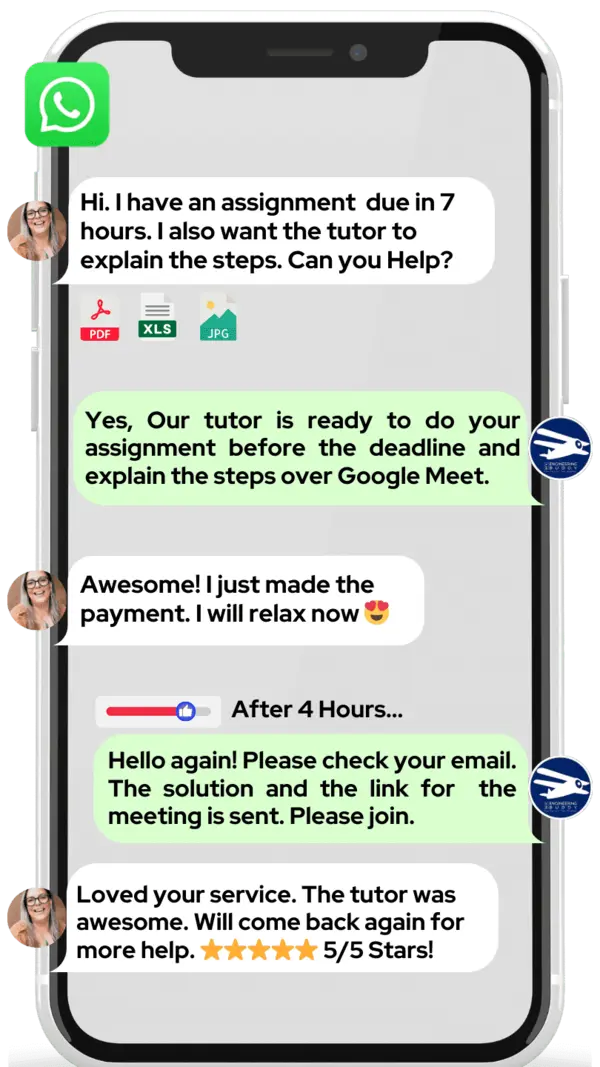
WhatsApp MEB for a quick quote — average response time under 1 minute.
Who This Embedded Systems Tutoring Is For
Embedded systems sits at the intersection of hardware and software. Students who struggle here usually aren’t weak in either area alone — the integration is what catches them out.
- Undergraduate ECE or computer engineering students stuck on microprocessor interfacing or memory-mapped I/O
- Students retaking after a failed first attempt at an embedded systems or digital systems module
- Graduate students building firmware for research projects — sensors, wireless nodes, RTOS scheduling
- Students with a lab project submission deadline approaching and hardware that still won’t respond
- Parents watching a student’s confidence drop as their lab grades slide below their written exam performance
- Students who need Embedded C programming help alongside system-level concepts
MEB tutors have worked with students at MIT, Georgia Tech, Imperial College, TU Delft, University of Toronto, University of Queensland, and ETH Zurich — among many others.
1:1 Tutoring vs Self-Study vs AI vs YouTube vs Online Courses
Self-study works if you have solid prerequisites and no hardware in front of you — but embedded systems requires active debugging, not passive reading. AI tools explain concepts fast but can’t watch you wire a GPIO pin incorrectly or spot that your clock prescaler is off by a factor of 8. YouTube covers UART and SPI protocols well at overview level, then stops when you’re stuck at 3am with a frozen interrupt handler. Online courses give you structured video content at a fixed pace with no personalisation around your specific MCU or assignment brief. 1:1 tutoring with MEB is live, calibrated to your exact platform and syllabus, and corrects errors in the session — not after you’ve already submitted the wrong code.
Outcomes: What You’ll Be Able To Do in Embedded Systems
After working with an MEB embedded systems tutor, you’ll be able to write and debug interrupt-driven firmware for ARM Cortex-M and AVR platforms without constant reference to forums. You’ll analyze timing diagrams to verify SPI, I2C, and UART communication at the register level. You’ll apply RTOS concepts — task scheduling, semaphores, queues — to real lab assignments, not just definitions on a slide. You’ll explain memory architecture decisions in your project reports. You’ll present working embedded code and hardware schematics that your examiner can follow.
Supporting a student through embedded systems? MEB works directly with parents to set up sessions, track progress, and keep lab submissions on schedule. WhatsApp MEB — average response time is under a minute, 24/7.
Based on feedback from 40,000+ sessions collected by MEB from 2022 to 2025, 58% of students improved by one full grade after approximately 20 hours of 1:1 tutoring in subjects like Embedded Systems. A further 23% achieved at least a half-grade improvement.
Source: MEB session feedback data, 2022–2025.
What We Cover in Embedded Systems (Syllabus / Topics)

Track 1: Microcontroller Architecture and Peripherals
- CPU core architecture — ARM Cortex-M0/M3/M4, AVR, PIC families
- GPIO configuration, pull-up/pull-down resistors, port registers
- Timers and counters — PWM generation, input capture, output compare
- Serial protocols — UART, SPI, I2C: configuration, timing, and debugging
- ADC and DAC interfacing — resolution, sampling rate, reference voltage selection
- Interrupt handling — NVIC priority, ISR design, shared-variable hazards
- Direct Memory Access (DMA) — transfer modes, channel configuration
Key references: The Definitive Guide to ARM Cortex-M3 and Cortex-M4 Processors by Joseph Yiu; Programming Embedded Systems by Michael Barr and Anthony Massa.
Track 2: Embedded C, Firmware, and RTOS
- Embedded C specifics — volatile, bit manipulation, register-level access, memory qualifiers
- Bare-metal firmware structure — startup code, linker scripts, memory sections
- FreeRTOS fundamentals — task creation, scheduler, context switching
- Semaphores, mutexes, message queues — deadlock avoidance and priority inversion
- Bootloader concepts — flash programming, memory protection
- Low-power design — sleep modes, clock gating, peripheral shutdown
- Debugging tools — JTAG, SWD, logic analysers, oscilloscope interpretation
Key references: Using the FreeRTOS Real Time Kernel by Richard Barry; Embedded Systems: Introduction to ARM Cortex-M Microcontrollers by Jonathan Valvano.
Track 3: Digital Logic, FPGA, and Hardware-Software Co-design
- Combinational and sequential logic — FSM design, timing analysis
- HDL coding for embedded targets — VHDL and Verilog for peripheral IP blocks
- FPGA soft-core processors — MicroBlaze, NIOS II integration with C firmware
- Hardware-software partitioning — what belongs in logic vs software
- Memory-mapped peripheral design — AXI bus, register interface
- Simulation and synthesis workflows — ModelSim, Vivado, Quartus
Key references: Digital Design and Computer Architecture by Harris and Harris; FPGA Prototyping by VHDL Examples by Pong Chu. See also IEEE Spectrum for current embedded and FPGA industry coverage.
At MEB, we’ve found that the biggest embedded systems bottleneck isn’t the C syntax — it’s students not knowing what the hardware is actually doing while the code runs. Once a tutor walks through a register map live on screen, that gap closes fast.
Platforms, Tools and Textbooks We Support
Embedded systems courses vary widely by university — STM32CubeIDE, Keil MDK, MPLAB X, Arduino IDE, Code Composer Studio, and Eclipse-based toolchains all appear on different syllabi. MEB tutors work across all major IDEs and debuggers. Simulation and hardware-in-the-loop tools covered include Proteus, MATLAB/Simulink (with Embedded Coder), and ModelSim for HDL verification.
- STM32CubeIDE / STM32CubeMX
- Keil MDK (uVision)
- MPLAB X IDE (Microchip)
- Arduino IDE and PlatformIO
- Code Composer Studio (TI)
- Proteus Design Suite
- MATLAB Simulink with Embedded Coder
- ModelSim / Vivado / Quartus Prime
What a Typical Embedded Systems Session Looks Like
The tutor opens by checking where you left off — usually a specific peripheral that wasn’t behaving, or a FreeRTOS task that was blocking unexpectedly. You share your screen: your IDE, your oscilloscope capture if you have one, your datasheet PDF open beside the code. The tutor uses a digital pen-pad to annotate the register map or timing diagram directly in the shared view while you watch. You work through the problem together — often running the code live, reading UART output, adjusting prescaler values or interrupt priorities in real time. Then you replicate the fix on your own with the tutor watching. The session closes with one specific task: reproduce this configuration on a different peripheral before next time, and note the deadline for your lab report.
How MEB Tutors Help You with Embedded Systems (The Learning Loop)
Diagnose: In the first session, the tutor identifies the specific gap — is it the hardware abstraction layer you’re misreading, the C pointer arithmetic that’s corrupting your buffer, or the RTOS priority inversion you haven’t spotted? The diagnostic is surgical, not a tour of the whole syllabus.
Explain: The tutor works through a live example on a digital pen-pad — writing the register configuration by hand, walking through the datasheet section that applies, and showing exactly which bits control which behaviour. Not slides. Not a textbook page. Live, annotated, paused where you need it.
Practice: You attempt the next variation while the tutor watches. This is where most online courses and YouTube stop — and where MEB sessions actually start earning their value.
Feedback: Every error gets a specific explanation. Not “that’s wrong” — but “your ISR is reading the flag before clearing it, which is why you’re getting re-entry.” Marks lost in lab reports usually trace to three or four recurring misunderstandings. The tutor finds them.
Plan: Before the session ends, the tutor notes the next topic, sets a concrete task, and confirms your deadline. Accountability isn’t optional here — it’s built into the structure.
Sessions run over Google Meet. The tutor uses a digital pen-pad or iPad with Apple Pencil. Before your first session, have your IDE open, your datasheet or course notes ready, and your last lab report or assignment in front of you. That first session doubles as your diagnostic. Start with the $1 trial — 30 minutes of live tutoring that also serves as your first diagnostic session.
Students consistently tell us that the moment an MEB tutor draws the memory map by hand — showing exactly where their array is sitting relative to the stack — something clicks that three hours of reading didn’t achieve.
Source: My Engineering Buddy tutor and student feedback, 2022–2025.
Try your first session for $1 — 30 minutes of live 1:1 tutoring or one homework question explained in full. No registration. No commitment. WhatsApp MEB now and get matched within the hour.
Tutor Match Criteria (How We Pick Your Tutor)
Not every electronics engineer knows embedded systems. MEB matches on specifics.
Subject depth: The tutor must have worked with the specific MCU family or RTOS your course uses — not just general electronics knowledge. Tools: All tutors use Google Meet with digital pen-pad or iPad and Apple Pencil — the session is visual from the start. Time zone: Matched to your region — US East, UK, Gulf, Canada, Australia all covered without unsociable hours. Goals: Whether you need to pass a specific lab component, fix a grade before finals, or build firmware for a research platform — the tutor is selected around that specific outcome.
Unlike platforms where you fill out a form and wait, MEB responds in under a minute, 24/7. Tutor match takes under an hour. The $1 trial means you test before you commit. Everything runs over WhatsApp — no logins, no intake forms.
Study Plans (Pick One That Matches Your Goal)
Catch-up (1–3 weeks): for students behind on lab work or with gaps in core topics like interrupts or serial protocols before a test. Exam prep (4–8 weeks): structured revision covering all assessed components — theory, lab practicals, report writing, and simulation tasks. Weekly support: ongoing, aligned to your university semester with sessions timed around assignment and lab submission deadlines. The tutor builds a specific session sequence after the diagnostic — no generic plan applied to every student.
Pricing Guide
Embedded systems tutoring runs $20–$40/hr for most undergraduate and taught master’s courses. Niche areas — bare-metal RTOS development, custom silicon bringup, safety-critical firmware (IEC 61508, MISRA C) — reach up to $100/hr. Rate factors include your level, the specific platform, and how close you are to a deadline.
Availability tightens around end-of-semester lab submission periods. If you have a fixed deadline, book ahead.
For students targeting roles at companies like Texas Instruments, STMicroelectronics, NXP, or Qualcomm — or postgraduate research positions requiring embedded hardware expertise — tutors with professional firmware and silicon industry backgrounds are available at higher rates. Share your specific goal and MEB will match the tier to your ambition.
Start with the $1 trial — 30 minutes, no registration, no commitment. WhatsApp MEB for a quick quote.
A common pattern our tutors observe is that students who book just before a lab deadline have already lost two or three sessions worth of recoverable ground. Coming in a week earlier makes a measurable difference to what we can actually fix in time.
FAQ
Is embedded systems hard?
It’s genuinely difficult — not because any single concept is impenetrable, but because it requires hardware and software knowledge to work together simultaneously. Students who are strong in one area often underestimate how much the other side matters. A tutor who works in both closes that gap efficiently.
How many sessions are needed?
Students with specific gaps — one broken peripheral, one confusing interrupt concept — often resolve their problem in 2–4 sessions. Those building from a weak foundation or preparing for a final project exam typically need 10–20 hours spread across the semester. The diagnostic session clarifies this quickly.
Can you help with homework and assignments?
MEB tutoring is guided learning — you understand the work, then submit it yourself. The tutor explains the concept and method; you write the code and report. See our Academic Integrity policy and Why MEB page for full details on what we help with and what we don’t.
Will the tutor match my exact syllabus or exam board?
Yes. Before matching, MEB asks for your university, course code, MCU platform, and any specific lab or assignment brief. Tutors are selected based on direct experience with that platform and level — not just general electronics knowledge.
What happens in the first session?
The tutor reviews your course outline, current assignment, and what you’ve tried so far. The session then targets the most pressing gap — usually the concept blocking progress right now. By the end, you have a clear plan for the next two to three sessions and a task to complete before the next one.
Is online tutoring as effective as in-person?
For embedded systems, yes — sometimes more so. Screen sharing lets both tutor and student view code, datasheets, oscilloscope captures, and schematics simultaneously. The digital pen-pad replicates whiteboard annotation without travel constraints. Students in the US, UK, Gulf, and Australia report no meaningful difference versus face-to-face.
What is the difference between bare-metal programming and RTOS in embedded systems, and which should I learn first?
Bare-metal means writing firmware with direct hardware register access — no operating system layer. RTOS adds task scheduling, queuing, and synchronisation primitives. Most university courses start with bare-metal to build hardware intuition, then introduce FreeRTOS. Understanding bare-metal first makes RTOS significantly easier to reason about.
My embedded C code compiles but the hardware doesn’t respond — can MEB help with this specific type of debugging?
This is one of the most common problems MEB tutors handle. It usually points to a misconfigured clock, wrong GPIO alternate function, incorrect register write order, or a missing peripheral enable. The tutor walks through the datasheet and your code in the same session — live debugging, not theoretical suggestions.
Can I get embedded systems help at midnight or on weekends?
Yes. MEB operates 24/7. Tutors are spread across time zones to cover US, UK, Gulf, Canada, and Australia availability. Late-night sessions before lab deadlines are common. WhatsApp MEB at any hour — median response time is under one minute.
What if I don’t like my assigned tutor?
Request a replacement via WhatsApp and MEB will match a different tutor, typically within the hour. The $1 trial exists precisely for this — you evaluate the tutor before spending more. No pressure, no lengthy process.
How do I get started?
Start with the $1 trial — 30 minutes of live embedded systems tutoring or one full homework question explained. Three steps: WhatsApp MEB, get matched to a tutor within the hour, begin your trial session. No registration required, no commitment beyond that first dollar.
Trust and Quality at My Engineering Buddy
Every MEB tutor goes through subject-specific vetting — not a generic screening. For embedded systems, that means verifying hands-on experience with specific MCU families, RTOS environments, and debugging workflows, not just an electronics degree. Tutors complete a live demo evaluation before being placed with students, and session feedback is reviewed continuously. Rated 4.8/5 across 40,000+ verified reviews on Google.
MEB tutoring is guided learning — you understand the work, then submit it yourself. For full details on what we help with and what we don’t, read our Academic Integrity policy and Why MEB.
MEB has served 52,000+ students across the US, UK, Canada, Australia, the Gulf, and Europe since 2008 — across 2,800+ subjects. In Electrical Engineering specifically, that includes students working on digital signal processing tutoring, control systems help, and Internet of Things tutoring alongside embedded systems. See our tutoring methodology for how sessions are structured across all levels.
Since 2008, MEB has matched students to tutors in over 2,800 subjects — including specialised embedded systems tutoring at undergraduate, master’s, and research level across four continents.
Source: My Engineering Buddy, 2008–2025.
Our experience across thousands of sessions shows that students who share their actual lab brief — not just a general topic — get matched to a more precise tutor and cover more ground in the first session. Specificity speeds everything up.
Explore Related Subjects
Students studying Embedded Systems often also need support in:
- Analog Circuits
- Digital Electronics
- Sensors and Actuators
- Signals and Systems
- PCB Design
- Semiconductor Devices
- Industrial Automation
Next Steps
When you contact MEB, share your exam board or university course code, the specific topic or peripheral giving you trouble, and your current deadline or submission date. Share your time zone and availability — sessions are matched to fit, not the other way around. MEB matches you with a verified embedded systems tutor, usually within 24 hours, often faster. The first session starts with a diagnostic so every minute is used on what actually matters.
Before your first session, have ready:
- Your course syllabus or lab brief, including which MCU or development board you’re using
- A recent assignment, lab report, or piece of code you’ve been stuck on
- Your exam date or submission deadline
Visit www.myengineeringbuddy.com for more on how MEB works.
WhatsApp to get started or email meb@myengineeringbuddy.com.
Reviewed by Subject Expert
This page has been carefully reviewed and validated by our subject expert to ensure accuracy and relevance.