Hire Verified & Experienced
Financial valuation Tutors
4.8/5 40K+ session ratings collected on the MEB platform



Hire The Best Financial valuation Tutor
Top Tutors, Top Grades. Without The Stress!
52,000+ Happy Students From Various Universities



How Much For Private 1:1 Tutoring & Hw Help?
Private 1:1 Tutoring and HW help Cost $20 – 35 per hour* on average.
Most students can run a DCF model. Far fewer can defend the assumptions behind it — and that’s where marks and job offers are lost.
Financial Valuation Tutor Online
Financial valuation is the process of determining the economic worth of an asset, business, or security using frameworks such as discounted cash flow (DCF), comparable company analysis, and precedent transactions. A financial valuation tutor helps students apply these methods accurately under exam and real-world conditions.
Finding a financial valuation tutor near me who knows your exact course — whether that’s a CFA prep programme, an undergraduate corporate finance module, or a graduate-level M&A valuation class — is harder than it sounds. MEB matches you with a 1:1 online financial valuation tutor who has worked through exactly these problems before. Sessions are built around your syllabus, your gaps, and your deadline.
- 1:1 online sessions tailored to your specific course or valuation framework
- Expert verified tutors with subject-specific knowledge in DCF, LBO, comps, and more
- Flexible time zones — US, UK, Canada, Australia, Gulf
- Structured learning plan built after a diagnostic session
- Ethical homework and assignment guidance — you understand the work before you submit it
52,000+ students across the US, UK, Canada, Australia, and the Gulf have used MEB since 2008 — across 2,800+ subjects, from AP Calculus to A Level Music Technology to Data Science.
Source: My Engineering Buddy, 2008–2025.
How Much Does a Financial Valuation Tutor Cost?
Most financial valuation tutoring sessions run $20–$40/hr depending on level and topic complexity. Graduate-level valuation, LBO modelling, or CFA-specific prep can reach $70–$100/hr. You can start with a $1 trial — 30 minutes of live tutoring or one full homework question explained.
| Level / Need | Typical Rate | What’s Included |
|---|---|---|
| Undergraduate (most levels) | $20–$35/hr | 1:1 sessions, homework guidance, DCF/comps basics |
| Graduate / CFA / Advanced | $35–$100/hr | Expert tutor, LBO, M&A, complex modelling |
| $1 Trial | $1 flat | 30 min live session or one full homework question |
Tutor availability tightens around semester finals and CFA exam windows. Book early if your deadline is within four weeks.
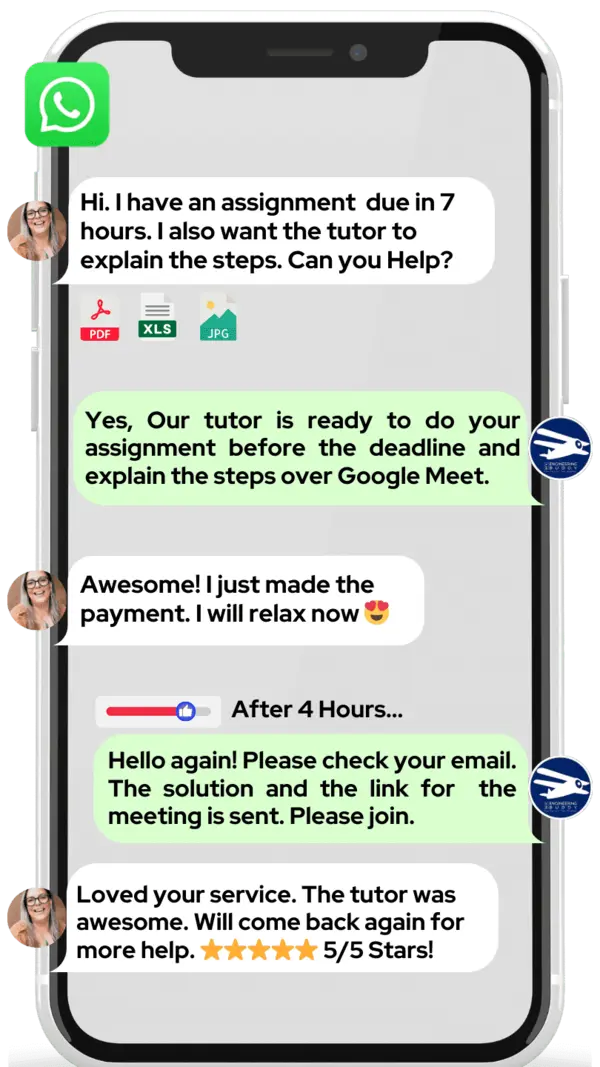
WhatsApp MEB for a quick quote — average response time under 1 minute.
Who This Financial Valuation Tutoring Is For
Financial valuation sits at the intersection of theory and judgement. Students who struggle aren’t always weak in maths — they’re often missing the conceptual framework that connects the numbers to a real decision. This tutoring is built for that gap.
- Undergraduate students in corporate finance, investments, or accounting programmes at universities including NYU Stern, Warwick, LSE, University of Toronto, UNSW, and HEC Paris
- MBA and MSc Finance students tackling valuation modules or case competitions
- CFA Level 1 and Level 2 candidates working through equity valuation and fixed income
- Students with a university conditional offer depending on their corporate finance grade this semester
- Professionals moving into investment banking, private equity, or equity research who need to close gaps fast
- Students who submitted a valuation assignment, got it back marked down, and still don’t know exactly why
1:1 Tutoring vs Self-Study vs AI Tools
Self-study works for reading theory, but financial valuation requires applying judgement to ambiguous inputs — and you can rehearse the wrong approach for weeks without realising it. AI tools can explain WACC or walk through a standard DCF template quickly, but they cannot watch you build a model live, catch the moment you’ve mistreated terminal growth rate, or explain why an examiner would reject your comparable selection. In financial valuation specifically, the gap between knowing the formula and defending your assumptions under pressure is exactly where a human tutor makes the difference. MEB combines the flexibility of online sessions with a structured feedback loop calibrated to your exact course or exam framework.
Outcomes: What You’ll Be Able To Do in Financial Valuation
After working with a financial valuation tutor at MEB, students are able to build and stress-test a discounted cash flow model from scratch, including WACC calculation and terminal value sensitivity analysis. You’ll be able to analyze comparable company and precedent transaction datasets to arrive at a defensible valuation range. Students learn to model leveraged buyout scenarios, explain how debt structure affects equity returns, and present a coherent investment thesis in written or oral form. You’ll apply the right valuation methodology to the right asset class — and explain why you chose it.
Supporting a student through financial valuation? MEB works directly with parents to set up sessions, track progress, and keep coursework on schedule. WhatsApp MEB — average response time is under a minute, 24/7.
Based on feedback from 40,000+ sessions collected by MEB from 2022 to 2025, 58% of students improved by one full grade after approximately 20 hours of 1:1 tutoring in a single subject. A further 23% achieved at least a half-grade improvement.
Source: MEB session feedback data, 2022–2025.
What We Cover in Financial Valuation (Syllabus / Topics)

Core Valuation Methods
- Discounted cash flow (DCF): free cash flow to firm and free cash flow to equity
- Weighted average cost of capital (WACC): components, estimation, and pitfalls
- Terminal value: Gordon Growth Model vs exit multiple — when to use which
- Comparable company analysis (comps): selecting peers, spreading multiples, interpreting spreads
- Precedent transactions: deal premiums, control premia, and synergy adjustments
- Sensitivity and scenario analysis: building tables that actually inform a decision
Recommended texts: Valuation: Measuring and Managing the Value of Companies (McKinsey & Co.), Investment Valuation by Aswath Damodaran — both standard across LSE, Wharton, and Toronto MBA programmes.
Advanced and Specialist Valuation
- Leveraged buyout (LBO) modelling: debt schedules, returns waterfalls, IRR and MOIC
- Real options valuation: when DCF undervalues flexibility
- Sum-of-the-parts (SOTP) for conglomerates and holding companies
- Intangible asset valuation: brand, IP, customer relationships
- Credit and distressed valuation: enterprise value in restructuring contexts
- Cross-border valuation: currency risk, country risk premium, and political risk adjustments
Relevant reading: Applied Corporate Finance by Damodaran; SEC filings and public deal disclosures at SEC.gov are standard primary sources for learning real transaction analysis.
Equity and Fixed Income Valuation (CFA-Aligned)
- Dividend discount models: Gordon Growth, H-model, multi-stage
- Price multiples: P/E, EV/EBITDA, P/B — application and limitations
- Residual income models and economic value added (EVA)
- Fixed income valuation: yield measures, duration, convexity, embedded options
- Equity risk premium estimation: historical, implied, and survey approaches
CFA Institute curriculum covers these in detail; tutors align sessions to the specific level and reading being tested. Get targeted financial mathematics tutoring to strengthen the quantitative foundations alongside valuation work.
What a Typical Financial Valuation Session Looks Like
The tutor opens by reviewing what was covered last time — usually a specific valuation method, such as building the WACC from scratch or selecting comparable companies. From there, the session moves into the student’s current problem: perhaps a DCF assignment where the terminal growth rate assumption is being questioned, or a comps exercise where the peer group selection lacks a clear rationale. The tutor uses a digital pen-pad to annotate the model live, walking through each line while the student explains their logic. When something is off, the tutor doesn’t just correct it — they ask the student to trace back to where the reasoning broke down. By the end of the session, the student has a concrete practice task: rebuild the sensitivity table using a different discount rate range, or re-run the comps with a corrected EV/EBITDA denominator.
How MEB Tutors Help You with Financial Valuation (The Learning Loop)
Diagnose: In the first session, the tutor identifies where exactly the student’s model-building breaks down — whether it’s the mechanics of the DCF, the logic of peer selection in comps, or the inability to connect valuation output to an investment decision.
Explain: The tutor works through a live example using a digital pen-pad — annotating a real or adapted financial model, showing each step, and pausing to check understanding before moving on.
Practice: The student attempts the next problem with the tutor present. This is where most self-study approaches fail — having someone catch the error in real time shortens the feedback loop from days to minutes.
Feedback: After each attempt, the tutor goes through the specific errors: what was technically wrong, what assumption was unjustified, and how an examiner or analyst would have marked it.
Plan: Each session closes with a clear note on the next topic, the specific practice problem to attempt before the next session, and any reading or formula sheet to review.
Sessions run over Google Meet with a digital pen-pad or iPad and Apple Pencil. Before the first session, share your course syllabus or exam framework, a recent assignment or past paper attempt, and your deadline. The first session covers the diagnostic and the first full worked example.
Start with the $1 trial — 30 minutes of live tutoring that also serves as your first diagnostic.
At MEB, we’ve found that students who struggle with financial valuation almost always understand the formula — what they’re missing is the habit of questioning every assumption before it goes into a model. That shift in thinking is what sessions are designed to build.
Tutor Match Criteria (How We Pick Your Tutor)
Not every finance tutor has worked through LBO modelling or CFA equity valuation. Here’s what MEB screens for when matching you.
Subject depth: Tutors are matched to your specific level and framework — undergraduate DCF, CFA Level 2 equity valuation, or graduate-level M&A modelling are all distinct, and the match reflects that.
Tools: All sessions use Google Meet with a digital pen-pad or iPad and Apple Pencil, so financial models can be annotated and built live on screen.
Time zone: MEB tutors cover New York, Los Angeles, Chicago, London, Dubai, Toronto, Sydney, and Melbourne — including evenings and weekends.
Learning style: Calibrated from the first session. Some students need conceptual grounding first; others learn faster by building the model and working backwards.
Communication: Clear English, adapted to whether you’re an undergraduate seeing DCF for the first time or an MBA student refining your terminal value assumptions.
Goals: Exam scores, assignment marks, interview prep, or conceptual depth — the tutor’s approach shifts accordingly.
Unlike platforms where you fill out a form and wait, MEB responds in under a minute, 24/7. Tutor match takes under an hour. The $1 trial means you test before you commit. Everything runs over WhatsApp — no logins, no intake forms.
Students consistently tell us that the tutor match is what makes the difference. Getting someone who has actually built valuation models in a professional context — not just studied them — changes the quality of the explanation entirely.
Study Plans (Pick One That Matches Your Goal)
After the diagnostic, your tutor builds the session sequence around one of three plans: a catch-up sprint (one to three weeks) for students with specific gaps before a deadline; structured exam or assignment prep (four to eight weeks) for a coursework submission or semester final; or ongoing weekly support aligned to your course schedule. The plan isn’t fixed — it adjusts as your understanding develops and new topics are introduced.
Pricing Guide
Financial valuation tutoring starts at $20/hr for standard undergraduate modules. Advanced topics — LBO modelling, CFA Level 2 prep, M&A transaction analysis — typically run $50–$100/hr depending on tutor background and topic depth.
Rate factors include your level, how specialised the topic is, how close your deadline is, and tutor availability. Slots during CFA exam windows and end-of-semester periods fill quickly.
For students targeting investment banking graduate schemes, private equity analyst roles, or CFA charterholder status, tutors with professional backgrounds in financial modelling and equity research are available at higher rates — share your specific goal and MEB will match the tier to your ambition.
Start with the $1 trial — 30 minutes, no registration, no commitment. WhatsApp MEB for a quick quote.
FAQ
Is financial valuation hard?
The mechanics are learnable. The difficulty is judgement — knowing which method to use, how to select inputs, and how to defend your assumptions. Most students find the conceptual layer harder than the maths. That’s exactly what 1:1 sessions address directly.
How many sessions are needed?
Students with a focused gap — one valuation method, one assignment — often need four to six sessions. Students building comprehensive modelling skills from scratch typically need 15–25 hours spread across a semester. The diagnostic session clarifies this within the first 30 minutes.
Can you help with homework and assignments?
Yes. Tutors explain the method, work through similar examples, and help you understand the reasoning — then you build and submit the model yourself. MEB tutoring is guided learning — you understand the work, then submit it yourself. For full details on what we help with and what we don’t, read our Academic Integrity policy and Why MEB.
Will the tutor match my exact syllabus or exam board?
Yes. Whether you’re working through a CFA Institute curriculum reading, a Warwick Business School assignment brief, or an NYU Stern corporate finance problem set, the tutor matches to your specific framework and requirements — not a generic valuation textbook.
What happens in the first session?
The tutor reviews your syllabus or assignment, asks you to walk through your current understanding of one valuation method, and identifies the exact point where your reasoning breaks down. The second half of the session covers the first worked example specific to your gap.
Is online tutoring as effective as in-person?
For financial valuation, yes. The digital pen-pad means the tutor can annotate your model live, just as an in-person tutor would on paper. Students working across time zones — London to Dubai, Toronto to Sydney — find no loss of quality compared to face-to-face sessions.
Can I get financial valuation help late at night?
MEB operates 24/7 across all major time zones. Students in the US, Gulf, and Australia regularly book sessions after 10pm local time. Message on WhatsApp and you’ll typically have a tutor confirmed within the hour, regardless of when you reach out.
What if I don’t get along with my assigned tutor?
The $1 trial exists precisely for this reason. If the match isn’t right after the first session, MEB reassigns you — no questions, no delays. Most students are matched correctly first time because the criteria are applied before the session, not after.
Do you offer group financial valuation sessions?
No. MEB is strictly 1:1. Group sessions dilute the feedback loop that makes tutoring effective for valuation, where the tutor needs to see exactly how one student builds a model and where their specific reasoning fails.
How do I get started?
Message MEB on WhatsApp with your course or exam framework and your deadline. You’ll be matched with a verified financial valuation tutor within the hour. The $1 trial covers 30 minutes of live tutoring or one full assignment question explained — no registration, no commitment required.
Trust & Quality at My Engineering Buddy
Every MEB tutor goes through a subject-specific screening process: verified academic credentials, a live demo session evaluated by MEB, and ongoing review based on student feedback. Tutors teaching financial valuation hold degrees in finance, economics, or accounting — many have professional experience in investment banking, equity research, or corporate finance. Rated 4.8/5 across 40,000+ verified reviews on Google.
MEB tutoring is guided learning — you understand the work, then submit it yourself. For full details on what we help with and what we don’t, read our Academic Integrity policy and Why MEB.
MEB has served 52,000+ students across the US, UK, Canada, Australia, Gulf, and Europe since 2008 — across 2,800+ subjects. If you need support beyond financial valuation, tutors cover closely related areas including advanced financial reporting tutoring, asset-liability management help, and stochastic processes tutoring for quantitative valuation methods. See MEB’s tutoring methodology for how sessions are structured from diagnostic to completion.
Our experience across thousands of sessions shows that students who share a past paper attempt or marked assignment before the first session make faster progress — the tutor arrives knowing exactly what to fix, not guessing where to start.
Explore Related Subjects
Students studying financial valuation often also need support in:
- Advanced Financial Reporting
- Asset Liability Management
- Financial Mathematics
- General Insurance
- Life Contingencies
- Stochastic Processes
Next Steps
Before your first session, have ready: your exam board and syllabus (or course outline), a recent past paper attempt or homework you struggled with, and your exam or deadline date. The tutor handles the rest.
- Share your valuation framework, hardest component, and current timeline
- Share your availability and time zone
- MEB matches you with a verified financial valuation tutor — usually within 24 hours
The first session starts with a diagnostic so every minute is used well. Visit www.myengineeringbuddy.com for more on the MEB process.
WhatsApp to get started or email meb@myengineeringbuddy.com.
MEB has matched students with financial valuation tutors across every major time zone since 2008. The $1 trial is the lowest-risk way to find out if the match is right.
Source: My Engineering Buddy, 2008–2025.
Reviewed by Subject Expert
This page has been carefully reviewed and validated by our subject expert to ensure accuracy and relevance.