Hire Verified & Experienced
High voltage engineering Tutors
4.8/5 40K+ session ratings collected on the MEB platform
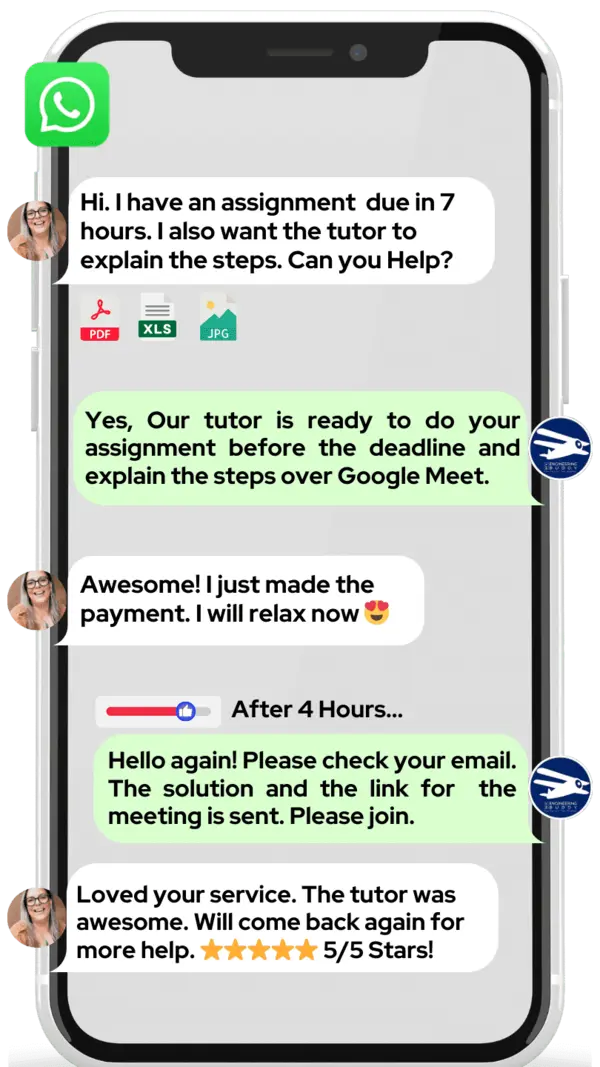



Hire The Best High voltage engineering Tutor
Top Tutors, Top Grades. Without The Stress!
52,000+ Happy Students From Various Universities






How Much For Private 1:1 Tutoring & Hw Help?
Private 1:1 Tutoring and HW help Cost $20 – 35 per hour* on average.
Most students who struggle with high voltage engineering aren’t failing because the physics is impossible — they’re failing because nobody has walked them through partial discharge, dielectric breakdown, or insulation coordination step by step.
High Voltage Engineering Tutor Online
High voltage engineering covers the generation, transmission, measurement, and insulation of electrical systems operating above 1 kV, equipping engineers to design safe, reliable power infrastructure and understand breakdown phenomena, corona effects, and protection coordination.
MEB connects you with a verified high voltage engineering tutor online who knows your course — whether that’s a final-year undergraduate module, a graduate power systems programme, or a professional certification track. Looking for a high voltage engineering tutor near me? Every MEB session is live and online, available 24/7 across the US, UK, Canada, Australia, and the Gulf. You get one-to-one attention on the exact topics your syllabus demands — from gas-insulated switchgear to lightning impulse testing — with no guesswork about relevance. Part of MEB’s broader electrical engineering tutoring offering across 2,800+ subjects.
- 1:1 online sessions tailored to your university course or professional syllabus
- Expert-verified tutors with postgraduate-level knowledge of HV systems
- Flexible time zones — US, UK, Canada, Australia, Gulf
- Structured learning plan built after a diagnostic session
- Ethical homework and assignment guidance — you understand the work, then submit it yourself
52,000+ students across the US, UK, Canada, Australia, and the Gulf have used MEB since 2008 — including students in Electrical Engineering subjects like high voltage engineering, power systems, and power system protection.
Source: My Engineering Buddy, 2008–2025.
How Much Does a High Voltage Engineering Tutor Cost?
Most high voltage engineering sessions run at $20–$40/hr. Graduate-level or specialist topics — such as HVDC transmission modelling or partial discharge analysis — can reach up to $100/hr. The $1 trial gives you 30 minutes of live 1:1 tutoring or one homework question explained in full before you commit to anything.
| Level / Need | Typical Rate | What’s Included |
|---|---|---|
| Undergraduate (most levels) | $20–$35/hr | 1:1 sessions, homework guidance |
| Graduate / Specialist | $35–$100/hr | Expert tutor, niche HV depth |
| $1 Trial | $1 flat | 30 min live session or 1 homework question |
Tutor availability tightens during end-of-semester exam periods. Book early if you’re within six weeks of a submission or exam.
WhatsApp MEB for a quick quote — average response time under 1 minute.
Who This High Voltage Engineering Tutoring Is For
High voltage engineering sits at the sharp end of electrical engineering — abstract enough to confuse, technical enough to fail if the foundations aren’t solid. MEB tutoring is built for students who need to close real gaps, fast.
- Final-year undergraduates with HV modules in power or electrical engineering programmes
- Masters and PhD students working on insulation systems, HVDC, or power grid reliability
- Students retaking after a failed first attempt at an HV engineering module
- Students with a university conditional offer depending on this grade
- Engineers pursuing professional development in high voltage testing or grid protection
- Students whose coursework covers Townsend discharge, gas insulation, or surge arrester design and who need someone to work through it with them in real time
Universities where MEB students have studied HV modules include MIT, Imperial College London, TU Delft, ETH Zürich, University of Toronto, UNSW Sydney, and Georgia Tech. If your institution runs an HV engineering course, MEB likely has a tutor who has covered that syllabus.
1:1 Tutoring vs Self-Study vs AI vs YouTube vs Online Courses
Self-study works if you’re disciplined, but HV engineering has almost no feedback loop — you can’t tell if your insulation coordination approach is wrong until the exam. AI tools explain concepts quickly but can’t diagnose why you keep misapplying the Paschen curve or why your impulse voltage calculations drift. YouTube covers lightning arresters in overview; it stops the moment your problem gets specific. Online courses move at a fixed pace and won’t pause for your partial discharge confusion. 1:1 tutoring with MEB is live, calibrated to your exact university module, and corrects errors in the session — not after the mark is lost.
Outcomes: What You’ll Be Able To Do in High Voltage Engineering
After working with an MEB high voltage engineering tutor, you’ll be able to apply Townsend’s ionisation theory to predict breakdown voltage in gaseous insulation, analyse dielectric loss and partial discharge patterns in solid and liquid insulation systems, model surge propagation on transmission lines and select appropriate surge arrester ratings, explain the operating principles of gas-insulated switchgear and SF6 alternatives, and write up insulation coordination studies in a format that matches what your examiner expects. These aren’t abstract outcomes — they map directly to the assignment questions and exam problems that cost students marks.
Based on feedback from 40,000+ sessions collected by MEB from 2022 to 2025, 58% of students improved by one full grade after approximately 20 hours of 1:1 tutoring in subjects like high voltage engineering. A further 23% achieved at least a half-grade improvement.
Source: MEB session feedback data, 2022–2025.
Try your first session for $1 — 30 minutes of live 1:1 tutoring or one homework question explained in full. No registration. No commitment. WhatsApp MEB now and get matched within the hour.
What We Cover in High Voltage Engineering (Syllabus / Topics)

Track 1: Breakdown Phenomena and Insulation
- Townsend’s first and second ionisation coefficients
- Paschen’s Law and breakdown voltage curves for air, SF6, and vacuum
- Streamer theory and leader propagation in long air gaps
- Partial discharge mechanisms in solid, liquid, and gaseous insulation
- Dielectric loss, tan delta measurement, and insulation ageing
- Solid insulation systems: epoxy, XLPE, paper-oil, PTFE
- Liquid insulation: transformer oil properties and testing
Key texts for this track include High Voltage Engineering Fundamentals by Kuffel, Zaengl, and Kuffel, and High Voltage Engineering and Testing edited by Ryan.
Track 2: HV Equipment, Testing, and Measurement
- Generation of AC, DC, and impulse high voltages in the laboratory
- Marx generator circuits and impulse voltage waveform parameters (1.2/50 µs)
- High voltage measurement: sphere gaps, resistive dividers, capacitive dividers
- Gas-insulated switchgear (GIS): design, SF6 properties, and eco-alternatives
- Transformers: insulation systems, bushings, and oil-paper interfaces
- Power cables: XLPE cable systems and partial discharge testing
- IEC 60060 and IEEE Std 4 standards for HV testing
Standard reference: High Voltage Engineering Fundamentals by Kuffel et al., supplemented by IEC 60060-1 for testing standards.
Track 3: Overvoltage Protection and Insulation Coordination
- Lightning and switching overvoltages: origin, characteristics, and propagation
- Surge arresters: metal oxide varistors (MOV), ratings, and placement
- Transmission line surge impedance and Bewley lattice diagrams
- Insulation coordination methodology per IEC 60071
- Shielding of substations: rolling sphere method and shielding angles
- HVDC systems: converter station insulation requirements
Reference texts include Overvoltage Protection of Low Voltage Systems by Hasse, Wiesinger, and Zischank, and IEC 60071-1 and 60071-2 for coordination studies. Students working on power transmission systems assignments will find significant overlap in surge and insulation topics.
At MEB, we’ve found that students who struggle with insulation coordination often have a gap one step earlier — they don’t have Paschen’s Law and streamer theory fully locked in. Fix the foundation and the coordination problems tend to resolve quickly.
What a Typical High Voltage Engineering Session Looks Like
The tutor opens by checking where you got stuck last time — usually partial discharge interpretation or impulse waveform analysis. From there, you and the tutor work through problems on screen: the tutor sketches the Townsend avalanche process on a digital pen-pad, you annotate or rebuild it yourself, then the tutor checks your reasoning at each step. If you’re working through a Marx generator problem, the tutor walks the circuit stage by stage and asks you to explain the voltage multiplication before moving on. The session closes with a specific practice task — perhaps three Paschen curve problems at different gas pressures — and the next topic is set so you arrive prepared. Nothing is left vague. If something didn’t land, it gets corrected before the session ends.
How MEB Tutors Help You with High Voltage Engineering (The Learning Loop)
Diagnose: In the first session, the tutor asks two or three targeted questions — typically around breakdown mechanisms or insulation testing — to locate exactly where your understanding breaks down. This takes about ten minutes and shapes everything that follows.
Explain: The tutor works through the topic live — drawing electric field distributions across electrode gaps, stepping through Townsend’s derivation, or building a surge arrester selection problem from first principles. The digital pen-pad makes this as clear as a whiteboard, and you can scroll back through it after the session.
Practice: You attempt a similar problem with the tutor present. This isn’t passive — you narrate your reasoning aloud and the tutor listens for where the logic slips.
Feedback: Step-by-step error correction. The tutor identifies not just the wrong answer but the exact misstep — for example, confusing the critical field strength in SF6 with that of air, or applying the wrong waveform parameters in an impulse test calculation. Students working on power system analysis homework alongside HV coursework often find these corrections carry over to both subjects.
Plan: Before the session ends, the tutor maps the next two or three topics in sequence, sets a specific task, and notes your exam date. Progress is tracked session to session — not left to memory.
Sessions run on Google Meet. The tutor uses a digital pen-pad or iPad with Apple Pencil. Before your first session, have your course syllabus and one recent problem you couldn’t solve. The first session covers your diagnostic and gets you working on your actual material within the first twenty minutes. Start with the $1 trial — 30 minutes of live tutoring that also serves as your first diagnostic.
Students working on high voltage engineering regularly tell MEB tutors that the subject clicked only after someone showed them the field distribution visually — not just through equations. That’s what a live session delivers that a textbook can’t.
Source: My Engineering Buddy tutor observations, 2022–2025.
Tutor Match Criteria (How We Pick Your Tutor)
Not every electrical engineering tutor knows high voltage work. MEB matches on four criteria:
Subject depth: The tutor must have postgraduate-level knowledge of HV engineering — not just general electrical engineering. We look for coursework, research, or professional experience in insulation systems, HV testing, or grid protection.
Tools: Every session runs on Google Meet with a digital pen-pad or iPad and Apple Pencil. Tutors who can’t draw a Paschen curve live aren’t matched to HV students. Those working in simulation-heavy roles may also support ETAP or PSCAD for power system modelling alongside HV coursework.
Time zone: Matched to your region — US, UK, Gulf, Canada, or Australia — so you’re not booking sessions at 3 a.m.
Goals: Whether you need exam preparation, conceptual depth on breakdown theory, or support with a dissertation chapter on insulation ageing, the tutor is matched to that specific goal — not just the subject name.
Unlike platforms where you fill out a form and wait, MEB responds in under a minute, 24/7. Tutor match takes under an hour. The $1 trial means you test before you commit. Everything runs over WhatsApp — no logins, no intake forms.
Study Plans (Pick One That Matches Your Goal)
After the first diagnostic session, the tutor builds the sequence that fits your timeline. Three options fit most high voltage engineering students: Catch-up (1–3 weeks, 3–5 sessions) for students with immediate assignment deadlines or a failed component to retake, covering the highest-yield topics first; Exam prep (4–8 weeks) for structured revision working through all syllabus tracks with past-paper practice built in; or Weekly support through the semester, aligned to lecture topics so you never fall two weeks behind again. The tutor maps the specific session sequence after reviewing your syllabus and current gaps.
Pricing Guide
High voltage engineering tutoring runs at $20–$40/hr for most undergraduate levels. Graduate coursework in HVDC, GIS, or insulation coordination — particularly at research level — typically falls in the $60–$100/hr range depending on tutor specialisation and timeline pressure.
Rate factors: course level, topic complexity (partial discharge analysis and insulation coordination take more preparation than introductory breakdown theory), your timeline, and tutor availability.
Availability is limited in the six weeks before end-of-semester exams. Students who book early get consistent tutor pairing across all sessions.
For students targeting roles at National Grid, Siemens Energy, ABB, or grid operator organisations, tutors with professional power utility or HV testing laboratory backgrounds are available at higher rates — share your specific goal and MEB will match the tier to your target.
Start with the $1 trial — 30 minutes, no registration, no commitment. WhatsApp MEB for a quick quote.
Students consistently tell us that the hardest part of high voltage engineering isn’t the maths — it’s building physical intuition for what happens inside an insulation system under stress. That’s exactly what 1:1 tutoring is built to give you, faster than any lecture or textbook can.
FAQ
Is high voltage engineering hard?
It’s one of the more demanding electrical engineering specialisms. The theory — Townsend ionisation, Paschen curves, partial discharge — is abstract. The standards (IEC 60060, IEC 60071) add another layer. Most students find it manageable once the physical intuition is built correctly from the start.
How many sessions do most students need?
Students with a specific assignment or exam six weeks away typically need 8–12 sessions. Those working through a full semester module usually benefit from 16–20 sessions spread over the term. The diagnostic determines the realistic number for your situation.
Can you help with high voltage engineering homework and assignments?
Yes. MEB tutoring is guided learning — you understand the work, then submit it yourself. See our Academic Integrity policy and Why MEB page for full details on what we help with and what we don’t.
Will the tutor match my exact syllabus or exam board?
Yes. Before matching, MEB asks for your university, module name, and if relevant, the specific IEC or IEEE standards your course references. Tutors are matched to your syllabus — not to a generic HV engineering template.
What happens in the first session?
The tutor asks targeted questions to locate your specific gaps — usually in breakdown theory or insulation testing. That diagnostic shapes the session plan. You’ll work through one real problem from your course before the session ends. It’s productive from minute one.
Is online tutoring as effective as in-person for a practical subject like this?
For the theory, analysis, and problem-solving components — yes, fully. The digital pen-pad replicates whiteboard work clearly. For physical lab safety procedures, MEB covers the underlying theory; hands-on equipment operation requires your institution’s laboratory setting.
What’s the difference between high voltage engineering and power engineering — do I need both?
Power engineering covers generation, transmission, and distribution systems broadly. High voltage engineering is the specialised subset dealing with insulation, breakdown, testing, and protection at high voltage levels. Many students need power engineering tutoring alongside HV work — MEB can support both, sometimes with the same tutor.
Can MEB help with PSCAD or ETAP simulations for HV coursework?
Yes. Some HV assignments require simulation tools for surge analysis or insulation coordination studies. MEB has tutors experienced in both platforms. Flag this when you contact MEB so the right tutor is matched from the start.
Do you offer group high voltage engineering sessions?
MEB’s model is 1:1 only. Group sessions dilute the diagnostic precision that makes HV tutoring effective — one student’s gap in partial discharge theory is rarely the same as another’s. Individual sessions are what produce results here.
Can I get high voltage engineering help late at night or on weekends?
Yes. MEB operates 24/7. Students in the Gulf, Australia, and US time zones regularly book sessions outside standard business hours. WhatsApp MEB at any time — the average response is under one minute.
How do I get started?
Three steps: WhatsApp MEB with your university module name and hardest topic, get matched with a verified HV tutor — usually within the hour, then start your $1 trial session. Thirty minutes live or one question explained in full. No forms, no delay.
Is SF6 replacement and eco-friendly insulation covered by MEB tutors?
Yes. The shift away from SF6 toward vacuum interrupters and g3 gas alternatives is now part of many graduate HV syllabuses. MEB tutors working in or researching modern GIS design are available for this topic specifically — mention it when you contact MEB.
Trust & Quality at My Engineering Buddy
Every MEB tutor goes through subject-specific screening before being matched to a student. For high voltage engineering, that means postgraduate-level knowledge of insulation systems, HV testing standards, and overvoltage protection — not just a general electrical engineering background. Tutors complete a live demo evaluation and are reviewed session by session using student feedback. Rated 4.8/5 across 40,000+ verified reviews on Google.
MEB tutoring is guided learning — you understand the work, then submit it yourself. For full details on what we help with and what we don’t, read our Academic Integrity policy and Why MEB.
MEB has been running since 2008 across the US, UK, Canada, Australia, the Gulf, and Europe — 52,000+ students served across 2,800+ subjects. Within Electrical Engineering, the platform covers everything from high voltage engineering and power system operation and control through to electromagnetic field theory tutoring and smart grid coursework. Tutor quality in the HV space is verified against the depth the subject demands — not averaged across easier subjects. See our tutoring methodology for how session quality is maintained.
Explore Related Subjects
Students studying high voltage engineering often also need support in:
- Electrical machines
- Power electronics
- Transformer
- Power generation
- Electrical circuits
- Control systems
- Thermal power plants
- Energy storage systems
Next Steps
When you contact MEB, have three things ready:
- Your university module name and exam or submission date
- The specific topic or problem that’s costing you marks right now
- Your time zone and preferred session times
Before your first session, also have ready: your course syllabus or module outline, a recent past paper attempt or homework problem you couldn’t solve, and your exam or deadline date. The tutor handles the rest.
MEB matches you with a verified high voltage engineering tutor — usually within 24 hours, often within the hour. The first session starts with a diagnostic so every minute is used on what actually matters for your grade.
Visit www.myengineeringbuddy.com for more on how MEB works.
WhatsApp to get started or email meb@myengineeringbuddy.com.
Reviewed by Subject Expert
This page has been carefully reviewed and validated by our subject expert to ensure accuracy and relevance.