Hire Verified & Experienced
Internet of things (IoT) Tutors
4.8/5 40K+ session ratings collected on the MEB platform
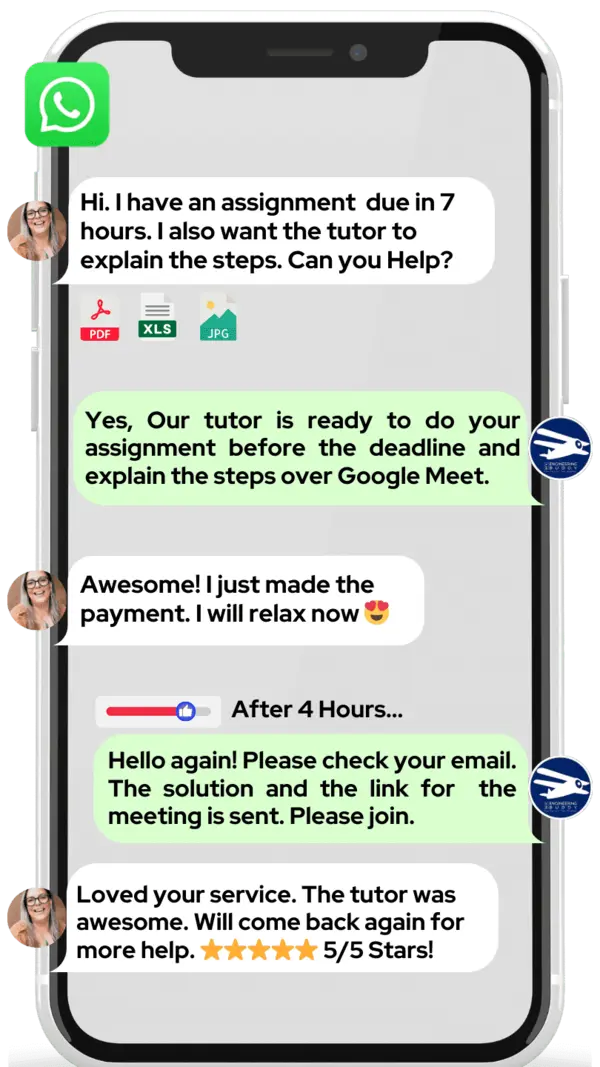



Hire The Best Internet of things (IoT) Tutor
Top Tutors, Top Grades. Without The Stress!



52,000+ Happy Students From Various Universities






How Much For Private 1:1 Tutoring & Hw Help?
Private 1:1 Tutoring and HW help Cost $20 – 35 per hour* on average.
Your IoT project compiles. Your sensor data is garbage. Your tutor has no idea what MQTT is.
Internet of Things (IoT) Tutor Online
Internet of Things (IoT) is a network of physical devices embedded with sensors, microcontrollers, and communication modules that collect and exchange data over the internet, equipping students to design, deploy, and troubleshoot connected systems across industrial, consumer, and smart-infrastructure applications.
Finding a qualified IoT tutor near me who actually knows the difference between Zigbee and Z-Wave, can debug an MQTT broker, and understands your specific course syllabus is harder than it sounds. MEB’s electrical engineering tutoring network includes specialists who have built real IoT systems — not just taught theory. One focused session can close the gap between a stalled project and a working prototype.
- 1:1 online IoT tutoring sessions tailored to your course or project brief
- Expert-verified tutors with hands-on embedded systems and networking experience
- Flexible time zones — US, UK, Canada, Australia, Gulf covered
- Structured learning plan built after a diagnostic session
- Ethical homework and assignment guidance — you understand the work before you submit it
52,000+ students across the US, UK, Canada, Australia, and the Gulf have used MEB since 2008 — including students in Electrical Engineering subjects like IoT, embedded systems tutoring, and wireless communication.
Source: My Engineering Buddy, 2008–2025.
How Much Does an IoT Tutor Cost?
Most IoT tutoring sessions run $20–$40/hr. Graduate-level work — think edge computing architecture, LPWAN protocol design, or cloud platform integration — goes up to $100/hr depending on tutor background. Not sure where you land? Start with the $1 trial and MEB will match you to the right tier.
| Level / Need | Typical Rate | What’s Included |
|---|---|---|
| Standard (undergrad, coursework) | $20–$35/hr | 1:1 sessions, homework guidance |
| Advanced / Graduate / Niche | $35–$100/hr | Expert tutor, protocol-level depth |
| $1 Trial | $1 flat | 30 min live session or 1 homework question explained |
Tutor availability tightens around semester project deadlines and finals. Book early if you’re working to a hard submission date.
WhatsApp MEB for a quick quote — average response time under 1 minute.
Who This IoT Tutoring Is For
IoT courses sit at the intersection of hardware, networking, and software. Students hit walls in all three areas — sometimes at the same time. This tutoring is built for people who need someone who can move between a circuit schematic and a Python script without missing a beat.
- Undergraduate ECE, CS, or EE students with an IoT module or capstone project
- Graduate students working on sensor networks, edge computing, or smart systems research
- Students whose conditional university offer depends on passing this course
- Students 4–6 weeks from a project submission with hardware or protocol gaps still open
- Engineers upskilling into IoT from a pure software or pure hardware background
- Parents watching a student’s confidence drop as their project deadline approaches
MEB tutors have supported students at Georgia Tech, MIT, University of Toronto, TU Delft, University of Melbourne, Imperial College London, and ETH Zürich — among others.
Not sure if you qualify? The $1 trial answers that question in 30 minutes.
1:1 Tutoring vs Self-Study vs AI vs YouTube vs Online Courses
Self-study works if your gaps are small and your documentation skills are good — IoT documentation rarely is. AI tools can explain MQTT QoS levels but can’t tell you why your ESP32 keeps dropping its Wi-Fi connection under your specific conditions. YouTube covers architecture overviews well and stops the moment you need to debug real hardware. Online courses give you structure but lock you into their pace and their hardware kit. A 1:1 online IoT tutor from MEB works on your actual device, your actual code, and your actual deadline — nothing hypothetical.
Outcomes: What You’ll Be Able To Do in IoT
After focused 1:1 IoT tutoring sessions, students consistently move from confusion to capability on specific, testable skills. You’ll be able to design a sensor-to-cloud pipeline using MQTT or CoAP and explain every layer of it. You’ll be able to analyze power consumption trade-offs between BLE, Zigbee, and LoRaWAN for a given deployment scenario. You’ll be able to write and debug embedded C or MicroPython firmware for microcontrollers like the ESP32 or Raspberry Pi. You’ll be able to apply network topology principles to architect a scalable IoT deployment. You’ll be able to present your system design — hardware selection, protocol choice, security model — clearly in a project report or viva.
Based on feedback from 40,000+ sessions collected by MEB from 2022 to 2025, 58% of students improved by one full grade after approximately 20 hours of 1:1 tutoring in subjects like Internet of Things (IoT). A further 23% achieved at least a half-grade improvement.
Source: MEB session feedback data, 2022–2025.
What We Cover in IoT (Syllabus / Topics)

Track 1: Hardware, Sensors & Microcontrollers
- Microcontroller architecture — ESP32, Arduino, STM32, Raspberry Pi
- Sensor types: temperature, humidity, pressure, accelerometer, proximity
- Actuators and GPIO control
- sensors and actuators help — interfacing ADC/DAC, I2C, SPI, UART
- Power management and sleep modes for battery-powered IoT nodes
- PCB layout considerations for IoT hardware
- Hardware debugging with oscilloscopes and logic analyzers
Core texts include Kolban’s Book on ESP32, and Programming the Raspberry Pi by Simon Monk (McGraw-Hill).
Track 2: Communication Protocols & Networking
- Short-range protocols: BLE, Zigbee, Z-Wave, Wi-Fi, NFC
- Long-range protocols: LoRaWAN, NB-IoT, LTE-M, Sigfox
- MQTT, CoAP, AMQP — message brokers and publish-subscribe models
- wireless communication tutoring — signal propagation and link budget basics
- IPv6 and 6LoWPAN for constrained networks
- Network topology design: star, mesh, tree
- Security fundamentals: TLS, DTLS, certificate management for IoT
Recommended reading: IoT Fundamentals by Hanes, Salgueiro, Grossetete, Barton & Henry (Cisco Press), and Building Wireless Sensor Networks by Robert Faludi (O’Reilly).
Track 3: Cloud Platforms, Data & Edge Computing
- Cloud IoT platforms: AWS IoT Core, Azure IoT Hub, Google Cloud IoT
- Data pipelines — ingestion, storage, time-series databases (InfluxDB, TimescaleDB)
- embedded systems assignment help — edge processing vs cloud offload decisions
- Dashboard and visualisation tools: Grafana, Node-RED, Home Assistant
- OTA (over-the-air) firmware update design
- Basic ML inference at the edge — TinyML, TensorFlow Lite for microcontrollers
Core texts: Designing the Internet of Things by Adrian McEwen & Hakim Cassimally (Wiley), and Practical Node-RED Programming by Taiji Hagino (Packt).
At MEB, we’ve found that IoT students who struggle most are usually caught between disciplines — they know enough hardware to start but not enough networking to finish. The first session almost always reveals which layer is the real blocker.
What a Typical IoT Session Looks Like
The tutor opens by checking where you left off — usually the MQTT broker configuration or the sensor calibration routine from the previous session. You share your screen: code editor, serial monitor, and circuit diagram side by side. The tutor uses a digital pen-pad to annotate your architecture diagram and walk through exactly where your data pipeline is dropping packets. You attempt the fix yourself while the tutor watches. If you’re stuck on the LoRaWAN join procedure, the tutor reproduces the issue on their own board, shows you the corrected register settings, and has you replicate it. The session closes with one concrete task — implement MQTT QoS level 1 with acknowledgement, test it, log the results — and the next topic is noted: gateway redundancy or edge filtering, depending on your project scope.
How MEB Tutors Help You with IoT (The Learning Loop)
Diagnose: The first session maps exactly where you are. The tutor asks you to explain your system architecture, then identifies whether the gap is in hardware interfacing, protocol selection, firmware logic, or cloud integration. Most students find this alone clarifying.
Explain: The tutor works through a live example on the digital pen-pad — say, walking through a complete MQTT publish cycle from sensor read to broker acknowledgement, line by line, so you see every step.
Practice: You attempt the equivalent problem yourself, with the tutor present. No moving on until you can do it without prompting. This is where most platforms stop — MEB doesn’t.
Feedback: The tutor reviews your output step by step. If your ESP32 isn’t connecting to your broker, they trace the exact line where authentication fails and explain what the error code actually means — not just how to fix it this time.
Plan: Each session ends with a clear next step and a recorded topic progression. You always know what’s next and why.
Sessions run on Google Meet. The tutor uses a digital pen-pad or iPad with Apple Pencil. Before your first session, share your course outline or project brief, the specific component or error you’re stuck on, and your submission deadline. The tutor designs the first session around that — no wasted time.
Start with the $1 trial — 30 minutes of live IoT tutoring that also serves as your diagnostic session.
Students consistently tell us that IoT feels impossible until they have one session where everything connects — literally and figuratively. That moment usually comes when the tutor slows down and traces the full data path from sensor to dashboard together.
Tutor Match Criteria (How We Pick Your Tutor)
Not every electrical engineer knows IoT. MEB matches on specifics.
Subject depth: Tutors are matched to your exact stack — RTOS firmware, LoRaWAN network design, or AWS IoT Core integration, not just “IoT general.” Tools: Every tutor uses Google Meet with a digital pen-pad or iPad and Apple Pencil for annotation. Time zone: Matched to your region — US, UK, Gulf, Canada, or Australia. Goals: Whether you need to pass a module exam, complete a project, or close a specific knowledge gap, the match reflects that.
Unlike platforms where you fill out a form and wait, MEB responds in under a minute, 24/7. Tutor match takes under an hour. The $1 trial means you test before you commit. Everything runs over WhatsApp — no logins, no intake forms.
Study Plans (Pick One That Matches Your Goal)
Catch-up (1–3 weeks): for students behind on a module or with a project submission approaching fast. The tutor identifies the two or three highest-impact gaps and works those first. Exam prep (4–8 weeks): structured revision covering every assessable topic, with past paper or mock project work built in. Weekly support: ongoing sessions aligned to your semester schedule, coursework deadlines, and progressive project milestones. The tutor builds the specific sequence after the first diagnostic — there’s no off-the-shelf plan.
Pricing Guide
IoT tutoring starts at $20/hr for standard undergraduate coursework. Graduate-level topics — edge AI, industrial IoT protocol stacks, custom RTOS development — run up to $100/hr depending on tutor background and topic depth. Rate factors include your level, the specific hardware or platform involved, your timeline, and tutor availability.
Availability is tightest around semester project submission windows. If you’re working to a hard deadline, book early.
For students targeting roles at companies like Siemens, Bosch, or Cisco — or graduate programmes where IoT is a core specialisation — tutors with professional embedded systems or network architecture backgrounds are available at higher rates. Share your specific goal and MEB will match the tier to your ambition.
Start with the $1 trial — 30 minutes, no registration, no commitment. WhatsApp MEB for a quick quote.
A common pattern our tutors observe is that students wait until three days before a project submission to ask for help. The $1 trial is there precisely so you don’t have to decide whether MEB is worth it before you’ve seen what a session actually looks like. One session changes the calculation.
FAQ
Is IoT hard to learn?
IoT is genuinely cross-disciplinary — hardware, firmware, networking, and cloud all in one course. Students with a pure software background struggle with sensors and GPIO; hardware students struggle with MQTT and cloud integration. Targeted 1:1 tutoring closes those specific gaps faster than broad review.
How many sessions will I need?
Most students working on a specific project or module gap see meaningful progress in 3–5 sessions. Closing all assessable topics for an end-of-semester exam typically takes 8–15 sessions depending on starting level and how many hours per week are available.
Can you help with homework and assignments?
MEB tutoring is guided learning — you understand the work, then submit it yourself. The tutor explains the concept, walks through a worked example, and checks your reasoning. See our Academic Integrity policy and Why MEB page for full details on what we help with and what we don’t.
Will the tutor match my exact syllabus or exam board?
Yes. Share your course outline, university, and the specific module name when you WhatsApp MEB. Tutors are matched to your syllabus — not a generic IoT curriculum. This matters most when your course uses a specific platform like AWS IoT Core or a specific hardware kit.
What happens in the first session?
The tutor reviews what you share before the session — your syllabus, current project state, or the specific problem you’re stuck on. The first 10 minutes are diagnostic. The remaining 20 minutes work on the highest-priority gap identified. You leave with a clear next task and a plan for follow-up sessions.
Is online IoT tutoring as effective as in-person?
For IoT specifically, online is often better. You work in your own environment, on your own hardware, sharing your actual screen. The tutor annotates your real code and your real circuit diagram — not a generic example. The digital pen-pad makes protocol diagrams and architecture annotation clear.
Can you help with MQTT, LoRaWAN, or a specific IoT protocol?
Yes — protocol-level help is one of the most common requests MEB receives for IoT. Tutors cover MQTT, CoAP, LoRaWAN, Zigbee, BLE, NB-IoT, and others. Share the specific protocol and your use case when booking so MEB can match the right specialist.
My IoT project uses a specific cloud platform — AWS, Azure, or Google Cloud. Can tutors help with that?
Yes. Tutors with hands-on AWS IoT Core, Azure IoT Hub, and Google Cloud IoT experience are available. Share your platform and what you’re trying to achieve — data ingestion pipeline, device provisioning, or dashboard integration — and MEB matches accordingly.
Can I get IoT help at midnight or on weekends?
MEB operates 24/7 across time zones. Students in the US, UK, Gulf, and Australia regularly book late-night or weekend sessions around project deadlines. WhatsApp MEB at any hour — median response time is under one minute.
Do you offer group IoT sessions?
MEB’s model is 1:1. Group sessions are not offered. Every session is calibrated to one student’s gaps, one project, one deadline — that’s what makes the difference for a subject as hands-on and variable as IoT.
How do I get started?
WhatsApp MEB with your course name, the specific topic or project you’re stuck on, and your deadline. MEB matches you with a verified IoT tutor — usually within the hour. Your first session is the $1 trial: 30 minutes live, or one homework question explained in full. Three steps: WhatsApp, get matched, start trial.
What’s the difference between an IoT tutor and a general electronics tutor for this subject?
A general electronics tutor handles circuit analysis and component theory well. IoT requires someone who also knows protocol stacks, cloud platforms, and firmware debugging — often simultaneously. MEB matches IoT-specific tutors, not general electrical engineers, for these sessions.
Trust & Quality at My Engineering Buddy
Every MEB tutor goes through subject-specific screening: a live demo session evaluated against a scoring rubric, verification of relevant degrees or professional experience, and ongoing feedback review after every session. For IoT, that means tutors are tested on protocol knowledge, embedded systems depth, and their ability to debug live — not just explain concepts. Rated 4.8/5 across 40,000+ verified reviews on Google.
MEB tutoring is guided learning — you understand the work, then submit it yourself. For full details on what we help with and what we don’t, read our Academic Integrity policy and Why MEB.
MEB has served 52,000+ students across the US, UK, Canada, Australia, the Gulf, and Europe since 2008 — in 2,800+ subjects. Within Electrical Engineering, that includes dedicated support for IoT alongside embedded C programming help, microcontrollers tutoring, and digital communications homework help. Read more about how MEB structures sessions.
Explore Related Subjects
Students studying IoT often also need support in:
- Arduino Programming
- FPGA Design
- Industrial Automation
- Control Systems
- Smart Grid
- Signals and Systems
- PCB Design
Next Steps
When you WhatsApp MEB, share your exam board or course syllabus, the component or topic giving you the most trouble, and your submission or exam date. Also share your availability and time zone — MEB covers US, UK, Gulf, Canada, and Australia.
MEB matches you with a verified IoT tutor, usually within 24 hours. Most students are matched and in their first session the same day.
- Have ready: your course outline or project brief
- Bring: a recent piece of work you struggled with — code, schematic, or past paper question
- Note: your hard deadline — exam date, submission date, or presentation date
The tutor handles the diagnostic and session plan from there. First session is calibrated to your exact gaps — no wasted time on what you already know.
Visit www.myengineeringbuddy.com for more on how MEB works.
WhatsApp to get started or email meb@myengineeringbuddy.com.
Reviewed by Subject Expert
This page has been carefully reviewed and validated by our subject expert to ensure accuracy and relevance.