

Hire Verified & Experienced
LABVIEW Tutors
Email: [email protected]
4.8/5 40K+ session ratings collected on the MEB platform



Hire The Best LABVIEW Tutor
Top Tutors, Top Grades. Without The Stress!
LabVIEW projects break when your block diagram logic is wrong and you can’t see why. One session fixes what hours of forum-searching won’t.
LabVIEW Tutor Online
LabVIEW (Laboratory Virtual Instrument Engineering Workbench) is a graphical programming environment developed by National Instruments, used for data acquisition, instrument control, signal processing, and automated test system development in engineering and research contexts.
If you’ve searched for a LabVIEW tutor near me, you’ve found what most people can’t: a 1:1 online LabVIEW tutor who knows your exact project type, whether that’s DAQ systems, PID control loops, or FPGA-based targets. MEB provides electrical engineering tutoring across 2,800+ subjects, including LabVIEW at every level. One session with the right tutor is worth more than three weeks of trial and error.
- 1:1 online sessions tailored to your course, lab report, or project brief
- Expert-verified tutors with hands-on LabVIEW and NI hardware experience
- Flexible time zones — US, UK, Canada, Australia, Gulf covered
- Structured learning plan built after a diagnostic session
- Ethical homework and assignment guidance — you understand the work before you submit
52,000+ students across the US, UK, Canada, Australia, and the Gulf have used MEB since 2008 — including students in Electrical Engineering subjects like LabVIEW, control systems, and digital signal processing.
Source: My Engineering Buddy, 2008–2025.
How Much Does a LabVIEW Tutor Cost?
Most LabVIEW tutoring sessions run $20–$40/hr. Advanced work — FPGA targets, real-time systems, NI TestStand integration — can reach $70–$100/hr depending on tutor depth. The $1 trial gets you 30 minutes of live 1:1 tutoring or one full homework question explained in detail.
| Level / Need | Typical Rate | What’s Included |
|---|---|---|
| Standard (undergrad labs, coursework) | $20–$40/hr | 1:1 sessions, homework guidance |
| Advanced / Specialist (FPGA, RT, TestStand) | $40–$100/hr | Expert tutor, niche system depth |
| $1 Trial | $1 flat | 30 min live session or 1 homework Q |
Tutor availability tightens in April and November when lab deadlines cluster. Book early if your submission is within three weeks.
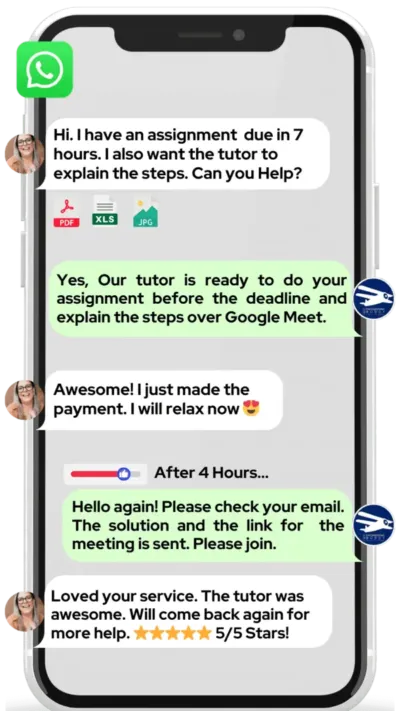
WhatsApp MEB for a quick quote — average response time under 1 minute.
Who This LabVIEW Tutoring Is For
LabVIEW sits at the overlap of programming, hardware, and measurement. Most students hit a wall not because the concepts are impossible, but because the graphical syntax behaves differently from text-based languages — and no one’s explained why.
- Undergraduate electrical, mechanical, or biomedical engineering students with compulsory LabVIEW lab components
- Graduate students integrating LabVIEW into research instrumentation or thesis projects
- Students whose LabVIEW coursework grade is pulling down their overall module result
- Students retaking a failed practical or resubmitting a lab report that used LabVIEW as the measurement platform
- Engineers in industry building test rigs who need structured guidance on VI architecture
- Students at institutions including MIT, Georgia Tech, University of Michigan, Imperial College London, TU Delft, and the University of Toronto where LabVIEW is embedded in core lab curricula
If your LabVIEW project compiles but produces wrong readings, or your VI crashes under load and you don’t know where the race condition is — this is exactly what MEB tutors fix.
1:1 Tutoring vs Self-Study vs AI vs YouTube vs Online Courses
Self-study works if you have time and a clear reference — but LabVIEW’s documentation assumes you already know what you’re doing. AI tools explain concepts quickly but can’t look at your block diagram and tell you where the data flow breaks. YouTube covers the basics well; it stops the moment your wiring error is non-standard. Online courses give structure but run at a fixed pace with no one checking your specific VI logic. With a 1:1 LabVIEW tutor from MEB, the session is built around your actual file, your actual error, and your actual deadline.
Outcomes: What You’ll Be Able To Do in LabVIEW
After working with an MEB LabVIEW tutor, students consistently report being able to do things they couldn’t do before — not just understand them in theory. You’ll be able to build a functional data acquisition VI that reads from physical sensors via NI DAQ hardware without signal noise issues. You’ll be able to design a PID control loop in LabVIEW and explain why each tuning parameter changes system behaviour. You’ll be able to apply error handling structures so your VI doesn’t silently fail during long test runs. Analyze timing issues caused by while-loop iteration rates and fix them using timed loops or event structures. Present your instrument control VI logic clearly in a lab report, explaining the producer-consumer architecture you chose and why.
Based on feedback from 40,000+ sessions collected by MEB from 2022 to 2025, 58% of students improved by one full grade after approximately 20 hours of 1:1 tutoring in subjects like LabVIEW. A further 23% achieved at least a half-grade improvement.
Source: MEB session feedback data, 2022–2025.
Students consistently tell us that the first session is the turning point — not because we cover everything, but because we find the one thing that was blocking everything else. In LabVIEW, that’s usually a dataflow misunderstanding that nobody had ever named for them.
What We Cover in LabVIEW (Syllabus / Topics)

Track 1: LabVIEW Fundamentals and VI Architecture
- Front panel controls and indicators — numeric, Boolean, string, array types
- Block diagram wiring, data flow execution model vs procedural logic
- Loops: For Loop, While Loop, timing with Wait functions
- Structures: Case, Sequence, Event, Formula Node
- Error handling: error clusters, error wire routing, error handling VIs
- SubVI creation, connector panes, icon editing, and modularity
- Debugging: probe tool, execution highlighting, breakpoints, single-step mode
Core text: LabVIEW for Engineers by Ronald W. Larsen; LabVIEW Graphical Programming by Gary W. Johnson and Richard Jennings.
Track 2: Data Acquisition and Instrument Control
- NI-DAQmx architecture — tasks, channels, timing, triggering
- Analog input/output: sampling rates, resolution, signal conditioning
- Digital I/O and counter/timer operations
- VISA and GPIB instrument control — reading/writing to oscilloscopes, function generators
- Serial (RS-232/RS-485) and USB instrument communication
- Signal filtering in LabVIEW: low-pass, high-pass, bandpass using built-in filter VIs
- Data logging to file: TDMS format, spreadsheet export, database connectivity
Reference: LabVIEW for Data Acquisition by Bruce Mihura; NI Developer Zone documentation for NI-DAQmx. For additional context on engineering software applied in research, IEEE Xplore carries a substantial body of published work on LabVIEW-based instrumentation systems.
Track 3: Control Systems, FPGA, and Real-Time Applications
- PID control implementation in LabVIEW — manual tuning and PID toolkit
- Producer-consumer architecture for multi-loop applications
- State machine design pattern — when and how to use it
- LabVIEW Real-Time (RT) target programming — deterministic execution
- LabVIEW FPGA — compiling VIs to FPGA hardware, fixed-point arithmetic
- NI CompactRIO system architecture — chassis, controller, FPGA module interaction
- TestStand basics for automated test sequence management
Reference: LabVIEW for Everyone by Jeffrey Travis and Jim Kring; NI CompactRIO Developer’s Guide. Students working on FPGA design alongside LabVIEW will find both tracks reinforce each other directly.
At MEB, we’ve found that students who struggle with LabVIEW’s FPGA module almost always have a gap in understanding fixed-point number representation. We address that in the first session — everything else moves faster once it’s clear.
Platforms, Tools & Textbooks We Support
LabVIEW tutoring requires familiarity with the NI software stack and associated hardware. MEB tutors work with students across LabVIEW versions 2018 through 2024, the NI-DAQmx driver framework, NI VISA, NI CompactRIO, LabVIEW Real-Time Module, LabVIEW FPGA Module, and NI TestStand. Sessions run over Google Meet with screen sharing so the tutor can review your VI file directly.
- LabVIEW 2018–2024 (Windows and Mac compatibility differences addressed)
- NI-DAQmx, NI-VISA, NI GPIB drivers
- NI CompactRIO, myDAQ, USB-6001/6002 DAQ hardware
- LabVIEW FPGA and Real-Time Modules
- NI TestStand (introductory and intermediate)
- Google Meet + digital pen-pad for block diagram annotation
What a Typical LabVIEW Session Looks Like
The tutor opens by asking what you worked on since the last session — specifically whether your DAQ task was reading cleanly or whether the timing issue from the while-loop iteration rate was still there. You share your screen and pull up the VI. The tutor looks at the block diagram first, not the front panel. If there’s a race condition, it usually shows up in how the shift registers are wired or where the local variables are sitting. The tutor annotates directly using a digital pen-pad, drawing the correct data path on screen while explaining why the current wiring causes the error. Then you rewire it. You explain back what changed and why. The session ends with a specific task: build a subVI that encapsulates the signal conditioning chain and test it with your NI myDAQ before next time.
How MEB Tutors Help You with LabVIEW (The Learning Loop)
Diagnose: In the first session, the tutor identifies where your understanding of dataflow execution breaks down. That’s almost always the root cause — not the specific VI that’s failing. It takes about 15 minutes to locate.
Explain: The tutor works through a live example on screen using a digital pen-pad. No slides. No passive watching. The block diagram is built in front of you, step by step, with each wire placement justified.
Practice: You build the next VI yourself while the tutor watches. Not later. During the session. This is where most of the learning happens — errors caught in real time are remembered.
Feedback: The tutor walks through exactly what went wrong and why it would cost marks in a lab assessment. Not generic — specific to the component, the wiring choice, or the error handling gap.
Plan: Each session ends with a written note of what was covered, what’s next, and what you should attempt before the following session. Nothing is left vague.
Sessions run on Google Meet with screen sharing. The tutor uses a digital pen-pad or iPad with Apple Pencil to annotate your block diagram directly. Before your first session, have your current VI file ready, your lab brief or assignment sheet, and your exam or submission deadline. The first session covers a diagnostic plus the first real fix. Start with the $1 trial — 30 minutes of live tutoring that also serves as your first diagnostic.
At MEB, the Learning Loop — diagnose, explain, practice, feedback, plan — isn’t a marketing framework. It’s what actually happens in the first 60 minutes of a LabVIEW session, tracked and adjusted every week.
Source: My Engineering Buddy internal tutoring methodology.
Try your first session for $1 — 30 minutes of live 1:1 tutoring or one homework question explained in full. No registration. No commitment. WhatsApp MEB now and get matched within the hour.
Tutor Match Criteria (How We Pick Your Tutor)
Not every LabVIEW tutor is right for every project type. MEB matches on four criteria.
Subject depth: The tutor must have direct experience with your specific LabVIEW application area — DAQ, FPGA, RT systems, or instrument control. Undergraduate coursework and graduate research projects require different tutor backgrounds.
Tools: Every tutor uses Google Meet and a digital pen-pad or iPad with Apple Pencil. Your VI file can be reviewed live in the session.
Time zone: Tutors are matched to your region — US, UK, Gulf, Canada, or Australia — so sessions happen at times that don’t require you to be awake at 3am.
Goals: Whether you need to pass a lab practical, fix a thesis instrument, or understand FPGA compilation, the tutor is matched to that specific goal — not assigned generically. Unlike platforms where you fill out a form and wait days, MEB responds in under a minute, 24/7. Tutor match takes under an hour. The $1 trial means you test before you commit. Everything runs over WhatsApp — no logins, no intake forms.
Study Plans (Pick One That Matches Your Goal)
Catch-up (1–3 weeks): for students with a lab submission or practical exam in the near term — covers the specific VI type required and the most common marking criteria. Exam prep (4–8 weeks): structured progression through your full LabVIEW syllabus, with regular review sessions and past assignment walkthroughs. Weekly support: ongoing sessions aligned to your semester lab schedule, covering each new LabVIEW topic as it’s introduced in your course. The tutor builds your specific sequence after the first diagnostic session.
Pricing Guide
LabVIEW tutoring starts at $20/hr for standard undergraduate coursework. Graduate-level project support, FPGA module work, or real-time system design runs $40–$100/hr depending on complexity and tutor specialisation. Rate factors include your level, the specific LabVIEW module involved, your timeline, and tutor availability.
For students working on NI CompactRIO-based research systems or industrial test automation projects, tutors with professional instrumentation backgrounds are available at higher rates — share your project brief and MEB will match the right tier.
Availability tightens in April and November. Start with the $1 trial — 30 minutes, no registration, no commitment. WhatsApp MEB for a quick quote.
FAQ
Is LabVIEW hard to learn?
LabVIEW’s dataflow model is genuinely different from Python or C. Most students find it clicks once someone explains why wires determine execution order rather than line position. That click usually happens in the first session.
How many sessions are needed?
For a specific lab report or assignment, two to four sessions typically cover the gap. For full LabVIEW proficiency across DAQ, control, and FPGA tracks, eight to fifteen hours is a realistic estimate depending on starting level.
Can you help with homework and assignments?
MEB tutoring is guided learning — you understand the work, then submit it yourself. See our Academic Integrity policy and Why MEB page for full details on what we help with and what we don’t.
Will the tutor match my exact syllabus or exam board?
Yes. Before matching, MEB asks for your course outline, university, and the specific LabVIEW modules involved. The tutor is matched to your exact learning context — not assigned from a general pool.
What happens in the first session?
The tutor runs a 10–15 minute diagnostic, reviews your current VI or lab brief, identifies the core gap, and spends the remaining time on live problem-solving. You leave with a working example and a clear next step.
Is online tutoring as effective as in-person?
For LabVIEW specifically, online is often better — screen sharing means the tutor sees your actual block diagram, not a hand-drawn sketch. The pen-pad annotation replicates whiteboard explanation more precisely than most in-person setups allow.
Can I get LabVIEW help at midnight or on weekends?
Yes. MEB operates 24/7 across time zones. WhatsApp response is typically under one minute regardless of time. Sessions can be booked same-day for urgent lab deadlines in most cases.
What if I don’t like my assigned tutor?
Tell MEB via WhatsApp. A replacement is matched within the hour. No explanation required, no forms to fill. The $1 trial exists precisely so you can verify the fit before committing to a longer plan.
Do you support both LabVIEW Community Edition and full NI licenses?
Yes. Tutors are familiar with both. Community Edition has functional limitations — no FPGA or RT modules — and the tutor will factor that into session planning if it affects your project scope.
What’s the difference between LabVIEW and NI TestStand, and can you help with both?
LabVIEW is the graphical programming environment; TestStand is a test management framework that calls LabVIEW code as steps. MEB tutors cover both — including how they integrate in production test systems.
How do I find a LabVIEW tutor in my city?
MEB tutoring is fully online. Location doesn’t limit your options. Students in Houston, London, Dubai, Toronto, and Sydney all access the same tutor pool. Time zone matching is handled automatically at booking.
How do I get started?
WhatsApp MEB, share your course outline or project brief, get matched to a verified LabVIEW tutor — usually within the hour. Your first session is the $1 trial: 30 minutes live or one question explained in full.
Trust & Quality at My Engineering Buddy
Every MEB tutor goes through subject-specific screening before being assigned to students. For LabVIEW, that means demonstrating hands-on experience with NI hardware, VI architecture, and at least one of the advanced modules — FPGA, Real-Time, or DAQ. Tutors submit to a live demo evaluation and are reviewed on an ongoing basis using session feedback. Rated 4.8/5 across 40,000+ verified reviews on Google.
MEB tutoring is guided learning — you understand the work, then submit it yourself. For full details on what we help with and what we don’t, read our Academic Integrity policy and Why MEB.
MEB has served 52,000+ students across the US, UK, Canada, Australia, Gulf, and Europe since 2008 in 2,800+ subjects. Within Electrical Engineering, that includes students working on instrumentation and control engineering, embedded systems, and industrial automation — all subjects that intersect directly with LabVIEW at the lab or project level. Read more about how sessions are structured on our tutoring methodology page.
MEB has been matching students with subject-specific tutors since 2008. In LabVIEW and related Electrical Engineering subjects, the match is made on hardware experience and VI architecture knowledge — not just academic background.
Source: My Engineering Buddy, 2008–2025.
A common pattern our tutors observe is that students who’ve already watched three YouTube tutorials on LabVIEW loops still can’t wire a working timed structure. The gap isn’t information — it’s not having someone watch them try and correct in real time.
Explore Related Subjects
Students studying LabVIEW often also need support in:
- Signals and Systems
- Control Engineering
- Sensors and Actuators
- Microcontrollers
- Distributed Control Systems (DCS)
- Analog Signal Processing
- VHDL
Next Steps
Getting started takes about two minutes. Share your exam board or course outline, your hardest LabVIEW component right now, and your current deadline. Share your availability and time zone. MEB matches you with a verified LabVIEW tutor — usually within 24 hours, often faster.
Before your first session, have ready:
- Your course outline or lab brief and the specific VI task you’re working on
- A recent lab attempt or homework you struggled with — the actual VI file if possible
- Your submission or exam date
The tutor handles the rest. Visit www.myengineeringbuddy.com for more on how MEB works.
WhatsApp to get started or email [email protected].
52,000+ Happy Students From Various Universities






How Much For Private 1:1 Tutoring & Hw Help?
Private 1:1 Tutoring and HW help Cost $20 – 35 per hour* on average.
Reviewed by Subject Expert
This page has been carefully reviewed and validated by our subject expert to ensure accuracy and relevance.
